


That dark, bold-tasting coffee you believe is the strongest? It likely has less caffeine than a light, bright roast. It's one of the biggest myths we see in the coffee world, and as your roaster, we're here to set the record straight.
We talk to customers every day who are tired of the guesswork. You've felt the unpredictable jitters from a generic morning brew and stared at a bag of beans, wondering what "bold" or "intense" really means for your energy level. You deserve to know exactly what's in your cup.
This is our artisan's guide to mastering your daily intake. We'll give you a straightforward look at how much caffeine is in a cup of coffee, breaking down the key variables that roasters control every day. You'll learn how bean origin, roast level, and even your brewing method change the final kick. By the end, you'll be able to confidently choose the right beans, estimate your caffeine consumption, and understand the updated safety limits for 2026.
Key Takeaways
- Learn why the standard 95mg of caffeine is just a starting point and discover the factors that can nearly double that amount in your daily cup.
- Uncover the truth about the "dark roast myth" and see how choosing the right bean-Arabica or Robusta-is the single biggest factor in your coffee's kick.
- Master your brewing technique by understanding how simple changes in water temperature and contact time directly impact how much caffeine is in a cup of coffee.
- Identify the expert-recommended daily caffeine limit for 2026 and recognize the personal signs that you might be overdoing it.
The Short Answer: How Much Caffeine Is in a Standard Cup?
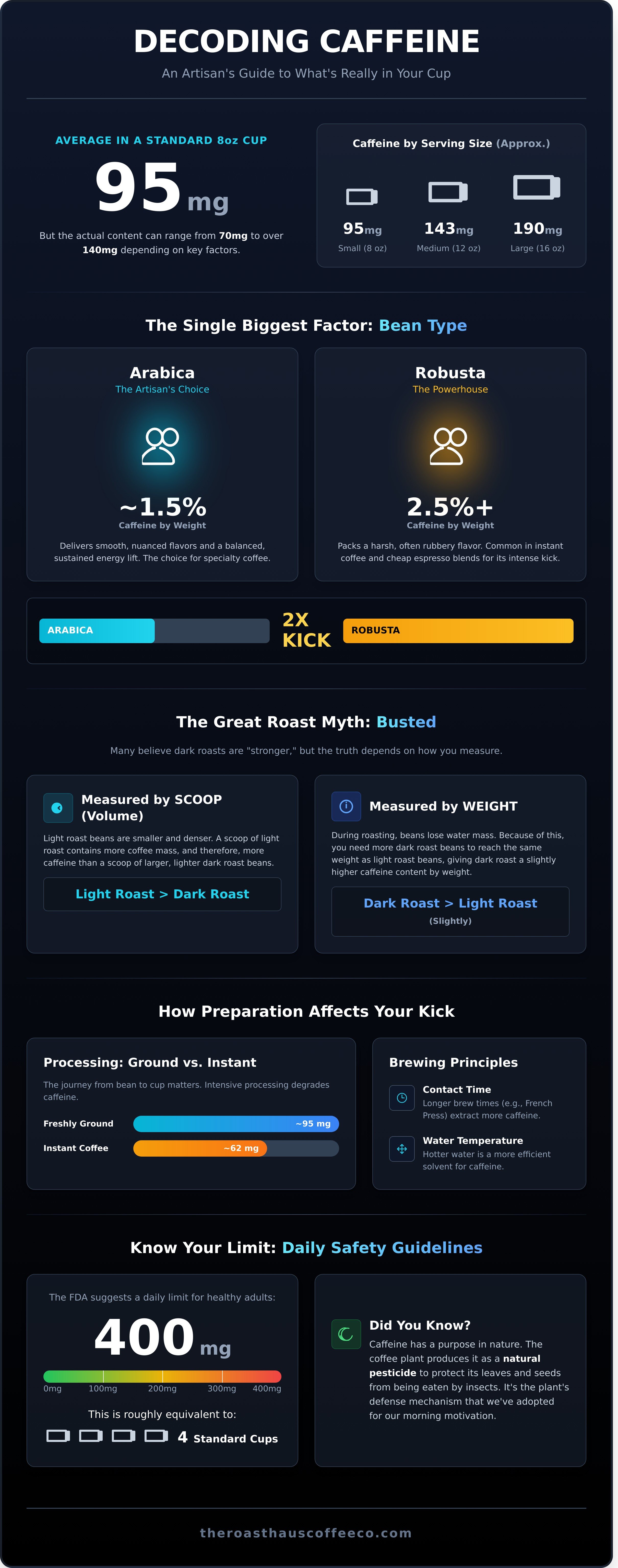
Let's get straight to it. The most common question we hear is, "how much caffeine is in a cup of coffee?" The industry benchmark for a standard 8-ounce cup of brewed, drip coffee is about 95 milligrams (mg) of caffeine. This is the figure you'll see cited most often by health organizations and in scientific studies. It's a solid average.
But reality is rarely average. The actual caffeine content in your mug can swing wildly, typically landing somewhere between 70 mg and 140 mg. Why the huge range? Everything matters: the type of coffee bean, the roast level, the grind size, and how you brew it. A lighter roast, for example, often retains slightly more caffeine than a dark roast when measured by volume. This is the science we love, and it’s why controlling every step of the process is so important to us.
Interestingly, that buzz you feel has a purpose in nature. Caffeine isn't just for our morning motivation; it's a natural pesticide. The coffee plant produces it to protect its leaves and seeds from being eaten by insects. It’s the plant’s defense mechanism, and we just happen to find it wonderfully effective for starting our day.
For a quick, practical guide, here's what you can generally expect from a cup of standard brewed coffee:
- Small Cup (8 oz / 237 ml): Approximately 95 mg of caffeine
- Medium Cup (12 oz / 355 ml): Approximately 143 mg of caffeine
- Large Cup (16 oz / 473 ml): Approximately 190 mg of caffeine
Defining the 'Standard' Cup in 2026
The term 'cup' itself can be misleading. The U.S. Department of Agriculture (USDA) references a standard 8-ounce cup in its data. However, the Food and Drug Administration (FDA) often uses a 12-ounce serving size for its nutritional guidelines. This is why it's crucial to distinguish between naturally brewed coffee and "caffeine-infused" energy beverages, which contain added, often synthetic, caffeine. Caffeine is a naturally occurring methylxanthine alkaloid found in over 60 plant species; you can find a comprehensive overview of caffeine and its properties to learn more about its chemical nature.
Instant vs. Ground: The Processing Gap
The journey from bean to cup dramatically affects the final caffeine count. Instant coffee, for instance, typically contains less caffeine-around 62 mg per 8 ounces. The intensive freeze-drying or spray-drying process used to create instant granules degrades some of the caffeine and strips away many of the delicate flavor compounds. This is the processing gap. Freshly roasted-to-order beans, on the other hand, maintain a stable and complete chemical profile. When we ship your coffee the same day it’s roasted, you're getting the bean at its peak potential. Older, pre-ground coffee from a grocery store shelf suffers from oxidation, a process where oxygen breaks down the compounds responsible for both flavor and potency, resulting in a less vibrant and less caffeinated cup.
The Variables: Beans, Roasts, and Origins
Asking how much caffeine is in a cup of coffee is like asking how long it takes to drive to the city. The answer depends entirely on your starting point and the vehicle you choose. In coffee, the variables are the bean itself, the roast level, and even the altitude where it was grown. Not all coffee is created equal, and the genetic makeup of the bean is the single biggest factor in its caffeine content.
The coffee world is dominated by two species: Arabica and Robusta. Robusta beans are a powerhouse, packing nearly double the caffeine of their counterpart. A typical Robusta bean contains 2.5% or more caffeine by weight, while an Arabica bean sits around 1.5%. This intense caffeine load, combined with a harsh, often rubbery flavor, is why Robusta is common in instant coffee and cheap espresso blends. While that jolt might seem appealing, it's vital to stay within the safe caffeine consumption guidelines set by health authorities like the FDA, which generally suggest up to 400 milligrams per day for healthy adults.
Light Roast vs. Dark Roast Density
Many believe dark roasts are stronger because of their bold flavor, but the opposite is true if you measure by the scoop. During roasting, coffee beans lose water and expand. Light roast beans are denser and heavier than dark roast beans. A scoop of light roast, therefore, contains more coffee mass and more caffeine. If you measure by weight, the dark roast has a slight edge because you need more individual beans to reach the same weight. For a deeper dive, read our Light vs. Dark Roast comparison.
Arabica: The Artisan Choice for Balanced Energy
At The Roast Haus, we exclusively use 100% specialty-grade Arabica beans. We make this choice because we believe coffee should deliver both exceptional flavor and a clean, balanced energy. You don't need the harsh, jittery kick from Robusta. The smoother caffeine curve of Arabica provides a sustained lift without the crash. The bean’s origin also plays a critical role. High-altitude beans, like our Kenya AA Supreme, grow slower in cooler temperatures, developing more complex sugars and a vibrant, clean taste that you just can't find in lowland commodity coffee.
Ultimately, the journey to your perfect cup is personal. It involves understanding the beans you choose and how they are handled from farm to roaster. Exploring different single-origin coffees is the best way to discover the precise combination of flavor and energy that’s right for you.
Brewing Methods: From Espresso to French Press
The beans are just the beginning. Once you have perfectly roasted coffee, the final step in your hands-the brew-directly controls the character and kick of your morning cup. How you introduce hot water to ground coffee changes everything. The key variables are simple: extraction time, water temperature, and grind size. Mastering them is how you truly control how much caffeine is in a cup of coffee.
Think of extraction as a conversation between water and coffee. The longer they talk, the more caffeine gets pulled from the grounds. A quick 30-second espresso pull is a short chat, while a 4-minute French press steep is a much deeper discussion.
- Extraction Time: More contact time equals more caffeine. A French press, with its 4-minute immersion, extracts a significant amount of caffeine, though its coarse grind keeps it from going overboard.
- Water Temperature: The sweet spot for caffeine solubility is between 195°F and 205°F. This range efficiently dissolves caffeine and desirable flavor compounds. Colder water struggles to extract, while water that's too hot can scorch the grounds, creating a bitter taste.
- Grind Size: The finer the grind, the more surface area the water can access. This is why espresso uses a powder-fine grind for a super-fast extraction. Grind size is just one of the many factors that affect caffeine content, and it works hand-in-hand with time and temperature.
This brings us to a common debate: the espresso shot versus the full cup. An espresso shot feels like a jolt because its caffeine is highly concentrated, packing around 60mg into a single ounce. However, a standard 8-ounce cup of drip coffee typically contains 95mg to 165mg of caffeine. While less potent ounce-for-ounce, the larger volume delivers a much higher total dose of caffeine.
Caffeine Content by Brewing Method
Here’s a straightforward look at what you can expect from an 8-ounce serving (or a 1-ounce shot for espresso). These numbers are solid estimates, but remember that your specific beans and technique will cause them to vary.
- Drip / Filter Coffee (8 oz): 95-165 mg
- French Press (8 oz): 80-135 mg
- Espresso (1 oz shot): 47-75 mg
- Cold Brew (8 oz): 150-200+ mg
The Cold Brew Outlier
Cold brew is in a league of its own. Instead of heat, it uses a very long extraction time-typically 12 to 24 hours-to pull flavor and caffeine from the grounds. This marathon steep, combined with a higher coffee-to-water ratio, creates a potent concentrate. Because of this, a standard serving of cold brew often has the highest caffeine level. The good news is you're in control. We recommend diluting cold brew concentrate with water or milk, usually at a 1:1 ratio, to create a balanced, smooth drink and manage your caffeine intake.
Health, Safety, and the 'Freshness' Perception
Understanding how much caffeine is in a cup of coffee is the first step toward a healthy relationship with your favorite drink. The U.S. Food and Drug Administration (FDA) states that up to 400 milligrams of caffeine per day, about four 8-ounce cups of brewed coffee, is generally safe for healthy adults. This guideline remains the gold standard heading into 2026. But the numbers don't tell the whole story. The quality and freshness of your coffee beans dramatically change how that caffeine affects your body.
Your body has clear ways of telling you when you’ve crossed your personal limit. Consuming more caffeine than you're used to can lead to some unpleasant side effects. Pay attention to these signals:
- Jitters and Anxiety: A feeling of restlessness or being on edge.
- Increased Heart Rate: A noticeable pounding or racing heart.
- Sleep Disruption: Difficulty falling asleep or staying asleep, even hours after your last cup.
- Digestive Issues: An upset stomach or acid reflux.
Many people blame caffeine for these feelings, but often, the real culprit is stale coffee. The harshness you feel isn't just the caffeine; it's a sign of oxidation and degradation in the beans themselves.
Why Freshly Roasted Coffee Feels Different
Freshly roasted coffee delivers a "clean buzz" because its natural oils and hundreds of aromatic compounds are intact. These elements work with the caffeine to create a smoother, more focused energy. Stale, mass-produced coffee, which has sat on a shelf for months, has lost these delicate compounds. Its oils have oxidized, creating a rancid taste that can increase stomach acid and lead to the infamous post-caffeine crash. It's a harsh, jagged energy, not the clean lift you deserve. Learn more about why this matters in our guide, What is Roasted-to-Order Coffee?
The Decaf Truth: It’s Not Zero
For those who love the flavor of coffee without the stimulation, decaf seems like the perfect solution. But most decaffeination processes, which often use chemical solvents like methylene chloride, leave behind 3-7 mg of caffeine per cup. For caffeine-sensitive individuals, that small amount adds up. This is why the Decaf Swiss Water Process is the artisan gold standard. The Swiss Water Process uses only time, temperature, and water-no chemicals-to gently remove 99.9% of the caffeine while preserving the coffee's precious flavor. It's the purest way to enjoy a truly caffeine-free cup.
Your daily coffee ritual should make you feel good. It should energize your mind and respect your body. Don't settle for the harsh side effects of stale, oxidized beans. Experience the difference a clean, fresh buzz makes. Shop our artisan roasted-to-order coffee today.
Mastering Your Morning with The Roast Haus
Understanding the science behind your coffee is the first step. Applying that knowledge is how you perfect your daily ritual. The variables, from bean origin to roast level, directly impact your energy and focus. At The Roast Haus Coffee Co., we don't just sell coffee; we give you the tools to control your caffeine intake and build a better morning, cup by cup.
It all starts with the right bean. Your desired energy level should guide your choice. Instead of grabbing any bag off the shelf, you can select a coffee with intention. The goal is to match the bean's natural characteristics to your body's needs throughout the day. It's the difference between a jolt and a gentle lift.
Curating Your Caffeine Experience
We've simplified the process of finding your ideal energy profile. Think of our collection as a toolkit for your day. For a powerful start, our light-roasted Kenya AA or Ethiopia Limu deliver a bright, acidic snap with higher caffeine density. For a smoother afternoon, the medium-bodied Honduras Morning Splendeur provides a balanced lift without the jitters. Our subscription service ensures you never run out, delivering that predictable energy right when you need it.
But choosing the right bean is only half the story. The ultimate decider for how much caffeine is in a cup of coffee often comes down to the roaster. Inconsistent, large-batch roasting can create a mix of under-roasted and over-roasted beans, leading to unpredictable flavor and caffeine levels. We roast in small, carefully controlled batches. This artisan approach guarantees that every bean hits its peak potential, providing you with a consistent, reliable cup every single time.
Our "Roasted to Order" promise is central to this. Coffee beans are at their best for about 14 days after roasting. After that, oxidation begins to degrade the delicate oils and compounds that create rich flavor and aroma. The coffee you buy in a supermarket is often weeks, if not months, old. We roast your beans after you place your order. You get coffee at its absolute peak of freshness, ensuring you experience its full flavor and intended potency.
Not sure where to begin? Our All Day Sampler is the perfect starting point. It allows you to explore different origins and roast profiles to find the exact buzz that works for you, from a high-energy morning charge to a mellow afternoon focus.
The Roast Haus Coffee Co. Promise
As a family-owned business, we put our name on every bag. We care about your cup as much as you do because our reputation is built on quality and trust. From our roastery in Oklahoma, we operate on a strict 24-hour roast-to-ship window. This ensures the freshest possible coffee arrives at your door, ready to brew. Take control of your coffee experience and feel the difference that true freshness makes. Shop our fresh-roasted collection now.
Master Your Morning Brew in 2026
Navigating the world of coffee doesn't have to be complicated. You now know that an 8-ounce cup holds anywhere from 70 to over 140 milligrams of caffeine, and that your choice of bean and brewing method directly impacts that final number. Understanding how much caffeine is in a cup of coffee is less about finding a single, static answer and more about taking control of the variables that matter.
At The Roast Haus, we believe the most important variable is freshness. As a family-owned artisan roastery, we provide that control with small-batch precision for every single bag. We roast your coffee only after you order it and ship it directly to you within 24 hours. This isn't just a promise; it's how you get coffee at its absolute peak flavor. Experience peak freshness-Shop our Roasted-to-Order Beans. Stop guessing and start brewing with intention.
Frequently Asked Questions About Coffee & Caffeine
Does dark roast coffee have more caffeine than light roast?
No, light roast beans have more caffeine than dark roast beans when measured by weight. The roasting process itself doesn't significantly change a bean's total caffeine, but it does make the bean less dense. Because light roast beans are denser, you get more caffeine gram-for-gram. If you measure by scoops (volume), a dark roast might give you a slightly more caffeinated cup because you're using more of the lighter, larger beans to fill the scoop.
How much caffeine is in a 12 oz cup of home-brewed coffee?
An average 12 oz cup of home-brewed coffee contains between 120 and 180 milligrams of caffeine. The definitive answer to how much caffeine is in a cup of coffee really depends on your specific process. Factors like the bean variety, the fineness of the grind, and the water contact time all play a crucial role. A longer brew time, like with a French press, will always extract more caffeine than a quicker pour-over method.
Is espresso higher in caffeine than regular drip coffee?
A single shot of espresso actually has less total caffeine than a standard cup of drip coffee. While espresso is more concentrated, containing about 64 milligrams per ounce, a typical serving is just that one ounce. An 8-ounce cup of drip coffee contains 95 to 165 milligrams on average. So, unless you're drinking a double or triple espresso, your regular cup of fresh-brewed coffee usually packs a bigger overall punch.
Can I reduce the caffeine in my coffee by brewing it faster?
Yes, a faster brew time directly results in less caffeine in your cup. Caffeine extraction depends on how long the coffee grounds are in contact with hot water. For example, a pour-over that takes 2 minutes will have less caffeine than a French press that steeps for 4 minutes, even if you use the exact same amount of coffee and water. Shortening the brew time is a simple way to manage your caffeine intake without switching to decaf.
How much caffeine is considered 'too much' per day?
For most healthy adults, the U.S. Food and Drug Administration (FDA) suggests a limit of 400 milligrams of caffeine per day. This is roughly the amount you'd find in four 8-ounce cups of standard brewed coffee. Exceeding this amount can sometimes lead to negative effects like jitters or an upset stomach. It's important to remember that everyone's tolerance is different, so listen to your own body.
Does the freshness of the roast affect how much caffeine I feel?
The actual milligrams of caffeine don't change, but freshness absolutely impacts the experience. Stale coffee, where the natural oils have oxidized, tastes flat and lifeless. A coffee that is roasted to order delivers a vibrant, aromatic, and complex flavor profile that is far more stimulating to your senses. You aren't getting chemically more caffeine, but you are getting a much better, more impactful cup that truly awakens your palate.
Is decaf coffee actually 100% caffeine-free?
No, decaf coffee is not completely free of caffeine. According to U.S. regulations, coffee must have at least 97% of its caffeine removed to be labeled "decaffeinated." This means a standard 12-ounce cup of decaf can still have between 2 and 15 milligrams of caffeine. While this is a very small amount, it's not zero, which is an important fact for anyone who is highly sensitive to caffeine's effects.
Which coffee bean variety has the most caffeine?
The Robusta coffee bean has the most caffeine, containing nearly double the amount found in Arabica beans. A typical Robusta bean is composed of about 2.5% caffeine by weight, while an Arabica bean contains closer to 1.5%. This is why Robusta is often included in traditional espresso blends; it helps produce a thick, stable crema and provides that signature powerful kick. For maximum caffeine, a 100% Robusta brew is the choice.

