


Walk down any coffee aisle, and you’ll see the words: "Italian Roast." For many, it brings to mind a bold, powerful cup of coffee. For others, it’s a warning sign for something bitter or burnt. If you've ever been confused by coffee labels or worried you’re buying stale, overly roasted beans, you're in the right place. The truth is, a great italian roast coffee isn't about a geographical location or a burnt flavor. It’s about a specific, deep roasting style that, when done correctly with fresh beans, creates a rich, full-bodied experience with low acidity and notes of dark chocolate and caramel.
This appreciation for authentic Italian tradition often extends beyond coffee to classic culinary staples. For example, family-owned restaurants that have served their communities for decades, like Hatboro Pizza, carry on that same spirit of quality and tradition in their food.
We believe that no coffee lover should have to settle for a bitter cup. In this guide, we’re cutting through the marketing noise to give you the honest truth. You will learn exactly what makes a roast "Italian," how to choose high-quality beans where freshness is key, and the best methods for brewing it to unlock that incredible, syrupy flavor without the char. It’s time to feel confident with dark roasts and finally enjoy this classic coffee style the way it was meant to be.
Key Takeaways
- Learn that "Italian Roast" defines a specific dark roast style, not where the beans are from, so you can shop for the flavor you actually want.
- Unlock the rich, bold flavor of a true italian roast coffee by using the right brewing methods that prevent bitterness and highlight its deep notes.
- Finally understand the difference between Italian, French, and Vienna roasts to confidently navigate the world of dark roast coffee.
- Find out why looking for a "roasted on" date is the single most important step to finding a quality dark roast, regardless of the name on the bag.
What Is Italian Roast Coffee? A Look Beyond the Label
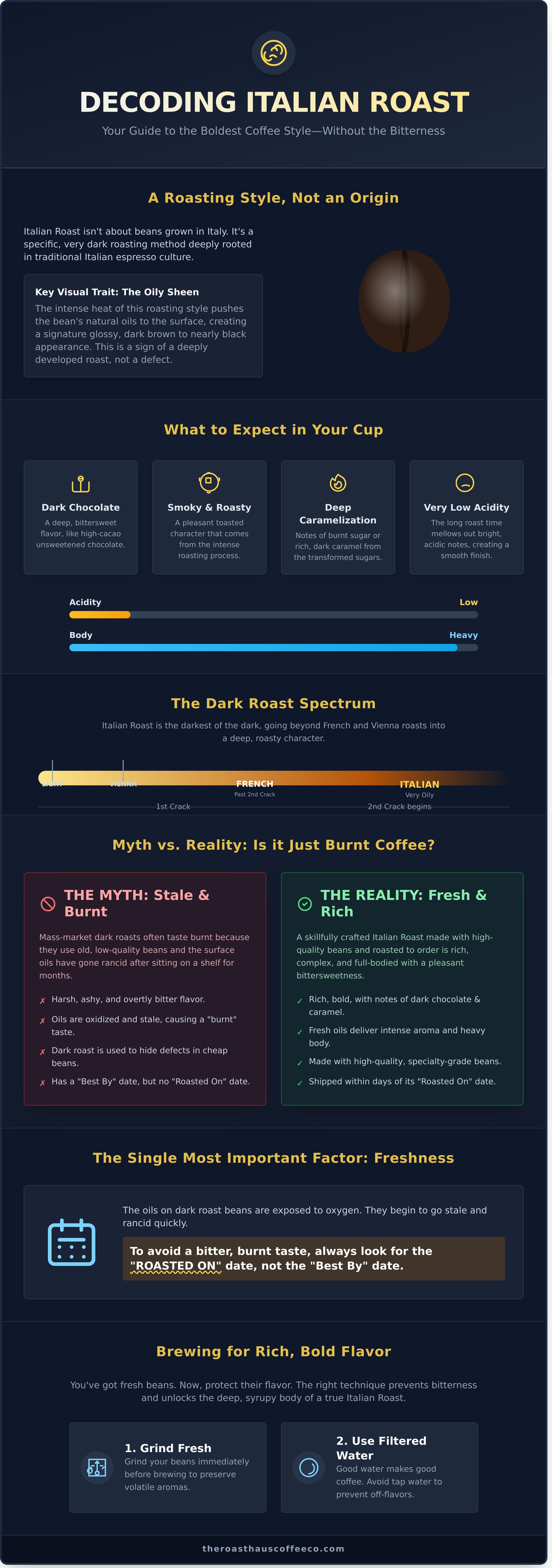
When you see the term "Italian Roast," it's easy to picture beans grown on a sun-drenched Italian hillside. But the truth is simpler and more about craft: Italian roast is a roasting style, not a specific bean or origin. It represents the darkest end of the coffee roasting spectrum, a bold and unapologetic statement in every cup. This style is deeply rooted in traditional Italian coffee culture, which historically favored a dark, intense profile perfect for pulling classic espresso shots.
This rich coffee tradition is a huge part of the travel experience in many Mediterranean cities. For instance, enjoying a morning espresso on a private balcony is a quintessential part of visiting Greece, and finding the right place to stay, like the apartments at Rooftops of Athens, can make that experience possible.
The allure of Italian coffee culture often goes hand-in-hand with a love for classic European aesthetics. If you appreciate the art and photography that capture this timeless style, you can learn more about Galerie Prints and their collection of fine art photography.
Visually, these beans are unmistakable. They are roasted to a very dark brown, often appearing almost black, and are coated in a noticeable oily sheen. This isn't a sign of a bad bean; it's the signature of a coffee taken to its roasting limit, a deliberate choice for a specific, powerful flavor.
The Roasting Process: From Green Bean to Oily Sheen
Every coffee bean undergoes a dramatic transformation in the roaster. As they heat up, they reach 'first crack'—an audible pop, much like popcorn, that signals a light roast. To achieve an Italian roast, we push the beans far beyond this point, well into and often just past the rolling 'second crack'. This intense, prolonged heat breaks down the bean's cellular structure, forcing the natural oils inside to migrate to the surface. It’s a process that completely transforms the bean, sacrificing its delicate origin notes for a deep, roasty character.
What Does Italian Roast Taste Like?
The flavor of an Italian roast is dominated by the roasting process itself, not the bean's origin. The intense caramelization of sugars and the slight carbonization of the bean fibers create a profile that is bold, roasty, and very low in acidity. It delivers a powerful, bittersweet experience. Common tasting notes include:
- Dark, unsweetened chocolate
- Smoky and toasted flavors
- Deep, rich caramelization
- A hint of toasted nuts or burnt sugar
The original flavors of the green coffee become a subtle backdrop. What you get is a classic, intense cup that defines what many people love about a truly dark italian roast coffee experience—a testament to tradition and roasting craft. This mastery of heat and smoke is also essential in the world of barbecue; for those who appreciate premium fuel for grilling, you can discover Charcoal Kings.
Myth vs. Reality: Is Italian Roast Just Burnt Coffee?
Let's be direct: many people believe that Italian roast coffee is simply burnt, bitter, and one-dimensional. This is a common myth, but it comes from a place of truth. Some mass-market coffee companies use a very dark roast to cover up the defects in low-quality beans, creating a uniform, but often harsh, flavor profile. This has given all dark roasts a bad name.
The reality is that a true, skillfully crafted italian roast coffee made with high-quality, specialty-grade beans is anything but burnt. It’s a bold, rich, and deeply complex coffee with a bittersweet character and low acidity. The secret to unlocking this incredible flavor isn't the bean or the roast style alone—it's freshness.
The Problem with Stale, Mass-Market Dark Roasts
When coffee is roasted to a dark profile, its natural oils are brought to the surface of the bean. These oils are packed with flavor and aroma, but they are also delicate. Once exposed to oxygen, they begin to oxidize and quickly turn rancid. That bag of dark roast on the grocery store shelf, with a "best by" date months away, was likely roasted weeks or even months ago. The unpleasant, ashy, and "burnt" taste you might associate with dark roasts is often the flavor of stale, rancid oils, not the roast itself.
Why Roasted-to-Order Makes All the Difference
When you drink a dark roast that was prepared just for you and shipped within days of roasting, the experience is completely different. The harsh bitterness is replaced by a pleasant sweetness, a heavy and rich body, and deep notes of dark chocolate and caramelized sugar. The entire spectrum of coffee roasting, from light to dark as detailed in the National Coffee Association's guide to roast levels, depends on freshness to deliver its intended flavor.
This is the core of our belief at The Roast Haus. Roasting to order isn't a gimmick; it's the only way to guarantee you experience the true, incredible potential locked inside every coffee bean. It ensures you taste the craft, not the shelf life.
How to Brew Italian Roast Coffee for Rich, Bold Flavor
You've chosen a bold, deeply roasted coffee. Now, the brewing process is where you either unlock its rich, smoky-sweet flavor or end up with a bitter cup. The right technique is everything for a dark roast. It respects the beans and the roasting craft, ensuring you get the full-bodied experience you're looking for.
To get the absolute best flavor, always start with two things: freshly ground beans and good, filtered water. This simple step protects the pure, robust notes of your coffee.
Best Brewing Methods for Italian Roast
Because of its low acidity and heavy body, this roast shines in methods that produce a strong, concentrated coffee. These three are our top choices:
- Espresso: The quintessential pairing. An espresso machine forces hot water through finely-ground coffee, creating a thick, syrupy shot with a rich layer of crema on top.
- Moka Pot: This stovetop brewer is an Italian icon. It uses steam pressure to produce a strong, concentrated, espresso-like coffee that perfectly complements the roast's intensity.
- French Press: For a full-bodied and robust cup, the French press is an excellent choice. The immersion process highlights the deep, roasty notes and creates a satisfyingly heavy mouthfeel.
A Simple Guide to Moka Pot Brewing
The Moka pot is a fantastic and accessible way to brew italian roast coffee. Here’s how to do it right:
- Fill the bottom chamber with filtered water up to the safety valve.
- Fill the filter basket with medium-fine ground coffee. Level it off but do not tamp it down.
- Screw the top and bottom chambers together tightly and place on your stovetop over medium heat.
- Listen for a gurgling sound—that means your coffee is ready. Remove it from the heat immediately to prevent a burnt taste.
- Pour and enjoy your rich, authentic brew.
Pro Tips to Avoid Bitterness
Dark roasts can become bitter if over-extracted. This happens when hot water pulls too many undesirable compounds from the grounds. Here are a few simple ways to keep your brew smooth and balanced:
- Grind a Little Coarser: A slightly coarser grind than you might normally use for your brew method reduces the surface area, preventing the water from extracting flavor too quickly.
- Watch Your Water Temperature: Water that is too hot will scald the grounds. Aim for a temperature just off the boil, around 195-200°F (90-93°C).
- Don't Be Afraid of Milk: The bold, potent flavor of this roast pairs exceptionally well with milk, cream, or a touch of sugar, which can mellow any lingering bitterness.
Italian Roast vs. French Roast and Other Dark Styles
When you start exploring dark roast coffee, you'll quickly encounter terms like 'Vienna,' 'French,' and 'Italian.' These names don't refer to the coffee's origin but to the degree of roast. Think of them as markers on a spectrum, guiding you from a lighter dark roast to the absolute darkest. While every artisan roaster has their own unique approach, these terms provide a helpful guide to what you can expect in the cup.
Italian Roast: The Darkest
This is the final stage of the coffee roasting journey. The beans are nearly black, with a significant, glossy sheen of oil on their surface. The flavor profile is intense and powerful, dominated by bittersweet, smoky, and pungent notes. Due to the prolonged heat exposure, the bean's structure breaks down, resulting in a characteristically thin body.
French Roast: A Step Lighter
Pulled from the roaster just before it would become an Italian roast, a French Roast is still deeply dark but shows more of a rich, chocolate-brown color. It's also oily, but the flavor is slightly less intense. You’ll find more notes of caramelized sweetness to balance its signature smoky finish. The body is typically fuller and more robust than an Italian roast.
Vienna Roast & Full City Roast
These roasts represent the entry point into the dark roast world, often developed to the beginning of the "second crack." They have a much lighter oil sheen, if any, and retain more of the coffee bean's original character. This means you get a wonderful balance of roasty notes alongside the bean's inherent sweetness and acidity. For a deeper dive, see our full guide to Light vs. Dark Roast.
To make it simple, here’s a quick comparison:
| Roast Style | Color & Oil | Key Flavor Notes |
|---|---|---|
| Vienna Roast | Medium-dark brown, slight oil sheen | Bittersweet chocolate, roasty, retains some origin character |
| French Roast | Dark brown, oily surface | Smoky, caramelized sugar, low acidity |
| Italian Roast | Nearly black, very oily | Intensely bittersweet, smoky, pungent, thin body |
Ultimately, the name on the bag is less important than the skill of the roaster. Crafting a superb italian roast coffee requires precision and a deep understanding of how heat transforms the bean. At The Roast Haus, we roast every batch to order, ensuring that whether you choose a light or a dark roast, you receive it at its absolute peak of freshness and flavor.
Finding the Best Dark Roast: A Freshness-First Approach
After exploring the history and flavor of this classic profile, you understand that the label 'Italian Roast' is less important than the quality of the coffee inside the bag. A truly exceptional dark roast experience doesn't come from a name, but from a roaster's commitment to freshness and sourcing. The goal is to find a coffee that is bold and rich, not bitter and burnt.
Instead of relying on marketing terms, you can empower yourself by looking for clear indicators of quality. This ensures that whether you're buying an italian roast coffee or another dark blend, you're getting a product crafted for peak flavor.
What to Look For When Buying Dark Roast Coffee
When you're at the store or shopping online, cut through the noise by focusing on these three critical factors. They are the true signs of a roaster who cares about their craft and your cup.
- A 'Roasted On' Date: This is the single most important piece of information on a coffee bag. A 'best by' date is a marketing gimmick that can hide stale beans. Coffee is a fresh product, and its best flavors are enjoyed within a few weeks of roasting. Always choose a bag with a recent roast date.
- Bean Origin Transparency: A quality roaster is proud of their green coffee. Look for information about the coffee's origin—at minimum the country, but ideally the region or farm. This transparency shows a commitment to sourcing high-grade beans that can handle a deep roast profile.
- Fast Shipping from the Roaster: Freshness is fragile. A roaster who understands this will ship your coffee immediately after roasting, often the same or the next day. This minimizes the time between the roaster and your grinder, preserving the coffee's vibrant aroma and flavor.
The Roast Haus Approach to Dark Roasts
At The Roast Haus, our entire process is built around delivering the freshest dark roast possible. We don't believe in warehouses full of roasted coffee going stale. We believe in roasting for you.
We start by sourcing high-quality, single-origin beans with the right density and character to develop deep, sweet flavors under heat. Then, we wait for your order. Our roasted-to-order process guarantees that the coffee you receive was roasted just for you, capturing its flavor at its absolute peak. This commitment eliminates the harsh, burnt taste common in stale, mass-produced coffee, leaving only rich, satisfying flavor. Experience the difference that true freshness makes.
Explore Our Collection of Freshly Roasted Coffees and taste what a perfect dark roast is meant to be.
Embrace the Bold: Your Next Cup Awaits
We've explored how this classic style is far more than just "burnt"—it's a craft that balances deep, bittersweet notes with a bold, rich body when done right. You now understand that proper brewing unlocks its potential and that, above all, freshness is the single most important factor for experiencing italian roast coffee at its absolute peak. The difference between a mediocre dark roast and an exceptional one is always freshness.
At The Roast Haus, we are built on that principle. As a family-owned artisan roastery, our commitment is to delivering peak flavor. We achieve this by roasting every single batch to order and shipping it within 24 hours, ensuring you never have to settle for stale coffee from a store shelf again. It’s time to taste the bold, rich flavor you deserve. Discover your perfect fresh-roasted coffee at The Roast Haus. Your best cup is waiting.
Italian Roast Coffee: Frequently Asked Questions
What does Italian roast coffee taste like?
Italian roast coffee has a bold, bittersweet, and often smoky flavor. The extended roasting process caramelizes the sugars deeply, masking the bean's original acidity and fruity notes. Instead, you'll taste notes of dark cocoa, toasted nuts, and a powerful, roasty finish. It’s known for its heavy body and a lingering, bittersweet aftertaste. This is a classic profile for those who love an intense, no-nonsense cup of coffee.
Is Italian roast coffee stronger in caffeine?
This is a common myth. The longer roasting time actually burns off a small amount of caffeine. So, bean for bean, an Italian roast has slightly less caffeine than a light roast. However, because dark roast beans are less dense, you might use more beans by volume (if you measure with a scoop), which can make the caffeine content in your final cup very similar. The "strong" flavor refers to the taste, not the caffeine kick.
Is Italian roast the same as espresso?
No, they are two different things. Italian roast refers to a very dark roast level, while espresso is a method of brewing coffee by forcing hot, pressurized water through a puck of finely-ground beans. While you can certainly use Italian roast beans to make a traditional, robust shot of espresso, you can also use any other roast level. One is a roast style, the other is a preparation technique.
Why are Italian roast coffee beans so oily?
The oily sheen on Italian roast beans is a direct result of the intense, high-temperature roasting process. As the beans are heated for an extended period, their internal cell structures break down, which forces the natural coffee oils to the surface. This is a distinct characteristic of a very dark roast and contributes to the coffee's heavy body and rich flavor profile. It's a visual cue that you're holding a deeply roasted bean.
Is Italian roast good for French press?
Absolutely. The French press is an excellent way to brew Italian roast coffee. Its immersion brewing style and metal filter allow the coffee's natural oils and heavy body to shine through, creating a rich, full-flavored cup. The coarse grind required for a French press pairs perfectly with this dark roast, minimizing bitterness while maximizing the deep, smoky, and chocolatey notes that make this coffee a classic choice for this brew method.
Which is darker, French or Italian roast?
Italian roast is traditionally the darkest on the coffee roasting spectrum, even darker than a French roast. While both are very dark and oily, an Italian roast is taken to the very edge of carbonization, resulting in a nearly black bean with a noticeable sheen. A French roast is also very dark but is typically pulled from the roaster just a moment sooner, retaining a slightly less intense, smoky character.
What's the best way to store dark roast coffee beans?
To preserve the bold flavor of your dark roast, proper storage is key. The biggest enemies are oxygen, light, heat, and moisture. Store your beans in an opaque, airtight container at room temperature, away from direct sunlight or the heat of your oven. We always recommend buying whole beans and grinding them just before you brew. This protects those rich, volatile oils and ensures you experience peak freshness in every single cup.

