


Have you ever seen words like "earthy" or "full-bodied" on a coffee bag and wondered what they actually taste like? Or heard the term "wet-hulled" and felt a little lost? These descriptions can be confusing, but they point to one of the most unique and beloved origins in the coffee world. We're talking about Sumatran coffee, a bean with a bold character that is completely different from the bright, fruity coffees of Africa or South America. It’s a coffee that deserves to be understood, because when brewed right, the flavor is deeply rewarding.
This guide is here to clear up the confusion. We’re going to show you exactly what makes this coffee special, from its unique ‘Giling Basah’ processing method to its rich, low-acidity flavor profile. You'll learn why it tastes the way it does and get our straightforward, practical tips for brewing the perfect cup at home. By the end, you won’t just understand Sumatran coffee-you’ll know for sure if its bold, earthy flavors are the right fit for you.
Key Takeaways
- Understand the signature flavor profile of sumatran coffee, defined by its deep, earthy notes and satisfyingly heavy body.
- Discover the unique "Giling Basah" wet-hulling process and how it creates the coffee's famous bold character.
- Learn the best brewing methods to highlight the rich, full-bodied qualities of your beans at home.
- Find out how different roast levels impact flavor and get simple tips for pairing this coffee with your favorite foods.
What Makes Sumatran Coffee So Unique?
If you're searching for a coffee with a deep, powerful, and truly distinct character, look no further than Sumatra. Hailing from the rugged, volcanic island of Sumatra in the Indonesian archipelago, this coffee stands apart from all others. It’s celebrated for a classic flavor profile that is profoundly earthy, full-bodied, and incredibly low in acidity. Unlike the bright, sharp, and wine-like notes you might find in an African coffee, a cup of sumatran coffee is smooth, rich, and wonderfully complex. This unforgettable character isn’t just from the soil-it’s the direct result of a unique harvesting and processing method that defines its one-of-a-kind taste.
The Signature Flavor Profile
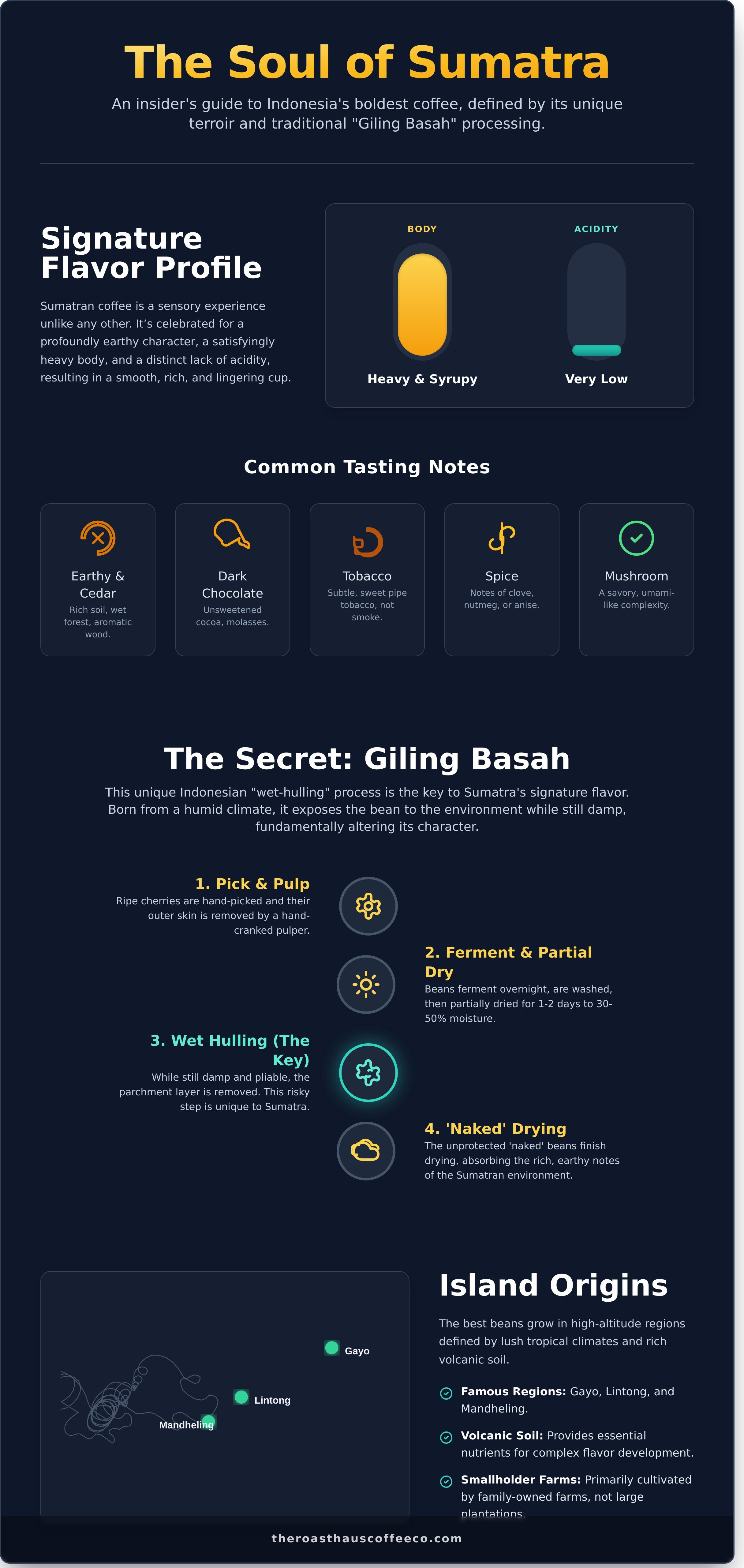
The first thing you’ll notice is the coffee’s heavy, almost syrupy body. It’s a satisfying weight that coats your tongue and lingers long after you sip, carrying deep, complex flavors. When we say ‘earthy,’ we mean rustic, organic notes of rich soil after a rain, cedar, and even a hint of fresh tobacco or mushroom-never dirt. These bold flavors are often complemented by notes of dark chocolate, molasses, and subtle spice. The famously low acidity is the secret to its smoothness. You won’t find any sharp, acidic bite here, making it a gentle and comforting cup that’s perfect for those who find other coffees too bright or aggressive on the palate.
- Body: Full, heavy, and syrupy.
- Acidity: Very low, resulting in a smooth finish.
- Common Notes: Cedar, dark chocolate, tobacco, spice, and rich earth.
Where in Sumatra Does Coffee Grow?
The best Sumatran beans come from specific high-altitude regions, where the unique climate and soil work their magic. The most famous of these are the Gayo region in the northern Aceh province, and the Lintong and Mandheling areas surrounding the stunning Lake Toba in North Sumatra. The history of Coffee production in Indonesia is deeply tied to these places, where the lush tropical climate and nutrient-rich volcanic soil create the perfect environment for Arabica beans to thrive. This isn’t a story of massive corporate plantations. Instead, the backbone of production is a dedicated network of smallholder farms, often family-owned for generations, who take immense pride in cultivating these exceptional beans.
This connection to cultivation and the joy of growing something from scratch resonates with many. If you're inspired to try your hand at gardening, you can find out more about seeds for your own hobby garden.
The Secret to Sumatra's Flavor: Giling Basah (Wet-Hulling)
What gives Sumatran coffee its famous deep, earthy flavor and syrupy body? The secret lies in a unique, hands-on processing method born from the island's humid climate: Giling Basah, or wet-hulling. This traditional technique is almost exclusive to Indonesia and is the reason this coffee stands apart from all others.
Unlike the more common 'washed' or 'natural' methods, where beans are dried slowly inside their protective layers, Giling Basah is a rustic, fast-paced process. It involves removing the bean's parchment layer while its moisture content is still incredibly high. This risky step exposes the raw bean to the elements, fundamentally changing its chemical makeup and embedding the classic flavors of the Sumatran terroir directly into the coffee.
How Wet-Hulling Works: A Simple Breakdown
This method is a testament to the resourcefulness of Sumatran farmers. It’s a multi-stage process that requires skill and experience passed down through generations.
- Step 1: Farmers pick the ripe coffee cherries and run them through a hand-cranked pulper to remove the outer skin, leaving the sticky fruit mucilage on the bean.
- Step 2: The beans are fermented overnight and then washed, before being partially sun-dried for a day or two until the moisture content is around 30-50%.
- Step 3: While still damp and pliable, the beans are hulled to remove the parchment layer. This is the key step of Giling Basah.
- Step 4: The 'naked' green beans finish drying, unprotected. This allows them to absorb the rich, earthy characteristics of their environment.
How Giling Basah Affects the Taste
The impact of wet-hulling on the final cup is immense. By stripping the bean of its parchment layer early, the process mutes the coffee's bright, citric acidity and dramatically boosts its body, creating a heavy, lingering mouthfeel. This is what imparts the signature notes of our sumatran coffee: rich earth, cedar, tobacco, and a hint of spice. Before roasting, these beans have a distinct dark, mossy green color-a visual cue of the unique journey they’ve taken.
Why is This Method Used in Sumatra?
Giling Basah was born from necessity. Sumatra’s damp, unpredictable climate makes it difficult to dry coffee using conventional methods. This faster technique allows farmers to partially dry their beans, sell them to a miller quickly, and receive payment sooner. It reduces the risk of mold and crop loss in a challenging environment. It’s a perfect example of how local tradition and terroir work together to create something truly unforgettable.
How to Brew Sumatran Coffee for the Perfect Cup
You've got the beans. Now, how do you get that perfect cup? The brewing method you choose is critical. It can either highlight the deep, earthy character of Sumatran beans or hide it completely. Because of its low acidity and heavy body, this coffee shines when you use a method that embraces its rich texture and bold flavors, rather than one designed for delicate, bright coffees.
Getting it right comes down to two things: your brewer and your technique. We're here to help you nail both.
Best Brewing Methods for Sumatran Beans
To capture the full, syrupy body that makes this coffee so special, we recommend immersion or full-contact brewing methods. These techniques allow the water to saturate the grounds completely, extracting the deep, complex flavors you're looking for.
- French Press: This is a classic choice for a reason. The metal filter allows the natural oils and fine sediment to pass into your cup, creating a heavy, full-bodied brew with an incredibly rich texture. It’s the best way to experience the coffee’s signature earthiness.
- AeroPress: For a cleaner but equally intense cup, the AeroPress is a fantastic tool. It uses pressure to create a concentrated, syrupy coffee that highlights the deep chocolate and spice notes without any of the sediment you get from a French press.
- Drip Coffee Maker: A simple drip machine can still make excellent sumatran coffee. For best results, use one with a flat-bottom filter. This promotes a more even extraction, giving you a balanced and classic cup that’s smooth and flavorful.
Grind Size and Water Temperature Tips
Your brewer is only half the equation. Dialing in your grind and water temperature will prevent a bitter, disappointing cup and unlock the bean’s true potential. These small adjustments make a huge difference in the final taste.
- Grind Size: Stick to a medium to coarse grind. A fine grind, like you'd use for espresso, will over-extract the coffee and create a harsh, muddy bitterness. A coarser grind allows the water to flow through evenly, pulling out the sweet, earthy notes we love.
- Water Temperature: Use water that is just off the boil, ideally between 195-200°F (90-93°C). Water that is too hot can scorch the grounds, resulting in a burnt taste. This slightly lower temperature tames any potential harshness and produces a smoother, more balanced cup.
By pairing the right brewing method with the correct technique, you honor the hard work of the farmers and ensure every cup is as bold and unforgettable as it was meant to be.
Choosing and Roasting Sumatran Coffee
The true potential of a Sumatran coffee bean is unlocked in the roast. Its famously low acidity and heavy, syrupy body make it incredibly versatile, capable of handling a wide range of roast profiles without losing its core character. This resilience is why you’ll often find it as the backbone of high-quality espresso blends, where it contributes a rich body and a beautiful, persistent crema. Ultimately, the final cup is a direct result of the roaster's skill and their understanding of how to coax the best flavors from this unique Indonesian bean.
For example, roasters in the region like Singapore's compoundcoffee.com often showcase their expertise with Indonesian beans, demonstrating this very skill.
From Medium to Dark: Finding Your Ideal Roast
A skilled roaster can steer the flavor of Sumatran coffee in different directions, tailoring the profile to your preference. Depending on what you enjoy in a cup, the roast level makes all the difference in highlighting its distinct qualities.
- Medium Roast: This roast carefully balances the bean's signature earthy and cedar notes with a surprising sweetness. It allows the more subtle, complex flavors like spice, bell pepper, or even tropical fruit to come forward.
- Medium-Dark Roast: Often considered the sweet spot for Sumatra. This roast deepens the body and brings forward rich, comforting notes of dark chocolate, molasses, and a touch of smoke, while softening the more intense earthiness.
- Dark Roast: Perfect for those who love a bold, intense, and classic cup. A dark roast transforms the bean into a smoky, syrupy, and profoundly rich coffee with minimal acidity and a powerful, lingering finish.
Why Freshness is Crucial for Complex Flavors
The complex, savory notes that make Sumatra so unforgettable are also delicate. When coffee sits on a shelf and goes stale, these unique flavors are the first to disappear, leaving behind a flat, one-dimensional, and sometimes muddy taste. The vibrant, earthy character you paid for is lost forever to oxidation.
This is why we are so passionate about our roasted-to-order process. By roasting in small, artisan batches only after you place your order, we guarantee the coffee arrives at your door at its absolute peak freshness and flavor potential. You get to experience the full spectrum of flavor the roaster intended, from the rich aroma that fills your kitchen to the last satisfying sip. Don't settle for anything less than the freshest coffee.
Explore our artisan, roasted-to-order coffees. and taste the difference for yourself.
Pairing Food with Sumatran Coffee
Thinking about pairing food with coffee might seem reserved for wine, but the right combination can elevate both the meal and the brew. The best food pairings for sumatran coffee complement its distinct character. With its heavy body, low acidity, and deep, earthy notes of chocolate and spice, this is a coffee that isn't afraid of bold flavors. It stands up to rich foods in a way lighter, more acidic coffees simply can't.
The key is to match intensity. You want a food partner that can hold its own and bring out the best in the coffee's complex profile. Here are a few tried-and-true suggestions to get you started.
Sweet Pairings
Sumatra’s natural chocolatey and cedar notes are a perfect match for rich, dense desserts. Instead of light and fruity sweets, which can be easily overpowered, lean into decadent flavors that harmonize with the coffee's earthy depth. The goal is harmony, not competition.
- Dark Chocolate: A classic for a reason. The slightly bitter, rich flavor of dark chocolate or a fudgy brownie perfectly complements the coffee's own cocoa notes.
- Cinnamon and Spice: Think cinnamon rolls, spiced coffee cake, or even gingerbread. These warm spices echo the subtle spice notes found in a great Sumatran roast.
- Maple and Brown Sugar: The deep, caramelized sweetness of a maple-glazed donut or a simple bowl of oatmeal with brown sugar creates a wonderfully comforting and balanced pairing.
Savory Pairings
Don't limit yourself to dessert. The robust, full-bodied nature of a freshly brewed Sumatran coffee makes it an excellent companion for hearty, savory dishes, especially for breakfast or as an after-dinner digestif. Its low acidity ensures it won't clash with rich, savory ingredients.
- Hearty Breakfasts: This is where Sumatra truly shines. It’s the perfect brew to cut through the richness of bacon, sausage, and eggs.
- Earthy Herbs: The coffee’s earthy profile is a natural fit for dishes seasoned with herbs like sage, thyme, or rosemary. Think of a savory scone or a breakfast sausage.
- After a Rich Meal: Following a savory dinner like a steak, pot roast, or creamy pasta, a cup of Sumatra serves as a bold, satisfying finish that cleanses the palate.
Ultimately, the best pairing is the one you enjoy most. Use these ideas as a starting point, but don't be afraid to experiment with your favorite foods. The journey of discovering what works is part of the fun. Of course, the best pairings begin with the best beans, roasted to order for peak freshness and flavor. Explore our single-origin Sumatran coffee and start your tasting adventure today.
Your Journey into Sumatran Coffee Begins Now
From its distinctively bold, earthy flavor profile to the unique Giling Basah processing method that creates it, Sumatran coffee offers a truly unforgettable experience. Understanding how to choose the right roast and brew it properly ensures you unlock every rich, complex note in your cup, transforming your morning routine into a moment of discovery.
But the journey to the perfect cup begins with the beans. To truly appreciate the rich, syrupy body of an authentic sumatran coffee, you need beans that are roasted with skill and delivered at their absolute peak of freshness. As a family-owned, small-batch artisan roaster in Oklahoma, we take that commitment seriously. We roast every single bag to order, ensuring the peak flavor we worked so hard to develop is the flavor you experience.
Ready to taste the difference that roasted-to-order freshness makes? Discover our collection of expertly roasted single-origin coffees. Your next great coffee adventure is just a brew away.
Frequently Asked Questions About Sumatran Coffee
What does Sumatran Mandheling coffee mean?
Mandheling doesn't refer to a specific region but to the Mandailing people of North Sumatra, who were historically involved in the coffee trade. The name became a trade term for high-quality, wet-hulled Arabica coffee from central Sumatra. When you buy Mandheling, you're getting a coffee known for its distinct processing method and a specific flavor profile-full-bodied, low-acidity, and earthy-rather than beans from a single, defined place.
Is Sumatran coffee stronger in caffeine?
Not necessarily. Caffeine content is determined more by the coffee bean species (Arabica vs. Robusta) and roast level. Most specialty Sumatran coffee is 100% Arabica, which naturally has less caffeine than Robusta. While its flavor is bold and "strong," its caffeine level is comparable to other Arabica coffees from around the world. A dark roast profile, common for these beans, can also slightly lower the caffeine content when measured by scoop.
How is Sumatran coffee different from Colombian coffee?
The biggest differences are in the processing and resulting flavor. Sumatran beans are typically wet-hulled, which creates a heavy body, very low acidity, and deep, earthy flavors like dark chocolate and cedar. Colombian coffees are almost always fully washed, resulting in a cleaner, brighter cup with more noticeable acidity and notes of citrus, caramel, and nuts. Sumatra is bold and rustic; Colombia is bright and balanced.
Is Sumatran coffee good for espresso?
Yes, it’s an excellent choice for espresso. Its characteristically low acidity and heavy, syrupy body create a shot with a thick, lasting crema and a powerful flavor. These bold, chocolate-forward notes stand up exceptionally well to milk, making it a perfect base for lattes, cappuccinos, and flat whites. If you enjoy a classic, rich, and intense espresso experience, Sumatra is a fantastic option to try.
Why does my Sumatran coffee sometimes taste like dirt?
That unique "earthy" note is a hallmark of the wet-hulling process used in Sumatra. When done well, it presents as a pleasant, complex flavor like rich soil, moss, or even mushroom. However, if your coffee tastes unpleasantly like dirt or mold, it likely indicates a defect from processing or an improper roast. High-quality, freshly roasted Sumatran coffee should be richly earthy and complex, never sour or dirty-tasting.
Is all Indonesian coffee the same as Sumatran coffee?
No, not at all. Sumatra is just one of thousands of islands in Indonesia, and many produce incredible and distinct coffees. For example, beans from Java are known for their heavy body and spiced, chocolatey notes, while coffee from Sulawesi can be creamy with notes of warm spice and fruit. Each island has a unique terroir and processing tradition, creating a wide spectrum of flavors across the Indonesian archipelago.

