


The most expensive artisan beans lose their character the moment they're drowned in 10 ounces of frothed milk. If you've ever felt like your morning latte tasted more like a milkshake than a bold roast, you aren't alone. Most coffee drinkers struggle to find a drink that highlights the espresso without the harsh acidity of a straight shot. It's frustrating when cafes use inconsistent names or serve a drink that's 80% foam. You deserve to taste the craft that went into the roasting process.
That's why the cortado coffee is the roaster's favorite choice. This drink relies on a precise 1:1 ratio of espresso to lightly steamed milk, usually served in a 4.5-ounce glass. In this guide, you'll learn how to master this sophisticated balance at home. We'll walk through the history of this Spanish classic and provide a step-by-step method for brewing it using small-batch beans that are roasted to order. We're here to help you cut through the confusion of the coffee menu so you can enjoy peak flavor potential in every sip.
Key Takeaways
- Learn the specific 1:1 ratio of espresso and steamed milk that defines this sophisticated, balanced drink.
- Discover why the temperature and texture of the milk are critical for achieving a smooth, bubble-free finish.
- Compare the subtle differences between a cortado, a latte, and a flat white to refine your home barista skills.
- Follow a step-by-step guide to crafting a professional-grade cortado coffee using rich, syrupy double shots.
- Understand why small-batch, roasted-to-order beans are essential to preserve the natural sweetness this recipe requires.
What is a Cortado Coffee? Defining the 1:1 Ratio
A cortado coffee is the most honest way to enjoy espresso with milk. It's built on a foundation of balance, using an exact 1:1 ratio of espresso to steamed milk. This specific proportion isn't an accident. It's an intentional design meant to soften the bite of a concentrated shot without burying the artisan flavors of the bean. The name originates from the Spanish verb "cortar," which translates to "to cut." The milk literally cuts through the intensity of the espresso, creating a smooth, sippable experience that remains bold and coffee-forward.
In the world of specialty roasting, we focus on the nuances of every batch. A cortado is the industry standard for testing how a roast interacts with dairy. Because the total volume is small, usually 4 ounces, the milk can't hide any flaws in the coffee. If the beans aren't fresh, you'll taste it immediately. When understanding What is a Cortado?, think of it as a bridge between the intensity of a straight shot and the creamy sweetness of a flat white. It’s a drink for people who actually like the taste of coffee and want to experience the specific notes of a small-batch roast.
We believe the best results come from beans that are roasted to order and shipped same or day after roasting. Using a 4-ounce glass ensures the temperature stays consistent from the first sip to the last. You get 2 ounces of espresso and 2 ounces of milk, usually served at around 130 to 140 degrees Fahrenheit. This lower temperature compared to a latte makes the drink instantly drinkable. It also highlights the natural sweetness of the milk, which complements the rich, chocolatey, or fruity notes of our artisan blends.
The Anatomy of a Perfect Cortado
Creating the perfect 4-ounce balance requires technical skill and precision. It starts with a 2-ounce double shot of espresso. This base provides the structural integrity of the drink. The next 2 ounces consist of lightly steamed milk. Unlike the heavy froth found in a cappuccino, cortado coffee uses milk with a microfoam consistency. It's dense and silky rather than airy. You won't see any foam peaks or dry bubbles on the surface. The milk should be integrated so thoroughly that the texture is uniform throughout the glass. This lack of separation allows the espresso’s crema to meld with the milk, creating a velvety mouthfeel that doesn't distract from the flavor profile.
A Brief History: From Spain to Specialty Cafes
The cortado has deep roots in Spanish coffee culture. It began as a simple way for workers to enjoy a quick, midday caffeine boost without the lingering heat of a large beverage. Its transition into the American specialty scene happened in 2005 at Blue Bottle Coffee in San Francisco. Baristas there started serving the drink in 4.5-ounce Libbey "Gibraltar" glasses. This glass became so iconic that many West Coast cafes still call the drink a "Gibraltar" today. It’s a staple of the Third Wave movement because it prioritizes the quality of the roast over the size of the cup. For a family-owned business like ours, the cortado represents everything we value: simplicity, precision, and a commitment to the craft of coffee roasting.
The Texture of Taste: Milk, Temperature, and the Gibraltar Glass
The magic of a cortado coffee lies in its 1:1 ratio. It's not just about the volume; it's about the temperature. Most lattes are served at 150 or 160 degrees Fahrenheit. A cortado is different. It's meant to be consumed quickly, so baristas aim for 110 to 120 degrees Fahrenheit. This lower heat protects the natural sugars in the milk. When you steam milk, the lactose breaks down into simpler sugars, making it taste sweeter without any additives. Keeping the temperature low prevents the milk from scalding and masking the roasted bean's profile. You want to taste the artisan roast, not just hot milk.
In the article Misunderstood Coffee Drinks: The Cortado, industry experts highlight how this drink bridges the gap between a punchy espresso and a milky latte. It's a precise balance. If the milk is too hot, the sweetness vanishes. If it's too frothy, the texture feels airy rather than silky. The goal is a drink that's ready to enjoy the moment it hits the counter.
The Secret of Microfoam
Achieving the right microfoam for a 2 ounce pour requires precision. It should look like wet paint. Unlike the stiff, dry foam found on traditional cappuccinos, microfoam consists of tiny, uniform bubbles. These bubbles are so small they're nearly invisible to the naked eye. We recommend using whole milk with at least 3.5% fat or a high-quality barista-blend oat milk. The fat stabilizes the air bubbles, creating a creamy mouthfeel that coats the tongue. Don't overheat it. Once the milk passes 140 degrees, the proteins begin to break down, and you lose that velvet texture. This ruins the balance of our small-batch roasted beans, which we roast to order for maximum flavor and freshness.
Why the Glass Matters
The vessel is just as important as the liquid. Most shops serve this drink in a 4.5 ounce Libbey Gibraltar glass. This glass wasn't originally designed for coffee. In 2005, baristas in San Francisco started using these heavy, octagonal glasses because they were durable and the perfect size for a 4 ounce drink. The thick glass walls provide excellent thermal mass. This means the glass absorbs some of the initial heat, bringing the drink down to that perfect sipping temperature immediately while keeping it stable for the few minutes it takes to finish.
The tapered shape of the Gibraltar glass also serves a purpose. It concentrates the aroma of the espresso and helps maintain the crema on the surface. When you hold a warm glass instead of a ceramic handle, it changes the sensory experience. You feel the warmth directly through your palm. It's an honest, tactile way to enjoy a drink. The weight of the glass feels substantial in your hand, mirroring the intense, concentrated flavor of the cortado coffee inside. This isn't a drink for a paper cup; it's a drink for a moment of focus. The glass allows you to see the distinct layers of espresso and milk as they begin to integrate, ensuring the first sip is as visually appealing as it is delicious.
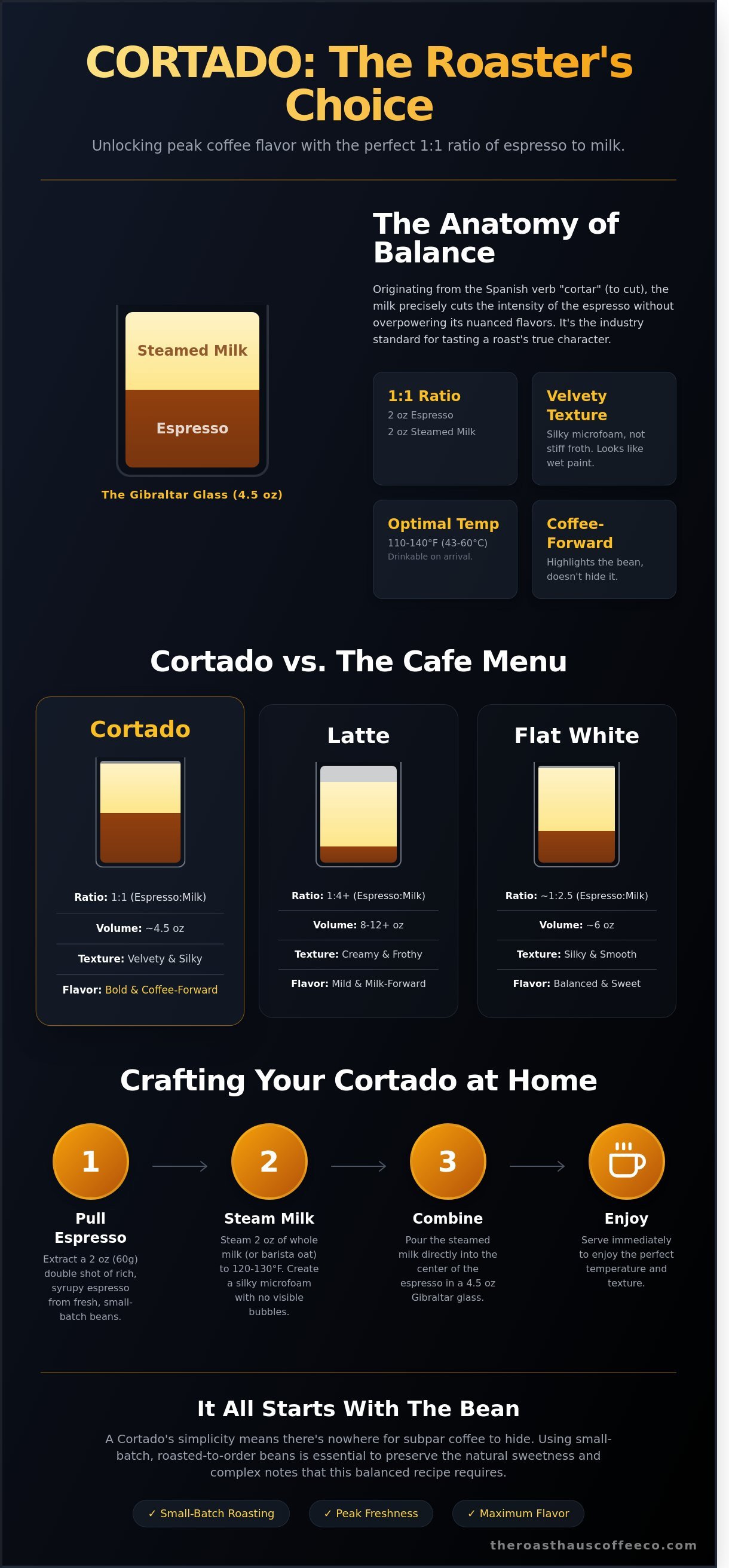
Cortado vs. Latte vs. Flat White: Understanding the Differences
Choosing the right drink means understanding how milk impacts the flavor of your small-batch beans. The cortado coffee sits at a specific point on the intensity scale. It provides a balance that larger milk drinks often lose. If you use high-quality beans roasted to order, you want to taste the origin notes without them being drowned in 8 ounces of steamed milk. The cortado ensures the coffee remains the hero of the cup.
Think of this as a spectrum of dilution. On one end, you have the straight espresso shot. On the other, you have the 12-ounce latte. The cortado is the "goldilocks" choice for those who want a creamy texture but still demand a strong coffee punch. In a 2023 industry report, over 65% of specialty coffee shops noted that customers are moving toward these smaller, 4-ounce drinks to better appreciate artisan roasting profiles. It's a move away from sugary, oversized beverages and back toward the craft of the roaster.
Cortado vs. Macchiato
The traditional Italian macchiato is a 2:1 ratio. It consists of a 2-ounce double shot of espresso "marked" with about 1 ounce of airy foam. It's the primary choice for purists who want the raw intensity of the bean with just a hint of dairy sweetness. The cortado uses a 1:1 ratio. It pairs 2 ounces of espresso with 2 ounces of flat, steamed milk. This extra milk cuts the sharp acidity of certain roasts, making it more approachable than a macchiato while remaining much bolder than a standard breakfast cup.
Cortado vs. Flat White and Latte
Volume is the main differentiator here. A cortado is strictly 4 ounces. A flat white typically measures 6 ounces, and a latte starts at 10 ounces and often goes up to 16 ounces in commercial chains. This volume change affects the dilution factor significantly. In a 12-ounce latte, the espresso makes up only about 16% of the drink. In a cortado, the espresso is 50% of the total volume. This high concentration ensures you experience the peak freshness and flavor potential of the coffee.
Texture also plays a role in the experience. A latte uses a thick layer of micro-foam, usually about 1 centimeter deep. A flat white uses a thinner layer of velvety micro-foam. The cortado uses milk that is steamed but not frothy. It's meant to be smooth and integrated. If you are learning How to Make a Cortado at home, remember that the goal is a silky consistency rather than a stiff foam. This lack of air allows the milk to blend perfectly with the oils in the espresso.
For the home brewer, the cortado coffee is a practical choice. Most home espresso machines struggle to steam large quantities of milk to the perfect temperature of 140 degrees Fahrenheit. Steaming just 2 ounces of milk for a cortado is faster and more consistent. It reduces waste and ensures every sip contains the full nutritional content and rich aroma of your freshly roasted beans. When you buy from a family-owned roaster, you want to taste the craft in every 4-ounce glass. These smaller drinks respect the effort put into the small-batch roasting process.
How to Make a Cortado at Home: A Step-by-Step Guide
Crafting a perfect cortado coffee at home requires more than just a standard espresso machine. It's a precise ritual that balances the intensity of a double shot with the silkiness of lightly steamed milk. You can't hide poor quality ingredients in a drink this small. Every element must be dialed in, from the temperature of your water to the age of your beans. This guide focuses on the technical steps needed to replicate a cafe-quality experience in your own kitchen.
Selecting Your Espresso Base
The foundation of your drink is the espresso. We recommend choosing medium to dark roasts, specifically beans from Mexico or Guatemala. These regions produce profiles with heavy chocolate and nutty notes that don't get lost when you add milk. Freshness is the most critical factor here. At The Roast Haus Coffee Co., we've found that beans are at their peak flavor potential between 3 and 14 days after roasting. Using a "roasted-to-order" bag ensures you get a thick, stable crema. This crema acts as the essential bridge between the coffee and the milk fats.
- The Grind: Use a high-quality burr grinder. Your grounds should feel like fine table salt.
- The Dose: Weigh out 18 grams of dry coffee for a standard double shot.
- The Yield: Aim for 36 grams of liquid espresso in a 25 to 30-second extraction window.
Mastering the Small-Batch Steam
Steaming milk for a cortado is different than steaming for a latte. You're working with a very small volume, usually about three ounces of milk. We suggest using a 12-ounce pitcher to give you better control over the steam wand's position. If your pitcher is too large, the wand will blow the milk out of the container before you can create a vortex. Precision is key to avoiding waste and achieving the correct texture.
Start the "stretching" phase immediately. Keep the tip of the steam wand just below the surface for only two seconds. You want to hear a few light chirping sounds. This creates a thin layer of microfoam rather than a thick, dry froth. Once the milk volume increases by about 10 percent, submerge the wand deeper and tilt the pitcher. This creates a whirlpool that incorporates the bubbles into a glossy, wet paint consistency. Use a digital thermometer to hit exactly 130°F. If you heat the milk to 150°F or higher, you'll scald the sugars and ruin the delicate balance of the cortado coffee.
The final step is the pour. Hold your 4.5-ounce glass at a slight angle and pour the milk into the center of the espresso. Keep the pitcher close to the surface to ensure the milk tucks under the crema. You aren't looking for complex latte art here. A simple white dot or a clean, integrated finish is the mark of a well-made cortado. The goal is a seamless blend where the first sip is as balanced as the last.
Ready to elevate your home barista game with beans that are actually fresh? Shop our roasted-to-order coffee collections today.
Why Artisan Beans from The Roast Haus Make the Best Cortado
A cortado coffee relies on a precise 1:1 balance of espresso and steamed milk. This specific ratio leaves no room for the bitter, flat flavors found in mass-produced coffee. Most grocery store beans sit on shelves for 120 to 180 days before they reach your kitchen. By that point, the organic compounds that create sweetness have vanished. At The Roast Haus Coffee Co., we use small-batch roasting to ensure the natural sugars in every bean are caramelized, not carbonized. This process highlights the inherent quality of the harvest rather than hiding it behind a burnt finish.
Our roasting facility in Oklahoma operates with a focus on precision and timing. We monitor internal bean temperatures to within 1 degree during the final stages of the roast. This level of control prevents the "baked" flavor profile common in large industrial roasters that process thousands of pounds per hour. When you prepare a 4-ounce drink, the quality of that 2-ounce double shot is everything. If the coffee is stale, the milk will only amplify the metallic or sour notes. When the beans are fresh, the milk transforms the espresso into a velvety, balanced treat.
Freshness is the Secret Ingredient
Oxidation begins the moment the roasting process ends. Research shows that within 14 days of roasting, a coffee bean loses roughly 40% of its aromatic intensity. For a drink like the cortado coffee, you need the thick, carbon-dioxide-rich crema that only fresh beans provide. This crema acts as the essential bridge between the sharp espresso and the creamy milk. Without it, the drink lacks the heavy mouthfeel that defines the experience.
Supporting our family-owned roastery means you are opting out of the traditional supply chain that prioritizes shelf life over taste. We operate on a "Roasted To Order" model. This means your coffee isn't sitting in a warehouse; it is likely still in the cooling tray when your shipping label is printed. We ship your beans the same day or the day after roasting to ensure they arrive at your door during the peak degasification window. This 3 to 5-day window after roasting is when the flavor potential is at its absolute maximum.
Recommended Origins for Cortado Lovers
Choosing the right bean changes the entire profile of your drink. While any bean can be pulled as espresso, certain origins interact better with the fats in steamed milk. We recommend these three specific options for your home setup:
- Kenya AA Supreme: This is for the enthusiast who wants a bright, acidic "cut" through the milk. It offers a 4.5 out of 5 acidity rating with distinct notes of blackcurrant and a wine-like complexity.
- Honduras Morning Splendeur: This bean provides a smooth, chocolatey finish. It is ideal for those who prefer a traditional, dessert-like richness where the coffee and milk meld into a cocoa-forward flavor.
- Ethiopia Limu: This origin delivers a floral, tea-like experience. It transforms the drink into something light and sophisticated, offering a 3 out of 5 body rating that feels elegant on the palate.
The Roast Haus Coffee Co. promise is built on transparency and local craftsmanship. Every bag we ship is a testament to our commitment to the craft. We don't use fancy jargon to distract from our process. We simply roast high-quality beans in small batches and get them to you faster than anyone else. When you buy from us, you get the best possible ingredients to perfect your craft at home.
Elevate Your Daily Brew
Mastering the perfect cortado coffee comes down to the balance of a 1:1 ratio and the quality of your ingredients. You've learned how the 4.5-ounce Gibraltar glass preserves the ideal temperature and how textured milk enhances the espresso without masking its profile. A great drink deserves beans that haven't sat on a shelf for months. We roast our coffee in small batches of less than 25 pounds to ensure every bean receives individual attention. As a family-owned business based in Oklahoma, we take pride in our craft. We ship every bag within 24 hours of roasting so you receive it at its peak flavor potential. Don't compromise on freshness when you're brewing at home. You can taste the difference that artisan roasting makes in every sip. It's time to bring that coffeehouse quality into your own kitchen with beans that are actually fresh. We're here to help you make every morning better.
Shop our freshly roasted-to-order beans and elevate your home cortado today!
Enjoy the process and keep perfecting your pour.
Frequently Asked Questions
Is a cortado stronger than a latte?
Yes, a cortado tastes significantly stronger than a latte because it contains less milk to dilute the espresso. While both drinks typically use a 2 ounce double shot of espresso, a latte adds 6 to 10 ounces of steamed milk. A cortado uses only 2 ounces of milk. This 1 to 1 ratio ensures you taste the specific flavor notes of our small-batch beans rather than just warm milk.
Can I make a cortado with a Nespresso or Keurig?
You can make a version of this drink at home using a Nespresso machine by selecting the 1.35 ounce espresso setting. Use two pods to get closer to the traditional 2 ounce base. Since a Keurig lacks the 9 bars of pressure required for true espresso, it produces a strong coffee concentrate instead. For the best cortado coffee experience, use 2 ounces of fresh, roasted to order beans ground specifically for espresso.
What is the best milk for a cortado?
Whole milk with a 3.5% fat content is the best choice for a balanced flavor and silky texture. The high fat content rounds out the acidity of the espresso without masking the roast's profile. If you prefer plant-based options, use a barista-edition oat milk. These are formulated with added fats to ensure the milk doesn't curdle when hitting the 160 degree Fahrenheit espresso produced by your machine.
Why is it called a Gibraltar in some coffee shops?
The name comes from the 4.5 ounce Libbey Gibraltar glass tumbler used to serve the drink. Blue Bottle Coffee popularized this term in San Francisco back in 2005. While the recipe remains a 1 to 1 ratio of espresso and milk, the glassware defines the name. We prefer focusing on the quality of the 100% Arabica beans inside the glass rather than the brand of the vessel.
Does a cortado have more caffeine than a regular cup of coffee?
No, a standard cortado contains less caffeine than a typical 12 ounce cup of drip coffee. A double shot of espresso provides roughly 136 milligrams of caffeine. In contrast, a 12 ounce serving of our roasted to order drip coffee contains about 210 milligrams. The cortado coffee feels more intense because you're consuming the caffeine in a smaller 4 ounce volume, but the total stimulant count is lower.
Can I order a decaf cortado?
You can absolutely enjoy a decaf version by using high-quality decaffeinated beans. We recommend beans processed via the Swiss Water method, which removes 99.9% of caffeine without using harsh chemicals. This process preserves the essential oils and flavor compounds of the coffee. It's a perfect choice for an evening drink that still offers the rich, artisan taste of a traditional espresso without the late-night jitters.
What is the difference between a cortado and a piccolo latte?
The main difference lies in the type of espresso shot and the milk texture. A piccolo latte uses a single 15 to 20 milliliter ristretto shot, while a cortado uses a full 60 milliliter double espresso. Piccolo lattes also feature more micro-foam, similar to a miniature cafe latte. The cortado has a flatter, more integrated milk texture. Because of the larger espresso volume, the cortado offers a more robust flavor profile.

