


Standing in the coffee aisle, faced with a wall of options, can be overwhelming. Words like 'single-origin,' 'light roast,' and 'Arabica' can feel like a foreign language, making it tempting to just grab the same old bag-only to be disappointed by another flat, bitter cup. We believe everyone deserves to drink truly great coffee. That journey begins with understanding how to choose the right coffee beans, and it’s simpler than you think. You don't need to be a professional barista to understand what makes a bag of beans special or why fresh, small-batch coffee tastes so much better.
This guide is here to cut through the noise. We're going to give you honest, practical advice from a roaster's perspective. We’ll explain the real differences between Arabica and Robusta, show you how roast levels directly impact flavor, and help you decode the jargon on any bag. By the end, you'll have the confidence to select beans that perfectly match your taste and finally brew the delicious, aromatic coffee you've been looking for at home.
Key Takeaways
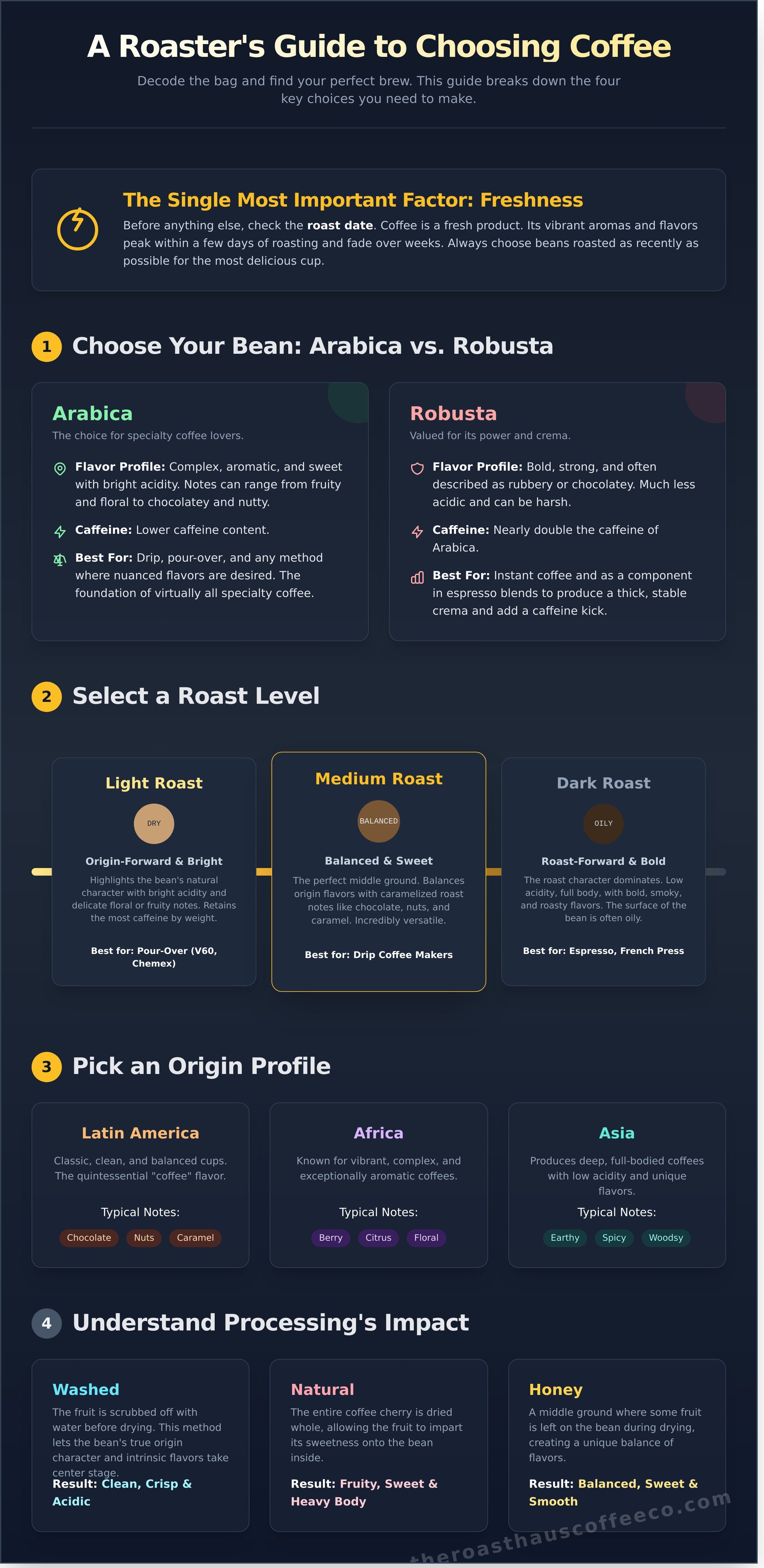
- Learn why the roast date is the single most important factor for delicious coffee, even more than origin or roast level.
- Choose the right coffee beans for your taste by understanding the fundamental differences between smooth Arabica and bold Robusta.
- Understand how the roast level unlocks flavor, so you can pick between bright, acidic notes or a rich, bold body.
- Discover whether single-origin or blended coffee is the right choice to match your personal flavor preference.
What Are Coffee Beans? The Journey from Seed to Cup
Before we can talk about flavor notes and brewing methods, we have to start at the source. Many people are surprised to learn that coffee beans aren't beans at all-they are the seeds found inside a small, red fruit called a coffee cherry. The journey of these special seeds is what creates the incredible range of flavors you find in your cup. It all starts with understanding what a coffee bean is and where it comes from.
The entire character of a coffee is shaped long before it reaches our roaster. Three key factors determine its initial flavor potential: the plant species it comes from, the region where it was grown, and the method used to process it after harvest. Getting these three things right is the foundation of all specialty coffee.
The Two Main Players: Arabica vs. Robusta
There are many species of coffee, but two dominate the market. Specialty coffee is almost always 100% Arabica. Grown at high altitudes, Arabica beans have a bright acidity and a huge range of complex aromatic flavors. Robusta is a hardier plant with nearly double the caffeine. It has a bold, strong, and sometimes harsh flavor, which is why it's typically used for instant coffee and as a component in espresso blends to produce a thick crema.
Where Coffee Beans Grow: The Importance of Origin
Coffee plants are picky. They only thrive in a specific equatorial region known as the 'Bean Belt.' The unique environment of each farm-its soil, climate, and altitude, collectively known as terroir-has a massive impact on flavor. This is why single-origin coffee beans are so distinct.
- Latin America: Often delivers balanced, clean cups with notes of chocolate, nuts, and caramel.
- Africa: Known for bright, fruity, and floral flavors like berry and citrus.
- Asia: Typically produces deep, earthy, and spicy coffees with a full body.
How Processing Affects Flavor: Washed, Natural, and Honey
Once picked, the coffee cherry's fruit must be removed to get to the seed inside. The method used dramatically changes the final taste.
- Washed Process: The fruit is scrubbed off with water before drying. This creates a clean, crisp, and acidic cup that lets the origin's true character shine.
- Natural Process: The entire cherry is dried first, allowing the fruit to impart its sweetness onto the seed. This results in a heavy-bodied, sweet, and very fruity cup.
- Honey Process: A middle ground where some, but not all, of the fruit is left on during drying. It produces a beautifully sweet and balanced cup with a smooth mouthfeel.
From Green to Brown: Understanding Coffee Roast Levels
Raw, green coffee beans have almost none of the flavor we associate with a morning brew. The magic happens in the roaster. Roasting is a craft where heat transforms the bean's internal chemistry, developing hundreds of aromatic compounds. Think of it like toasting a slice of bread: the longer it's heated, the more the sugars caramelize and the flavor profile deepens and changes. This stage is a critical part of the bean's entire journey from seed to cup, and the roast level is the single most significant factor determining how your coffee will taste.
LIGHT → MEDIUM → DARK
(Bright & Fruity) → (Balanced & Sweet) → (Bold & Roasty)
Light Roast: Bright, Acidic, and Origin-Forward
A light roast is all about celebrating the bean itself. The goal is to highlight the unique flavors of its specific origin-the soil, climate, and altitude where it was grown. These roasts let the bean's natural character shine through with bright, crisp acidity and notes that are often fruity or floral.
- Appearance: Light brown, cinnamon color with a dry, non-oily surface.
- Flavor: High acidity, delicate body, with floral, berry, and citrus notes.
- Best For: Pour-over methods like a V60 or Chemex that showcase its nuanced flavors. It also retains the most caffeine by weight.
Medium Roast: Balanced, Sweet, and Aromatic
This is the sweet spot for many coffee drinkers and is often considered the standard American roast. A medium roast has a perfect balance between the bean's origin flavors and the deep, caramelized notes developed during the roasting process. It offers a fuller body than a light roast without the intense, smoky character of a dark roast.
- Appearance: Medium brown color with little to no oil on the surface.
- Flavor: A smooth, balanced cup with notes of caramel, chocolate, and nuts.
- Best For: An incredibly versatile choice, perfect for drip coffee makers and a great all-day coffee.
Dark Roast: Bold, Roasty, and Low Acidity
For those who love a rich, intense, and powerful cup, the dark roast delivers. Roasted until the natural oils rise to the surface, these beans offer bold, roasty flavors that dominate the cup. The bean's origin characteristics are almost entirely replaced by the flavors of the roast itself, resulting in low acidity and a heavy body.
- Appearance: Dark brown to nearly black, with a shiny, oily surface.
- Flavor: Low acidity, heavy body, with smoky, bittersweet, and dark chocolate flavors.
- Best For: Traditional espresso blends and French press, where its bold character stands up well to milk and sugar.
Single Origin vs. Blends: Which Is Right for You?
When you shop for specialty coffee, you'll see two main categories: single origin and blends. Understanding the difference is the first step to finding a coffee you'll truly love. One isn't better than the other-they simply offer two different experiences. A single-origin coffee tells the story of one specific place, while a blend is a carefully crafted flavor profile created by the roaster.
Exploring Terroir with Single-Origin Coffee
Single-origin means the coffee comes from one specific farm, cooperative, or region within a country. Think of it like a fine wine-its flavor is a direct reflection of its "terroir," the unique combination of soil, altitude, and climate where it was grown. Every step in the coffee's journey from seed to cup leaves a distinct mark on the final taste. These coffees often have bright, exotic, and distinct flavor notes-from the fruity, wine-like acidity of an Ethiopian Yirgacheffe to the rich, earthy notes of a Sumatran. We often use a lighter roast for single origins to let these unique characteristics shine. If you enjoy variety and want to taste the world of coffee, single origin is for you.
The Art of Consistency: Why Roasters Create Blends
A blend is a thoughtful mix of coffee beans from different origins. As roasters, our goal with a blend is to create a specific, balanced, and consistent flavor profile that you can enjoy time and time again. We might combine a bean with bright acidity with another that has a heavy, chocolatey body to create a perfectly rounded cup. Blends are often designed for a specific purpose, like a rich and syrupy espresso blend that produces amazing crema, or a smooth house blend that’s your perfect daily drinker. If you find a flavor you love and want that same reliable experience every morning, a blend is an excellent choice.
How to Choose: Adventurous vs. Consistent
The right choice comes down to your personal preference. There is no wrong answer, only what you enjoy most.
- Choose single origin if: You are adventurous, enjoy tasting new and sometimes surprising flavors, and want to explore how geography impacts taste.
- Choose a blend if: You value consistency, prefer a balanced and predictable flavor profile, and want a reliable go-to coffee for your daily routine.
Ultimately, the best way to find out what you like is to try both. We roast all our coffee to order, ensuring maximum freshness whether you choose a single origin or a blend. Explore our single-origin and blended coffees.
The Secret to Great Coffee: Why Freshness Matters Most
After you’ve selected the perfect origin and roast profile, one final factor determines whether your coffee will be spectacular or just average: freshness. More than any other variable, the freshness of your coffee beans dictates the flavor in your cup. Coffee is not a shelf-stable pantry item; it’s a perishable product, much like fresh bread or produce. It has a limited window for peak flavor, and understanding this is the key to unlocking a truly exceptional coffee experience.
The Enemy of Flavor: Oxidation and Stale Coffee
The moment coffee roasting is complete, a clock starts ticking. The beans begin to release carbon dioxide (a process called degassing) and interact with oxygen in the air. This interaction, known as oxidation, is the primary enemy of flavor. Oxygen breaks down the delicate aromatic oils and soluble compounds that give coffee its incredible complexity. The result is stale coffee that tastes flat, woody, and generically bitter, losing all the unique notes of its origin.
Look for a 'Roasted On' Date, Not a 'Best By' Date
When you buy coffee from a large grocery store, you’ll often find a "Best By" or "Use By" date stamped on the bag. This date can be months, or even a year, in the future and tells you almost nothing about when the coffee was actually roasted. A true specialty roaster provides a 'Roasted On' date. This is the only date that matters.
- 'Roasted On' Date: Tells you the exact day the beans were roasted, giving you full transparency.
- Peak Flavor Window: Coffee is generally at its best between three days and four weeks after roasting.
Always look for the 'Roasted On' date. It’s the clearest sign that a roaster is committed to quality and freshness.
The Roast Haus Promise: Roasted to Order for Peak Flavor
We built our entire process around delivering peak freshness. "Roasted to order" isn't a marketing slogan for us-it's our promise. It means your coffee doesn't even exist until you click the buy button. We don't have bags of roasted coffee sitting on a shelf waiting for a home. When we receive your order, we roast your beans, pack them, and ship them directly to you, often on the same day.
This method guarantees that the coffee beans you receive are at the absolute beginning of their flavor journey. It’s the difference between eating bread baked this morning versus one that's been in a warehouse for a month. To experience coffee the way the roaster intended, with its full aromatic potential and vibrant flavor, it must be fresh. Experience the roasted-to-order difference for yourself.
Start Your Fresh Coffee Journey
You've journeyed from seed to cup, learning how roast levels and bean origins shape your brew. But the most important lesson is simple: freshness is everything. The flavor difference between a bag that's sat on a shelf for weeks and freshly roasted coffee beans is something you can truly taste in every single sip.
At The Roast Haus Coffee Co., we live by that principle. As a family-owned artisan roastery, we source exceptional beans from the world's best coffee regions. We don’t roast until you order, and we ship within 24 hours. This isn't just a promise; it's our commitment to delivering coffee at its absolute peak freshness and flavor.
Ready to elevate your morning ritual? Discover our selection of freshly roasted-to-order coffee beans. Your perfect cup is waiting. Happy brewing!
Frequently Asked Questions About Coffee Beans
How long do coffee beans last after opening?
For the best flavor, we recommend using your whole beans within 2 to 4 weeks of the roast date. While they won't spoil like milk, they will lose their distinct aroma and taste due to oxidation. This process happens much faster with ground coffee. That's why we roast to order-to get the freshest possible beans into your hands so you can enjoy them at their absolute peak. Don't let great coffee go stale.
Should I buy whole bean or ground coffee?
We will always recommend buying whole bean coffee. The moment you grind coffee, you expose much more surface area to oxygen, and the flavor begins to degrade rapidly. Grinding your beans just before you brew is the single most important step you can take to experience the full, vibrant taste our roasters intended. It preserves the delicate aromas and complex flavors that make specialty coffee special. It's a simple change that makes a huge difference.
What's the difference between espresso beans and regular coffee beans?
There is no specific type of bean called an "espresso bean." The term simply refers to a roast profile-often a bit darker-that is developed to taste great when brewed as espresso. These roasts are designed to have lower acidity and higher solubility for the high-pressure method. However, any high-quality coffee bean can be used to pull a delicious shot of espresso. It all comes down to the roaster's craft and your personal preference.
How should I store my coffee beans to keep them fresh?
To protect your beans from their enemies-oxygen, light, heat, and moisture-store them in an airtight, opaque container. Keep it in a cool, dark place like a pantry, not next to the oven. Please, do not put your coffee in the refrigerator or freezer. The condensation creates moisture, and the beans can absorb unwanted odors. Proper storage is simple and protects the quality we worked so hard to create for you.
Is expensive specialty coffee really worth the price?
We believe it is. The price of specialty coffee reflects the incredible amount of work that goes into it. It pays for higher quality green beans from farmers who use sustainable practices, and it supports the craft of a skilled roaster. You are paying for a superior product with complex, clean flavors you won't find in commodity coffee. It’s an investment in a better tasting cup and supports a chain of passionate, family-owned businesses.
Can I use any coffee bean for any brewing method?
Absolutely. You can use any coffee beans for any brewing method, from French press to pour-over. The most critical factor is using the correct grind size for your brewer. However, certain roast profiles and origins will shine more in different methods. A bright, fruity light roast might be incredible as a pour-over but too acidic as espresso. We encourage you to experiment to find the perfect pairing for your palate and your gear.

