


Why does a $22 bag of "artisan" beans often taste just as flat as the supermarket brand you bought last month? It's a frustrating reality for many, especially when 74% of coffee drinkers say they prefer a premium taste but don't know how to find it. Finding truly high quality coffee isn't about fancy labels or gold-leaf packaging; it's about the time elapsed since the roast. Most beans sit in warehouses for 120 days before they reach your kitchen, losing their vital oils and nutritional content long before you take your first sip.
We know you're tired of settling for bitter, stale cups that don't live up to the hype. You deserve a morning ritual that actually tastes like the "glorious aroma" promised on the bag. This guide will show you how to stop wasting money on stale beans and start brewing cafe-standard coffee at home. We'll walk you through the science of small-batch roasting and give you a clear framework for identifying premium beans that are roasted to order for peak flavor potential in 2026.
Key Takeaways
- Stop guessing at the grocery store and learn how to identify true specialty-grade beans using professional SCA scoring and bag checklists.
- Discover how the science of oxidation affects your beans and how to hit the "sweet spot" of flavor by understanding the degassing period.
- Learn to brew high quality coffee like a professional by mastering water chemistry and avoiding the common mistakes that ruin premium beans.
- See why a commitment to "Roasted-to-Order" artisan beans makes all the difference in delivering peak freshness and nutritional value to your cup.
Defining High Quality Coffee: Beyond the Marketing Labels
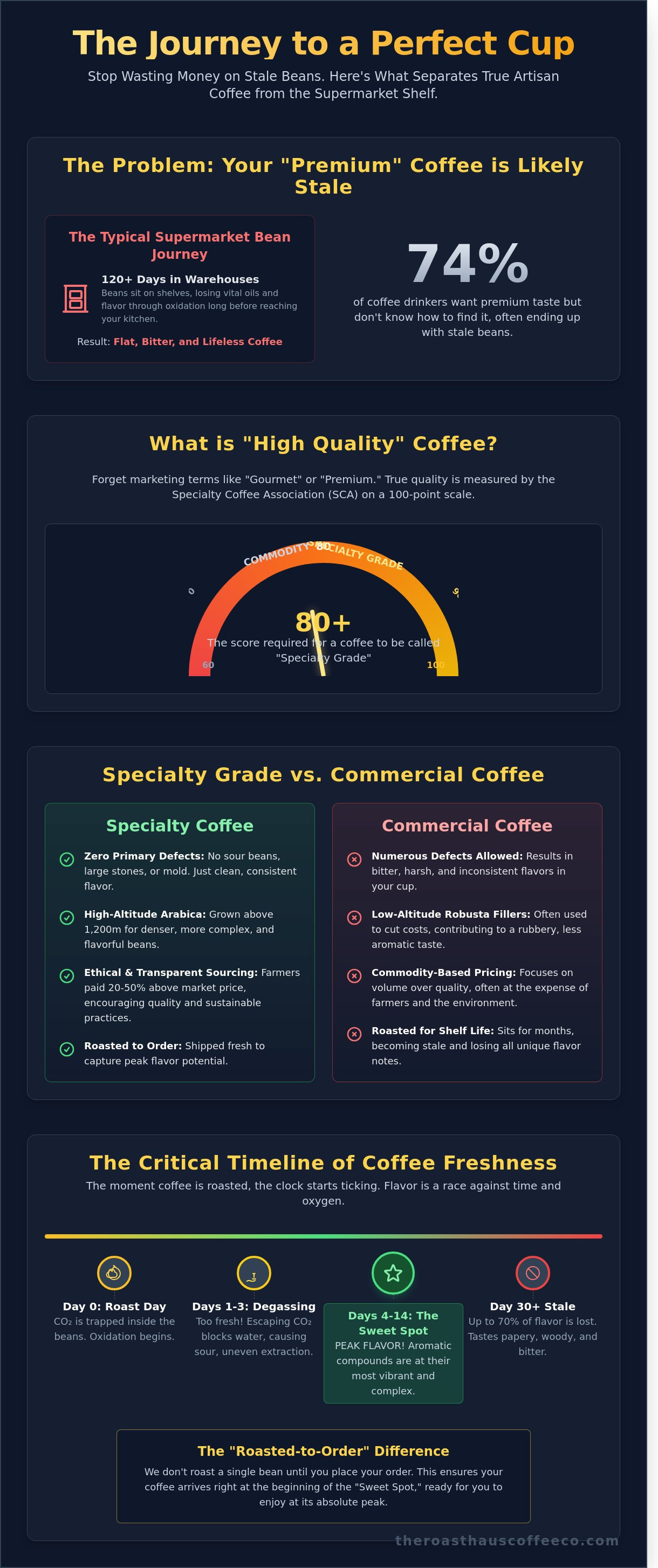
Walk into any grocery store and you'll see bags covered in words like "premium," "gourmet," or "select." These terms don't actually mean anything in the professional coffee world. Real high quality coffee is defined by a rigorous, standardized scoring system. To earn the title of "specialty grade," beans must score 80 points or higher on a 100-point scale. This system, known as the Specialty Coffee Association standards, ensures that the coffee you drink is free from major defects and possesses distinct flavor characteristics. If a coffee scores a 75, it's considered commodity grade. If it scores an 85, it's an exceptional product that reflects the hard work of the farmer and the roaster.
At The Roast Haus Coffee Co., we see "Artisan" as a specific set of actions, not a marketing buzzword. It's a process that begins with sourcing and ends with our "roasted to order" promise. It means we focus on small-batch production where every roast is monitored for precision. It's about transparency. When coffee sits on a warehouse shelf for 6 months, it loses its soul. True quality requires a direct line from the farm to the roaster to your cup. We don't hide behind vague labels. We focus on the craft of bringing out the best in every bean.
Specialty Grade vs. Commercial Coffee
The biggest difference between specialty and commercial coffee is how defects are handled. In a 350-gram sample of specialty green beans, zero primary defects are allowed. This means no sour beans, no black beans, and no large stones. Commercial coffee, which makes up about 80% of the global market, allows for numerous defects that lead to bitter, inconsistent flavors. High quality coffee beans are almost always high-altitude Arabica, grown above 1,200 meters. These beans are denser and more flavorful than the low-altitude Robusta fillers found in mass-market cans. A premium unroasted bean looks uniform in size and color, which shows the care taken during the sorting process at the mill. We choose beans that pass these strict physical inspections because we know they'll produce a cleaner, sweeter cup.
The Role of Terroir and Ethical Sourcing
Terroir is a term that describes how the environment shapes a crop. For coffee, this includes volcanic soil, specific rainfall patterns, and the cooling effect of high altitudes. These factors create the unique notes of blueberry, jasmine, or chocolate that we love. Single-origin beans are the hallmark of quality because they highlight the terroir of one specific farm or region rather than masking it in a blend. When you taste a coffee from the Huila region of Colombia, you're tasting that specific soil and climate.
Ethical sourcing is directly tied to the flavor in your mug. When farmers are paid a premium, often 20% to 50% above the C-market commodity price, they can afford the labor-intensive practices required for high-quality crops. This includes hand-picking only the ripest red cherries rather than strip-harvesting everything at once. Better pay leads to better farming, which results in the high quality coffee we're proud to roast. Supporting these farmers ensures the future of specialty coffee and helps small family-owned businesses thrive across the globe.
The Critical Link Between Freshness and Coffee Quality
Freshness is the foundation of every bag of high quality coffee. It isn't just a marketing buzzword; it's a biological and chemical reality. The moment a coffee bean finishes the roasting process, it begins a slow descent into staleness. This happens primarily through oxidation. Oxygen reacts with the delicate volatile oils inside the bean, turning those flavorful fats rancid. If these oils degrade, the vibrant notes of stone fruit, cocoa, or jasmine disappear, replaced by a flat, papery taste that no amount of cream or sugar can fix.
There is a specific timeline for peak flavor known as the degassing period. During roasting, coffee beans build up significant amounts of carbon dioxide. For the first 48 to 72 hours after roasting, the beans release this gas rapidly. If you brew coffee during this window, the escaping gas actually blocks water from penetrating the grounds, which leads to uneven extraction. The sweet spot for flavor usually begins around day four and lasts until day 14. After this two-week mark, the aromatic compounds that define high quality coffee start to dissipate. By day 30, even the best beans lose about 70% of their original flavor complexity.
To truly understand the difference, you have to look at how the coffee is handled before it reaches your kitchen. Most mass-produced brands focus on logistics and shelf life rather than the sensory experience. We believe that a transparent roasting date is the only way to prove a product's worth. When you understand how to choose quality coffee, you realize that the "Roasted On" date is the most important piece of information on any label.
The Problem with Grocery Store Coffee Shelves
Grocery stores prioritize convenience and inventory management over actual taste. Most national brands use "Best By" dates that are set 12 months into the future. This is highly misleading because coffee is a perishable food product, not a canned good. By the time a bag reaches the shelf, it has likely spent 60 to 90 days sitting in a distribution center or a hot warehouse. Many of these brands also use clear packaging or bags with windows. Exposure to UV light and oxygen in these containers accelerates the breakdown of lipids and destroys the bean's structure. Warehouse storage is the ultimate enemy of artisan flavor because it subjects the beans to temperature swings and prolonged stagnation.
The 24-Hour Roasting-to-Shipping Window
The "Roasted-to-Order" philosophy is our solution to the staleness found in big-box retail. By shipping coffee within 24 hours of roasting, we ensure the beans arrive at your door just as they enter their peak flavor window. This tight turnaround is only possible through small-batch roasting. We roast in quantities under 50 pounds, which allows for 100% manual control over the heat application. This precision prevents scorching and preserves the richer nutritional content and antioxidants naturally found in the beans.
When you choose to buy fresh roasted coffee from a family-owned business, you're supporting a process that values craft over volume. Small-batch roasting ensures that every bean is heated evenly, locking in the sugars and acids that create a superb cup. This direct-to-consumer model eliminates the weeks of warehouse transit that ruin standard coffee. It's a simple, honest approach that guarantees you never have to settle for a dull, bitter morning brew again.
How to Identify High Quality Coffee Beans Like a Pro
Identifying high quality coffee starts with a transparent label. If a bag doesn't tell you exactly where the beans came from or when they were roasted, you're likely buying a commodity product that's been sitting in a warehouse for months. Professional buyers look for specific data points that prove the coffee's pedigree. We rely on the Specialty Coffee Association grading scale to separate average beans from the elite. Any coffee scoring 80 points or higher is considered specialty grade, meaning it's free of primary defects and offers a distinct flavor profile that reflects its environment.
Use this checklist every time you shop for beans to ensure you're getting the best possible product:
- Roast Date: Look for a specific date, not an expiration date. Freshness peaks between 7 and 21 days after roasting.
- Specific Origin: High quality coffee lists the country, region, and often the specific farm or washing station.
- Elevation: Look for "MASL" (Meters Above Sea Level). Numbers above 1,200 indicate slower growth and more complex sugars.
- Varietal: Names like Bourbon, Typica, or Geisha tell you the specific subspecies of the Arabica plant.
Tasting notes are another critical indicator. When a roaster lists "citrus," "jasmine," or "dark chocolate," they aren't describing added flavors. These are natural aromatic compounds found within the bean itself. Bright, acidic notes like lemon or green apple usually point to high-altitude African beans. Heavier, sweet notes like brown sugar or cocoa are typical of Central and South American origins. If the label only uses vague terms like "bold" or "smooth," the roaster might be hiding a lack of character behind a generic profile.
Decoding the Label: Origin, Altitude, and Process
Altitude creates density. At 1,500 to 2,000 meters, the air is thinner and cooler, forcing the coffee cherry to mature slowly. This results in a hard, dense bean packed with flavor precursors. Our Kenya AA Supreme is a perfect example of how high altitude produces a vibrant, complex cup. Processing also matters. Washed coffees are fermented and scrubbed, resulting in a clean, bright taste. Natural processing dries the bean inside the fruit, which imparts heavy body and intense berry-like sweetness.
Understanding Roast Profiles and Bean Integrity
Don't fall for the trap that dark roast means stronger coffee. Strength is about the ratio of grounds to water in your brewer, not the color of the bean. Light roasts are difficult to master because they leave the bean's original character exposed. Artisan roasters use small-batch techniques to reach the "first crack" without scorching the exterior. This preserves the delicate acids and oils. If you see beans that are oily, black, and smell like carbon, the roaster likely used high heat to mask defects in low-grade, cheap coffee.
Before you grind, take a handful of beans and look at them closely. High quality coffee beans should be uniform in size and color. If you see a mix of light and dark beans in a single-origin bag, the roast was inconsistent. Check for "quakers," which are pale, underdeveloped beans that didn't caramelize; these taste like paper or peanuts and ruin a brew. A well-roasted bean has a clean, matte appearance or a very slight sheen. It should feel firm, not brittle or crumbly. When you find beans that meet these standards, you've found a product crafted with care rather than mass-produced for a shelf.
Maximizing Quality: Brewing High-End Beans at Home
You've invested in high quality coffee. Don't ruin it with poor technique. Even the best artisan beans taste flat if you ignore the science of extraction. Most home brewers make three fatal errors: using unfiltered tap water, grinding too early, and using boiling water. These mistakes strip away the delicate flavor profiles we work hard to preserve during our small-batch roasting process. You need a consistent routine to honor the craft that goes into every bag.
The Importance of the Grind and Storage
Grinding your beans just before you brew is a non-negotiable rule for freshness. Coffee begins to oxidize and lose its aromatic oils within 15 minutes of being ground. If you buy pre-ground coffee, you've already lost 60% of the flavor potential before the bag reaches your kitchen. Use a burr grinder rather than a blade grinder. Burr grinders use two revolving abrasive surfaces to crush beans into uniform particles. Blade grinders chop beans unevenly, creating "fines" that over-extract and "boulders" that under-extract. This inconsistency creates a cup that's simultaneously bitter and sour. Store your whole beans in an opaque, airtight container. Keep this container in a cool, dark pantry. Avoid the refrigerator; the moisture and odors there will destroy the beans' integrity.
Water Chemistry and Temperature Control
Your cup is 98% water. If your water tastes like chlorine or heavy minerals, your coffee will too. Use filtered water to ensure the 1,000 plus chemical compounds in the bean can shine. Temperature is equally critical for a balanced extraction. Keep your water between 195°F and 205°F. If the water is 212°F, it scorches the grounds. This causes over-extraction, which results in a harsh, burnt taste that masks the bean's natural sweetness. If the temperature is below 195°F, you'll miss out on the body and acidity, leaving you with a thin, disappointing cup. Precise temperature control is the difference between a generic caffeine fix and a professional-grade experience.
One step people often skip is the bloom. When you first pour water over fresh grounds, they will bubble and expand. This is the release of carbon dioxide. We roast our beans to order, so they arrive at your door full of these gases. If you don't let the grounds "bloom" for 30 to 45 seconds before your main pour, the gas prevents water from penetrating the coffee. This results in an uneven, weak brew. A proper bloom ensures every drop of water extracts the rich, complex notes you paid for.
When you look for scales, kettles, or filters, think small. Choosing accessories from family-owned businesses mirrors the care we put into our roasting. It supports a community of craftsmen who value quality over mass production. This "support small business" mindset ensures that every tool in your kitchen is built to last and designed for excellence. High quality coffee deserves high quality equipment.
Ready to put your brewing skills to the test with the freshest beans available? Shop our roasted-to-order collections now and taste the difference that artisan craftsmanship makes.
The Roast Haus Difference: Artisan Quality from Our Family to Yours
Finding high quality coffee shouldn't feel like a gamble. At The Roast Haus Coffee Co., we've removed the guesswork by keeping our operation small, family-owned, and strictly focused on freshness. Based in Wyandotte, Oklahoma, our husband-and-wife team handles every aspect of the process. We don't believe in letting beans sit on a warehouse shelf for 6 months like big-box brands. Instead, we follow a simple rule: we roast your beans only after you place your order. This ensures you receive your coffee at its absolute peak flavor potential, often shipping the very same day or the morning after roasting.
Our commitment to quality starts at the source. We've developed a global sourcing strategy that brings the world's best beans from over 12 distinct growing regions to our Oklahoma doorstep. We select specialty-grade beans from high-altitude farms in Ethiopia, where heirloom varieties offer floral and citrus notes, to the rugged mountains of Honduras, known for chocolatey and nutty profiles. By sourcing from these specific regions, we can guarantee a 100% Arabica product that meets the rigorous standards of the specialty coffee industry. You aren't just buying a beverage; you're supporting a transparent supply chain that values the craft of the farmer as much as the skill of the roaster.
Small-Batch Roasting in Wyandotte, Oklahoma
We roast in small batches to maintain total control over the heat and airflow. This meticulous care allows us to highlight the unique characteristics of every bean. Because we're a local US roaster, your coffee doesn't spend weeks in transit or stuck in customs. It moves from our roaster to your front door in an average of 3 to 5 business days. Supporting our small business means you get a world-class product without the corporate markup or the stale taste of mass production.
Our artisan approach means we're personally involved in every roast profile. We monitor the first crack and the development time with precision, ensuring that a light roast stays bright and a dark roast remains bold without becoming bitter. This level of attention is impossible at a commercial scale. When you brew a cup of our coffee, you're tasting the results of a craft that a husband-and-wife team has perfected through thousands of individual roasts. We take pride in knowing our customers by name and providing a level of service that matches the excellence of our beans.
A Curated Selection for Every Palate
If you're new to the world of specialty beans, we recommend the All Day Sampler to experience our most popular profiles. For those who want the flavor without the caffeine, our Swiss Water Process decaf provides a 99.9% chemical-free experience that preserves the bean's natural integrity. Every bag we sell is a testament to our passion for the craft.
Ready to experience the difference that fresh roasting makes? Don't settle for grocery store beans that lost their soul months ago. Join our family of coffee lovers and taste what happens when high quality coffee is treated with the respect it deserves. Shop our fresh-roasted collection now and enjoy the richest, most flavorful cup you've ever brewed at home.
Take Control of Your Morning Cup
Finding high quality coffee shouldn't be a guessing game. You now have the tools to identify fresh beans and the techniques to brew them with precision at home. Remember that quality starts with a clear roast date. Most beans lose their peak flavor profile within 14 days of roasting; sourcing from a transparent provider is essential for brewing excellence in 2026.
We take this commitment to freshness seriously. The Roast Haus Coffee Co. is a family-owned artisan roastery that prioritizes small-batch quality control for every single order. We don't let our beans sit in a warehouse for months. Instead, your coffee is shipped within 24 hours of roasting to ensure it arrives at your door with its full flavor potential intact. You'll taste the difference that 100% dedication to the craft makes in every sip. It's time to stop settling for stale, mass-produced beans and start enjoying the rich experience you deserve.
Experience Peak Freshness: Shop Our Roasted-To-Order Beans
We're excited to be part of your journey toward a better brew and look forward to roasting your next favorite bag.
Frequently Asked Questions
What is the difference between gourmet and specialty coffee?
Specialty coffee is a technical grade that requires a score of 80 points or higher on the 100 point Specialty Coffee Association scale. Gourmet is a marketing term with no legal definition or quality standards. While gourmet brands might use decent beans, specialty beans must have zero primary defects per 300 grams. We focus on specialty grades because they guarantee a level of care that commercial labels simply can't match.
How long does high quality coffee stay fresh after roasting?
High quality coffee stays at its peak flavor for 7 to 21 days after the roast date. Once 30 days pass, oxidation removes nearly 60% of the volatile aromatics that give the beans their unique character. We roast to order and ship within 24 hours to ensure you receive the product during this critical window. This timeline ensures you experience the full flavor potential before the oils start to go stale.
Why is single-origin coffee considered better than blends?
Single-origin coffee is prized because it highlights the specific terroir and flavor profile of one farm or region. Blends often combine beans from 4 or 5 different countries to create a consistent, repeatable taste or to lower production costs. When you drink a single-origin bean from Ethiopia, you're tasting the specific jasmine and citrus notes of that soil. It's a transparent way to experience the craftsman's work without hiding behind a mix.
Does high quality coffee have more caffeine?
High quality coffee actually contains about 40% less caffeine than lower grade commercial beans. Most premium roasters use 100% Arabica beans, which average 1.2% to 1.5% caffeine content. Cheaper industrial coffees use Robusta beans that reach 2.7% caffeine but taste bitter and rubbery. You're paying for a complex flavor and a smooth finish rather than a harsh chemical kick that leads to jitters.
Can I find high quality coffee in a grocery store?
It's very difficult to find high quality coffee in a grocery store because most bags sit on the shelf for 90 to 180 days. Freshness is the most important factor for quality, and large supply chains aren't built for the speed that artisan roasting requires. We ship our beans the same day or the day after roasting so they arrive at your door at their absolute peak. Always check for a "roasted on" date rather than a "best by" date.
What does the "Kenya AA" grade actually mean?
Kenya AA refers to the physical size of the bean, specifically those that pass through a screen size of 17 or 18, which is about 7.2 millimeters. It's the largest grade available in the Kenyan auction system and often fetches the highest prices. Larger beans generally contain more essential oils that produce a heavier body and more intense acidity. While size doesn't always guarantee flavor, it's a reliable indicator of meticulous sorting and processing.
Is organic coffee always higher quality?
Organic certification doesn't guarantee a higher flavor score, as it focuses on the absence of synthetic pesticides rather than the taste profile. A coffee can be certified organic but only score a 75 on the quality scale, making it a lower grade than many non-certified beans. Many small, family-owned farms produce 88 point coffee using traditional methods but can't afford the 5,000 dollar annual certification fee. We prioritize the actual cupping score and the farmer's sustainable practices.
How much should I expect to pay for truly artisan coffee?
Expect to pay between 18 and 30 dollars for a 12 ounce bag of truly artisan coffee. This price reflects the 300% premium paid over the standard commodity market price to ensure farmers earn a living wage. It also covers the labor of small-batch roasting where we monitor every 15 second interval of the process. When you buy at this price point, you're supporting a small business and getting a product that was handled with individual care.

