


You're likely throwing away 30% of your coffee's flavor potential simply because your water is 5 degrees too hot or your grind is slightly too fine. It's frustrating to spend $22 on a bag of fresh, small-batch beans only to have them taste like burnt toast and cause stomach irritation. If you're tired of wasting money on premium beans, learning how to avoid bitter coffee is the fastest way to improve your morning. At Roast Haus Coffee Co., we've helped over 1,500 home brewers fix this exact problem by focusing on the fundamentals of extraction.
This master guide reveals the professional secrets to unlocking the natural sweetness hidden in your beans so you can finally stop masking the flavor with heavy cream. You'll learn how to calibrate your water to exactly 202 degrees, select the right grind size for your specific brewer, and understand why bold flavor doesn't have to mean a bitter cup. We're going to give you the confidence to brew like a pro. Let's get your morning routine back on track with a balanced brew you can be proud of.
Key Takeaways
- Master the extraction curve to move past harshness and find the natural sweetness hidden in your beans.
- Learn how to avoid bitter coffee by mastering two simple variables: your grind size and your water temperature.
- Stop the cycle of oxidation and stale oils by understanding how fresh, small-batch roasting preserves delicate flavors.
- Troubleshoot your specific brewing equipment to fix the hidden errors in your French Press or Pour Over routine.
- Discover why starting with a naturally bold, artisan-roasted bean is the easiest way to eliminate burnt tastes.
Why Is My Coffee Bitter? Understanding the Science of Extraction
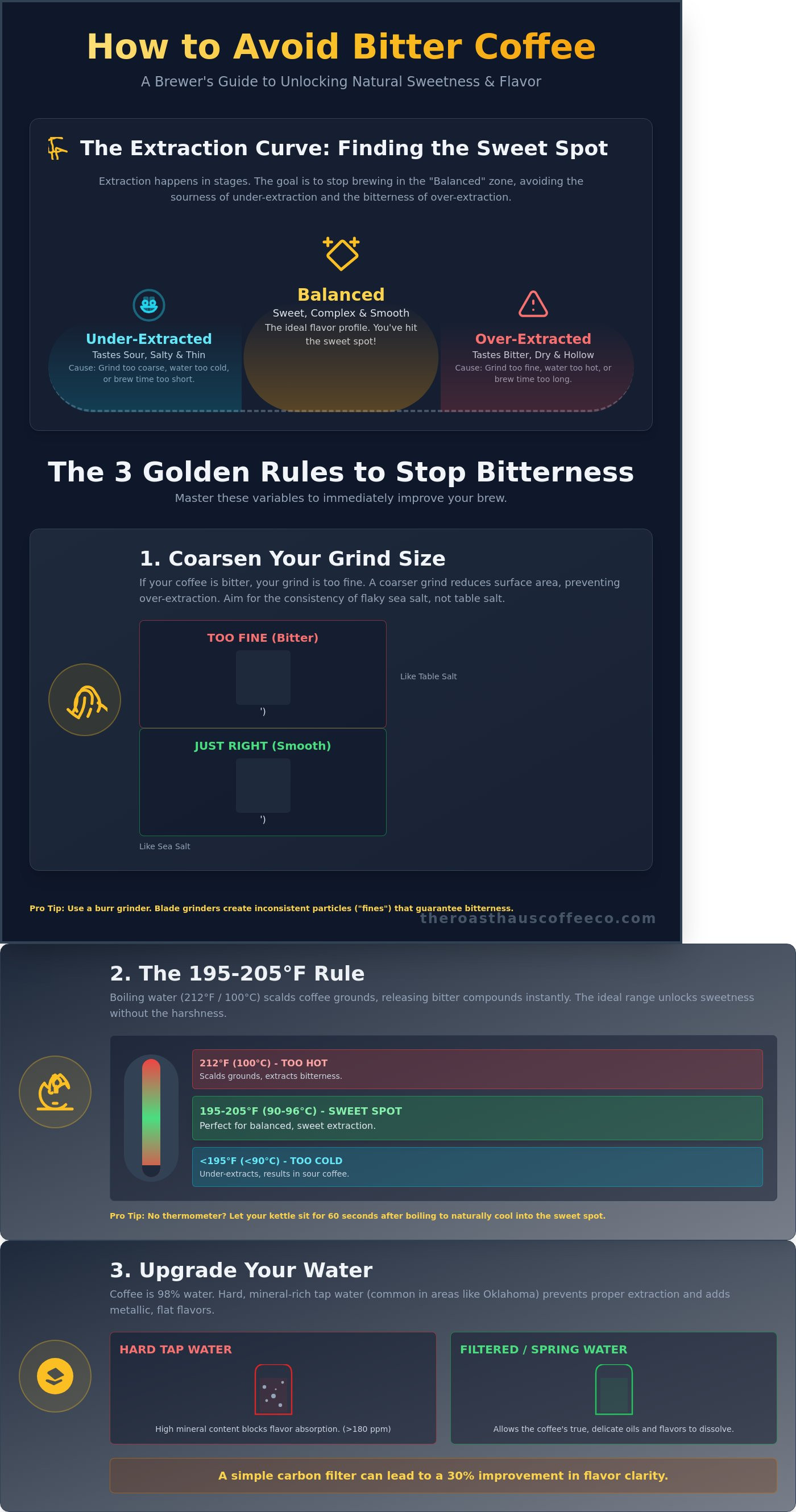
Bitterness is usually the result of over-extraction. This happens when you pull too many organic compounds out of the coffee bean during the brewing process. To learn how to avoid bitter coffee, you need to master the science of coffee extraction. When hot water meets coffee grounds, it dissolves flavor compounds in a specific sequence. It starts with fruit acids, moves to sweetness and oils, and ends with heavy, bitter fibers.
Professional roasters use an extraction curve to find the perfect balance. This curve follows a simple path:
- Under-extraction: The coffee tastes sour, thin, or salty.
- Balanced extraction: The coffee is sweet, complex, and smooth.
- Over-extraction: The coffee tastes bitter, dry, and hollow.
Three main culprits usually cause over-extraction. First is excessive heat. Water temperatures above 205 degrees Fahrenheit extract flavors too aggressively. Second is time. A brew that lasts 6 or 7 minutes when it should have taken 4 will almost always taste harsh. Third is surface area. If your coffee is ground too fine, the water has too much access to the internal fibers of the bean, pulling out flavors that should have stayed inside.
The Difference Between Bitter and Sour Coffee
Knowing the difference between these two flavors helps you fix your brew. Sourness causes a sharp, "pucker" sensation on the sides of your tongue. Bitterness creates a dry, acrid feeling at the very back of your throat. Light roasts often taste sour if they aren't extracted enough. Dark roasts, which are often roasted for 13 minutes or more, lean toward bitterness because the heat has already begun to break down the bean's cell structure. Identifying this sensation is key to learning how to avoid bitter coffee in your own kitchen.
What Is Over-Extraction?
Over-extraction is the point where water dissolves the woody, fibrous structures of the coffee bean. This stage of brewing releases heavy tannins and chlorogenic acids that produce a burnt, chemical taste. Even the highest quality, small-batch beans will taste unpleasant if they are over-extracted. It's important to distinguish this from "bold" flavor. A bold cup is simply intense and concentrated; a bitter cup is chemically imbalanced and harsh on the palate.
The 3 Golden Rules to Make Coffee Less Bitter Immediately
Bitterness happens when you pull too much from the bean. This is called over-extraction. If you want to learn how to avoid bitter coffee, you must control how water interacts with your grounds. Start with a 1:16 coffee-to-water ratio. This specific balance prevents the water from working too hard on too few grounds, which usually results in a harsh, dry finish. Mastering these three variables will transform your morning routine from a chore into a craft.
Coarsening Your Grind for a Smoother Cup
Think of your coffee grounds like salt. If your coffee tastes bitter, your grind is likely too fine, resembling standard table salt. This fine texture creates a massive amount of surface area, allowing water to strip away every compound, including the ones you don't want. Switch to a coarser setting that looks more like flaky sea salt. You need a burr grinder for this. Blade grinders are inconsistent and create "fines," which are tiny dust particles that turn your cup bitter instantly. If your brew is sharp today, move your grinder exactly one click coarser tomorrow. Using freshly roasted artisan beans makes these small adjustments much easier to detect in the final cup.
The 200-Degree Rule: Stop Using Boiling Water
Boiling water is the enemy of a smooth brew. When water hits 212°F, it scalds the delicate oils in the bean and forces the release of heavy, bitter compounds. You should aim for a temperature between 195°F and 205°F. This 10-degree window is where the best flavors live. If you don't own a digital thermometer, let your kettle sit for 60 seconds after it reaches a full boil. This 60-second pause naturally drops the temperature into the safe zone. It's a simple way to protect the natural sweetness of a small-batch roast without buying extra equipment.
Fixing Your Water Quality (The Oklahoma Context)
Water makes up 98% of your coffee. If your water tastes bad, your coffee will too. In Oklahoma, tap water often has high mineral hardness, sometimes exceeding 180 parts per million (ppm). This high mineral content makes coffee taste flat or metallic. Don't use straight tap water if you want a clean profile. Switch to a basic carbon filter or bottled spring water. You'll notice a 30% improvement in flavor clarity immediately because the water can finally absorb the coffee's oils instead of fighting against local minerals. Using filtered water is one of the easiest ways to understand how to avoid bitter coffee at home.
Why Stale Beans and Oxidation Lead to Harsh Flavors
Bitter flavors often start long before you pour water over your grounds. Many home brewers blame their technique when the real culprit is actually rancid coffee oils. Coffee contains delicate lipids that begin to oxidize the moment they leave the roaster. This chemical reaction, known as oxidation, degrades organic compounds and replaces sweet, complex notes with a harsh, metallic bite. If you want to know how to avoid bitter coffee, you must first look at the age of your beans. Most bags found on grocery store shelves were roasted 90 to 180 days ago. By the time you bring them home, the peak flavor window has already closed.
The 'Roasted-to-Order' Difference
At The Roast Haus Co., we reject the standard warehouse model. We roast in small batches and ship your order within 24 hours of roasting. This ensures you receive beans at their absolute peak of freshness. Freshly roasted coffee retains its natural sugars and aromatic oils, which create a balanced sweetness that naturally masks perceived bitterness. It is helpful to think of coffee as a perishable produce item. Just like a loaf of artisan bread or a ripe peach, its quality drops by roughly 50% within the first 14 days after roasting. When you choose roasted-to-order beans, you get 100% of the nutritional antioxidants and flavor potential intended by the farmer.
How to Properly Store Your Beans
Proper storage is your second line of defense against a bad cup. Four enemies destroy coffee quality: air, light, heat, and moisture. We recommend keeping your beans in an airtight, opaque container at a room temperature between 68 and 72 degrees Fahrenheit. Don't put your coffee in the freezer. Opening a frozen bag introduces moisture that causes immediate condensation on the beans, leading to freezer burn and flat, papery flavors. For the best results, use the packaging we provide. Our bags feature a one-way degassing valve. This allows carbon dioxide to escape without letting oxygen in, which is the most effective way how to avoid bitter coffee caused by premature staling.
- Air: Oxygen speeds up the breakdown of flavor compounds.
- Light: UV rays cause photodegradation of the bean's structure.
- Heat: High temperatures accelerate chemical reactions that lead to staleness.
- Moisture: Humidity can lead to mold and ruined oils.
Troubleshooting Your Specific Brewing Equipment
Learning how to avoid bitter coffee requires a deep look at your specific tools. Even the freshest beans from our small-batch roastery can't survive poor equipment habits. Your gear should highlight flavor, not hide it under a layer of burnt sediment or old oils.
The French Press 'Sludge' Problem
Bitterness in a French Press usually comes from "the sludge." If you leave coffee in the press after plunging, the water continues to extract flavors from the grounds. This turns a rich, artisan cup into a bitter mess within 120 seconds. You must decant your coffee into a separate carafe immediately after the 4-minute brew time. Use a very coarse, consistent grind that looks like sea salt. If your grounds are too fine, they'll pass through the mesh filter and create a gritty, harsh texture that ruins the experience.
Drip Machines: The Heating Element Trap
Most home drip machines use a glass pot sitting on a hot plate. This plate often stays between 175 and 185 degrees Fahrenheit, which literally cooks your coffee after it's brewed. This constant heat destroys the delicate flavor profiles we work hard to preserve during our roasting process. Switch to a thermal carafe to keep your coffee hot without adding heat. Additionally, 15% of bitterness issues in drip machines stem from mineral scale buildup. Descale your brewer every 30 days with a vinegar solution to ensure water flows at the correct speed and temperature.
Cleanliness is your best defense against "old coffee" bitterness. Coffee oils are organic and eventually turn rancid. If you don't scrub your carafe, filter basket, and showerhead every week, those old oils will contaminate your fresh brew. A clean machine ensures you only taste the roasted to order freshness of the beans.
- French Press: 4 minutes total. Decant immediately to stop extraction.
- Pour Over: 2.5 to 3 minutes. If it takes longer, your grind is too fine.
- Standard Drip: 5 to 6 minutes. Slower flow indicates a need for descaling.
- Aeropress: 1.5 to 2 minutes. Short contact time prevents over-extraction.
We take pride in our craft as a family-owned business. We want you to taste every note of our hard work. Experience the difference of peak freshness by exploring our small-batch roasted to order coffee selection today.
Start Fresh: How The Roast Haus Eliminates Bitterness
You can master every brewing technique in this guide, but you can't fix a bean that was ruined during the roasting process. Our Kenya AA Supreme is a prime example of a coffee that stays smooth despite its bold profile. While many commercial brands rely on over-roasting to hide low-quality beans, we select high-altitude varieties that naturally lack harshness. These beans offer a bright, clean finish with notes of berries and citrus. Learning how to avoid bitter coffee is much simpler when your ingredients aren't burnt before they reach your kitchen.
The Benefits of Small-Batch Roasting
Mass-produced coffee often tastes bitter because industrial machines roast 500 pounds of beans at a single time. This creates uneven heat and "hot spots" that scorch the bean surface while the inside remains underdeveloped. At our family-owned facility, we roast in precise 12-pound batches. This artisan approach means we monitor the temperature every second to prevent scorching or charring. We prioritize quality over quantity in every bag we seal. Shop our fresh-roasted beans and taste the difference for yourself.
A Supportive Community of Coffee Lovers
Our commitment to quality is why we stay rooted in Wyandotte, Oklahoma. Local residents can even choose pickup options to get their coffee just 4 hours after it leaves the roaster. For our customers across the country, we follow a strict "Roasted To Order" policy. This means your coffee is shipped same or day after roasting to guarantee peak flavor potential and richer nutritional content. If you're still exploring your palate, try "The All Day Sampler" to test three distinct roast levels and find your perfect match.
We want you to love your morning routine. If your brew still tastes off after following these steps, reach out to our team with your questions. We'll help you troubleshoot your grind size or water temperature. The journey from bitter to better coffee is easier with a trusted artisan in your corner. By starting with fresh, small-batch beans and using the right techniques, you'll never have to settle for a mediocre cup again.
Start Brewing Smoother Coffee Today
Learning how to avoid bitter coffee starts with mastering your extraction. You've seen how adjusting your grind size and water temperature can fix harsh flavors in just 1 brew. However, even the best technique can't save stale, oxidized beans. Most grocery store coffee sits on a shelf for 3 to 6 months before it reaches your kitchen. By then, the natural oils have turned rancid and lost their inherent sweetness.
At The Roast Haus Coffee Co., we do things differently. We operate as a family-owned business in Oklahoma, focusing on small-batch artisan quality. We guarantee your coffee is shipped within 24 hours of roasting. This ensures you get peak flavor and the richest nutritional content possible. You don't have to settle for burnt or bitter tastes anymore.
Stop settling for bitter coffee; order your Roasted-to-Order bag today!
Freshness is the secret to a smooth cup. We're proud to help you enjoy the craft of coffee as much as we do.
Frequently Asked Questions
Why does my coffee taste bitter even with milk and sugar?
Milk and sugar only mask flavor; they don't remove the bitter chemical compounds like phenylindanes created during over-extraction. If your brew water was above 205 degrees Fahrenheit, you've likely pulled out harsh tannins from the grounds. Use a thermometer to keep your water between 195 and 205 degrees. This simple change is the best way to learn how to avoid bitter coffee at the source. It's about getting the extraction right from the start.
Can I fix coffee that is already brewed and tastes bitter?
You can neutralize bitterness in a brewed cup by adding a tiny pinch of salt, roughly 0.1 grams or just a few grains. Sodium ions block the bitter receptors on your tongue more effectively than sugar does. This trick works because it chemically interferes with how your brain perceives the liquid. It won't make a bad roast perfect, but it saves a cup that would otherwise go to waste. It's a quick fix for a common problem.
Is dark roast coffee naturally more bitter than light roast?
Dark roast coffee is naturally more bitter because the longer roasting process breaks down chlorogenic acid into bitter-tasting phenylindanes. A French Roast reaches temperatures near 464 degrees Fahrenheit, which carbonizes the sugars. Light roasts stop around 400 degrees, preserving more acidity and floral notes. Choosing a medium roast often provides a balance for those who find dark roasts too harsh. It's a matter of chemistry and roast duration.
Does the type of coffee filter I use affect the bitterness?
Paper filters remove oily compounds like cafestol and kahweol that can contribute to a heavy, sometimes bitter mouthfeel. Metal mesh filters allow these oils and fine sediments to pass through into your cup. If you find your coffee too sharp, switching to a high-quality bleached paper filter can reduce sediment by 95 percent. This creates a cleaner, more focused flavor profile in every brew you make at home. It's a simple equipment swap.
How much coffee should I use per cup to avoid a harsh taste?
Use 2 tablespoons of ground coffee for every 6 ounces of water to maintain a proper extraction ratio. This 1:17 golden ratio prevents the water from over-extracting the grounds. When you use too little coffee, the water washes out the bitter fibers of the bean. Measuring by weight with a scale is 10 times more accurate than using a scoop. It ensures consistency every morning and prevents that thin, acrid taste.
Can old coffee beans cause bitterness?
Old coffee beans develop bitterness as the natural oils oxidize and turn rancid after about 30 days. Freshness is the most important factor, which is why we focus on a roasted to order model. Coffee peaks in flavor between day 3 and day 14 after roasting. Once you hit the 30 day mark, the delicate aromatics vanish. This leaves behind only the harsh, woody flavors that ruin your morning cup.
Does a dirty coffee maker make coffee taste bitter?
A dirty machine ruins flavor because old coffee oils and mineral scale build up on the heating element and internal tubes. These residues undergo oxidation and impart a rancid, acrid taste to fresh water. You should descale your machine with a vinegar solution or commercial cleaner every 90 days. Learning how to avoid bitter coffee starts with keeping your equipment in 100 percent clean condition. Don't let old residue spoil a fresh batch.

