


The best wholesale coffee partner isn’t necessarily the one with the biggest menu or the loudest claims. For an Oklahoma café, restaurant, or other business, the right choice is coffee that tastes right to your customers and supports consistent day to day service. Knowing how to choose a wholesale coffee partner in Oklahoma starts with looking beyond a sample cup.
A sample tells you about flavor, but it does not show how a coffee performs during a busy service or how well the supplier’s offer fits your inventory routine. Use a practical checklist to assess menu fit, roast information, repeatability, ordering details, and the local connection you value. These steps help you compare what matters to your business instead of relying on a sales pitch.
The Roast Haus Coffee Co. is a family owned roastery in Wyandotte, Oklahoma, producing small batches of coffee roasted to order. It sells bulk roasted beans to commercial accounts and local coffee shops. This guide explains what to evaluate and how to match a roaster’s coffee selection to your customers’ preferences, so you can build a wholesale relationship that works for your business.
Key Takeaways
- Start with your menu, customers, and service needs to define what a wholesale coffee partner must deliver.
- Taste coffee using the preparation method your business serves, then assess flavor, roast information, and consistency.
- Compare fulfillment and partnership terms alongside coffee quality. Treat stated details separately from general expectations.
- Use this checklist for how to choose a wholesale coffee partner in Oklahoma, from defining needs to making a practical fit assessment.
- Consider how The Roast Haus’s family owned, Wyandotte roots and small batch, roasted to order approach align with your freshness priorities.
How to choose a wholesale coffee partner in Oklahoma: start with your business
Your coffee partner affects more than what’s in the cup. The beans you serve shape your menu, the rhythm of daily service, and the impression customers take with them. Oklahoma cafés, restaurants, offices, and other commercial accounts have different needs, so define yours before comparing roasters.
A wholesale coffee partner is a recurring business supplier that provides roasted coffee for ongoing commercial service. The term Wholesaling describes the business model of supplying goods for resale or business use. For a coffee business, the relationship is about having roasted beans for regular service, rather than simply buying consumer bags in bulk.
What should an Oklahoma business expect from a wholesale coffee relationship?
Start with the core need: roasted beans that suit your business and a supply arrangement that supports regular service. A café may need coffee that works across espresso drinks and brewed coffee, while an office may prioritize an approachable option employees enjoy. Product fit and clear fulfillment details matter alongside a roaster’s Oklahoma roots. The Roast Haus Coffee Co., a family owned roastery in Wyandotte, sells bulk roasted beans to commercial accounts and local coffee shops.
Set your coffee and service priorities before comparing roasters
Write down what your business serves and what your customers are likely to prefer. A restaurant serving brewed coffee at the table has different menu needs from a café making espresso based drinks. Consider the flavor profile you want, such as a familiar, balanced cup or a more distinctive coffee that gives customers something new to try. Also decide whether you need one dependable house coffee or a choice of coffees for different drinks and preferences.
- Map your menu: List the coffee drinks and service occasions you need to support. Identify which coffees will be brewed, served as espresso, or offered as decaf.
- Think about customer preferences: Consider whether your regulars tend to favor straightforward coffee, bolder flavors, or decaf choices. Use customer feedback and sales patterns where available.
- Estimate usage patterns: Review your own sales, service periods, and seasonal changes so your ordering discussions reflect actual business needs.
These priorities help you compare coffee for its role in your business, not just its name or origin. For more context on flavor and bean selection, read this beginner’s guide to choosing coffee beans. Use your menu and customer preferences to decide what to taste and assess. That is the practical foundation for how to choose a wholesale coffee partner in Oklahoma.
Evaluate Oklahoma wholesale coffee partners on quality, freshness, and consistency
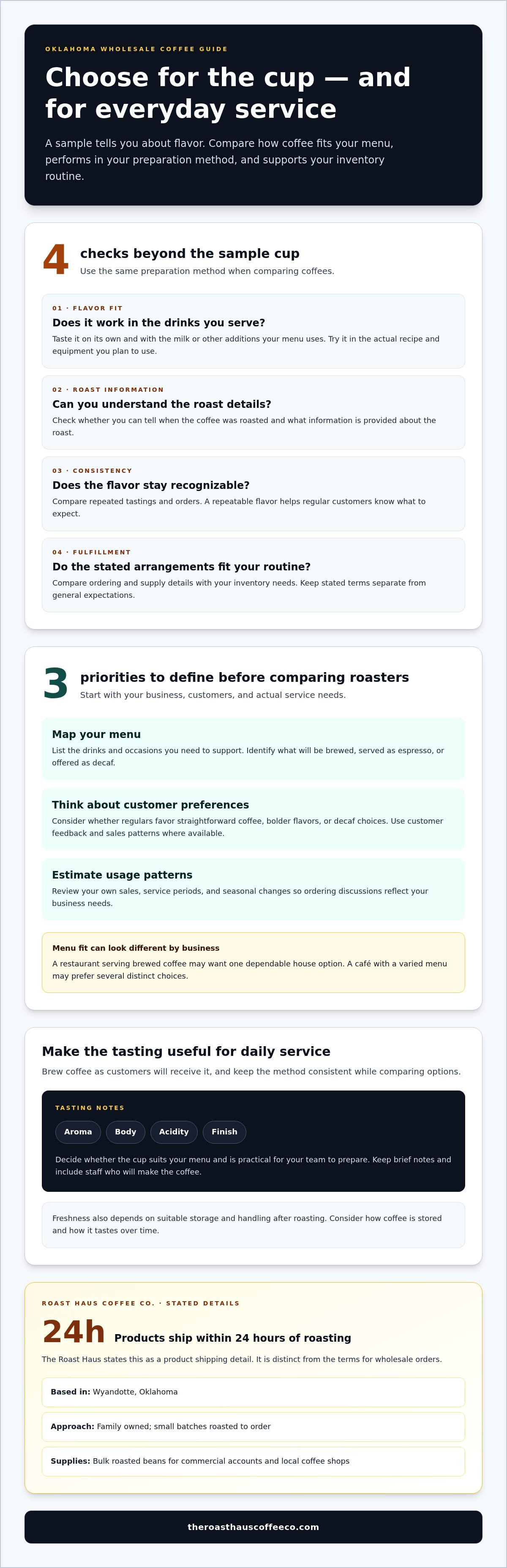
A coffee label can suggest what to expect, but tasting the coffee in your own service style gives you better evidence. Brew it as customers will receive it, whether that means drip coffee, espresso, or another preparation. Keep the method consistent as you compare options. Note aroma, body, acidity, and finish, then decide whether the cup suits your menu and is practical for your team to prepare.
Use a simple comparison to keep your evaluation grounded in the details that affect daily service:
| Factor | What to assess |
|---|---|
| Flavor fit | Does the coffee taste right in the drinks you serve? Does it work on its own and with any milk or other additions your menu uses? |
| Roast information | Can you understand when the coffee was roasted and what information is provided about the roast? |
| Consistency | Does the flavor remain recognizable across repeated tastings and orders? |
| Fulfillment | Do the stated ordering and supply arrangements suit your inventory routine? |
Match coffee selection to your Oklahoma business’s menu
Compare each coffee with the drinks and service style you already offer. A restaurant serving brewed coffee may want one dependable house option; a café with a varied menu may prefer several distinct choices. Test the coffee in the actual recipe and equipment you plan to use, since the same beans can taste different when prepared in different ways. Judge each candidate by the cup, not just the origin or tasting notes on a label. A guide to making coffee at home can also help explain why preparation matters.
A repeatable flavor profile helps regular customers know what to expect every time they order. That familiarity supports a reliable customer experience and makes it easier for staff to serve the same standard from day to day. If more than one person prepares coffee, include them in tastings so the choice works for the people who will make it.
Assess freshness and consistency without assuming supplier terms
Roast dates help you understand when beans were roasted. Freshness also depends on suitable storage and handling after roasting, so consider how the coffee is stored and how it tastes over time. The Roast Haus roasts small batches to order and states that its products ship within 24 hours of roasting. This product shipping detail is distinct from the terms for wholesale orders.
Keep brief tasting notes and record staff or customer feedback as you use the coffee. If the cup changes, note the roast information and preparation conditions before deciding what caused the difference. A roaster’s values may matter too; this study discusses environmental and social responsibility in the coffee sector. For a closer look at available coffees, explore The Roast Haus coffee selection as you consider what fits your business.
Compare wholesale coffee partnership fit, not just the headline offer
A compelling offer matters only if it works for your business over time. Compare the coffee itself, the consistency of the selection, and whether the supplier’s stated fulfillment details suit your inventory routine. A headline price or broad promise of support cannot replace a product that fits your menu and customers.
How does a local Oklahoma roaster compare with a distant supplier?
The Roast Haus Coffee Co. is based in Wyandotte, Oklahoma, and is family owned and operated. Its local, independent identity gives Oklahoma buyers useful context about the business behind the coffee. The roastery sells bulk roasted beans to commercial accounts and local coffee shops. A local connection may be important to your business, but location alone does not determine whether a coffee suits your menu or how its supply arrangements fit your operation. Let the cup and your operating needs lead the comparison.
Which partnership details matter to your operation?
Compare the information available about each coffee selection, ordering process, fulfillment, and partnership terms. Match those details with the way your business manages stock. A café with changing demand may weigh ordering cadence differently from an office with a steadier routine. Review contract terms, order minimums, and support details as specific parts of an offer, rather than assuming they are the same across suppliers.
| Area to compare | Questions for your business |
|---|---|
| Coffee selection | Does the available range suit your menu, and can you maintain a consistent selection? |
| Fulfillment information | Are the stated ordering and supply details compatible with your inventory planning? |
| Contract and minimums | What terms are explicitly stated, and how do they fit your purchasing plans? |
| Partnership support | What support is specifically described, and is it relevant to your operation? |
Keep facts separate from assumptions. Record any stated support options or ordering terms as part of that supplier’s offer. The same applies to contract requirements and order minimums. This makes comparisons fair and helps you avoid choosing based on a perk that does not address your actual needs.
Use your tasting notes and inventory planning to assess the whole relationship. A local connection can add meaning, but quality, selection, and practical fulfillment should carry the decision. That is the heart of how to choose a wholesale coffee partner in Oklahoma: compare the details that matter to your business and base your choice on what is stated and what you have tested.
Use this checklist to choose a wholesale coffee partner in Oklahoma
A clear process helps turn tasting notes and supplier information into a decision you can stand behind. Use these five steps to compare coffee and business fit without letting a persuasive offer outweigh what your operation actually needs.
- Define your needs. Write down your menu, customer preferences, and how you will serve the coffee. Decide whether you need one house coffee or several options, and consider your usage patterns.
- Compare coffee by taste. Taste each coffee using the preparation method your business intends to serve. Keep preparation consistent, record flavor, and assess how well each option fits the menu. Do not judge by branding or origin descriptions alone.
- Review freshness and fulfillment. Look at available roast information, consistency across tastings, and the provider’s stated ordering and supply details. Compare those details with how your business plans and replenishes inventory.
- Assess the wholesale offering. Compare the coffee and stated wholesale terms with your operating needs. Distinguish explicitly described contract terms, minimums, or support from assumptions about what a supplier may provide.
- Make the decision. Use your tasting results and business requirements to choose the option that best balances the cup with your day to day operation.
Turn the tasting and comparison into a business decision
Keep a simple record for each coffee: who tasted it, how it was prepared, what the tasters noticed, and whether the intended customers liked it. A café might include the staff who prepare the drinks; a restaurant could gather feedback from the people responsible for its coffee service. Record the recipe and preparation method with the feedback so you can compare results on equal terms.
Separate essentials from preferences before making the final decision. Flavor fit and dependable supply should carry more weight than an assumed low price or an appealing but unspecified benefit.
| Decision category | Examples |
|---|---|
| Essential requirements | Suitable taste for your menu, a consistent product selection, and stated fulfillment details that align with your inventory planning. |
| Preferences | A local connection, a particular origin profile, or other qualities that matter to your business but are not necessary for daily service. |
The right supplier fits both the cup and your business’s operating rhythm. If you’re ready to consider an Oklahoma roastery with wholesale coffee partnerships, explore The Roast Haus.
Build an Oklahoma wholesale coffee partnership with The Roast Haus
Choosing a wholesale roaster is ultimately about finding coffee you’re proud to serve and a supply relationship that makes sense for your business. The Roast Haus Coffee Co. brings an independent Oklahoma perspective to that decision, with a family owned operation rooted in Wyandotte and wholesale sales to commercial accounts and local coffee shops.
What makes The Roast Haus relevant to Oklahoma business buyers?
The Roast Haus began as a kitchen hobby in 2014 and grew into a commercial roasting operation. Today, the family owned roastery produces coffee in small batches and roasts to order. Its wholesale sales give businesses a local roaster to consider for their coffee program.
Local identity is one part of the fit, not the whole decision. Use your menu and customer preferences to assess the coffees available. The Roast Haus’s coffee selection includes options such as Kenya AA Supreme, Ethiopia Limu Organic, Honduras Morning Splendeur, and Decaf Swiss Water Process. Consider whether the flavor of a coffee complements what you serve, whether it suits your intended menu, and how it performs with your own preparation method. A roastery’s origins and process can inform your evaluation, but the finished cup should lead it.
Take the next step toward a better coffee program
Bring your evaluation back to the priorities that matter in daily service: taste, consistency, freshness, and operational fit. Small batch, roasted to order production aligns with a freshness focused approach, but your own tastings and the fulfillment details that apply to your business should inform the final choice. Consider how a coffee performs across repeated preparations and how the wholesale offering fits your inventory routine.
If you’re deciding how to choose a wholesale coffee partner in Oklahoma, start with the cup, then weigh the practical details and the value of working with an independent local business. Explore a wholesale coffee partnership with The Roast Haus and consider how its coffee can fit your Oklahoma business.
Choose coffee that works for your business
The strongest wholesale relationship starts with coffee your customers enjoy and continues with a supply arrangement that fits your operating rhythm. Taste each option as you serve it, assess consistency over time, and weigh freshness and fulfillment details alongside local connection. Those practical checks are at the heart of how to choose a wholesale coffee partner in Oklahoma.
The Roast Haus Coffee Co. is family owned and operated in Wyandotte, Oklahoma, with wholesale sales to commercial accounts and local coffee shops. It roasts small batches to order, and its products ship within 24 hours of roasting. Use your menu and customer preferences to assess which coffees suit your business.
Ready to explore a local, independent roaster for your coffee program? Explore a wholesale coffee partnership with The Roast Haus. A thoughtful match can help you serve a cup your customers look forward to.
Frequently Asked Questions
How do I choose a wholesale coffee supplier in Oklahoma?
Start with the coffee your business needs and the customers you serve. To learn how to choose a wholesale coffee partner in Oklahoma, taste options using your intended preparation method, review roast and freshness information, and assess consistency and fulfillment details. Local context can matter, but it should not replace product fit. The Roast Haus is a family owned roastery in Wyandotte with wholesale sales to commercial accounts and local coffee shops.
What should I look for in a wholesale coffee partner?
Look for coffee that suits your menu and customers, clear roast and freshness information, and a selection that fits your operation. Compare the supplier’s stated fulfillment details with your inventory planning. Taste coffee using the method you intend to serve, then record feedback. Contract terms, order minimums, training, and equipment are provider specific details, so base your comparison on stated information and the needs of your business.
Is a local Oklahoma coffee roaster a good wholesale partner?
A local roaster can bring a relevant Oklahoma connection, but location alone does not establish whether the coffee fits your business. Compare flavor, consistency, freshness information, and fulfillment details with your needs. The Roast Haus is based in Wyandotte, Oklahoma, and sells bulk roasted coffee to commercial accounts and local coffee shops. Consider its local identity alongside the product and operational criteria that matter to your day to day service.
How can a business assess wholesale coffee quality before choosing a supplier?
Taste the coffee using the preparation method your customers will experience. Keep the brew method consistent and note the flavor, aroma, and body. Invite staff or a small group of customers to share feedback, then compare each coffee against your menu rather than judging by the bag label alone. Repeat the tasting when useful, recording preparation details so you can tell whether the coffee continues to suit your business.
What does roasted-to-order coffee mean for a wholesale buyer?
Roasted to order means coffee is roasted in response to orders rather than relying only on stock prepared well in advance. This approach can support freshness focused purchasing, but it does not define delivery timing or wholesale terms by itself. The Roast Haus roasts small batches to order and says its products ship within 24 hours of roasting. That stated product shipping detail is distinct from the terms for wholesale orders.
Can a small Oklahoma coffee roaster supply a business consistently?
A roaster’s size alone does not show whether its coffee and fulfillment will suit your operation. Review the available product range, roast and freshness information, and wholesale details against your business needs. The Roast Haus is a commercial roastery in Wyandotte with wholesale sales to local coffee shops and other commercial accounts. Focus on product fit and stated information rather than assumptions about what a roaster’s size means for consistency.
How much does wholesale coffee cost in Oklahoma?
There is not one reliable Oklahoma wide figure for wholesale coffee. Pricing can depend on the coffee, order details, and provider terms, so compare offers using the product and fulfillment information relevant to your business. Avoid judging an offer by a per pound figure alone, since it may not reflect the full fit for your operation.

