


Most people don't actually hate black coffee; they just hate the taste of stale, over-roasted beans masked by artificial chemicals. If you've ever winced at the harsh bitterness or stomach acidity of a standard cup, it's natural to reach for heavy syrups. However, learning how to make coffee taste good without creamer isn't about forcing yourself to endure a bad drink. It's about uncovering the complex, natural sweetness that high quality, artisanal beans already possess.
We agree that your morning ritual should be a source of genuine pleasure, not a struggle against poor quality. You deserve a cup that is smooth and flavorful enough to stand on its own. This guide will show you how to eliminate bitterness by focusing on freshness and the SCA Golden Cup Standard. We will walk through the best ways to improve your extraction technique and introduce clean, healthy additives that enhance flavor without the chemicals. You'll soon understand exactly why your current coffee tastes bland and how to unlock a truly superior brewing experience.
Key Takeaways
- Learn to distinguish between harsh, burnt bitterness and the bright, pleasant acidity that characterizes a high-quality brew.
- Discover how to make coffee taste good without creamer by focusing on the 24-hour freshness rule and small-batch roasting techniques.
- Implement precise technical adjustments to your water temperature and coffee-to-water ratio to ensure a rich, full-bodied cup every time.
- Use clean, natural additives like dry-ground spices or pure extracts to enhance your coffee's profile without relying on artificial chemicals.
- Match your flavor preferences to the correct roast type, whether you enjoy the fruity notes of a light roast or the caramel sweetness of a medium roast.
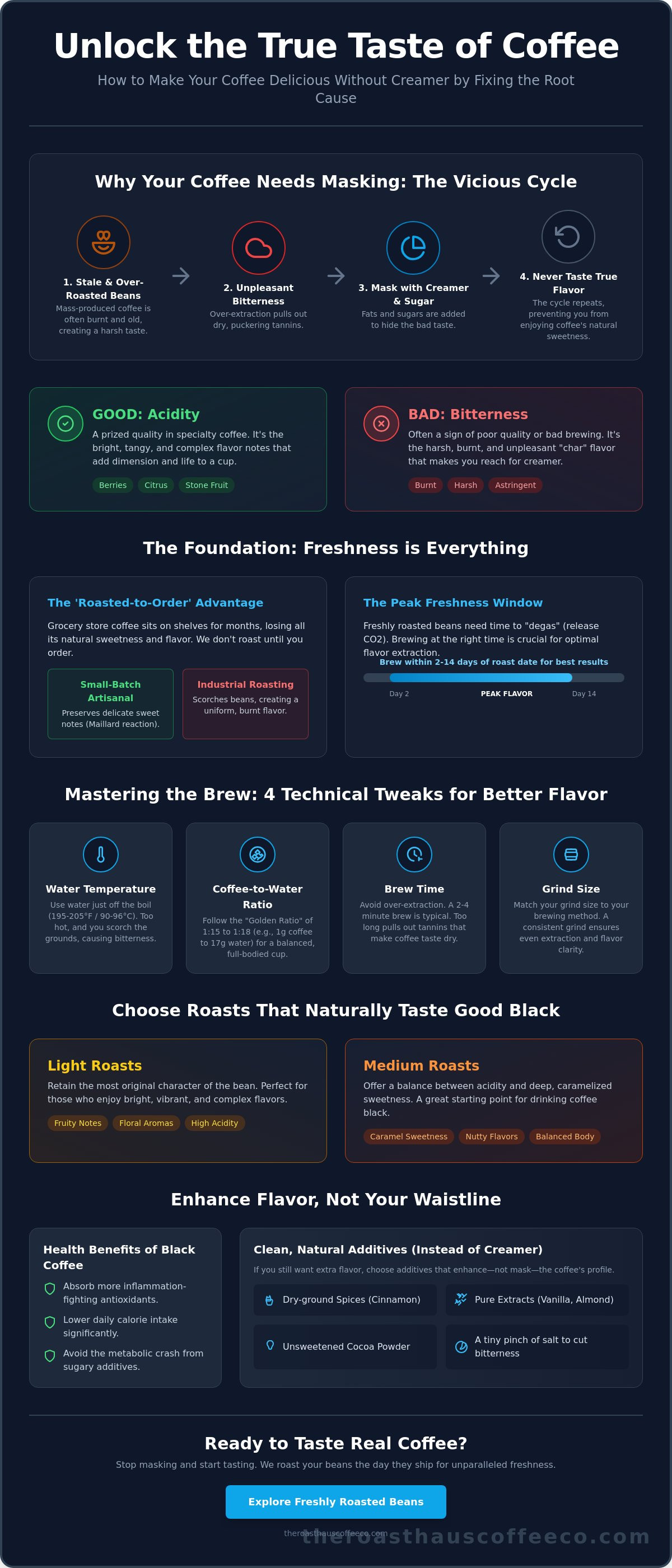
Why Your Coffee Needs Masking: Understanding Bitterness and Acidity
Staleness is another common reason for a bad cup. Coffee is a perishable product. Once roasted, beans begin to oxidize. This chemical reaction creates compounds that taste "off" or "papery." If your coffee sits in a warehouse or on a grocery shelf for months, those delicate, sweet flavors disappear completely. You are left with a flat, stale liquid that lacks any character. This is why many people wonder how to make coffee taste good without creamer; they're trying to cover up the taste of old, oxidized beans. We call this the "Masking Cycle." You add fat and sugar to counteract the poor roasting and staleness. It's a cycle that prevents you from ever tasting the true potential of the bean.
The Role of Tannins and Over-Extraction
When you brew for too long or use water that is too hot, you release tannins. These are the same compounds found in over-steeped tea that make your mouth feel dry and puckered. Over-extraction is the process of pulling unwanted chemicals from the coffee grounds due to excessive heat or time. If you want to know how to make coffee taste good without creamer, you must respect the natural chemistry of the bean. While creamer provides a synthetic, "slick" feeling, a well-brewed cup relies on natural oils. These oils provide a rich mouthfeel that feels satisfying on its own. Understanding the process of coffee preparation helps you manage these variables to keep those oils intact and the tannins at bay.
Health Benefits of Going Creamer-Free
Ditching the creamer does more than just improve the flavor. Commercial creamers are often loaded with hidden sugars and hydrogenated oils that contribute to inflammation. By drinking your coffee closer to its natural state, you increase your body's ability to absorb antioxidants. Coffee is one of the highest sources of antioxidants in the modern diet, but these benefits are often hindered by artificial additives. You also lower your daily calorie intake significantly. This allows you to enjoy your caffeine ritual without the metabolic crash associated with sugary syrups. It's a cleaner way to fuel your day while supporting your long-term health goals.
The Foundation: How Freshness Eliminates the Need for Creamer
Freshness is not just a marketing term; it is a chemical reality. Most people struggle with how to make coffee taste good without creamer because they are starting with a product that is already dead. Coffee beans contain volatile aromatics that begin to dissipate the moment they leave the roaster. Our 24-hour rule ensures that we ship your beans within one day of roasting. This preserves the delicate flavor notes that provide a natural, inherent sweetness. Industrial roasting focuses on volume and speed, often scorching the beans and destroying the Maillard reaction. This reaction is the complex chemical process between amino acids and reducing sugars that gives coffee its savory and sweet depth. By roasting in small batches, we control this process with precision.
Timing matters even after the roast is finished. During the first two weeks, beans undergo a process called degassing, where they release carbon dioxide. If you brew too early, the gas interferes with water contact and creates a sour taste. If you wait too long, the oils go rancid. Selecting high quality coffee beans that have been handled with care ensures you have a smooth base. When you start with a product that is peak-fresh, you don't need to hide the flavor. You simply need to let it shine.
The 'Roasted-to-Order' Advantage
In Wyandotte, Oklahoma, we believe in a simple philosophy: we don't roast it until you buy it. This is the ultimate differentiator in quality. Contrast this with grocery store coffee that may sit in a warehouse or on a shelf for six months before it reaches your kitchen. By the time you open that bag, the sugars have turned flat and the oils have oxidized. Freshly roasted coffee naturally tastes sweeter because those volatile aromatics are still intact. If you want to experience this difference yourself, consider trying freshly roasted beans delivered straight to your door.
Whole Bean vs. Pre-Ground
Buying pre-ground coffee is the fastest way to ruin a good brew. When coffee is ground, the surface area increases exponentially, which accelerates oxidation and flavor loss. Pre-ground coffee loses 60% of its aroma within 15 minutes of being exposed to air. To maintain the integrity of the bean, you should use a coffee grinder just before you start your brew. This single step ensures that the natural oils and flavors end up in your cup rather than dissipating into the kitchen air. It is the most effective way to ensure your black coffee has the body and richness you usually seek from creamers.
Mastering the Brew: 4 Technical Tweaks for Better Flavor
Good coffee starts with good water. Since your brew is approximately 98% water, any chlorine or heavy minerals in your tap will distort the natural profile of the bean. Using filtered water ensures a neutral mineral balance that allows the artisanal notes of the roast to shine. This is a fundamental step in learning how to make coffee taste good without creamer. If the water tastes like chemicals, your coffee will too. We recommend a simple carbon filter to remove impurities while keeping the essential minerals that help extract flavor.
Temperature and ratio are the next two pillars of a perfect cup. Most home machines don't get hot enough, or they scorch the grounds with boiling water. Aim for a temperature between 195°F and 205°F. Water that is too cold results in a sour, thin brew, while water above 205°F pulls out harsh, ashy flavors. You should also stop "eyeballing" your coffee scoops. A standard ratio of 1 gram of coffee to 15 or 17 grams of water provides a rich, heavy body that mimics the mouthfeel of cream. For detailed instructions on these measurements, consult our ultimate guide to crafting the perfect cup at home.
The Pinch of Salt Trick
A tiny pinch of salt can transform a bitter cup. Sodium ions naturally block bitterness receptors on your tongue, making the coffee taste smoother and more balanced. This isn't about making the coffee salty; you only need a few grains added to the dry grounds before brewing. It is a much healthier alternative to chemical creamers for those who are particularly sensitive to bitter notes. This trick works because it chemically suppresses the "bad" flavors so the natural sweetness can take center stage.
Grind Size Calibration
Your grind size dictates the speed of extraction. If your coffee tastes ashy or hollow, your grind is likely too fine, causing over-extraction. If it tastes salty or sour, it's too coarse. Match your grind to your method. Use a coarse grind for a French Press and a medium grind for a standard drip machine. For a drip brew, your grounds should look like coarse sea salt. Achieving this visual check is a major milestone in understanding how to make coffee taste good without creamer because it ensures you're only pulling the best flavors from the bean.
Natural Additives: Flavoring Your Cup Without the Chemicals
If you have followed our advice on freshness and technical brewing, your cup should already be smooth. Sometimes you want a specific flavor profile without the chemical aftertaste of store bought syrups. Learning how to make coffee taste good without creamer involves looking at your spice cabinet and pantry for clean, whole food alternatives. These ingredients provide depth and aroma without the metabolic crash of hydrogenated oils and processed sugars. You aren't trying to fix a bad product; you're personalizing a great one.
Infuse spices directly into the dry grounds before you brew. This is the secret most guides miss. By mixing a half teaspoon of cinnamon or a dash of nutmeg with your grounds before starting the process, the hot water extracts aromatic oils from both the beans and the spices simultaneously. This creates a balanced, integrated flavor that doesn't just float on top of the liquid. You can also use high quality extracts like vanilla, almond, or peppermint. A single drop is potent enough to transform the entire pot. For those who miss the richness of cream, adding a teaspoon of grass-fed butter or coconut oil provides healthy fats and a velvety mouthfeel. If you want a natural mocha, stir in a small amount of unsweetened cocoa powder while the coffee is piping hot.
The Spice Cabinet Secrets
Cinnamon is the most effective tool for palate training. It naturally tricks your brain into perceiving sweetness even when no sugar is present. Cardamom adds a floral, citrusy note that is common in Middle Eastern coffee culture and pairs beautifully with our lighter roasts. Nutmeg and clove can be used to create a "fall" flavor profile year round. These spices provide a warmth that mimics the complexity of expensive, seasonal lattes without the artificial pumpkin spice creamer. Experience the difference by using artisanal beans roasted to order as your base.
Alternative Milks for Transitioning
If you aren't ready to go completely black, alternative milks are excellent for transitioning. Oat milk generally provides the best "creamer-like" texture because of its higher carbohydrate and fat content compared to nut milks. Almond milk offers a nuttier, thinner profile that works well with darker roasts. Always choose unsweetened versions. This is essential for training your palate to enjoy the actual taste of the bean. You don't need an expensive machine to froth these at home. Simply pour your milk into a glass jar, shake it vigorously for thirty seconds, and then microwave it for another thirty seconds to stabilize the foam. This simple step adds a luxury feel to your morning ritual while keeping your cup clean and healthy.
Choosing the Right Roast: Beans That Naturally Taste Good Black
Your choice of roast is the final decision in your journey to master how to make coffee taste good without creamer. Different roast levels highlight specific chemical compounds within the bean. Light roasts are ideal if you enjoy bright, fruity acidity. They often taste of berries or citrus. Medium roasts offer a balance of caramel and nutty notes that provide a natural sweetness most people find approachable. If you prefer a heavy mouthfeel, a dark roast provides bold, chocolatey profiles that satisfy the palate without needing added fats. Each level offers a unique experience that stands perfectly on its own.
Specific beans excel when consumed black because of their unique genetic profiles. Our Kenya AA Supreme is a perfect example. It offers a wine-like acidity and complex berry notes that are incredibly distinct. You don't want to hide these characteristics behind a layer of cream or sugar. When you choose the right roast, you're selecting a flavor profile that is designed to be the star of the show. It turns your morning caffeine fix into a genuine culinary experience.
Single-Origin Profiles for Beginners
If you're new to drinking black coffee, certain origins make the transition much easier. Ethiopia Limu Organic is floral and citrusy, often compared to a tea-infused coffee. It's light and refreshing on the tongue. For those who want something more traditional, Honduras Morning Splendeur is nutty and exceptionally smooth. It's often cited as the perfect "first black coffee" because it lacks any harsh edges. Guatemala beans are also a great choice. They're known for cocoa and spice notes that naturally mimic a mocha without the dairy or chemicals. These profiles prove that how to make coffee taste good without creamer is simply a matter of choosing the right bean for your palate.
The Roast Haus Commitment
At The Roast Haus, we are a family-owned artisan roastery based in Wyandotte, Oklahoma. We believe that the biggest enemy of good coffee is the warehouse shelf. Our commitment to you is simple: we roast your beans only after you place your order. This ensures you never receive a stale bag that has lost its natural sweetness. Supporting an independent, small business means you're getting a product handled with personal care and integrity. This dedication results in a better-tasting cup that you can finally enjoy exactly as nature intended. We take pride in our craft so you can take pride in your brew.
Take the Next Step Toward a Purist’s Brew
Transitioning to black coffee shouldn't feel like a sacrifice. By focusing on peak freshness and refining your brewing technique, you eliminate the need for artificial masks. You now understand that harsh bitterness is often just a symptom of stale beans or incorrect water temperature. Mastering how to make coffee taste good without creamer is ultimately about respecting the natural integrity of the bean. When you start with high quality, small-batch coffee, the complex notes of caramel, fruit, and cocoa shine through on their own.
At The Roast Haus, we take this integrity seriously. We're a family-owned and operated business in Wyandotte, OK, dedicated to small-batch artisan craftsmanship. We never let beans sit on a warehouse shelf. Instead, we roast your selection within 24 hours of shipping to ensure the volatile aromatics stay in the bag until they reach your cup. Shop our freshly roasted-to-order coffee beans and taste the difference today! You've learned the techniques to improve your morning ritual. Now, give yourself the quality beans that make those techniques worth it. Enjoy every sip of your clean, flavorful brew.
Frequently Asked Questions
Is black coffee actually healthier than coffee with creamer?
Yes, black coffee is significantly healthier because it eliminates the processed sugars and hydrogenated fats found in commercial creamers. By removing these additives, you reduce your daily calorie intake and avoid metabolic spikes. Drinking it black also ensures your body absorbs more of the natural antioxidants present in the beans without interference from dairy proteins.
Why does my black coffee always taste like battery acid?
Coffee that tastes like battery acid is typically a result of under-extraction or using beans that are too old. When water doesn't spend enough time with the grounds, it only pulls out the sharp, sour acids rather than the sweeter compounds. Learning how to make coffee taste good without creamer requires balancing your brew time and using beans roasted within the last 14 days.
Can I add cinnamon directly to the coffee filter?
You can and should add cinnamon directly to the coffee filter with your dry grounds. This method allows the hot water to extract the aromatic oils from the spice during the brewing process for a seamless flavor. It's more effective than stirring it into the finished cup, where the powder often clumps and creates a gritty texture.
What is the best coffee roast for someone who hates bitterness?
Medium roasts are the best choice for those who want to avoid bitterness while enjoying a smooth cup. These roasts are cooked long enough to develop natural caramel and nutty sugars but not so long that they take on a burnt, carbonized taste. Our Honduras Morning Splendeur is a great entry point for those transitioning away from creamers.
Does adding salt to coffee really work to make it taste better?
Adding a tiny pinch of salt to your grounds really does work to neutralize bitterness. Sodium ions interfere with the bitterness receptors on your tongue, which makes the coffee's natural sweetness more apparent. It's a precise chemical fix that helps people discover how to make coffee taste good without creamer by suppressing harsh flavors naturally.
How long does coffee stay fresh after the roast date?
Coffee is at its peak flavor between 3 and 14 days after the roast date. During this window, the beans have degassed enough carbon dioxide to allow for even extraction but still retain their volatile aromatics. By the time coffee has sat for 30 days, most of the delicate flavor notes that define a specialty brew have disappeared.
What is the best way to store coffee beans to keep them tasting good?
The best way to store coffee is in an airtight, opaque container kept in a cool, dark pantry. Exposure to oxygen, light, heat, and moisture are the primary enemies of freshness. Never store your beans in the refrigerator or freezer, as the frequent temperature changes create condensation that ruins the bean's oils.
Can I use honey as a natural sweetener instead of creamer?
Honey is an excellent natural sweetener for those who find black coffee too intense. It provides a floral sweetness that is much cleaner than artificial syrups or processed sugars. Keep in mind that honey has a strong flavor of its own, so start with a small amount to avoid overpowering the natural notes of the coffee.

