


Most coffee drinkers spend their lives avoiding acidity because they've only ever experienced it as a sour, unpleasant bite. It's a common frustration to buy a premium bag and end up with a cup that tastes burnt or flat instead of the vibrant, fruity experience you expected. If you've been confused by labels like "AA" or "Screen 18," you aren't alone. Understanding the kenya aa coffee flavor profile is the first step toward enjoying what experts call the "Wine of East Africa."
You deserve a cup that reflects the true craftsmanship of the farmer. This article will help you identify the specific notes of blackcurrant and tart citrus that define high-quality Kenyan beans. We'll also explain why the "AA" grade matters for consistency and how the recent Kenya Coffee Act of 2026 is reshaping the industry to focus on quality and traceability. By the end, you'll know exactly how to brew our Kenya AA Supreme to achieve a bold, structured finish without any bitterness. Let's look at what makes these beans so unique.
Key Takeaways
- Learn why the "AA" grade represents the largest, highest-quality beans grown in the nutrient-rich volcanic soil of Mt. Kenya.
- Identify the vibrant notes of blackcurrant and tart grapefruit that define the complex kenya aa coffee flavor profile.
- Understand how the unique Kenyan "double washed" process creates the clean, wine-like acidity prized by specialty coffee drinkers.
- Master the specific brewing steps and medium roast profile needed to unlock delicate fruit notes without introducing burnt flavors.
- Discover the importance of freshness and why we roast our Kenya AA Supreme to order to protect its volatile aromatics.
What is Kenya AA Coffee? Defining the Gold Standard
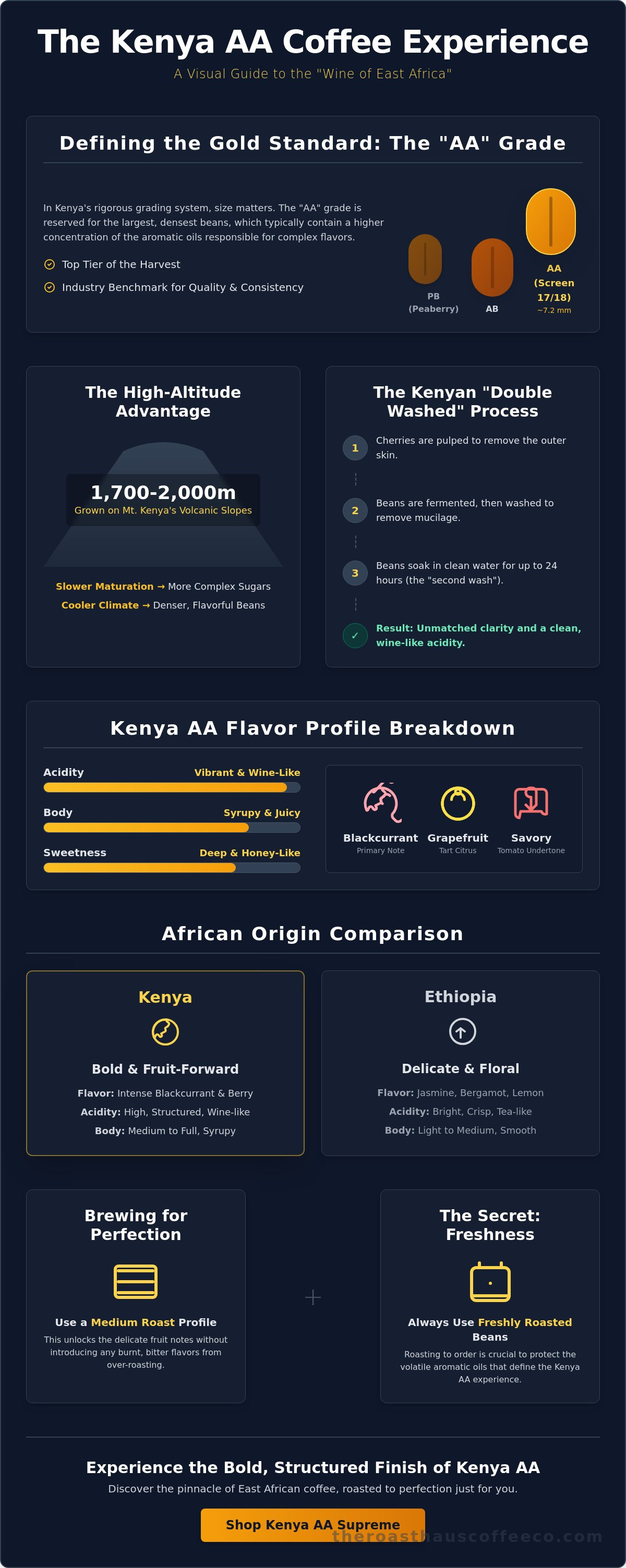
Kenya AA is the highest grade of coffee available from the East African nation. It isn't just a label we use for marketing. It's a specific classification based on bean size and quality. In the world of specialty coffee, the "AA" designation represents the top tier of the harvest. These beans are prized for their bold character and the multi-layered acidity that defines the kenya aa coffee flavor profile. Most of these exceptional crops grow in the nutrient-rich volcanic soils surrounding Mt. Kenya. This unique environment provides the minerals necessary for the coffee to develop its signature intensity.
The Meaning Behind the 'AA' Grade
The grading system in Kenya is one of the most rigorous in the world. It's managed by the Coffee Board of Kenya to ensure buyers know exactly what they're getting. The "AA" refers specifically to the bean size, measured using a screen system. These beans are the largest, typically falling into Screen 17 or 18. This means they are roughly 7.2 millimeters wide. Larger beans are generally preferred because they often possess a higher concentration of aromatic oils. These oils are responsible for the complex flavors you taste in your cup. While you might see other grades like AB or the small, round Peaberry (PB), the AA grade is the industry benchmark for quality and consistency. You can learn more about the history of Coffee production in Kenya to see how this system has evolved over decades.
Why High Altitude Matters for Flavor
Elevation is the primary driver of quality in Kenyan coffee. Most AA beans grow at altitudes between 1,700 and 2,000 meters. At these heights, the climate is cooler. This environment forces the coffee cherries to grow at a much slower pace. This slow maturation is vital. It allows the plant more time to develop complex sugars and organic acids within the seed. The result is a much denser bean. Density is a critical factor for us during the roasting process. A dense bean can withstand higher heat, which allows us to fully develop the sugars without scorching the delicate fruit notes. This is why our Kenya AA Supreme offers such a structured and vibrant experience. It's a direct result of the harsh, high-altitude conditions where the coffee struggles to grow, creating a more flavorful end product.
The Kenya AA Coffee Flavor Profile: A Sensory Breakdown
The kenya aa coffee flavor profile is often described as the most intense in the world. It doesn't hide its character behind subtle hints. Instead, it delivers a punch of blackcurrant and tart grapefruit from the first sip. This boldness is why many enthusiasts call it the wine of coffee. It has a dry, lingering finish that mimics a complex red wine. If you've only ever had dark, oily roasts that taste like ash, this will be a revelation. The flavors are vibrant, clean, and unmistakable.
Beyond the primary fruit, you'll find secondary notes like floral aromatics and a deep honey sweetness. In some high-quality lots, a unique savory undertone appears. This can taste similar to sun-ripened tomatoes. It adds a layer of depth that keeps the cup from being one-dimensional. The body is typically medium to full. It feels syrupy or juicy on the tongue. This heavy mouthfeel carries the complex Kenyan flavor profile through the entire sip, leaving a clean aftertaste that makes you want another.
Acidity vs. Sourness: What to Expect
New drinkers often confuse acidity with sourness. Bright acidity is a pleasant, tingling sensation on the sides of the tongue. It's like the refreshing snap of a fresh green apple or a squeeze of lemon. This unique characteristic comes from the phosphorus-rich volcanic soil found in the Kenyan highlands. Sourness, however, is an unpleasant bite often caused by under-extracted coffee or stale beans. When you brew our Kenya AA Supreme, you're looking for that vibrant, phosphoric spark that balances the natural sweetness of the bean.
Kenya vs. Ethiopia: Choosing Your African Origin
Choosing between these two famous origins depends on your personal palate. Ethiopian beans, like our Ethiopia Limu Organic, are often lighter and more delicate. They lean toward tea-like bodies with heavy floral notes of jasmine and lemon. Kenyan beans are the opposite. They are bolder, more fruit-forward, and significantly more acidic. If you want a gentle, floral cup, go with Ethiopia. If you want a structured, wine-like experience with intense berry notes, our Kenya AA Supreme is the better choice. Both offer excellence, but Kenya provides a much more powerful sensory experience.
The Science of the Kenyan Terroir and Processing
The exceptional kenya aa coffee flavor profile isn't an accident of history. It's the result of a specific geological and agricultural environment. Mt. Kenya's volcanic soil is rich in phosphorus. This mineral is the secret behind the "spark" or phosphoric acidity that defines the region's best exports. Without this specific soil chemistry, the beans wouldn't have their characteristic snap. The location on the equator provides intense sun during the day. This is balanced by regular, predictable rainfall. These conditions allow the coffee cherries to develop high sugar content. When these sugars are combined with the soil's mineral profile, you get a bean that is both sweet and complex.
The 'Double Washed' (Kenya Process) Explained
Kenya uses a processing method that is more intensive than almost anywhere else. It's called the "double washed" or "Kenya process." First, the cherries are pulped and fermented for up to 48 hours to break down the fruit. Then, they are washed and soaked in clean water for another 24 hours. This extra soak is crucial. It removes every trace of fruit mucilage. This ensures the final cup is incredibly clean. You won't find the earthy or muddy flavors common in other regions. After the soak, the beans are spread on raised beds to dry in the sun. This slow drying process stabilizes the moisture content and preserves the flavor for months. It's a labor-intensive way to work, but it's the only way to protect the integrity of the harvest.
The Famous SL Varieties
The plants themselves are just as important as the soil. Most Kenyan coffee comes from two specific varieties: SL-28 and SL-34. These were developed by Scott Laboratories in the 1930s. Researchers wanted plants that could survive the local climate while producing superior fruit. SL-28 is particularly famous for its drought resistance and its ability to produce high yields of top-tier beans. SL-28 is the primary source of the complex acidity and legendary blackcurrant notes found in the kenya aa coffee flavor profile. SL-34 adds body and additional fruit depth to the cup. Together, these heirloom varieties create the structure we look for in our Kenya AA Supreme. They are the genetic foundation of what makes this coffee a world-class experience.
How to Brew Kenya AA to Unlock Its Full Potential
The kenya aa coffee flavor profile is delicate and complex. If you don't brew it correctly, you'll lose the vibrant blackcurrant and citrus notes that make these beans famous. Always grind your beans just before you brew. Volatile aromatics begin to disappear the moment the bean is cracked. We roast our beans to a medium level because it's the sweet spot. This roast level is dark enough to develop the natural honey sweetness but light enough to keep the phosphoric acidity alive.
Water temperature is another critical factor. Aim for a range between 195 and 205°F. If your water is too hot, you'll extract bitter compounds that mask the fruit. If it's too cold, the coffee will taste sour and thin. Your grind size must match your equipment. Use a medium grind for pour-over methods and a medium-coarse grind for immersion. Consistency matters. A quality burr grinder is the best tool to ensure you get a clear, clean cup every time.
The Pour-Over Method: Highlighting Acidity
Pour-over brewing is the best way to showcase the "winey" characteristics of Kenyan coffee. Whether you use a Hario V60 or a Chemex, paper filters are essential. These filters trap the oils and fine particles that can make a cup taste muddy. This results in the sparkling, clean finish that high-altitude beans require. For a solid foundation on technique, read our guide on how to make coffee. Start with a 1:16 coffee-to-water ratio and pour slowly in concentric circles. This method allows the tart grapefruit and floral aromatics to truly shine.
The French Press Method: Boosting the Body
If you prefer a syrupy or "juicy" mouthfeel, the French Press is your best option. Immersion brewing brings out the heavier body hidden within the kenya aa coffee flavor profile. Use a medium-coarse grind. Add your coffee and hot water, then let it steep for exactly four minutes. Before you press the plunger, use a spoon to break the "crust" of grounds on the surface. This helps the coffee settle and improves clarity. Don't let the coffee sit in the press after you plunge. Pour it into a separate carafe immediately. This simple step prevents over-extraction and the bitterness that can ruin a premium bean.
Ready to experience the wine of East Africa for yourself? Order a bag of our fresh-roasted Kenya AA Supreme and taste the difference that craftsmanship makes.
Why Freshness is the Secret to the Kenya AA Experience
Freshness isn't just a buzzword. It's a technical requirement for experiencing the true kenya aa coffee flavor profile. You can buy the best beans from the highest slopes of Mt. Kenya, but if they sit on a grocery store shelf for months, the magic disappears. The delicate blackcurrant and floral notes we've discussed are the result of volatile aromatic oils. These oils begin to oxidize the moment the roasting process ends. Mass-produced coffee often sits in warehouses for weeks before it ever reaches a consumer. By that time, the vibrant acidity has turned flat and the complex sugars have gone stale.
Artisan roasting is different. We use a small-batch approach that allows for precise control over the heat and airflow. This level of detail is impossible in large, industrial facilities. Small-batch roasting ensures that every bean reaches its full potential. It allows us to monitor the development of those iconic berry flavors constantly. Our commitment to quality means we don't roast coffee to sit in a bin. We roast it for you. This is why our "Roasted-to-Order" promise is the core of our business. We ship your coffee within 24 hours of roasting to make sure you experience the beans at their peak.
From Our Oklahoma Roastery to Your Door
Our operation is based in Wyandotte, Oklahoma. We are a family venture focused on the integrity of the craft. When you buy from us, you aren't just getting a bag of beans. You're supporting an independent business that values quality over volume. This personal touch is what ensures our Kenya AA Supreme remains consistent from one batch to the next. We take pride in our process because we know that the final cup reflects our work. You get world-class Kenyan coffee delivered with the care of a local expert.
Never Run Out with a Coffee Subscription
The best way to maintain a steady supply of fresh beans is through a coffee subscription. This service allows you to customize your delivery frequency based on how much you drink. It removes the risk of running out and being forced to buy stale, mass-produced alternatives. Whether you need a bag every week or once a month, we make sure it arrives at your door just days after leaving the roaster. Don't settle for flat, bitter coffee when you can have the vibrant, wine-like snap of a fresh roast. Order our Kenya AA Supreme today and taste the difference of 24-hour freshness.
Experience the Wine of East Africa at Home
You now understand that the AA grade is more than just a label. It represents the largest, most oil-rich beans that produce the legendary kenya aa coffee flavor profile. This complex balance of tart grapefruit and deep blackcurrant is only possible through the high-altitude volcanic soil and the meticulous double-washed process unique to Kenyan farms. When you combine these factors with the right brewing technique, you get a cup that is truly world-class.
The final step to a perfect cup is undeniable freshness. Our family-owned roastery in Oklahoma focuses on small-batch precision to protect these delicate aromatics. We roast every order specifically for you and ship it within 24 hours. This ensures you get the bold, structured experience that mass-produced coffee simply can't match. We take pride in our process so you can take pride in your brew.
Shop our fresh-roasted Kenya AA Supreme today and taste the result of honest craftsmanship. We look forward to helping you discover your new favorite roast.
Frequently Asked Questions
What does the 'AA' in Kenya AA coffee stand for?
The 'AA' stands for the largest bean size classification in the Kenyan grading system. These beans are sorted using screens with a size of 17 or 18, which is approximately 7.2 millimeters in diameter. While size doesn't always guarantee flavor, larger beans often contain more essential oils that contribute to the complex kenya aa coffee flavor profile. This sorting ensures a consistent roast and a high-standard experience for the consumer.
Is Kenya AA coffee very acidic?
Yes, this coffee is famous for its high, bright acidity. This isn't the unpleasant sourness found in under-extracted coffee, but a vibrant, tingling sensation often compared to tart citrus or green apples. This unique characteristic comes from the phosphorus-rich volcanic soil near Mt. Kenya. It provides a structured, wine-like finish that balances the natural sweetness of the blackcurrant notes found in our Kenya AA Supreme.
What is the best roast level for Kenya AA beans?
A medium roast is the ideal level for these specific beans. A light roast might leave the acidity feeling too sharp or grassy, while a dark roast can destroy the delicate fruit and floral aromatics. Our medium roast process develops the body and honey-like sweetness while preserving the sparkling acidity that makes this origin famous. It ensures you get the full sensory experience without any burnt aftertaste.
How does Kenya AA compare to Ethiopian Yirgacheffe?
Kenyan coffee is generally much bolder and more fruit-forward than Ethiopian Yirgacheffe. While Yirgacheffe is prized for its tea-like body and floral jasmine notes, Kenya AA delivers a heavier, syrupy mouthfeel and intense berry flavors. If you prefer a delicate, floral cup, Ethiopia is a great choice. If you want a powerful, structured coffee with a dry, winey finish, Kenya is the superior option for your palate.
Why is Kenyan coffee more expensive than other origins?
The cost reflects the rigorous grading system and the labor-intensive "double washed" processing method used in the region. The Coffee Board of Kenya maintains strict standards that ensure only the best beans receive the AA grade. Additionally, the unique kenya aa coffee flavor profile is in high demand globally. Favorable prices at the Nairobi Coffee Exchange reflect the quality and the complex logistics required to bring these beans from high-altitude farms to your door.
Can I use Kenya AA for espresso?
You can use these beans for espresso, but be prepared for a very bright and intense shot. The high acidity translates into a sharp, citrusy flavor that can be polarizing as a straight shot. It works exceptionally well in milk-based drinks like lattes or cappuccinos, where the milk's sweetness balances the tart berry notes. If you enjoy modern, fruit-forward espresso, this is an excellent choice for your home setup.
Does Kenya AA coffee have more caffeine?
No, Kenya AA does not inherently contain more caffeine than other Arabica coffees. Caffeine content is determined by the coffee species and the plant's genetics rather than the size of the bean or its quality grade. While the flavor is much more intense and "bold," the actual caffeine level is standard for high-altitude Arabica plants. The perceived energy boost often comes from the coffee's vibrant acidity and complex sensory impact rather than extra caffeine.

