


Why does the "fresh" bag of coffee you bought last week still taste like burnt charcoal and bitter disappointment? If you're tired of hazy, oily beans that lack character, you aren't alone. You need to understand what is small batch coffee roasting and why this method is the only way to achieve true flavor clarity. The truth is that most commercial coffee sits in a distribution center for months before it ever reaches your kitchen. By the time you brew it, the delicate oils have turned rancid. You're left with a cup that's more about caffeine than quality.
For enthusiasts who want to explore different profiles, sourcing specialty ESPRESSO COFFEE from dedicated roasters is a great way to see how various origins perform under pressure.
We agree that your morning ritual deserves better than stale, mass-produced beans. This article will show you how small batch roasting transforms ordinary beans into extraordinary coffee through precision, craft, and a dedicated roasted-to-order philosophy. You'll learn how to spot high-quality beans, understand the technical steps that define this process, and find a reliable source for coffee that's actually fresh. We'll guide you through the journey from green bean to peak flavor so you can stop settling for bitter brews and start enjoying a truly superior cup.
Key Takeaways
- Define what is small batch coffee roasting and learn why limiting production to under 50 pounds is the key to achieving peak flavor clarity.
- Discover how the roasting curve and the pivotal "First Crack" moment determine the final taste and aroma of your morning cup.
- See how artisan methods eliminate the burnt, bitter notes found in industrial coffee by focusing on precision rather than mass efficiency.
- Understand why "roasted-to-order" coffee is the only way to ensure your beans are at their best when they reach your door.
- Learn to identify high-quality beans and why supporting independent roasters leads to a better experience for your palate and your community.
What is Small Batch Coffee Roasting? Beyond the Industry Buzzword
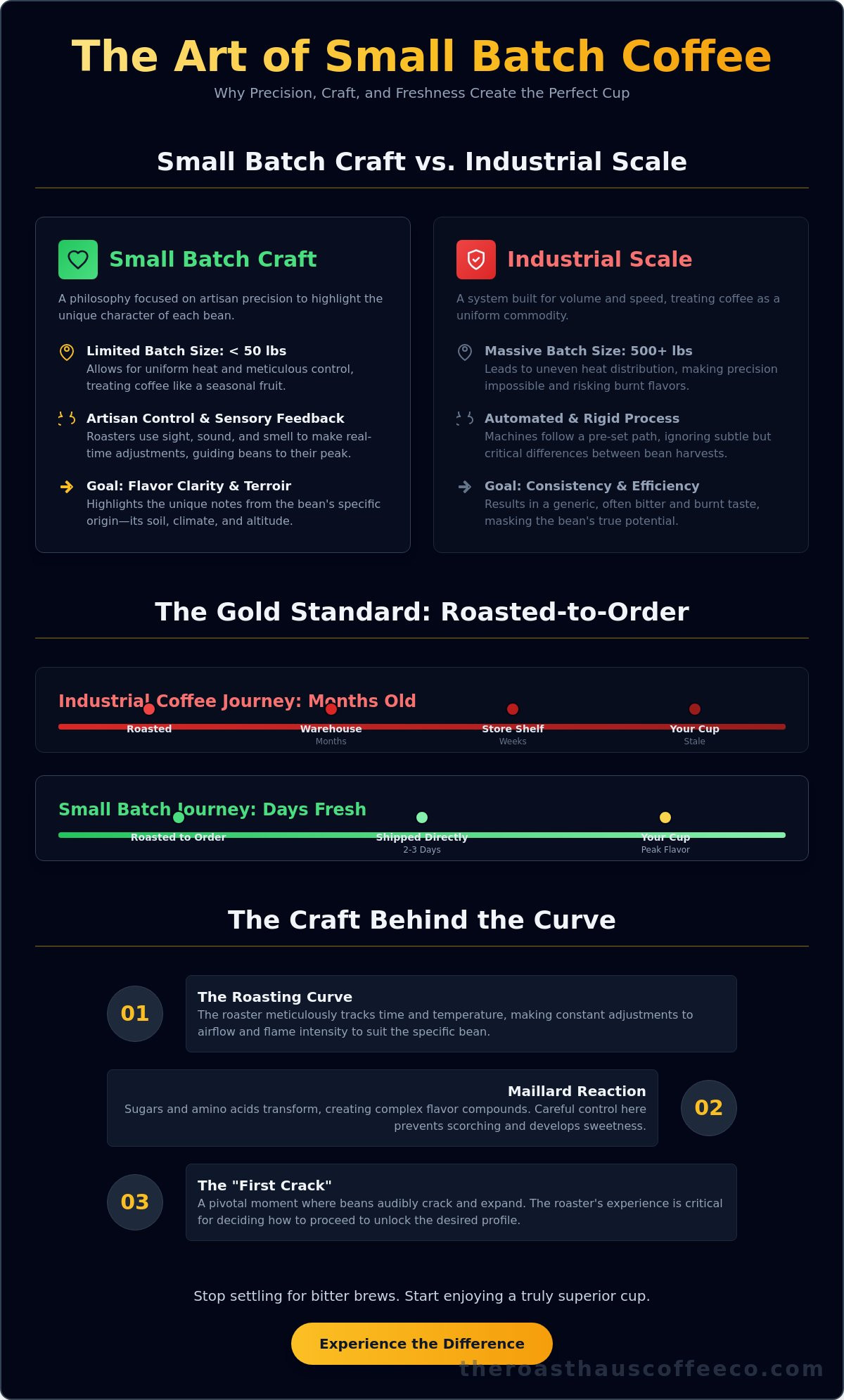
You see the term "small batch" on coffee bags everywhere, from local markets to high-end boutiques. It's easy to dismiss it as a marketing label designed to justify a higher price. However, in the world of specialty coffee, the term represents a fundamental difference in how beans are treated. So, what is small batch coffee roasting exactly? It's a method where coffee is roasted in limited quantities, typically under 50 pounds at a time. This approach shifts the focus away from industrial efficiency and places it squarely on artisan precision.
Industrial roasting is built for speed and volume. It treats coffee like a commodity that needs to be processed as quickly as possible. Small batch roasting treats coffee like a seasonal fruit. This methodology is essential for handling micro-lots. These are small, specific harvests from a single farm or even a single hillside. Because these beans are rare and have unique characteristics, they require small-scale handling. You can't toss a micro-lot into a massive industrial machine and expect it to survive with its soul intact. Small batches allow the roaster to respect the bean's journey from the farm to your cup.
The Industry Standard for Batch Size
The scale of production makes a massive difference in the final taste. Large commercial roasters use industrial behemoths that can hold 500 pounds or more in a single cycle. In contrast, artisan roasters use drums that typically hold between 5 and 30 pounds. This size difference matters because of heat control. Smaller volumes allow for more uniform heat distribution throughout the drum. Every bean receives the same amount of energy at the same time.
Different coffee beans react to heat in unique ways based on their density and origin. A dense bean from the high altitudes of Ethiopia needs a different heat profile than a softer bean from a lower elevation. In a small drum, the roaster can make split-second adjustments to the flame to account for these variables. This level of control is impossible when you're managing thousands of pounds an hour.
The Philosophy: Quality Over Quantity
Small batch roasting is a hands-on craft. The roaster isn't just pushing a button and walking away. They are constantly monitoring the Coffee roasting process by smelling the exhaust, checking the color, and listening for the beans to crack. The goal is to highlight the terroir. This is the unique flavor profile created by the soil, weather, and altitude where the coffee grew.
This process is labor-intensive. It takes significantly more time and effort to roast ten small batches than it does to roast one giant one. While the labor costs are higher, the value shows up in the final cup. You get a level of flavor clarity and freshness that mass production simply cannot replicate. It's the difference between a loaf of bread from a local baker and a plastic-wrapped loaf from a factory. One is made with a focus on the craft; the other is made with a focus on the bottom line.
The Craft Behind the Curve: How Small Batch Roasting Works
The roasting curve is the heartbeat of the entire process. It tracks the precise relationship between time and temperature inside the drum. When you ask what is small batch coffee roasting, you're really asking about the roaster's ability to manipulate this curve with total precision. In mass production, machines follow a rigid, automated path that ignores the subtle differences between harvests. In a small-scale setting, the roaster constantly adjusts the airflow and flame intensity. They react to how the beans are developing in real time. This ensures that every origin reaches its unique flavor peak without being overexposed to heat.
Sensory feedback is the roaster's greatest tool. While industrial plants rely on sensors and algorithms, an artisan roaster uses their eyes, ears, and nose. They watch for color shifts, listen for physical changes, and smell the developing sugars. This level of attention is what prevents the generic, flat flavors found in grocery store aisles. It's a manual craft that requires years of experience to master.
Thermal Control and the Roaster’s Eye
One of the most critical stages is the Maillard reaction. This is where the chemical changes during roasting begin to turn sugars and amino acids into complex flavor compounds. In a small batch, the roaster can carefully manage this browning phase. They prevent "scorching," which happens when beans spend too much time against a drum that's too hot. This is a common flaw in industrial coffee that leads to that familiar, burnt aftertaste. A roast profile is a unique recipe designed specifically for each bean's origin to highlight its best traits.
The 'First Crack' and Sensory Feedback
The roaster listens for the "First Crack," a distinct sound similar to popcorn popping. This signifies the moment when moisture inside the bean turns to steam and breaks through the cell walls. It's a pivotal moment in the drum. If the heat isn't managed correctly here, the delicate aromatics can literally go up in smoke. The roaster uses a tool called a "trier" to pull small samples from the drum throughout the cycle. They look at the color development and smell the evolving aroma to decide exactly when the beans have reached their peak.
Once that moment hits, the beans are dropped into a cooling tray. Stopping the roast instantly is vital to lock in the flavor and stop the internal cooking process. If you want to taste how this precision changes the cup, try The All Day Sampler to see the difference between various roast profiles. This hands-on approach ensures that the integrity of the bean is preserved from start to finish.
Small Batch vs. Industrial Roasting: Why Flavor Clarity Wins
The biggest difference between industrial coffee and artisan coffee is the goal of the roast. Commercial roasters prioritize "uniform bitterness." They want every bag to taste exactly the same, whether it was roasted in January or June. To achieve this, they often roast beans to a very dark, oily state. This masks the fact that the beans are often low-quality or inconsistent. When you understand what is small batch coffee roasting, you realize the goal is the exact opposite. We aim for flavor clarity. This means you can actually taste the distinct notes of the bean, whether it's the bright citrus of a Kenya AA Supreme or the earthy depth of an Ethiopia Limu Organic.
Timing is the other major factor. Most bags of coffee on grocery store shelves are months old. The oils have already begun to oxidize, leading to that stale, flat taste. Small batch coffee is typically roasted in quantities that sell quickly, meaning the beans are often only days or weeks old when they reach you. This freshness is vital. It's the difference between a crisp, vibrant cup and one that just tastes like burnt wood. You're paying for the craft and the careful sourcing of the beans, not just a flashy brand name.
Consistency vs. Complexity
Big brands rely on consistency through over-roasting. By pushing every bean to a dark roast, they hide the "imperfections" of cheaper harvests. Artisan roasters celebrate these unique characteristics. We look for the specific nuances that define a single origin. While industrial coffee has a shelf life designed for long-term storage, small batch coffee is designed for immediate consumption. It's a perishable product that is at its peak shortly after it leaves the cooling tray. This model respects the natural complexity of the coffee rather than trying to mute it.
Sourcing and the Direct Trade Connection
Small batch roasters often source through micro-lots. These are specific harvests from individual farms that are too small for industrial buyers to bother with. This direct connection ensures better pay for farmers and encourages sustainable farming practices. When you buy from a small roaster, you're supporting a transparent supply chain. You know exactly where your beans came from and the care that went into growing them.
This level of precision and sourcing is especially important for espresso. Because espresso is a concentrated extraction, any flaw in the roast or the bean is magnified. Small batch roasting ensures the beans have the necessary density and flavor profile to stand up to high-pressure brewing. It ensures your shot is rich and complex rather than just bitter and thin.
The Freshness Timeline: Why Roasted-to-Order is the Gold Standard
Many coffee drinkers understand what is small batch coffee roasting in terms of equipment size, but they often overlook the importance of the fulfillment model. Small batch is about the craft; roasted-to-order is about the timing. In a roasted-to-order system, the beans aren't even put into the drum until your order is placed. This is the opposite of the industrial model, where coffee is roasted in massive quantities and stored in warehouses for months. When you buy from a grocery store, you're getting a product that has already lost its most vibrant aromatics. By choosing a roasted-to-order model, you ensure that you receive the beans exactly as they reach their peak flavor.
Freshness isn't just a buzzword. It's a chemical reality. During the roasting process, carbon dioxide builds up inside the bean. This gas needs to escape through a process called degassing. Most coffee hits its flavor peak between 3 and 10 days after roasting. If you brew too early, the escaping gas can prevent water from fully saturating the grounds. This makes learning how to make coffee at home much harder, as the gas creates an uneven extraction. Industrial coffee is often way past this window, leaving you with a flat and uninspiring cup.
Identifying Authentic Small Batch Coffee
You can spot a true artisan roaster by looking at the bag. Authentic small batch coffee will always display a specific "Roast Date" rather than a vague "Best By" date. Grocery store brands use expiration dates to hide the fact that the beans are already months old. You should also look for valved bags. These one-way valves allow the CO2 to escape without letting oxygen in. Oxygen is the primary cause of staleness. Finally, check the flavor notes. A craftsman will list specific sensory markers like "stone fruit" or "dark chocolate" rather than generic marketing terms like "bold" or "intense."
The Logistics of Peak Freshness
We believe that speed is a part of the quality process. By shipping within 24 hours of roasting, we make sure the coffee arrives at your door just as it enters its peak window. This timing is why coffee grinders are so important. Once you grind a bean, the surface area increases and the flavor begins to fade rapidly. To get the most out of your purchase, follow the "2-week rule." Only buy what you can realistically drink in 14 days. This ensures that every cup you brew has the clarity and vibrance that only fresh, small-batch roasting can provide.
Ready to taste the difference that timing makes? Browse our Roasted-to-Order Coffee and experience peak flavor clarity for yourself.
Experience the Difference with The Roast Haus Coffee Co.
Understanding what is small batch coffee roasting is the first step toward a better morning ritual. The second step is finding a partner who values the craft as much as you do. At The Roast Haus Coffee Co., we aren't a massive corporation with automated plants and generic blends. We're a family-owned roastery based in Wyandotte, Oklahoma. Our approach is simple and honest. We treat every batch with the attention it deserves to ensure you get the peak flavor clarity we've discussed throughout this guide. When you buy from us, you're not just getting a bag of beans. You're supporting a small, independent venture dedicated to the art of the roast.
Our commitment to quality starts with our sourcing. We select premium origins like the bright and complex Kenya AA Supreme and the organic, earthy Ethiopia Limu Organic. These aren't commodity beans meant for bulk processing. They're specific harvests that require the precision only a small-scale operation can provide. By focusing on these high-quality micro-lots, we bring the unique terroir of global coffee regions directly to your kitchen. This focus on site-specific excellence is similar to the approach at Keplinger Wines, where boutique production highlights the best of select vineyards. We're passionate about the integrity of our product and we want you to taste the difference that careful, manual roasting makes.
From Oklahoma Hobby to Artisan Roastery
The Roast Haus began as a passionate kitchen hobby between a husband-and-wife team. We loved the process of experimenting with different profiles and tasting the results. As we grew, we made a conscious choice to stick to the small batch model. This allows us to maintain our integrity and keep our hands on the product at every stage. Supporting independent businesses is vital for a healthy coffee industry. It ensures that diversity and craftsmanship aren't swallowed up by industrial efficiency. We're proud of our identity as a personal venture and invite you to join our community of coffee lovers.
Shipping Peak Freshness Nationwide
Our fulfillment model is our ultimate differentiator. Most roasters roast in bulk and wait for orders to come in. We do the opposite. We roast, then we ship. Our process is straightforward: you order today, we roast your specific beans tomorrow, and they're in the mail within 24 hours. This ensures you receive your coffee right as it enters its ideal degassing window. To make sure you never run out of peak freshness, you can explore the coffee subscription options we offer. It's the easiest way to keep high-quality, artisan beans in your pantry year-round.
Stop settling for the stale, bitter options found on grocery shelves. Experience the clarity and vibrance that only a dedicated craftsman can provide. Browse our small-batch origins today!
Elevate Your Morning Ritual with Artisan Precision
Small batch roasting is the difference between a stale commodity and a vibrant, sensory experience. By focusing on limited quantities and the specific thermal needs of every bean, we protect the natural flavor clarity that industrial roasting often destroys. You've learned how timing, sensory feedback, and precision heat control create a superior cup. Now that you understand what is small batch coffee roasting, you can stop settling for grocery store bags that were roasted months ago.
At The Roast Haus Coffee Co., we take this craft seriously. Our family-owned shop in Wyandotte, OK, is built on a simple promise: we roast, then we ship. We source ethically produced micro-lots and get them in the mail within 24 hours of roasting. This ensures you receive your beans exactly when they reach their peak flavor. It's an honest approach to coffee that puts quality and integrity above everything else. We don't believe in cutting corners when it comes to your morning ritual.
Shop our Roasted-to-Order Samplers and Single Origins and experience true quality today. You deserve a morning cup that is as honest and hardworking as you are.
Frequently Asked Questions
Is small batch coffee actually better than commercial coffee?
Yes, small batch coffee is superior because the roaster maintains total control over the heat and airflow. In large industrial plants, coffee is roasted for mass volume and consistency, which often leads to a flat or burnt taste. Small scale production allows for the preservation of delicate oils and nuanced notes. This results in a cleaner, more vibrant cup that highlights the bean's true character rather than masking it with uniform bitterness.
How can I tell if my coffee was roasted in a small batch?
You can identify these beans by looking for a specific roast date on the packaging. Most commercial bags only list an expiration date to hide how long the coffee has been sitting in a warehouse. Authentic artisan roasters will also provide specific flavor descriptors like "stone fruit" or "citrus." If the bag uses generic marketing terms like "bold" or "intense," it is likely a mass-produced product from a large corporation.
Does small batch coffee have more caffeine?
Batch size does not significantly impact the caffeine content of your coffee. Caffeine levels are primarily determined by the species of the bean and the duration of the roast. However, because small batch roasters often prefer lighter to medium roasts to preserve flavor clarity, you might experience a slightly different kick compared to dark-roasted industrial blends. The quality of the bean remains the focus, not just the stimulant effect.
Why is small batch coffee more expensive?
You're paying for the intensive labor and the premium quality of the beans. What is small batch coffee roasting if not a commitment to craft over speed? Roasting ten small batches takes much more time and energy than one industrial cycle. Additionally, artisan roasters often source micro-lots from individual farms. These beans cost more because they are rarer and produced with more care than the commodity beans used by big brands.
How long does small batch coffee stay fresh after opening?
Your coffee will stay at its flavor peak for about two weeks after you open the bag. Once exposed to oxygen, the delicate oils begin to break down and the aromatics fade. While the beans are still safe to drink after this window, you'll notice a significant loss in complexity. We recommend buying only what you can finish in 14 days to ensure you enjoy the peak freshness we worked hard to achieve.
What is the best way to store small batch coffee beans?
Store your beans in an airtight container away from light, heat, and moisture. Oxygen and sunlight are the primary enemies of coffee freshness. Keep the container in a cool pantry or cupboard rather than on the counter. Don't store your coffee in the freezer or refrigerator. The moisture and fluctuating temperatures inside a fridge can damage the beans and cause them to absorb odors from other foods in your kitchen.
Does 'small batch' mean the same thing as 'single origin'?
These are two different concepts. "Small batch" refers to the roasting methodology and the limited quantity produced at one time. "Single origin" means the beans all come from one specific geographic location, like our Ethiopia Limu Organic. While many artisan roasters focus on single-origin beans to highlight specific regional flavors, a small batch can also be a carefully crafted blend of different origins. Both terms indicate a focus on quality.
Can I use small batch beans in a regular drip coffee maker?
You can absolutely use these beans in a standard drip machine. In fact, using high-quality beans is the easiest way to improve the performance of a basic brewer. Just make sure you use a consistent grind size appropriate for your machine's filter. When you understand what is small batch coffee roasting, you see that the quality of the bean enhances any method, from a simple drip to a complex manual pour-over.

