


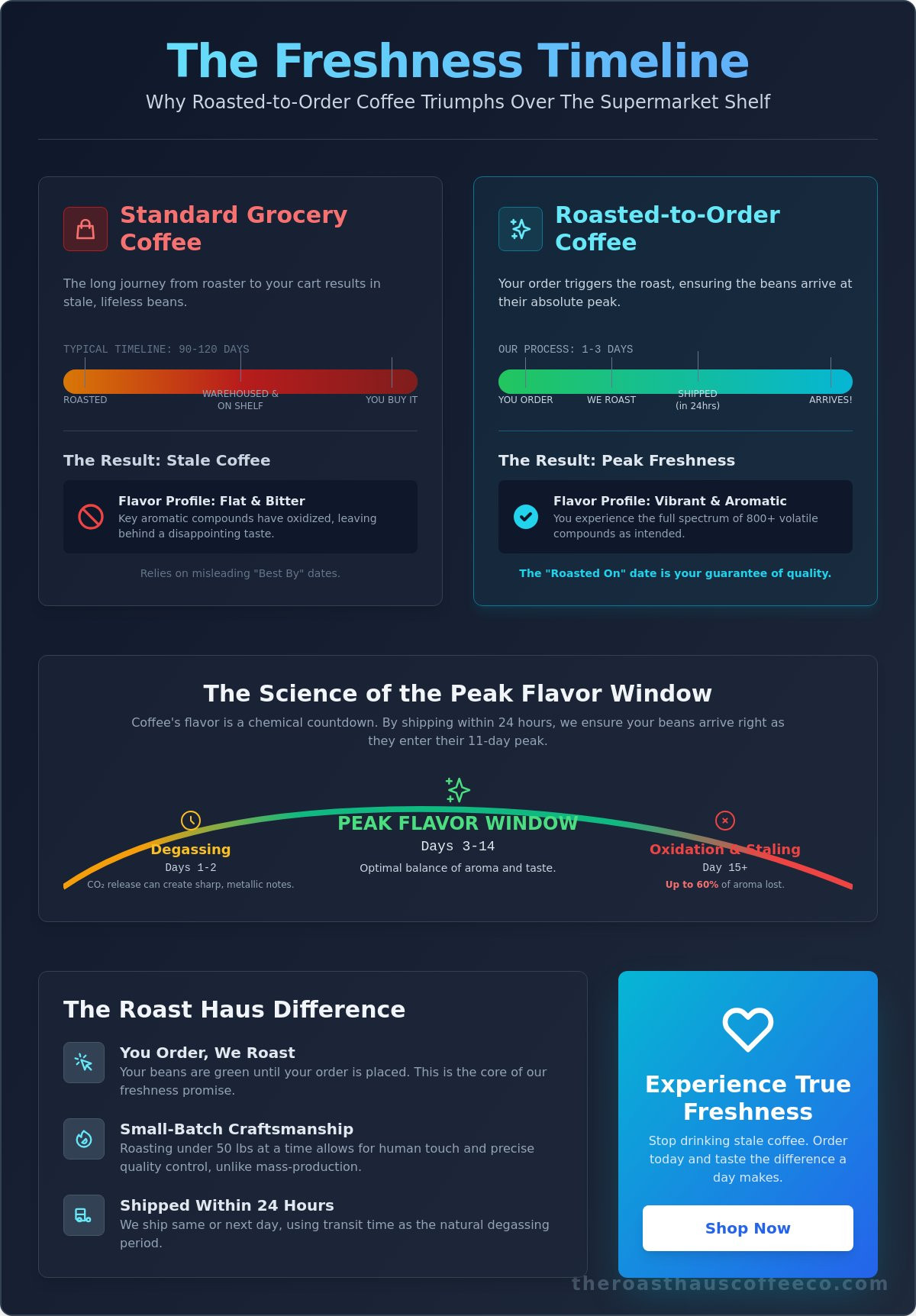
That "Best By" date on your grocery store coffee bag isn't a promise of quality. It's actually a countdown to disappointment. Research shows that coffee can lose up to 60% of its peak aromatic compounds within just 15 days of roasting. This is why so many bags on supermarket shelves, which often sit for 90 to 120 days, taste bitter or flat. When you choose roasted-to-order coffee beans, you stop the cycle of buying stale products. At The Roast Haus Coffee Co., we roast in small batches and ship within 24 hours to ensure you receive your beans at their absolute peak flavor potential.
It's frustrating to spend money on premium beans only to have them arrive without that signature scent. You deserve a glorious aroma that fills your kitchen every single morning. We'll show you why roasted-to-order logistics are the secret to the best cup of coffee you've ever brewed at home. This guide explains how to read roasting labels, why oxidation is the enemy of flavor, and how supporting a small, family-owned business guarantees a level of freshness that big corporations simply can't match.
Key Takeaways
- Understand why coffee roasted only after you buy it delivers a superior flavor compared to standard grocery store bags.
- Learn how to protect volatile organic compounds from oxidation to maintain peak aroma and flavor in every brew.
- Discover the simple steps to choosing your ideal roast level and deciding between single-origin or blended beans.
- See why roasted-to-order coffee beans are the essential secret to achieving a professional-quality cup at home.
- Find out how our small-batch, family-owned process ensures your coffee is shipped within 24 hours of roasting.
What Exactly Are Roasted-to-Order Coffee Beans?
Most coffee drinkers are used to buying bags that have lived on a grocery store shelf for 3 to 6 months. When you choose roasted-to-order coffee beans, you are opting for a completely different supply chain. This model means the heat never touches the green coffee seeds until after you place your order. While major retail chains roast 10,000 pounds at a time and store them in massive distribution centers, we wait for your signal. This ensures that the natural oils and volatile aromatics are at their absolute peak when the package arrives at your door.
The core of this artisan model is a 24-hour shipping promise. We roast your specific selection and get it into the mail the same day or the very next morning. This speed is not just about convenience; it is about chemistry. Coffee begins to oxidize the moment it leaves the roaster. By skipping the warehouse phase entirely, we provide a product that is significantly more vibrant than anything found in a traditional retail setting. Our family-owned approach prioritizes the craft over mass-market convenience.
The Distinction Between Freshly Roasted and Roasted-to-Order
The term "freshly roasted" is often used as a deceptive marketing buzzword. A bag of beans can sit in a warehouse for 12 weeks and still carry that label in a supermarket. You should ignore the marketing text and look for one specific metric: the "roasted on" date. This date is the only honest way to measure quality. We believe that choosing the best coffee beans starts with timing. If a bag does not have a clear roast date, it is likely stale. Roasted-to-order coffee beans guarantee that you are the first person to open that bag since the beans were cooled, providing a level of transparency that big corporations cannot match.
The Artisan Approach to Small-Batch Production
We roast in small batches, typically under 50 pounds at a time, to maintain precise temperature control. During the coffee roasting process, beans undergo complex physical and chemical changes that require a human touch. Mass-production lines use automated sensors that often miss the subtle nuances of a specific crop. Our roasters rely on intuition and years of experience to adjust the flame based on the humidity and bean density of that specific day. This unpretentious, craftsman-like focus is the hallmark of a family-owned roastery. We don't hide behind flashy branding; we let the quality of the small-batch roast speak for itself. This method allows us to highlight the unique flavor profiles of every origin we source, ensuring a superior cup of coffee every single time you brew.
The Science of the Peak Flavor Window
Coffee changes the second it leaves the roaster. Inside each bean, complex chemical reactions create over 800 volatile organic compounds (VOCs). These compounds give your morning cup its distinct aroma of chocolate, citrus, or toasted nuts. Understanding the science of coffee roasting helps explain why freshness is a hard requirement for quality. When you choose roasted-to-order coffee beans, you're timing your purchase to hit a specific biological timeline that mass-produced coffee simply cannot match.
The Peak Flavor Window usually begins 3 days after roasting and lasts until day 14. During this 11 day period, the internal chemistry is balanced. Before day 3, the flavors are often hidden by sharp, metallic notes. After day 14, the delicate VOCs begin to vanish. By roasting only after you place your order, we ensure the beans arrive at your door exactly as they enter this window. This ensures you get the full flavor potential we worked so hard to develop during the roast.
Degassing and the Importance of CO2
During the roasting process, carbon dioxide builds up inside the bean. This gas must escape before you brew, or it'll prevent water from properly extracting the coffee's flavor. Most beans need to rest for 24 to 48 hours to reach stability. Degassing is the release of gases trapped during roasting. We ship our orders the same or next day so that the shipping time serves as a natural resting period. By the time the package reaches your mailbox, the CO2 levels have dropped enough for the flavors to bloom perfectly in your cup.
Why Oxidation is the Enemy of Artisan Coffee
Think of coffee beans like fresh produce. They're perishable items that begin to degrade the moment they're exposed to the atmosphere. Oxygen is the primary culprit. It attacks the delicate oils within the bean, causing them to turn rancid and flat. This process, known as oxidation, strips away the vibrant acidity and sweetness that define small-batch roasts.
To fight this, we use airtight packaging equipped with one-way valves. These valves are a requirement for quality because they allow CO2 to escape without letting oxygen in. If you want to experience the full potential of your brew, you can browse our fresh-roasted selections to see the difference that artisan timing makes. Without these protections and the roast-to-order model, you're often buying coffee that's already lost 40 percent of its flavor profile while sitting on a grocery store shelf for months.
Roasted-to-Order vs. Standard Retail Coffee
Choosing between a bag from a supermarket shelf and a bag of roasted-to-order coffee beans is about more than just convenience. It is about the age and integrity of the product. Standard retail coffee follows a slow, industrial path. Beans often sit in regional warehouses for 60 days before they even reach the store. Once they arrive, they might stay on the shelf for another 90 to 120 days. Artisan roasters eliminate this delay. They roast the beans and ship them within 24 hours, ensuring you receive them at the start of their peak flavor window.
The wait for shipping is a small trade-off for the quality you receive. While grocery coffee is available instantly, it has already lost most of its character. Freshly roasted beans contain higher levels of bioactive compounds and antioxidants. Oxidation begins the moment the roasting process ends, breaking down the oils that carry flavor and health benefits. By the time a grocery store bag is opened, a large percentage of the original aromatics have dissipated. Choosing fresh beans means you get a richer nutritional profile and a cup that actually tastes like the region where it grew.
Transparency is the final differentiator. Every bag from an artisan roaster tells a story. You know the exact date the beans hit the cooling tray. You know the small business that handled the craft. This direct connection ensures accountability and a level of care that mass production cannot replicate.
The Grocery Store Myth: Why "Vacuum Sealed" Isn’t Enough
Vacuum sealing is a common marketing tool used to imply freshness. It keeps external air out, but it cannot stop the degradation that happened during the weeks of transport and storage before the seal was applied. Most retail coffee is 3 to 6 months old by the time you put it in your cart. There is also a common misconception that dark roasts stay fresh longer. In reality, dark roasts have more surface oils. These oils react with oxygen much faster than the dry surface of a light roast, leading to a rancid taste in a shorter amount of time.
Cost vs. Value: Investing in Your Morning Routine
Artisan beans carry a higher price point because the labor is intensive and the sourcing is superior. Small-batch roasting requires constant monitoring of temperature and airflow to ensure every bean reaches its potential. You can make this investment more affordable by signing up for a coffee subscription. These services offer better pricing and ensure you never run out of roasted-to-order coffee beans. Supporting a small family-owned business also promotes ethical sourcing. Many artisan roasters pay 20% to 40% above Fair Trade minimums to secure the highest quality harvests from sustainable farms.
How to Choose Your Perfect Roasted-to-Order Bag
Selecting the right coffee isn't just about picking a pretty label. It's about understanding what will actually end up in your mug. When you buy roasted-to-order coffee beans, you're already avoiding the 80% of grocery store products that sit on shelves for months, losing flavor every day. To find your ideal match, follow these four simple steps.
- Step 1: Identify your roast level. Light roasts are bright and acidic. Medium roasts offer a balance of body and sweetness. Dark roasts provide a smoky, bold finish with lower acidity.
- Step 2: Choose between single-origin or blends. Pick a single-origin if you want to taste the unique "terroir" of one specific farm. Choose a blend if you prefer a consistent, rounded flavor profile designed by a master roaster.
- Step 3: Check the processing method. If you need decaf, ensure the bag specifies the Swiss Water process. This method removes 99.9% of caffeine using only water, avoiding the harsh chemicals found in cheaper alternatives.
- Step 4: Verify the guarantee. Always look for a "roasted on" date rather than a "best by" date. We roast our beans the same day or the day after you place your order to ensure you receive them at their absolute peak.
Understanding Origins: From Ethiopia to Honduras
The geography of the bean dictates the flavor of your brew. A Kenya AA coffee is famous for its bold, savory-sweet complexity and sharp acidity. If you prefer something more delicate, an Ethiopia Limu offers floral aromas and citrus notes. For a reliable, all-day medium roast, our Honduras Morning Splendeur provides a smooth finish that never feels overwhelming. These differences exist because of the environment. Coffee grown in volcanic soil at altitudes above 1,200 meters develops a higher density. This density allows the bean to retain more complex sugars during the roasting process, resulting in a richer cup.
Roast Levels and Caffeine Content
Many drinkers believe that dark roasts have more caffeine. This is a myth. Caffeine is quite stable during roasting. Because dark roasted beans lose more moisture and mass, they're actually less dense. If you measure your coffee by the scoop, a light roast will actually have slightly more caffeine because the beans are smaller and heavier.
Artisans use specific terms to describe these levels. A "City Roast" is a light roast that finishes right after the first crack of the bean. A "Full City" roast is a medium-dark level where oils just begin to appear on the surface. For the best experience, match your roast to your equipment. Use a dark roast for your espresso machine to get a thick, rich crema. Use a light or medium roast for pour-overs to capture the subtle fruit and floral notes that high-heat brewing might otherwise hide.
The Roast Haus Difference: Small-Batch Quality from Wyandotte, Oklahoma
The Roast Haus Coffee Co. isn't a faceless corporation. We are a husband-and-wife team based in Wyandotte, Oklahoma, and we're obsessed with freshness. Every bag we sell is handled with personal care because we treat our customers like neighbors. Our commitment is simple; we ship your coffee within 24 hours of roasting. This ensures that the glorious aroma and complex flavors are locked in when the package arrives at your door. You won't find our beans sitting on a dusty shelf for weeks. We believe the best coffee experience starts with a roast date that is as close to your brew date as possible.
Our Signature Roasted-to-Order Process
We founded our company in 2014 with a single goal: to bring better coffee to our community. Since then, we've evolved into a professional roastery that prioritizes quality over volume. We take specific care with every variety we offer, ensuring that the unique characteristics of each origin are preserved. We don't roast it until you order it. This is our non-negotiable standard. By choosing roasted-to-order coffee beans, you avoid the stale bitterness found in grocery store products. We monitor the roast profiles of our small batches to ensure the natural sugars and oils are perfectly developed. This precision is especially important for our specialty selections:
- Kenya AA Supreme: We roast this to highlight its bold body and bright, wine-like acidity.
- Ethiopia Limu Organic: Our process ensures the delicate floral and fruity undertones of this organic bean remain intact.
Most commercial brands roast in massive quantities and let the beans sit in warehouses for months. We do the opposite. We wait for your order, roast in small batches, and get it to your door while the flavor potential is at its absolute peak.
Supporting Local Oklahoma Artisan Small Business
When you choose a local roaster over a multinational brand, you're making a choice that impacts the community. Every purchase supports an artisan small business that values craft over mass production. We take pride in being a family-owned operation in the heart of Oklahoma. For those who live near Wyandotte, we offer a local pickup option so you can get your roasted-to-order coffee beans even faster. This direct connection between the roaster and the drinker is what makes the artisan coffee world so special. Choosing local means you're getting a product that hasn't been processed by a massive machine or stored in a shipping container. It's time to upgrade your morning routine. Experience the difference that personal care and small-batch roasting make.
Elevate Your Morning Brew With Unmatched Freshness
You don't have to settle for stale grocery store bags that sat on shelves for months. Choosing roasted-to-order coffee beans ensures you capture the peak flavor window before oxidation takes over. At The Roast Haus, we've spent over 10 years perfecting the art of small-batch roasting in Wyandotte, Oklahoma. We're a family-owned artisan roastery dedicated to one goal: getting the freshest possible cup into your hands. That's why we ship every order within 24 hours of roasting. This commitment to speed means you get to experience the rich aromas and complex notes that only truly fresh coffee can provide. Supporting a small business means you get a product crafted with care, not a mass-produced item from a factory. You'll taste the difference that a decade of expertise and a passion for quality make in every sip. It's time to stop drinking old coffee and start enjoying the artisan standard you deserve.
Experience the difference of roasted-to-order coffee; Shop The Roast Haus today!
We look forward to roasting a fresh batch just for you.
Frequently Asked Questions
How long does roasted-to-order coffee stay fresh?
Peak freshness lasts for 7 to 21 days after the roast date. After 30 days, the natural oils begin to oxidize and the flavor profile flattens significantly. Our roasted-to-order coffee beans reach your door at the very start of this window. This ensures you experience the full 100 percent of the intended flavor notes before they fade. It's the only way to guarantee a truly vibrant cup every morning.
Is it better to buy whole bean or ground coffee when ordering online?
You should always choose whole bean coffee to preserve the delicate oils and aromas. Ground coffee has 50 times more surface area exposed to oxygen, which causes it to go stale within 15 minutes of grinding. Buying whole beans allows you to grind right before brewing. This simple step keeps your roasted-to-order coffee beans tasting fresh for weeks instead of minutes. It's a small change that makes a massive difference.
Why does my coffee bag have a small plastic valve on the front?
This is a one-way degassing valve that allows carbon dioxide to escape without letting oxygen inside. Freshly roasted coffee releases approximately 2 liters of CO2 per pound over the first 24 hours. Without this valve, the pressure would cause the bag to rupture. It protects the beans from oxidation, which is the primary cause of flavor loss. We use these valves to maintain the integrity of our small-batch roasts.
How soon after roasting will my coffee be shipped?
We ship your coffee within 24 hours of it leaving the roaster. Most orders are roasted and boxed on the same business day to guarantee you receive the product at its absolute peak. This quick turnaround means your coffee typically arrives 2 to 3 days after roasting. You get to enjoy the beans exactly when they've finished degassing and are ready for brewing. We don't believe in letting coffee sit on shelves.
Can I freeze my coffee beans to keep them fresh longer?
You can freeze coffee beans for up to 3 months if they're kept in an airtight, vacuum-sealed container. However, moisture is the enemy of flavor. If you open the bag while it's still cold, condensation forms on the beans and ruins the cell structure. We recommend buying smaller batches every 14 days rather than freezing to maintain the highest quality. Freshness is always better than long-term storage.
What is the best way to store roasted-to-order coffee at home?
Store your beans in an opaque, airtight container at a room temperature of 68 to 72 degrees Fahrenheit. Keep the container in a dark pantry away from direct sunlight and heat sources like the stove. Light and heat accelerate the breakdown of organic compounds by 200 percent. A simple ceramic or stainless steel canister works best to lock in the aroma. Don't leave them in the original bag if it doesn't seal tightly.
Does the altitude of the coffee origin affect the roasting process?
Yes, coffee grown at altitudes above 4,000 feet is denser and requires a more intense heat profile during roasting. High-altitude beans, often labeled Strictly Hard Bean (SHB), have a tighter cell structure that develops more complex sugars. We adjust our small-batch roasting times by 30 to 60 seconds to account for these density differences. This precision ensures every origin reaches its full potential. It's how we bring out those unique, bright flavor notes.
Is roasted-to-order coffee more expensive than organic coffee?
The cost of roasted-to-order coffee depends on the specific farm and harvest quality rather than just the roasting schedule. Many of our selections are both organic and roasted to order, as these categories often overlap in the specialty market. Industry data from the Specialty Coffee Association shows that quality-tier beans fetch higher prices because of labor-intensive sorting and sustainable practices. You aren't just paying for a date; you're paying for better sourcing and craftsmanship.

