


For decades, the entire coffee industry has focused on one thing: the bean. We've been told the perfect cup comes from the perfect roast. But what if the most exciting part of the coffee plant has been overlooked, and often discarded, this whole time?
You can also create a powerful concentrate for sodas and cocktails. Use a stronger 1:7 ratio and let it steep for 24 hours. To make a "Cascara Fizz," just mix 2 ounces of this concentrate with 6 ounces of sparkling water and a squeeze of lime. For a simple cascara syrup, combine 1 cup of your hot brew with 1 cup of sugar in a saucepan. Heat gently until the sugar dissolves completely, then cool. It's an amazing addition to cocktails, lattes, or even drizzled over pancakes. This focus on craft beverages is a growing trend, with restaurants like Tacoverse gaining popularity for their unique mocktails. Ready to experiment? Shop our sun-dried cascara to start brewing.
If you've heard the word "cascara," you're probably a little confused. Many people mistakenly connect it to a medicinal supplement or feel unsure about its flavor and caffeine level. We understand. That uncertainty has kept this incredible drink a secret from far too many people for far too long.
This guide is here to give you clear, honest answers. We promise to show you exactly what coffee cherry cascara is, how to brew it, and where its sweet, fruity flavor comes from. You'll learn its true caffeine content and discover why this sustainable "super-tea" is finally getting the attention it deserves. Get ready to explore everything from its history on small farms to simple recipes you can try at home today.
Key Takeaways
- Learn the ideal water temperature and steeping time to brew the perfect cup of coffee cherry tea without bitterness.
- Understand the crucial difference between coffee cherry tea and Cascara Sagrada to ensure you are brewing safely and correctly.
- Discover the unique flavor profile of cascara, which has surprising notes of hibiscus and rosehip, unlike traditional tea or coffee.
- Find out how choosing this sustainable brew can directly support coffee farmers by reducing waste and creating a valuable new product.
Defining Cascara: The "Hidden" Fruit of the Coffee Plant
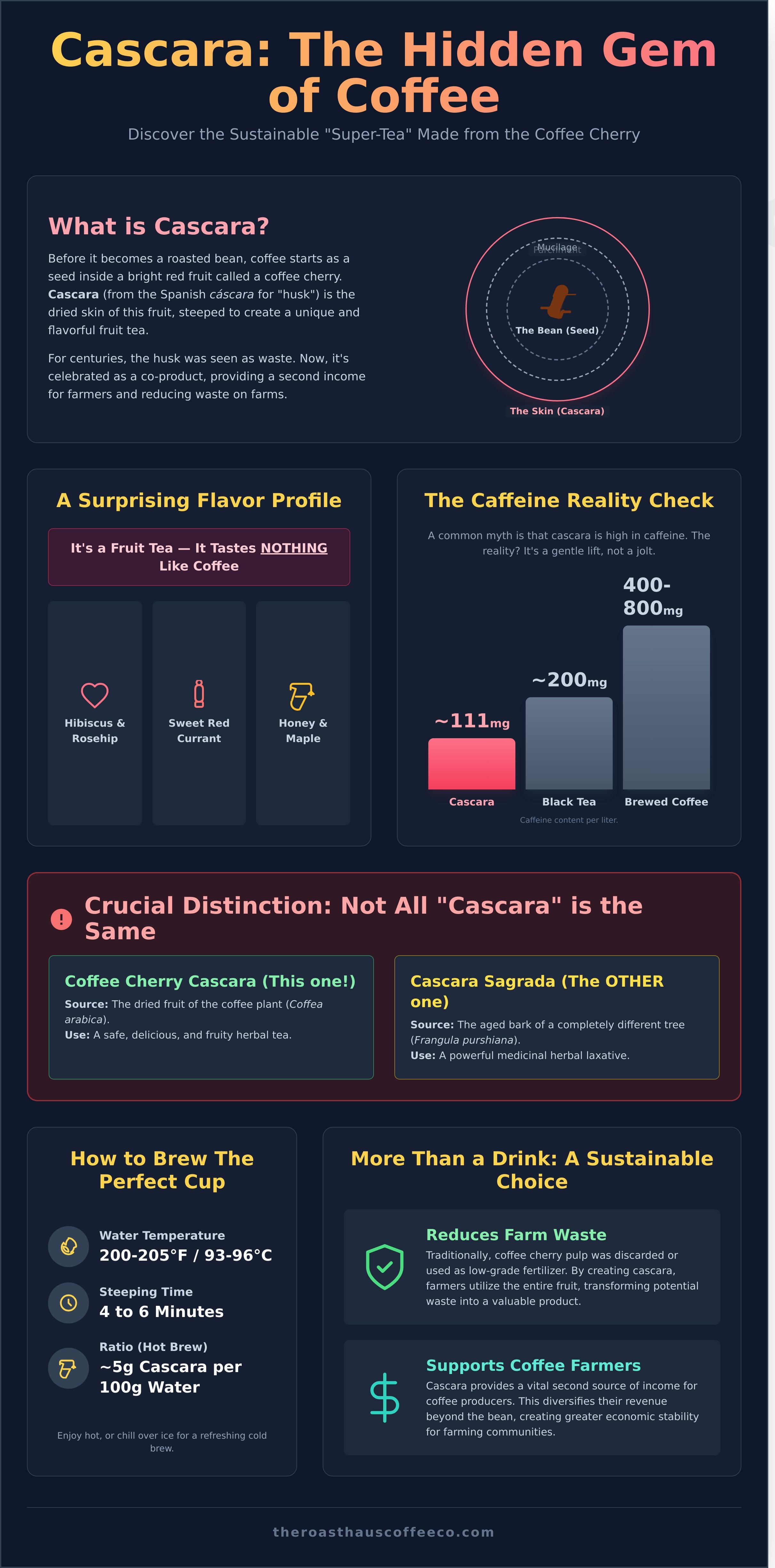
Before you get that perfectly roasted coffee bean, it starts its life as a seed inside a bright red fruit. This fruit, called a coffee cherry, is often overlooked. But its dried skin is the source of a unique and delicious beverage: cascara. The name comes directly from Spanish, where cáscara means "husk" or "shell," a simple and honest description for a complex drink.
For too long, the focus has been solely on the seed. We believe in using the whole fruit. To truly appreciate what you're drinking, it helps to understand the anatomy of the coffee cherry from the outside in:
- The Skin (Pulp): The cherry's outer layer. When picked and dried correctly, this becomes the flavorful cascara tea.
- The Mucilage: A sweet, sticky layer of fruit pulp just beneath the skin that helps give the final beverage its fruity notes.
- The Parchment & Silver Skin: Two thin, protective layers that encase the seed.
- The Bean (Seed): At the very center are the two seeds we know as coffee beans.
Understanding this structure makes it clear: the coffee bean is just one part of a larger, more flavorful whole. The rest of the fruit isn't waste; it's an opportunity.
The Journey from Waste to Wellness
For most of modern coffee history, the pulp of the coffee cherry was treated as a byproduct. After the beans were removed, the husks were either discarded or used as a low-cost fertilizer on the farm. That all began to change in 2005, when fifth-generation Salvadoran coffee producer Aida Batlle decided to brew the dried husks as a tea. She introduced it to the specialty coffee market, sparking a renaissance. Today, forward-thinking farmers no longer see the fruit as waste but as a co-primary crop, providing a second source of income and a sustainable way to use the entire harvest.
Global Variations: Qishr and Hashara
While it feels like a modern discovery in Western coffee shops, brewing coffee cherry tea is an ancient practice. In Yemen, farmers have brewed a version called Qishr for centuries, often spicing it with ginger and cinnamon. In Ethiopia, a similar drink known as Hashara is made from husks that are sun-dried and then lightly roasted to deepen the flavor. These drinks all fall under the umbrella of coffee cherry tea, and you can learn more about their shared history by asking What is Cascara? online. The modern version we celebrate today typically skips the extra spices or roasting, focusing instead on a careful drying process that preserves the fruit's pure, delicate flavors of hibiscus, rose hip, and sweet cherry.
Flavor Profile and Caffeine: What Does Cascara Taste Like?
Forget everything you think you know about coffee. When you steep cascara, you aren't brewing a coffee-like drink. You're making a unique herbal infusion. The flavor is bright, sweet, and refreshingly fruity. It doesn't taste like coffee at all. Instead, think of a delicate fruit tea with a beautiful reddish hue.
The sensory experience is complex yet approachable. Most people first notice notes of hibiscus, rosehip, and sweet red currant. As it cools, a subtle sweetness, much like maple or honey, comes forward. Its body is light and smooth, similar to a high-quality oolong or white tea, with a gentle, pleasant acidity that makes it incredibly easy to drink. It's a clean and refreshing flavor that stands entirely on its own.
Beyond its taste, this coffee cherry tea is packed with antioxidants. The drying process preserves a high concentration of polyphenols, compounds known for their health benefits. It's a simple, natural way to get a wellness boost. Just be sure you're getting the right stuff; coffee cherry tea should never be confused with the herbal laxative known as Cascara Sagrada, which is derived from the bark of a completely different tree, Frangula purshiana.
This focus on natural wellness and protective antioxidants isn't just limited to what we drink; it's a core principle in modern skincare as well. For those who value high-quality, protective products, online stores like Totaal Beauty offer a range of premium options.
The Caffeine Myth vs. Reality
A common misconception is that cascara is loaded with caffeine. Since it comes from the coffee plant, that seems logical, but it’s simply not true. The caffeine is concentrated in the seed (the bean), not the fruit's skin. A 2013 study found that steeped cascara contains approximately 111.4 milligrams of caffeine per liter. To put that in perspective, a liter of black tea contains around 200 mg, and brewed coffee can easily have 400 to 800 mg. It gives you a gentle lift without the jitters, making it the perfect afternoon pick-me-up.
Factors Influencing Cascara Flavor
Just like with coffee beans, not all cascara is the same. The final flavor in your cup depends heavily on where and how it was grown and processed. Quality is everything.
- Origin Matters: The terroir leaves a distinct fingerprint. A cascara from Ethiopia might present light, floral, and tea-like notes. In contrast, one from a Geisha varietal in Panama could deliver intense tropical fruit flavors like mango and a syrupy sweetness. Discovering these nuances is part of the fun, and you can explore our single-origin offerings to taste the difference yourself.
- Processing Method: Cherries from a "natural" process coffee, where the fruit is dried whole around the bean, often produce a sweeter, fruit-forward cascara. Husks from "washed" process coffees tend to be cleaner and more delicate.
- Drying Technique: How the fruit skins are dried is critical. They must be dried slowly and evenly at controlled temperatures and altitudes. Rushing the process or drying in humid conditions can lead to fermented or moldy flavors. Proper drying locks in the fruit’s natural sugars, ensuring a sweet and vibrant final product.
Cascara vs. Cascara Sagrada: Clearing the Confusion
Let's be direct. There's a critical and potentially dangerous mix-up with the word "cascara," and we need to set the record straight. One is the delicious, fruit-forward tea from the coffee cherry we love. The other is a potent herbal drug derived from the bark of a completely different plant. Confusing the two isn't just a simple mistake; it's a health risk. As your trusted coffee roaster, we believe it's our job to give you the honest, clear facts so you can enjoy your brew with complete confidence.
The shared name comes from the Spanish word cáscara, which simply means "husk" or "peel." Coffee cherry tea is the dried husk of the coffee fruit. Cascara Sagrada, which means "sacred bark," is the aged bark of a tree. They are not related. They are not interchangeable. And you should never, ever consume one thinking it's the other.
What is Cascara Sagrada?
Cascara Sagrada is the dried, aged bark of the Frangula purshiana tree, a species of buckthorn native to western North America. For over a century, it was widely used as a powerful stimulant laxative. However, on May 9, 2002, the U.S. Food and Drug Administration (FDA) issued a final rule reclassifying it, stating it was no longer "generally recognized as safe and effective" for over-the-counter use due to a lack of modern safety data. It is a powerful substance intended for specific medicinal purposes, not for casual brewing.
How to Shop Safely for Coffee Cascara
Your safety is everything. You deserve to know that what you're buying is exactly what you expect: a pure, simple tea made from dried coffee cherries. The good news is that telling the products apart is easy when you know what to look for. Your best defense is to buy from a source that specializes in coffee, not herbal supplements.
Here’s how to ensure you're getting authentic coffee cherry tea:
- Check the Labeling: Look for clear, specific terms like "Coffee Cherry Tea," "Coffee Fruit Tea," or "Dried Coffee Cherries." The product should proudly state its origin from a coffee farm, not a medicinal herb supplier.
- Avoid Red Flags: Be wary of any product sold in the supplement aisle of a pharmacy or health food store. If the packaging makes health claims about "cleansing," "detox," or "regularity," it's almost certainly Cascara Sagrada. Real coffee cascara is sold for its unique flavor, not for medicinal effects.
- Buy from a Coffee Expert: The safest way to purchase is directly from a reputable coffee roaster. At The Roast Haus, we source our coffee products with meticulous care. We know our farmers, we understand the process, and we can guarantee that our coffee cherry tea is 100% pure coffee fruit, with nothing else added. We are coffee people, not pharmacists.
When you buy from a dedicated coffee company, you're not just getting a quality product; you're getting peace of mind. You're buying from artisans who are passionate about the entire coffee plant, from the bean to the cherry that surrounds it.
How to Brew Cascara: Hot, Cold, and Creative Recipes
Brewing this unique coffee cherry tea is simple. It doesn't require expensive equipment. You just need to get a few key details right to unlock its incredible flavor. We treat brewing with the same care we give our roasting. It’s all about precision. The golden ratio we recommend is a great starting point: use 6 grams of dried fruit for every 100 grams of water, a 1:16.6 ratio that yields a balanced, full-bodied cup every time.
Just as important is water temperature. Never use fully boiling water. Water heated to 212°F (100°C) will scorch the delicate fruit, extracting bitter notes instead of the sweet, floral ones you want. Aim for a temperature between 195-205°F (90-96°C). Finally, be patient with your steep time. A quick dip won't do. We find the sweet spot is between 4 and 8 minutes, depending on your taste. You can use a French Press for a rich, full-immersion brew, a Clever Dripper for an exceptionally clean cup, or even a simple tea infuser in your favorite mug.
The Classic Hot Brew
For a warm, comforting cup that highlights notes of hibiscus and stone fruit, a classic hot infusion is the perfect method. It’s straightforward and consistently delicious.
- Measure: Weigh out 12 grams of dried fruit and 200 grams of water (about 7 ounces) for a single serving.
- Heat: Bring your water to 200°F. If you don't have a thermometer, let boiling water sit for 60 seconds before pouring.
- Steep: Combine the fruit and hot water in your French Press or mug. Start a timer for 4 to 8 minutes. A shorter steep is lighter and more floral; a longer steep creates a richer, syrupy body.
- Serve: Plunge your press or remove your infuser. For an extra layer of flavor, try adding a slice of fresh ginger or a twist of lemon peel during the steep. A small amount of honey also pairs beautifully.
For a balanced cup with maximum sweetness, we find a 6-minute steep hits the mark perfectly.
Cascara Cold Brew and Sodas
When the weather warms up, nothing is more refreshing than a chilled coffee cherry tea. The cold brew method produces a smooth, sweet, and less acidic drink that’s perfect over ice.
For a simple 24-hour cold brew, combine the dried fruit and cold, filtered water in a jar using a 1:10 ratio (for example, 50 grams of fruit to 500 grams of water). Seal the jar, give it a good shake, and let it steep in the refrigerator for a full 24 hours. Strain it through a fine-mesh sieve and serve over ice.
You can also create a powerful concentrate for sodas and cocktails. Use a stronger 1:7 ratio and let it steep for 24 hours. To make a "Cascara Fizz," just mix 2 ounces of this concentrate with 6 ounces of sparkling water and a squeeze of lime. For a simple cascara syrup, combine 1 cup of your hot brew with 1 cup of sugar in a saucepan. Heat gently until the sugar dissolves completely, then cool. It's an amazing addition to cocktails, lattes, or even drizzled over pancakes. Ready to experiment? Shop our sun-dried cascara to start brewing.
Sustainability and the Artisan Roaster Perspective
For us, coffee is about more than just the bean. It’s about the entire fruit, the farmer who grew it, and the impact its journey has on the world. This belief is at the heart of why we champion cascara. It represents a more complete, sustainable, and honest approach to coffee, one that values the whole harvest and respects the people behind it.
Thinking about the entire coffee cherry fundamentally changes the economic and environmental equation of coffee production. It’s a simple philosophy: waste nothing. By embracing the dried fruit of the coffee plant, we help create a system that is better for the planet and more profitable for the small, family-owned farms we support.
Environmental Impact of Cascara
Traditionally, the fruit pulp left over after coffee processing was seen as waste. Every year, an estimated 20 million tons of this pulp is discarded, often ending up in local rivers. This organic material pollutes waterways, depleting oxygen and harming aquatic ecosystems. By creating a market for this byproduct, we help turn a major pollutant into a premium product. This upcycling provides a crucial second revenue stream for farmers, with some studies showing it can increase a small farm’s income by up to 30%. It’s a direct investment in the communities that grow our coffee.
Why Freshness Matters for Cascara
Just like coffee beans, dried coffee cherry husks are affected by oxygen. When exposed to air for too long, they oxidize, losing their delicate, sweet flavors and developing a dull, woody taste. Peak freshness is non-negotiable. That’s why we source our products in small batches, ensuring they are properly dried and stored to preserve their vibrant character. Our commitment to freshness doesn't stop with tea. It's the foundation of everything we do. Explore our freshly roasted coffee beans and samplers and taste the difference for yourself.
The future of specialty coffee depends on innovations like these. As more people discover this incredible brew, it strengthens a cycle of sustainability that benefits everyone. It empowers farmers, protects the environment, and introduces you to a completely new world of flavor. It’s not just a trend; it's a better way to think about the coffee we love.
Experience the Full Coffee Plant
You're now equipped with the knowledge to explore one of coffee's best-kept secrets. You know that cascara is the sweet, dried fruit of the coffee cherry, completely distinct from the herbal laxative. With its bright notes of hibiscus and red currant and just 25-30 milligrams of caffeine per cup, it’s a sustainable choice that honors the entire coffee harvest. This deep respect for the coffee plant, from fruit to bean, is what drives us every single day.
That same commitment to quality defines our roasting philosophy. We believe great coffee starts with great care. When you're ready to taste the heart of the coffee cherry-the bean itself-we're here for you. As a family-owned artisan roastery, we guarantee freshness. Shop our coffee beans, roasted to order just for you and shipped within 24 hours of roasting. It's a difference you can taste in every cup.
Go ahead and explore the world of coffee. Happy brewing!
Frequently Asked Questions About Cascara
Is cascara tea higher in caffeine than coffee?
No, cascara tea is much lower in caffeine than coffee. A typical 8-ounce cup of brewed cascara has between 15 and 25 milligrams of caffeine. For comparison, an 8-ounce cup of drip coffee contains around 95 milligrams. This makes cascara a great choice for a gentle energy boost in the afternoon without the full intensity of a cup of coffee.
Does cascara taste like coffee?
Cascara tastes nothing like coffee. Its flavor is surprisingly sweet and fruit-forward, often compared to a delicate herbal tea. You can expect to find tasting notes of hibiscus, rose hip, red currant, and sometimes even cherry or prune. The taste is clean and refreshing, reflecting the fruit that surrounds the coffee bean, not the roasted bean itself.
Is cascara the same as the laxative Cascara Sagrada?
No, they are entirely different and come from two separate plants. The cascara we drink is the dried skin of coffee cherries from the Coffea arabica plant. The herbal laxative, Cascara Sagrada, is made from the bark of the Rhamnus purshiana tree, native to North America. They share a similar name but have no botanical or chemical relationship.
Can I eat the dried coffee cherries?
Yes, you can, but they are best when brewed or infused. While you can chew on a few pieces, their leathery texture isn't for everyone. Their true potential is unlocked when you steep them like tea to extract their flavor. They are also excellent for infusing into spirits like gin or for making a unique simple syrup for cocktails and desserts.
Where can I buy high-quality cascara?
You can find the best quality cascara from specialty coffee roasters who source their products directly from coffee farms. Look for roasters who provide transparent information about the coffee's origin, varietal, and processing method. Reputable online coffee retailers that focus on single-origin offerings are also an excellent source for fresh and flavorful cascara.
Does cascara have any health benefits?
Yes, cascara is rich in antioxidants. Studies from institutions like the University of British Columbia show that it contains high levels of polyphenols, which are beneficial plant compounds. Its antioxidant capacity, measured by an ORAC score, has been found to be higher than that of other superfoods like blueberries. These antioxidants help protect your body's cells from damage.
How long does dried cascara stay fresh?
Dried cascara will stay fresh and flavorful for up to one year from its harvest date if stored correctly. To preserve its quality, you must keep it in an airtight container in a cool, dark place. Protecting it from light, heat, and moisture is critical. This ensures you get the best possible taste from every single brew, just like with our coffee beans.
Can I brew cascara in a regular coffee maker?
We don't recommend using a standard drip coffee maker. The brew cycle is too short to properly extract the deep, fruity flavors from the coffee cherry skins. For the best results, you should steep cascara like a loose-leaf tea. Use a French press or a simple teapot with an infuser, and let it steep in hot water for 4 to 6 minutes.

