


Most coffee labeled as "Premium" in big-box stores was actually roasted over 180 days ago and lacks any real flavor profile. It's a common trap to buy an expensive bag only to find the beans taste bitter or burnt once you get them home. You deserve to understand exactly what makes coffee high quality so you can stop wasting money on stale products. True quality is defined by rigorous technical standards, not just clever marketing on a cardboard box.
We believe your morning ritual should be fueled by the freshest beans possible. This article will show you how to identify genuine specialty coffee using the 5 essential benchmarks of the industry. We'll explain the Specialty Coffee Association's 80-point grading scale, the impact of small-batch roasting, and why our roast-to-order philosophy ensures you receive your beans at their peak flavor potential within 48 hours of roasting. You'll walk away with a clear checklist to ensure every cup you brew is artisan grade.
Key Takeaways
- Learn why the 80-point Specialty Coffee Association scale is the non-negotiable standard for identifying true artisan beans.
- Understand how high-altitude environments and volcanic soil develop the complex sweetness and acidity found in premium coffee.
- Discover the scientific roasting techniques and small-batch methods that define what makes coffee high quality at its peak.
- Master a simple sensory checklist to evaluate bean uniformity and aroma so you can spot specialty grade quality in your own kitchen.
- See why our "roasted to order" philosophy is the final, most critical link in preserving the flavor potential of every bean.
Defining Specialty Grade: The Technical Standards of High-Quality Coffee
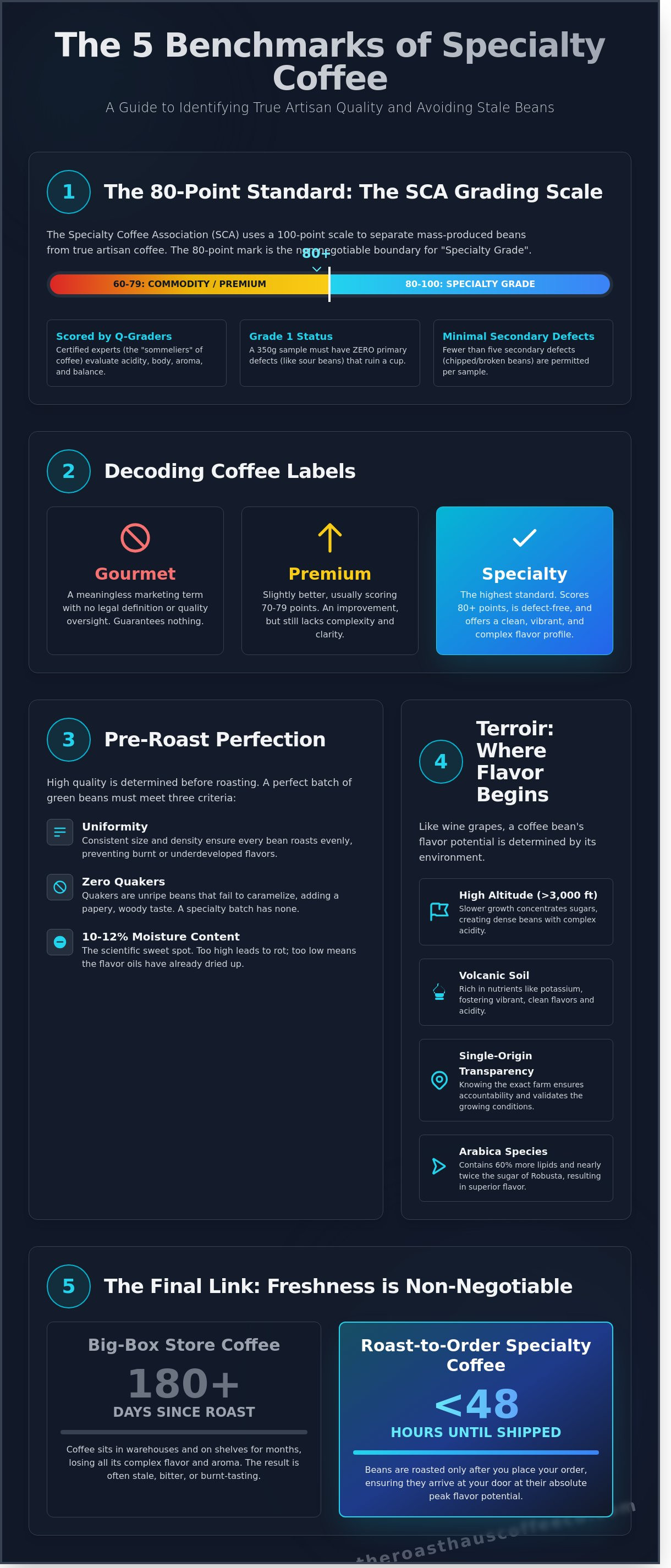
To understand what makes coffee high quality, we have to look at the data. The Specialty Coffee Association (SCA) uses a strict 100-point scale to grade coffee beans. For a coffee to be labeled "specialty," it must score 80 points or higher. Most commercial coffee found in grocery stores sits between 60 and 75 points. That 80-point line is a non-negotiable boundary. It separates mass-produced commodity beans from artisan products that offer genuine flavor clarity and depth.
Professional tasters known as Q-Graders determine these scores. These experts are the sommeliers of the coffee industry. To earn their title, they must pass 22 rigorous tests administered by the Coffee Quality Institute. They evaluate the beans based on acidity, body, aroma, and balance. When they find a coffee that hits the 80+ mark, they also check for "Grade 1" status. This technical designation requires a 350-gram sample to have zero primary defects. Primary defects include things like black beans or sour beans that completely ruin a pot. They also limit secondary defects, like broken or chipped beans, to fewer than five per sample.
The Difference Between Specialty, Premium, and Gourmet
The word "Gourmet" is a marketing term. It has no legal definition and no technical oversight. You can find it on a five-dollar tin or a fifty-dollar bag. It doesn't guarantee anything about the bean's origin or quality. "Premium" coffee is slightly better, usually scoring between 70 and 79 points. While it's an improvement over the lowest grades, it still lacks the complexity of specialty beans. Choosing specialty grade isn't just about taste. Defect-free beans are easier on your system. Low-grade beans often contain molds or mycotoxins that can cause stomach irritation and jitters. High-quality beans provide a cleaner experience for your body.
Physical Characteristics of High-Quality Green Beans
Quality starts with the raw green bean before it ever touches a roaster. We look for uniformity in size and density. If the beans are the same size, they roast evenly. This consistency is a hallmark of careful sorting at the farm level. We also watch for "quakers." These are unripe beans that don't have enough sugar to caramelize. They look pale after roasting and taste like dry paper or wood. A high-quality batch has zero quakers. Finally, moisture content is a critical metric. Standards require green coffee to maintain a moisture level between 10% and 12%. If the moisture is too high, the coffee can rot during shipping. If it's too low, the flavor oils dry up and the coffee tastes stale before it's even brewed. This technical precision is exactly what makes coffee high quality from the very start.
Terroir and Origin: How Environment Shapes Flavor Potential
A coffee bean is the seed of a fruit. Like wine grapes, its flavor depends entirely on where it grows. This environmental influence is called terroir. It includes soil chemistry, altitude, and specific weather patterns. These factors determine the raw potential of the bean before it ever reaches a roaster. Understanding these variables is the first step in learning what makes coffee high quality.
The "Altitude Rule" is a reliable benchmark for specialty coffee. Beans grown at elevations above 3,000 feet experience cooler nights. This temperature drop slows the maturation of the coffee cherry. A slower growth cycle allows the plant to concentrate more sugars and nutrients into the seed. This results in a denser bean with more complex acidity. In contrast, low-altitude beans grow quickly and often taste woody or flat. High-quality beans are also almost exclusively Arabica. This species contains 60% more lipids and nearly twice the sugar concentration of the hardier, but bitter, Robusta plant.
- Volcanic Soil: Soil rich in potassium and magnesium provides the nutrients needed for vibrant acidity. Porous volcanic earth also offers the drainage coffee roots require to thrive.
- Sourcing Transparency: High-quality sourcing focuses on single-origin beans. This tells you exactly which farm or cooperative produced your coffee. It ensures accountability and validates the growing conditions.
- Microclimates: Small-scale weather patterns in a specific valley can create flavor profiles that are impossible to replicate elsewhere.
The World’s Premier Coffee Regions
Geography acts as a flavor map for your palate. African origins like Ethiopia and Kenya are famous for floral notes and high, citrus-like acidity. If you want to experience the peak of this profile, the Kenya AA Supreme represents the top tier of Kenyan grading. The "AA" refers to the specific screen size of 17/64 of an inch. Larger beans often correlate with higher oil content and more intense flavor. Central and South American coffees offer a different profile, prized for their balance and notes of milk chocolate and toasted nuts.
Processing Methods: Washed, Natural, and Honey
Processing is the method used to remove the fruit from the seed. The washed process is the industry standard for clarity. It involves removing the pulp and washing the beans in water tanks to highlight the "clean" acidity of the origin. The natural process dries the bean inside the fruit. This imparts intense berry and tropical fruit notes. Even the best beans are ruined if processing isn't precise. Over-fermentation for as little as 12 hours can create sour, vinegar-like flavors that disqualify a bean from being specialty grade. You can taste the difference that careful processing makes when you shop our artisan roasted coffees.
The Roasting Bridge: Turning Potential into Peak Flavor
Roasting is where raw green seeds transform into the aromatic beans you recognize. This stage is a critical part of what makes coffee high quality. During the Maillard reaction, heat triggers a chemical dance between amino acids and reducing sugars. This process unlocks over 800 distinct aromatic compounds that were hidden inside the bean. Industrial mass-production often rushes this step by using massive 500-pound drums that prioritize volume over nuance. In contrast, artisan roasting focuses on the specific needs of the bean to highlight its natural origin flavors.
Oxidation is the primary enemy of specialty coffee. Once beans leave the roaster, they begin to lose their volatile oils and aromatics. That is why we follow a strict "Roasted-to-Order" philosophy. Most grocery store coffee sits on shelves for 60 to 120 days before you ever buy it. By then, the vibrant notes of citrus or chocolate have vanished. We ensure your coffee is shipped the same or day after roasting to capture the peak flavor potential. It's the difference between a stale commodity and a fresh, artisan product.
Understanding the Peak Flavor Window in 2026
Freshness isn't just about being "new." It's about timing. Immediately after roasting, beans undergo a degassing phase where they release high levels of carbon dioxide. If you brew beans 30 minutes after they come off the tray, the escaping gas creates bubbles that prevent water from fully saturating the grounds. This leads to uneven extraction and a sour taste. The sweet spot for most freshly roasted coffee beans falls between days 3 and 14. During this window, the CO2 has settled, allowing the complex flavor profile to shine. By the time 30 days pass, the chemical structure changes significantly as oxygen replaces internal gases, leading to a flat, paper-like taste.
Roast Profile Accuracy
A master roaster knows that a "Dark Roast" shouldn't mean the coffee tastes burnt. High-quality roasting preserves the origin character of the bean even at higher temperatures. We carefully monitor the "first crack," which is an audible pop indicating the beans are expanding and releasing moisture. This moment requires precision and constant attention. Small-batch roasting is defined as roasting under 50lbs to ensure heat consistency throughout the entire drum. This level of control is essential for what makes coffee high quality because it prevents scorched beans and ensures every cup tastes exactly as intended. Our family-owned business treats every batch as a craft, not a commodity.
The Sensory Checklist: How to Identify Quality at Home
You don't need a laboratory to figure out what makes coffee high quality. It starts with a simple visual inspection. Open your bag and look for uniformity. High-quality beans share a consistent size and color. If you see a mix of pale, shriveled beans and charred ones, the roaster likely rushed the process or used lower-grade "quakers." In specialty coffee standards, a 350-gram sample should have zero primary defects. If your bag is full of broken fragments or hollow shells, the flavor will be just as inconsistent as the appearance.
Aroma provides the next clue. High-quality coffee smells distinct; you should pick up specific notes like chocolate, citrus, or toasted nuts. If the bag smells like a damp basement or old gym clothes, it's musty. This usually means the beans weren't dried properly at the farm or they've absorbed moisture during shipping. True quality smells earthy in a way that reminds you of fresh soil or rain, never rot or mildew.
Don't fall for the oil myth. Many people think shiny, oily beans are fresher. They aren't. Oil on the surface means the roast was dark enough to break the bean's internal cell structure. These oils are now exposed to oxygen. Exposed oils go rancid within 7 to 10 days; this creates that bitter, "burnt" taste that lingers. High-quality specialty beans are usually roasted to preserve their natural oils inside the bean where they stay protected until you grind them.
Finally, test the clarity. A superior cup should be enjoyable black. If you need three spoons of sugar to mask the bitterness, the quality isn't there. High-quality coffee has a natural sweetness and a clean finish that doesn't feel heavy or "muddy" on your tongue.
Testing Your Beans: The "Bloom" Test
Freshness is a pillar of what makes coffee high quality. When you pour hot water over fresh grounds, they should puff up and bubble. This is the "bloom." It happens because the beans are releasing CO2 trapped during the roasting process. If your coffee stays flat and lifeless, the gas is gone and the flavor has oxidized. To get the best results, follow this how to make coffee guide to master your brewing technique and see the bloom in action.
Packaging Red Flags
Packaging protects your investment. Never buy coffee in clear bags or from bulk bins. Light and oxygen destroy flavor in less than 24 hours. Look for a one-way degassing valve. This little plastic circle lets CO2 out without letting oxygen in. Most importantly, check for a roast date. If a bag only has an "expiration date," it's likely months old. We believe coffee is a fresh produce item. You should aim to brew beans within 14 to 21 days of the roast date for peak flavor potential.
The Final Link: Why Freshness is the Ultimate Quality Differentiator
Supermarket shelves are frequently the graveyard of specialty coffee. You might find Grade 1 beans there, but many have sat in a plastic bag for 180 days before you ever see them. Even the highest rated beans lose their peak flavor profile within 14 to 21 days of roasting. When coffee sits for months, the complex acids and sugars break down through oxidation. This turns a vibrant cup into something bitter and flat. Understanding what makes coffee high quality involves more than just a score; it's about the timing of the roast.
At The Roast Haus Coffee Co., we believe the clock starts the moment the beans leave the cooling tray. Our "Shipped within 24 Hours" promise is our way of closing the gap between our roaster and your cup. We don't believe in bulk inventory or dusty warehouses. We believe in the artisan process. Supporting small-batch roasters is better for your palate and better for the farmer. When we roast in small quantities, we can pay closer attention to the unique needs of every lot. This ensures you get the full value of what makes coffee high quality every time you brew.
The Roast Haus Approach to Artisan Roasting
Our family-owned business operates on a simple set of values. We take no shortcuts in the roasting process. We focus on sourcing transparency, selecting beans like our bright, citrusy Ethiopia Limu or the smooth, balanced Honduras Morning Splendeur. We want you to know exactly where your coffee comes from. To make this easier, our coffee subscription automates your access to high-quality beans. You won't have to worry about running out of fresh coffee again. We roast it, pack it, and ship it directly to your door so you receive it at peak flavor.
Taking the Next Step in Your Coffee Journey
- Start with a Sampler: If you're new to specialty beans, a sampler pack helps you calibrate your palate to different origins.
- Invest in Gear: Using a quality coffee grinder at home is essential. Grinding right before you brew is the only way to preserve the bean's integrity.
- Check the Date: Always look for a specific roast date rather than an expiration date.
Don't settle for stale, mass-produced coffee that has lost its soul on a supermarket shelf. Your morning routine deserves the rich aroma and complex notes that only come from a fresh roast. Experience the difference of roast-to-order today. BUY NOW and taste the difference that true freshness makes in your cup.
Elevate Your Morning Brew Today
Understanding what makes coffee high quality means looking at the journey from the soil to your cup. True specialty beans must meet strict technical standards, including a cupping score of 80 points or higher. This potential is only realized through precise roasting and absolute freshness. At The Roast Haus Coffee Co., we honor these standards in our family-owned small-batch roastery located in Oklahoma. We don't let beans sit on a shelf for months. Instead, we ensure every order is shipped within 24 hours of roasting to lock in the peak flavor profile.
You can taste the difference that artisan care and immediate shipping make. Our commitment to this process has earned us dozens of 5-star customer testimonials from coffee lovers who value transparency and craft. It's time to stop settling for stale, grocery store bags and start enjoying the rich, complex notes your coffee was meant to have. Experience the difference of beans that are roasted specifically for you.
Shop our Roasted-to-Order Artisan Coffee Samplers
We're excited to help you find your new favorite roast.
Frequently Asked Questions
How can I tell if my coffee beans are high quality just by looking at them?
You can identify quality by looking for uniformity in the size, shape, and color of the beans. High-quality specialty beans must have zero Category 1 defects, such as black beans or sour beans, in a 350-gram sample according to SCA standards. If you see many broken pieces or inconsistent roast colors in your bag, the batch likely contains lower-grade commodity coffee.
Does a higher price always mean better quality coffee?
Price is a strong indicator but it isn't a guarantee of excellence. Genuine specialty coffee typically costs more because roasters pay 40% to 100% above the standard C-market rate to support sustainable farming and better harvests. However, some large brands use expensive packaging to mask lower-grade beans. Always check for a specific roast date to ensure you're paying for freshness rather than just a label.
What is the difference between Specialty Grade and Gourmet coffee?
Specialty coffee is a technical designation for beans that score 80 points or higher on a 100-point scale. This process involves rigorous cupping by certified Q-graders who evaluate flavor and acidity. "Gourmet" is a marketing term with no legal definition or quality requirements. You'll often find gourmet labels on coffee that wouldn't pass the strict 5% defect limit required for specialty grade.
How long does high-quality coffee stay fresh after roasting?
Coffee hits its peak flavor between 7 and 21 days after the roast date. By day 30, the beans lose approximately 60% of their volatile aromatic compounds due to oxidation. We roast to order and ship immediately because freshness is the most critical factor in preserving the complex notes of the bean. For the best experience, try to finish your bag within 4 weeks of the roast date.
Are oily coffee beans a sign of high quality or freshness?
Oil on the surface is actually a sign of a very dark roast or aging, not necessarily quality. Internal oils migrate to the surface when the bean's structure breaks down during an intense roast or after sitting for 3 weeks or longer. Most high-quality specialty beans are roasted to a light or medium level to preserve their natural sugars, so they should appear matte rather than shiny.
Why does high-quality coffee often have a roast date instead of an expiration date?
A roast date is the only way to track what makes coffee high quality in terms of freshness. Commercial coffee often uses expiration dates set 12 to 24 months in the future, which hides how old the beans actually are. Since coffee starts losing its distinct flavor profile 14 days after roasting, knowing the exact day it left the roaster is essential for an artisan experience.
Is single-origin coffee better quality than a blend?
Neither is inherently better, as both can use 85-point specialty beans. Single-origin coffee comes from one specific farm or region, highlighting a unique flavor profile that hasn't been mixed. Blends combine beans from 2 or 3 different regions to create a consistent, balanced taste year-round. The quality depends on the grade of the base beans and the skill of the small-batch roaster.
Can I find high-quality coffee at a local grocery store?
It's rare to find peak freshness at a grocery store because 80% of those bags have been sitting on shelves or in warehouses for 3 to 6 months. If you do shop locally, ignore the "best by" date and look for a bag with a roast date from the last 10 days. For the best results, buy from a family-owned business that roasts to order so the coffee arrives at your door at its flavor peak.

