


You are likely losing 40% of your coffee's flavor potential by making common coffee brewing mistakes before the water even hits the grounds. It's a frustrating reality for many home brewers who spend $22 on a bag of fresh beans only to end up with a cup that tastes thin or bitter. At The Roast Haus Coffee Co., we understand that you want a consistent, delicious cup every morning without needing a chemistry degree to understand the process. Our goal is to help you unlock the full potential of beans that are roasted to order and delivered at peak freshness.
Beyond the brewing process, what you add to your mug also matters; to ensure your additions are as clean and high-quality as your beans, you can discover more about Glucose friendly coffee creamers for a healthy, clean-label way to enhance your morning cup.
This guide provides the simple fixes you need to stop wasting high-quality coffee and start enjoying professional results at home. We have identified the 15 most frequent blunders that ruin your morning cup and provided straightforward solutions for each. You'll learn the 'why' behind every brewing variable so you can master your craft with confidence. From grind size to water temperature, we are breaking down everything you need to know to achieve a superb brew every single day.
Key Takeaways
- Stop settling for stale supermarket beans by identifying the narrow window when freshly roasted coffee reaches its peak flavor potential.
- Correct the most common coffee brewing mistakes by ditching the measuring scoop for the "Golden Ratio" to ensure a balanced extraction every time.
- Learn to calibrate your grind size and water temperature to avoid the twin traps of scorched grounds and under-extracted flavor.
- Unlock the hidden depth of your beans by mastering the "bloom" phase and ensuring even saturation throughout the entire brewing process.
- Preserve your coffee’s integrity with proper storage habits and maintenance routines that prevent old oils from ruining your fresh morning cup.
The Foundation: Why Freshness is the Most Common Coffee Brewing Mistake
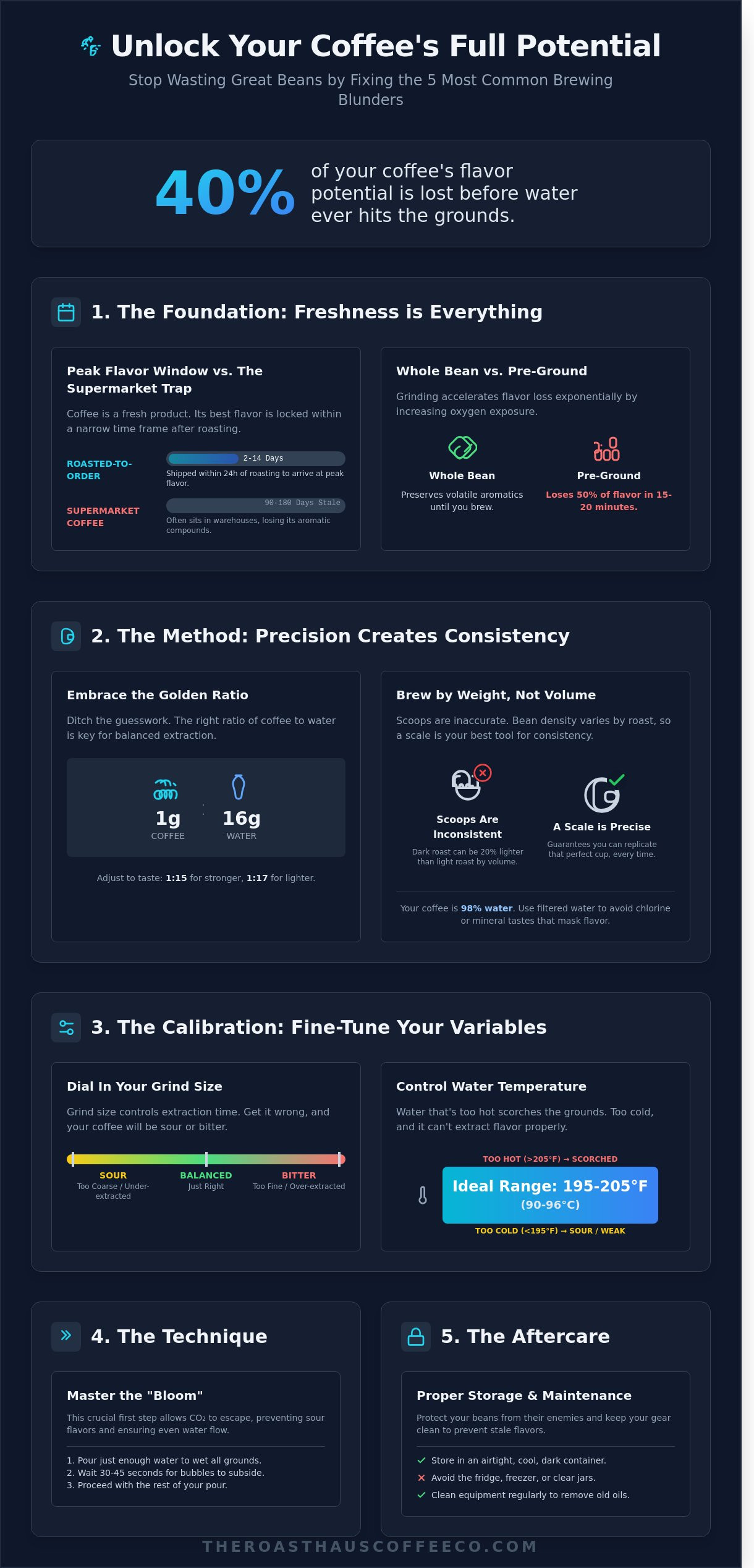
Many people think their technique is the problem, but the most common coffee brewing mistakes usually start before the water even hits the grounds. Coffee is a fresh agricultural product, not a shelf-stable pantry staple. It reaches peak flavor between 2 and 14 days after roasting. After this 12 day window, the organic compounds that create those rich notes of chocolate or berry begin to break down. If your beans don't have a clear "roasted on" date, you're likely brewing coffee that's already past its prime. For a helpful guide on matching different roast profiles to your personal taste, check out Compound Coffee Co..
The "Supermarket Trap" is a major hurdle for quality flavor. Most beans found on grocery store shelves have sat in warehouses or on display for 90 to 180 days. By the time you buy them, they are stale. This happens because of oxidation. Oxygen is the enemy of flavor. The moment a bean leaves the roaster, oxygen begins stripping away volatile aromatics. This process turns a vibrant, artisan bean into something flat and bitter.
At The Roast Haus, we believe the "Roasted to Order" process is the only way to guarantee quality. We don't roast coffee to sit in a warehouse or on a retail shelf. We roast every batch specifically for the customer and ship it within 24 hours. This ensures you receive the beans at the start of their flavor peak. By focusing on small-batch production, we help you avoid common coffee brewing mistakes like using old, oxidized beans that have lost their soul.
Pre-Ground vs. Whole Bean Coffee
Buying pre-ground coffee is a shortcut to a bad cup. Once coffee is ground, it loses 50% of its flavor profile within 15 to 20 minutes. Grinding increases the surface area exposed to oxygen by over 1,000%, which accelerates oxidation exponentially. Degassing is the natural release of CO2 from freshly roasted beans. When you buy pre-ground, that gas and the flavor it carries are long gone before you even open the bag.
Buying Too Much at Once
Bulk buying works for paper towels, but it ruins your morning brew. A 5lb bag might seem like a deal, but by day 21, you're drinking flat beans. If you drink two 12-ounce cups a day, you consume about 0.75 pounds of coffee per week. Buying a 12-ounce bag every 7 to 10 days keeps your brew within that 14 day peak window. To simplify this, many of our customers use a coffee subscription to automate fresh deliveries. This keeps your pantry stocked with artisan beans without the risk of them going stale. It's a simple way to support a small business while ensuring your coffee is always at its best.
Mastering the Math: Brew Ratios and Water Quality
Precision is the foundation of a great cup. Many people treat coffee brewing like a casual hobby, but it's actually a precise extraction process. One of the most common coffee brewing mistakes is guessing the amount of coffee and water used. To achieve a balanced cup, the industry standard is the Golden Ratio, which falls between 1:15 and 1:17. This means for every 1 gram of coffee, you use 15 to 17 grams of water. A 1:16 ratio serves as the ideal starting point for most drinkers. It provides enough water to extract the sugars and oils without washing out the flavor.
Fixing a bad brew is simple once you know the math. If your coffee tastes overwhelmingly intense or bitter, increase your water ratio to 1:17. If the cup feels thin or weak, tighten the ratio to 1:15. Making these small adjustments ensures our small-batch artisan beans reach their full flavor potential in your mug every time.
Why You Should Brew by Weight
Stop using scoops and tablespoons immediately. Coffee beans vary significantly in density based on their roast level and origin. A scoop of dark roast often weighs 20 percent less than a scoop of light roast because the beans expand and lose moisture during a longer roasting process. Using a digital kitchen scale eliminates this guesswork. Measuring in grams allows you to replicate a perfect cup every single morning. A standard 10-ounce mug requires about 18 grams of coffee and 300 grams of water for a consistent 1:16 result. It's a simple step that moves your routine from luck to science.
The Tap Water Trap
Your coffee is 98 percent water. If your water tastes like chlorine or heavy minerals, your coffee will too. Tap water in most cities contains chemicals that mask the delicate notes of a high-quality roast. Hard water causes a flat, metallic taste, while softened water is often even worse. Softened water can lead to over-extraction, making the coffee taste salty or medicinal. To fix this, use a simple charcoal filter pitcher. For those seeking perfection, use distilled water and add a specific mineral packet. This ensures the water has the 150 parts per million of total dissolved solids required to pull the best flavors from the bean. Avoiding these common coffee brewing mistakes transforms your kitchen into a professional-grade cafe.
Technical Calibration: Grind Size and Temperature
Precision is the difference between a mediocre cup and an artisan experience. Many coffee drinkers overlook the relationship between grind size and contact time. This leads to common coffee brewing mistakes that ruin even the best small-batch beans. Fine grounds extract quickly because they have more surface area. Coarse grounds need more time to release their flavor. If your coffee tastes hollow or sour, your grind is likely too coarse for your brew time. If it tastes harsh and ashy, you have ground it too fine.
Water temperature is the second half of the calibration equation. Using boiling water at 212°F is a mistake that scorches delicate oils. You lose the nuanced notes we work hard to preserve during our roasting process. To get the best results, you must match your technique to your equipment. You can find method-specific details in our guide on how to make coffee for a perfect home setup.
Finding the Right Grind for Your Method
Consistency is your goal. We recommend using a burr mill instead of a blade grinder. Blade grinders chop beans into uneven sizes, creating "fines" that over-extract and "boulders" that under-extract. A burr mill ensures every particle is the same size for even flavor. Use these visual cues to calibrate your grinder:
- French Press: Coarse like sea salt. This slow immersion method needs larger pieces to prevent bitterness.
- Pour Over: Medium-coarse like kosher salt. This allows water to flow through at a steady, controlled pace.
- Drip Coffee: Medium like standard table salt. Most home machines are designed for this specific texture.
For a deeper look at why particle size matters for freshness, check out our resource on coffee grinders and burr mill benefits.
The Temperature Sweet Spot
The ideal temperature range for brewing is 195°F to 205°F. Within this 10 degree window, water effectively dissolves sugars and acids without pulling out burnt carbon flavors. Temperature should also vary based on the roast profile. Darker roasts are more soluble and fragile, so 195°F is best to avoid bitterness. Light roasts, like our Ethiopia Limu, are denser and require 205°F to fully extract their bright, floral notes. If you don't own a digital thermometer, simply let your kettle sit for 30 seconds after it reaches a rolling boil. This brief pause usually drops the water into the safe 200°F zone, protecting your beans from heat damage and ensuring you don't fall victim to common coffee brewing mistakes that hide the quality of our roasted to order beans.
Technique Failures: Avoiding the Bitter and Sour Traps
Even the highest quality beans can't save a cup ruined by poor technique. Many common coffee brewing mistakes happen in the heat of the moment while you're standing over the brewer. We roast our coffee in small batches to ensure you receive it at peak flavor, but how you handle the water and the grounds determines if that flavor actually makes it into your mug. Precision isn't about being pretentious; it's about respecting the craft and the bean.
Why You Can't Skip the Bloom
The bloom is the most critical 30 seconds of your morning. When you first pour water over fresh grounds, you'll see them swell and bubble. This is the release of carbon dioxide. If you skip this pre-wetting phase, that gas creates a physical barrier that prevents water from fully entering the coffee cells. Degassing during the bloom is the primary indicator of bean freshness. If your coffee doesn't bubble and rise, it likely sat on a grocery store shelf for months before reaching you. We ship our coffee the same day or the day after roasting to ensure you see a healthy, active bloom every single time.
Saturation and Agitation Errors
Uneven saturation is a silent flavor killer. If you pour too quickly or unevenly, you create "dry pockets" inside the filter. This means 20% to 30% of your coffee isn't even participating in the brew, leading to a weak and thin result. Similarly, you must find a balance with agitation. Stirring the grounds too aggressively can clog the paper filter and stall the brew. Conversely, no agitation at all can leave flavors trapped. A single, gentle stir or a steady circular pour ensures every grain is saturated without overworking the coffee.
Diagnosing Your Brew: Sour vs. Bitter
Understanding the flavor of your failures helps you fix them. If your coffee tastes sharp, thin, or sour, it's under-extracted. This usually happens when your water temperature is below 195 degrees Fahrenheit or your grind is too coarse, allowing water to pass through too fast. A 1-minute pour-over will almost always taste sour because the water didn't have time to pull out the sugars.
- The Sour Sign: Caused by under-extraction. Use hotter water or a finer grind.
- The Bitter Sign: Caused by over-extraction. A 6-minute pour-over becomes bitter as the water pulls out harsh tannins.
- The Sweet Spot: Dial in your brew by changing only one variable at a time, such as adjusting your grind size by one notch.
Bitterness is the sign of over-extraction. This occurs when your water is too hot, typically over 205 degrees Fahrenheit, or the brew time lasts too long. To find the "sweet spot," aim for a total brew time of 3 to 4 minutes for most manual methods. This balance allows the natural sweetness of our artisan roasts to shine through without the interference of harsh chemicals.
Post-Brew Habits: Storage and Equipment Maintenance
Your work doesn't end when the timer stops. One of the most common coffee brewing mistakes involves how you treat your beans and gear once the bag is open. Many home brewers still believe the freezer myth. Storing beans in the freezer introduces moisture through condensation every time you open the door. This moisture breaks down the delicate cell structure of the bean, causing it to lose its flavor 50% faster than room-temperature storage. Coffee is also porous. It acts like a sponge, absorbing the odors of frozen foods and leftovers. It's better to keep your beans at a steady room temperature.
The vessel you drink from also impacts the final result. Paper cups and plastic lids are convenient, but they mask the quality of artisan coffee. A plastic lid blocks 80% of the aromatics that define a small-batch roast. You end up tasting the paper or the plastic instead of the bean's natural profile. Always use a clean ceramic mug to fully experience the glorious aroma of your coffee.
Proper Storage for Peak Flavor
Light, Heat, Moisture, and Oxygen are the four enemies of freshness. Oxygen can make coffee go stale in as little as 14 days if the beans are left in an open container. You should skip the clear glass jars on the counter. While they look nice, they expose beans to UV light and heat. The original Roast Haus valve bag is a superior storage tool. It features a one-way valve that lets CO2 escape without letting oxygen in. Stick to the AOC rule: Airtight, Opaque, and Cool. Keep your bag in a dark pantry. Don't store it next to the oven or a sunny window, as temperatures above 75 degrees Fahrenheit accelerate oxidation.
Cleaning for Clarity
Old coffee oils are the silent killer of flavor. These oils sit on your carafe and go rancid within 24 hours, tainting your next brew with a metallic, bitter taste. Another issue is mineral scale. In a typical drip machine, calcium buildup can reduce water flow by 30% and prevent the heating element from reaching the required 195 to 205 degrees. This is one of the common coffee brewing mistakes that leads to under-extracted, sour coffee. Follow this routine:
- Daily: Wash carafes and filter baskets with soap and hot water after every use.
- Quarterly: Descale your machine every 3 months using a dedicated solution to remove mineral buildup.
- Preparation: Always rinse your equipment before starting a new brew to remove any dust or lingering residue.
Clean equipment ensures the clarity of the bean shines through. Respect the craft by keeping your gear as fresh as your beans. Taking these extra steps preserves the integrity of the roasted to order quality you expect.
Take Control of Your Daily Brew
Great coffee isn't an accident. It's the result of paying attention to the small details that often go overlooked. By fixing common coffee brewing mistakes like using stale beans or incorrect water temperatures, you'll immediately taste the difference in your mug. Freshness is the foundation of every good cup. Even the best technique can't save beans that have been sitting on a grocery store shelf for 6 months. Focus on your grind size and keep your equipment clean to ensure every sip is as bold as it should be. These simple adjustments transform a mediocre morning into an exceptional one.
At The Roast Haus Coffee Co., we take the guesswork out of quality. We're a family-owned artisan roastery based in Wyandotte, Oklahoma. Our team handles every batch with care to ensure you receive small-batch quality every time. We ship your order within 24 hours of roasting so you get peak flavor delivered right to your door. We've spent years perfecting our craft so you can enjoy yours. You deserve a morning routine that inspires you and fuels your day.
Experience the difference of 'Roasted to Order'; Shop our fresh origins now!
Enjoy your next cup; you've earned it.
Frequently Asked Questions
Why does my coffee taste bitter even though I followed the recipe?
Bitterness usually stems from over-extraction caused by water temperatures exceeding 205°F or a grind size that is too fine for your brewing method. Even with a precise recipe, these factors pull harsh compounds from the bean that mask the natural sweetness. Adjust your kettle to 195°F or 200°F and try a coarser grind setting to restore the balance of your cup and highlight the artisan quality of the roast.
Can I use tap water for brewing coffee at home?
You should use filtered water instead of tap water because minerals and chlorine in tap water mask the delicate flavors of small-batch beans. Standard tap water often contains 200 to 300 parts per million of dissolved solids, which can make your coffee taste flat or metallic. A simple carbon filter reduces these impurities so the peak freshness and flavor potential of your coffee shines through in every sip.
Is it better to grind coffee beans the night before to save time?
Grinding your beans the night before is one of the most common coffee brewing mistakes because it accelerates oxidation. Coffee begins losing its peak flavor within 15 minutes of grinding as the increased surface area exposes the oils to oxygen. To ensure you experience the full aroma and rich nutritional content of our roasted to order beans, always grind them immediately before you start the brewing process.
How much coffee should I use for a standard 12-cup coffee maker?
Use approximately 66 grams of coffee for a standard 12-cup coffee maker, which typically holds 60 ounces of water. This follows the 1:17 golden ratio that professional roasters use to achieve a balanced extraction. Measuring by weight with a digital scale ensures consistency that volume-based scoops cannot provide, as different roasts have varying densities.
Does the roast level change how I should brew the coffee?
Roast levels require different water temperatures because dark roasts are more porous and extract faster than light roasts. Brew dark roasts at 185°F to 190°F to prevent burnt flavors from dominating the cup. Light roasts benefit from hotter water between 200°F and 205°F to fully extract the complex acidity and floral notes developed during our small-batch roasting process.
How long do coffee beans stay fresh after the roast date?
Coffee beans stay at peak freshness for 7 to 21 days after the roast date printed on your bag. After 30 days, the organic compounds begin to oxidize and the flavor profile flattens. We ship our coffee the same day or the day after roasting to ensure you receive the product at the start of this 14 day window of maximum flavor potential.
Should I store my coffee beans in the refrigerator or freezer?
Store your coffee in an airtight container in a cool, dark cupboard rather than the refrigerator or freezer. Refrigerators introduce moisture and odors that the beans absorb like a sponge, while freezing can damage the cell structure of the bean. Keep the storage temperature between 60°F and 70°F to preserve the integrity of the artisan roast and prevent common coffee brewing mistakes related to storage.
What is the best way to clean my coffee maker without using chemicals?
Clean your coffee maker by running a cycle with a mixture of 50 percent distilled white vinegar and 50 percent water. This natural solution breaks down calcium deposits and old coffee oils that cause off-flavors over time. Follow this with two cycles of plain filtered water to remove any lingering vinegar scent, ensuring your next pot tastes exactly as the roaster intended.

