


66% of Americans have consumed coffee in the past day, making it the most popular beverage in the country, yet many of us still struggle to make a decent cup at home. If you've ever poured frothed milk into your mug only to have it taste like watery cardboard or burnt rubber, you aren't alone. Finding the best coffee beans for cappuccino isn't about looking for a generic "espresso" label. It's about finding a high-density, small-batch bean that can actually stand up to the dairy.
You deserve a morning cup that maintains its bold character and natural sweetness without needing a spoonful of sugar. We'll show you how to identify the right roast profiles and origins, such as our Kenya AA Supreme, that cut through milk instead of getting lost in it. We will also explain why the timing of the roast is the ultimate differentiator for achieving that perfect, velvety texture. From debunking the "espresso roast" myth to choosing the right artisan beans, you'll soon be brewing cafe-quality drinks in your own kitchen.
Key Takeaways
- Identify why high-density beans and specific acidity levels are necessary to prevent milk from masking the coffee's natural flavor.
- Learn to look past the "espresso roast" label and find medium-dark profiles that offer rich chocolate and nutty notes without a bitter finish.
- Discover why choosing the best coffee beans for cappuccino requires a focus on roast-to-order freshness to produce the thick crema needed for stable microfoam.
- Explore how specific origins like our Kenya AA Supreme or Honduras Morning Splendeur provide the bold character required for a balanced cup.
- Understand the benefit of using a sampler to compare how different bean profiles interact with the natural sweetness of frothed milk.
What Makes a Coffee Bean 'Cappuccino-Friendly'?
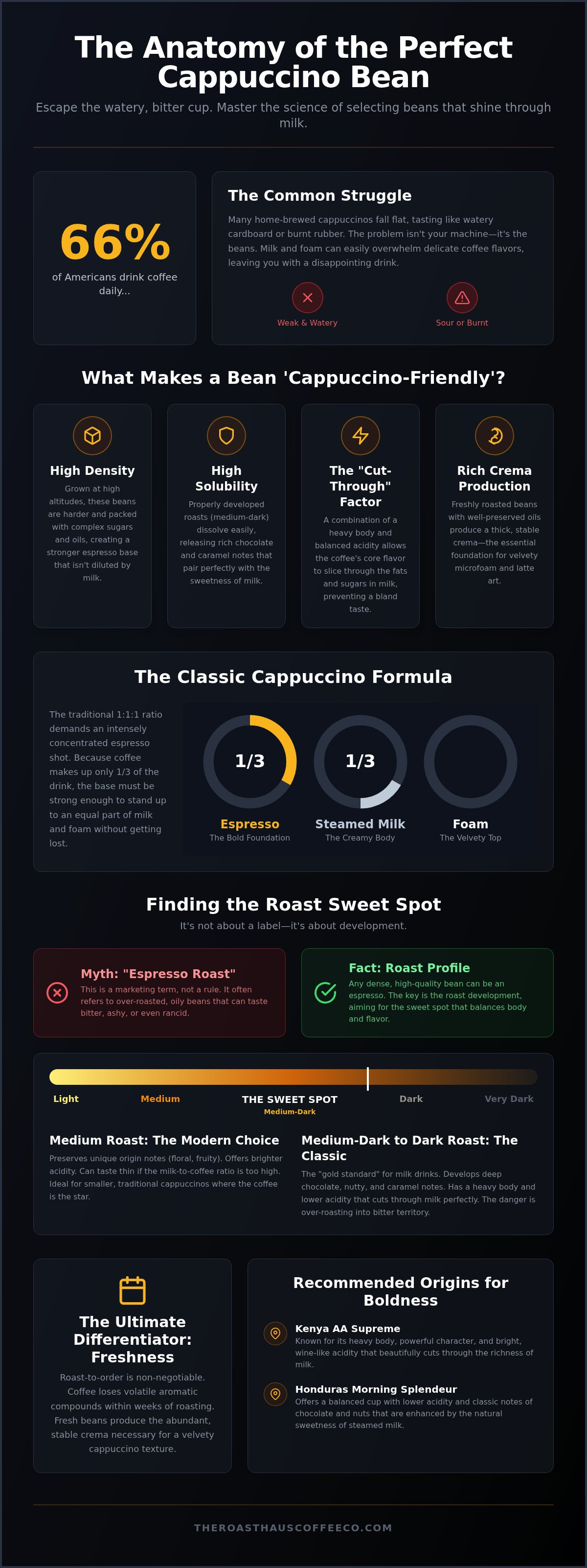
A great cappuccino isn't just a latte with more foam. It's a balance of intensity. When you add milk, you're adding lactose and fats. These ingredients easily drown out delicate coffee notes. The best coffee beans for cappuccino are those with high soluble solids. This means the bean has enough physical substance to remain present after being diluted. You need a "cut-through" factor. This is a specific combination of high acidity and heavy body. While black coffee might taste balanced with subtle fruitiness, a milk-based drink requires a bolder profile to avoid tasting like plain, warm dairy.
Coffee oils, or lipids, play a vital role in this interaction. These oils don't just add flavor; they provide the structural support for the milk foam. When the espresso shot is pulled correctly, the crema acts as a bridge between the liquid coffee and the microfoam. This creates the velvety mouthfeel that defines the drink. Many people think they must buy a bag labeled "Espresso Roast" to get this result. That's a recommendation, not a rule. Any high-quality bean can be pulled as an espresso shot if it has the right density and roast development.
The 1:1:1 Rule and Bean Density
The traditional cappuccino follows a strict 1:1:1 ratio. This includes one part espresso, one part steamed milk, and one part foam. Because the coffee portion is relatively small, the base must be incredibly strong. We look for high-altitude beans like our Kenya AA Supreme for this reason. High altitude creates a denser bean. Density allows for more complex compounds to develop during the roasting process. Extraction strength is the concentration of dissolved coffee solids that forms the foundation of a milk-based beverage. Without a dense bean, your extraction strength will be too low to compete with the milk.
Solubility and Milk Interaction
Solubility is how easily the coffee compounds dissolve in water. Darker roasts are generally more soluble because the heat has broken down the bean's cellular structure. During roasting, the Maillard reaction occurs. This chemical reaction develops the deep caramel and chocolate notes that pair perfectly with the natural sweetness of milk. If you use a light roast, the high acidity often clashes with the dairy. This can create a sour flavor profile that feels almost curdled on the tongue. Choosing the best coffee beans for cappuccino means selecting a roast that has moved far enough into the development stage to produce those rich, toasted sugars. This is why our small-batch precision matters. We ensure the beans reach that sweet spot without ever tasting burnt or ashy.
Roast Profiles: Finding the Sweet Spot Between Medium and Dark
Don't be fooled by the "Espresso Roast" label you see on grocery store shelves. It's a common myth that you need a specific type of bean to make a decent shot. In reality, the best coffee beans for cappuccino are defined by their roast profile and development, not a marketing sticker. A medium-dark roast is often the gold standard. It provides the heavy body and low acidity needed to cut through milk while highlighting natural chocolate and nutty notes. This sweet spot allows the natural sugars in the bean to shine, giving your drink a pleasant finish without the need for added syrups.
Understanding the science of coffee roasting helps explain why certain profiles work better than others. As heat is applied, chemical changes occur within the bean that dictate its final flavor. If a roast goes too far, you'll see surface oils. These oils are a warning sign. In mass-market coffee, they often indicate an over-roasted bean that will taste ashy or rancid. These oils also gum up your grinder and ruin the flavor of your milk. We avoid this by using small-batch precision. We stop the roast at the peak of flavor, ensuring the sugars are caramelized but not carbonized. This allows you to enjoy a naturally sweet drink without adding heaps of sugar.
Medium Roast: The Modern Specialty Choice
A medium roast preserves the unique characteristics of the origin. You'll taste the floral and fruity notes that make specialty coffee exciting. The main drawback is that these beans can sometimes feel thin when paired with too much milk. You have to be precise with your brewing to ensure the coffee doesn't get lost. Our Ethiopia Limu Organic is a perfect example of a medium-profile bean. It brings a sophisticated, bright quality to a smaller, more traditional cappuccino. If you enjoy a drink where the coffee's personality is the star, this is your best bet.
Dark Roast: The Traditional Italian Experience
For those who love a heavy, roasty flavor, a dark roast is the way to go. It offers a thick body and very low acidity. The danger here is the burnt trap. Many large corporations roast their beans until they are bitter and charred to hide low-quality green coffee. At The Roast Haus, we take an earnest approach to dark roasting. We focus on craftsmanship to ensure you get a bold, rich cup without the burnt mass-market aftertaste. Our Honduras Morning Splendeur fits this category perfectly. It delivers the classic, chocolatey profile that people expect from a traditional cafe experience. If you want to find your personal preference, The All Day Sampler is an excellent way to compare these different profiles side-by-side in your morning milk.
Single Origin vs. Blends: Which Wins in a Cappuccino?
Many coffee lovers assume that a blend is the only option for milk-based drinks. Blends are designed for consistency, creating a rounded flavor profile that fills the gaps left by the natural sweetness of dairy. However, choosing the best coffee beans for cappuccino often leads adventurous brewers toward single-origin options. While a blend offers a predictable safety net, a single-origin bean tells the story of a specific soil, climate, and altitude. Scientific advancements in coffee bean authenticity testing now allow us to be more certain than ever about where our beans come from. This transparency helps you choose a bean that hasn't been stretched with low-quality fillers.
High-acidity origins are particularly effective in a 6oz cappuccino. While acidity might sound like a negative trait, in the context of espresso, it provides the brightness needed to cut through heavy milk foam. Origins like Kenya, Honduras, and Colombia are the workhorses of the specialty world. They offer a stable foundation of caramel and cocoa that pairs naturally with the lactose in your cup. Using a single origin allows you to taste the specific character of the region rather than a generic "coffee" flavor.
Why Kenyan Coffee Changes the Cappuccino Game
Kenyan coffee is famous for a unique, wine-like acidity. This isn't a sour flavor. It's a complex brightness that survives even when you add thick layers of frothed milk. Our Kenya AA Supreme: Bold Flavors From The Roast Haus showcases why this origin is so prized. The "Supreme" grading refers to the screen size of the bean. Larger beans often roast more consistently, ensuring that every shot you pull has the same high-density extraction we discussed earlier. It turns a standard morning routine into a sophisticated experience.
The Balanced Profile of Central American Beans
If you prefer a more traditional, "comfort" flavor, Central American beans are your best bet. Our Honduras Morning Splendeur is a prime example of this profile. It features deep nutty and cocoa notes that act as a perfect partner for dairy. These beans provide a stable, chocolatey finish that complements the natural sugars in steamed milk. Colombian beans offer similar stability. They are reliable and less likely to produce "off" flavors if your brewing temperature isn't perfect. Whether you want the bright punch of a Kenyan bean or the smooth cocoa of a Honduran crop, the best coffee beans for cappuccino are the ones that make you excited to wake up. We often recommend The All Day Sampler to our customers so they can see which origin profile they prefer in their morning milk.
The Secret Ingredient: Why Freshness Trumps Brand Name
You can buy the most expensive bag of coffee in the world, but if it was roasted three months ago, it won't make a great drink. Many people fall into the trap of buying famous brand names from grocery store shelves. These beans often come with a one-year shelf life, which is a red flag for any coffee enthusiast. By the time that bag reaches your kitchen, the complex oils and sugars have already oxidized. The best coffee beans for cappuccino are those that reach your door shortly after leaving the cooling tray. We ship our beans within 24 hours of roasting because we believe timing is the ultimate differentiator in quality.
Freshness provides the physical structure your drink needs. When coffee is fresh, it is still releasing carbon dioxide. This gas is essential for creating a thick, resilient crema. In a cappuccino, the crema acts as the foundation that supports the weight of the velvety frothed milk. If your espresso lacks this golden layer, your microfoam will simply sink and dissipate. Industrial production often destroys the bean's integrity through high-heat, high-volume cycles. Our small-batch precision ensures we preserve the natural character of the bean without ever introducing "burnt" mass-market flavors.
What is Roasted-to-Order Coffee?
The artisan model is simple: we don't roast coffee until you buy it. This ensures that the clock only starts ticking on your coffee's peak flavor the moment you place an order. To understand why this process is so vital for your morning routine, you can read more about What is Roasted-to-Order Coffee? Why it Matters. You might notice your beans "bubbling" or blooming when they first hit the water. This degassing is a feature of freshness, not a flaw, and it indicates that the flavor compounds are still active and vibrant.
How Freshness Affects Milk Integration
Stale beans produce a "thin" espresso that lacks the viscosity to hold its own against dairy. When the coffee is old, the oils have turned rancid, leading to a flat and papery taste that milk only makes worse. Freshly roasted oils create a stable emulsion with the milk fats. This keeps your cappuccino looking and tasting better for much longer. The sensory difference is undeniable. A fresh cappuccino fills the room with a deep, sweet aroma, while a stale one smells like wet cardboard. If you're ready to taste the difference that artisan timing makes, browse our roasted-to-order selections and elevate your home barista experience today.
The Roast Haus Recommendations for the Perfect 2026 Cappuccino
Selecting the best coffee beans for cappuccino comes down to your personal palate and how you like your coffee to interact with milk. We have curated a selection of small-batch roasts that cater to different styles, from the traditional chocolatey profile to the modern fruity cup. Every bag we ship is a product of our family-owned artisan operation in Wyandotte, OK. We believe that freshness is the ultimate differentiator; these recommendations reflect our commitment to that philosophy.
Our Kenya AA Supreme serves the barista who demands a bold, sophisticated cup. It offers a wine-like acidity that survives even the thickest microfoam, ensuring the coffee's soul isn't lost in the dairy. If you prefer a traditional daily driver experience, the Honduras Morning Splendeur is your best option. It provides the deep cocoa and nutty notes that make a cappuccino feel like a warm, chocolatey comfort. For a Third Wave experience, the Ethiopia Limu Organic offers a lighter, floral touch that pairs beautifully with the natural sweetness of steamed milk or plant-based alternatives.
Finding Your Signature Home Brew
We recommend starting with the All Day Sampler to test how different roast levels interact with your milk of choice. This allows you to find your perfect coffee without committing to a single large bag. By supporting an independent, family-owned roaster, you are getting a product crafted with care, not mass-produced in a factory. Always grind your beans fresh right before you brew. This simple step preserves the artisan quality and ensures the volatile aromas remain in your cup rather than escaping into the air.
Elevating Your Home Barista Skills
Preparation is just as important as the bean itself. You can find more detail in our Ultimate Guide to Choosing Coffee Beans. Pay close attention to your water quality and grind size. Even the best coffee beans for cappuccino will taste flat if your water is too hard or your grind is too coarse. Aim for a fine, consistent grind that allows for a steady, syrupy extraction. This creates the heavy body required to cut through the milk foam. When you are ready to start your journey, Shop Freshly Roasted Beans Now and experience the difference of roasted-to-order quality.
Elevate Your Morning Routine with Artisan Quality
Stop settling for watery or bitter coffee that disappears behind a layer of milk. You now understand that the best coffee beans for cappuccino require high density and a precise roast development to maintain their character. Freshness is not just a marketing term; it's a physical requirement for the thick crema and stable microfoam you expect from a high-end cafe. When you choose beans with the right solubility and roast profile, you can enjoy a naturally sweet drink without reaching for the sugar bowl.
We invite you to experience the difference that small-batch precision makes. Our family-owned roastery in Wyandotte, OK, focuses on the integrity of every bean. We don't let our coffee sit on a warehouse shelf for months. Instead, we roast every bag to order and ship it within 24 hours to ensure you get the peak flavor of our Kenya AA Supreme or Honduras Morning Splendeur. Order Freshly Roasted-to-Order Beans for Your Next Cappuccino today. You've mastered the theory of a perfect brew; now it's time to taste the results in your own kitchen.
Frequently Asked Questions
Can I use regular coffee beans for a cappuccino?
Yes, you can use any high-quality coffee bean for a cappuccino. The term "regular" usually refers to beans intended for drip brewing, but the only real difference is the grind size and extraction method. To get the best results, choose a bean with enough body to stand up to the milk. Our Kenya AA Supreme is a perfect example of a versatile bean that excels when brewed as a concentrated espresso base.
Are dark roast beans better than medium roast for milk drinks?
Dark roasts are traditional because their low acidity and heavy body cut through milk easily. However, a medium-dark roast is often better for preserving sweetness and complexity. The best coffee beans for cappuccino are those that provide a rich, chocolatey foundation without the ashy, burnt flavors common in industrial dark roasts. Small-batch roasting ensures these beans reach their full potential without becoming bitter.
How much coffee should I use for a single cappuccino?
You should use approximately 18 to 20 grams of finely ground coffee to pull a double shot of espresso. This shot serves as the base for a traditional 6-ounce cappuccino. Using this specific dose ensures the coffee remains the star of the drink. If you use too little coffee, the four ounces of steamed milk and foam will quickly overwhelm the flavor, leaving you with a watery cup.
What is the difference between espresso beans and coffee beans?
There is no botanical difference between the two; it is simply a matter of how the roaster intends them to be used. "Espresso" is a brewing method, not a type of bean. Roasters often label beans as espresso if they have been roasted longer to increase solubility. You can use our Ethiopia Limu Organic or any other bean in an espresso machine as long as it is ground correctly.
Does the origin of the bean really matter if I'm adding milk?
The origin matters because it defines the flavor profile that the milk will either enhance or hide. A Kenyan bean provides a bright, wine-like acidity that stays vibrant even under heavy foam. A Honduran bean offers the cocoa and nutty notes that create a classic, comforting drink. Finding the best coffee beans for cappuccino requires choosing an origin that matches the specific taste you want to achieve.
How long do coffee beans stay fresh for cappuccinos?
Coffee beans are at their absolute peak between four and fourteen days after the roast date. During this time, they have enough internal gas to produce a thick, resilient crema. After thirty days, most beans lose the volatile oils necessary for a stable emulsion with milk. Because we ship within 24 hours of roasting, you receive your beans exactly when they are ready for the best possible extraction.
Can I use decaf beans for a cappuccino?
You can certainly use decaf beans as long as they are processed in a way that preserves the bean's integrity. Our Decaf Swiss Water Process beans are ideal for this because the method is chemical-free and keeps the flavor compounds intact. You'll still get the rich, chocolatey notes and heavy mouthfeel required for a great cappuccino. It's a perfect choice for those who want the taste without the caffeine.
Is single-origin coffee too acidic for milk?
Some light-roast single origins can taste sour or "curdled" when paired with dairy, but medium-roast versions are often spectacular. The key is proper roast development. When a single-origin bean is roasted to a medium-dark level, its acidity is balanced by caramelized sugars. This creates a complex and bright cappuccino that offers a much more interesting flavor profile than a standard, rounded blend found in most grocery stores.
