


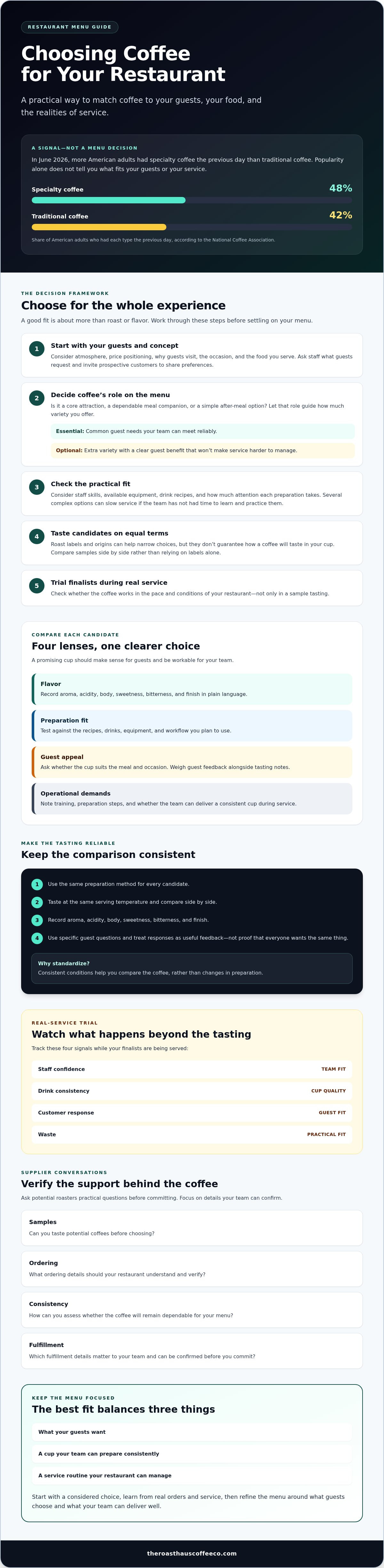
In June 2026, 48% of American adults had specialty coffee the previous day, compared with 42% who drank traditional coffee, according to the National Coffee Association. That’s a useful signal for restaurant owners, but a popular coffee style isn’t automatically the right fit for your guests or service. The real question is how to choose a coffee for a new restaurant menu that tastes right and can be served consistently.
It’s natural to focus first on roast and flavor. But the right coffee also needs to suit your restaurant’s concept, fit your team’s workflow, and remain dependable when service gets busy. A long list of choices can add work without improving the cup.
This guide shows you how to match coffee to your guests, compare options through consistent tasting, and keep your menu focused. You’ll also find practical questions to ask a potential roaster about product fit, supply, and the details your team needs to serve a satisfying cup again and again.
Key Takeaways
- To decide how to choose a coffee for a new restaurant menu, start with your concept, guests’ occasions, and the food you serve.
- Compare roast and origin by tasting, then weigh flavor alongside guest appeal, preparation fit, and service demands.
- Use the same preparation method, serving temperature, and tasting process to make coffee comparisons more reliable.
- Trial your finalists during real service. Track staff confidence, drink consistency, customer response, and waste.
- Ask potential suppliers about samples, ordering, consistency, and fulfillment details you can verify before committing.
How to Choose Coffee for a New Restaurant Menu: Start With Your Guests
Your favorite coffee may not be the one your guests want with breakfast or after dinner. To learn how to choose a coffee for a new restaurant menu, start with the experience your restaurant promises, then check your assumptions against real feedback. A considered choice fits the room, the food, and the pace of service, not just the owner’s personal taste.
Map your restaurant concept to guest expectations
Think about your atmosphere, price positioning, and the reasons guests visit. A quick-service breakfast spot may need a familiar, easy-drinking cup that pairs well with pastries and savory plates. A slower, ingredient-focused restaurant may have room for a more distinctive coffee that guests can explore after a meal. These are starting points, not rules.
Ask staff what guests already request, and invite prospective customers to share what they enjoy. Keep questions specific: Do they prefer a smooth, familiar cup or a brighter, more distinctive one? Would they order coffee with a meal or mainly afterward? Treat the responses as useful feedback, not proof that every guest wants the same thing. Tasting candidates side by side can make those conversations more concrete. The professional practice of coffee tasting, often called cupping, offers a structured way to observe a coffee’s aromas and flavors.
Decide what role coffee should play on the menu
Decide whether coffee is a core attraction, a dependable meal companion, or a simple after-meal option. That role helps you set the right menu breadth. A concise selection might include a regular coffee and a decaf option, while more distinctive choices can wait until you know guests want them.
Be realistic about what your team can prepare consistently. Consider staff skills, the equipment you have, and how much attention each drink takes during a rush. Several complex options can slow service if the team hasn’t had time to learn and practice them. For foundational terms such as roast and origin, see this beginner’s guide to choosing coffee beans.
- Essential: Options that meet common guest needs and can be prepared reliably.
- Optional: Extra variety that gives guests a clear reason to choose your restaurant without making service harder to manage.
Keep the decision grounded in guest fit, repeatable quality, and practical service. Refine the menu as you learn what customers order and what your team can deliver well.
Set Coffee Selection Criteria for Flavor, Format, and Service
Once you know who you’re serving, turn preferences into criteria you can test. A coffee may taste excellent in a sample cup but prove awkward for your menu if it doesn’t suit your recipes or your team’s routine. A clear comparison helps you weigh flavor and guest appeal against practical service needs.
Compare flavor profiles without relying on labels alone
Roast labels and origins can help narrow your options, but they don’t guarantee how a coffee will taste in your cup. Brew each option the same way, then record aroma, acidity, body, sweetness, bitterness, and finish in plain language. Compare samples side by side. For example, note whether a cup feels light or full-bodied, or whether its finish is clean or lingering. Keep the recipe and tasting conditions consistent so you’re comparing the coffee, not changes in preparation.
Consider how guests judge both the cup and the experience. Research on understanding customer value can provide a broader perspective on what shapes customer choice and loyalty in coffee shops. For your own menu, use guest feedback alongside your tasting notes rather than treating either as the whole answer.
| Flavor | Preparation fit | Guest appeal | Operational demands |
|---|---|---|---|
| Record aroma, acidity, body, sweetness, bitterness, and finish. | Test with the recipes and confirmed equipment you’ll use. | Ask whether the cup suits the meal and occasion. | Note training, preparation steps, and consistency during service. |
| Compare roast profiles and origins by tasting, not assumption. | Check whether it works for each planned drink. | Consider familiar options alongside more distinctive choices. | Keep only choices your team can prepare reliably. |
Match coffee format to the drinks you plan to serve
List the drinks on your draft menu before choosing a format. A coffee served on its own may need different qualities from one used with milk or in an espresso-based drink. Confirm your restaurant’s brewing equipment and workflow first, then decide whether whole-bean or another format is workable for your team. If espresso is on the menu, this beginner’s espresso guide explains the basics.
For tasting candidates, consider confirmed coffees such as Kenya AA Supreme, Ethiopia Limu Organic, or Honduras Morning Splendeur. Treat them as options to evaluate, not automatic matches. Explore confirmed coffee options as you build a shortlist, then compare each candidate against your flavor, preparation, guest, and service criteria.
How to Taste-Test and Compare Coffee Before Choosing
A controlled tasting turns “I like this one” into a decision your team can explain and repeat. It also helps separate a coffee’s flavor from differences in brewing. Include front-of-house staff, who hear guest requests, and kitchen or beverage staff, who understand what preparation involves during service.
Run a fair side-by-side tasting
Use this process to keep the comparison focused:
- Define the candidates. Choose a manageable shortlist based on the flavors and drinks you’re considering. Use the same coffees each time you retest.
- Standardize preparation. Use the same water, coffee dose, grind approach, brewing method, and serving conditions for every sample. Keep recipes and serving temperatures consistent, and follow a method your team can reproduce with its commercial equipment.
- Taste in a consistent order. Serve samples at comparable temperatures. Label them with neutral codes so brand or origin names don’t sway first impressions. Give participants the same instructions and ask them to write individual notes before discussing the cups.
- Record and discuss. Capture flavor impressions, guest suitability, and preparation concerns. Let each person finish their notes before the group shares opinions.
- Retest. Repeat the tasting on another occasion using the same process. A second round helps show whether a favorite remains appealing beyond the first impression.
Side-by-side tasting works best when preparation stays controlled. Differences in the cup are easier to compare when the brewing process isn’t changing.
Turn tasting notes into a menu decision
Before tasting, agree on the criteria that matter to your restaurant. Score each candidate for guest fit, flavor, workflow, and supply considerations. For supply, assess only details you can verify with a potential supplier, such as ordering steps and how changes are communicated. A simple shared scorecard keeps the discussion grounded.
Disagreement is useful. If one person prefers a distinctive cup and another favors a familiar one, ask which better fits the guests and menu. If staff like a coffee but find it difficult to prepare consistently, weigh that service reality alongside flavor. The winning choice doesn’t need unanimous enthusiasm. It needs to meet the restaurant’s most important criteria.
For general brewing concepts, read this guide to brewing better coffee at home, then adapt your tests to your restaurant’s equipment and workflow. Keep the notes and recipe from the final tasting. They give your team a clear reference when you assess the coffee again.
Test Coffee Choices in Real Restaurant Service
A tasting-room favorite still needs to work when orders arrive together. Before adding a coffee permanently, run a limited trial with a clear start and end point, a defined menu role, and agreed criteria for success. Test across realistic shifts, including busier periods, rather than relying on one quiet service or a single staff member’s impression.
Track a few practical observations each shift:
- Preparation time: Does the drink fit the pace of service?
- Staff confidence: Can team members follow the recipe without repeated help?
- Consistency: Does the cup taste and look similar across different team members?
- Guest response: Do customers finish it, comment on it, or order it again?
- Avoidable waste: Are drinks being remade or coffee discarded because the process is unclear?
A coffee succeeds on the menu when guests enjoy it and the team can prepare it well and consistently through real service.
Check staff training and drink consistency
Write down a simple recipe for the restaurant’s equipment, including the dose, grind approach, water, and method. Have different team members prepare the same drink, then compare results. If cups vary, check whether the issue is grind, dose, water, or technique before deciding the coffee itself is at fault. This coffee grinder guide explains why grind consistency matters. Use your actual commercial setup for the trial.
Gather useful guest feedback during the trial
Keep questions brief and neutral. Ask, “How did the taste and strength feel?” or “Would you order this again?” Avoid leading customers toward praise. Pair their answers with repeat orders and staff observations. Informal comments can reveal useful detail, but patterns across the trial provide a stronger basis for a decision.
Use what you learn to make a specific adjustment. If guests like the cup but find its menu description unclear, revise the wording. If the recipe is difficult to repeat, refine the method and retrain before retesting. If the coffee doesn’t fit the menu or service, return to your shortlist.
This real-world check is a practical part of how to choose a coffee for a new restaurant menu. If you’re building a shortlist, explore The Roast Haus Coffee Co. coffees as potential tasting candidates, then confirm which options and formats are available for your restaurant’s needs.
Choose a Coffee Supplier That Can Support Your Menu
A good supplier relationship supports both the coffee you’ve chosen and the way your restaurant serves it. Compare potential partners on product consistency, communication, ordering steps, and fulfillment details you can verify. Your team needs to know what to order, how changes are shared, and what to do if a coffee’s availability changes.
Ask suppliers practical questions before committing
Get details in writing or confirm them directly before building your menu around a particular coffee. Ask which coffees are available to wholesale customers, whether samples can be provided, how orders are placed, and what order cadence the supplier can support. Don’t assume retail options, formats, or ordering terms automatically apply to restaurant accounts.
Ask how the roaster communicates roast information, product changes, and potential supply issues. The Roast Haus Coffee Co. says its products ship within 24 hours of roasting, but confirm whether that applies to wholesale orders before relying on it for restaurant planning. Verify any delivery timing, pricing, minimums, and continuity details directly with the supplier.
Build a menu that can adapt over time
Keep a record of the coffee you select, the recipe your staff uses, feedback from the team and guests, and any supply details the supplier confirms. This makes it easier to review your decision if the cup changes, service becomes harder, or guests respond differently than expected. Revisit the menu when your restaurant’s needs or verified supply conditions change.
When considering how to choose a coffee for a new restaurant menu, treat supplier fit as part of the decision, not an afterthought. A coffee that suits your guests and workflow is only a dependable menu choice if you can confirm how it will be ordered and supplied. Keep a second candidate in mind if your preferred option becomes unavailable, and retest it before making a switch.
- Confirm wholesale availability and ordering steps.
- Ask how the supplier shares product or availability changes.
- Verify fulfillment claims that affect your service plan.
- Keep recipes and feedback records current.
The Roast Haus is a family-owned Oklahoma roaster with wholesale partnerships with coffee shops. Explore The Roast Haus coffee offerings and contact the roaster to discuss whether its coffees and wholesale options fit your restaurant’s menu and needs.
Build a Coffee Menu Your Team Can Stand Behind
The strongest coffee menu starts with your guests, but it also has to hold up in real service. Match flavor and format to your restaurant’s concept, compare candidates under consistent tasting conditions, and test your choice across realistic shifts. Staff confidence, a repeatable cup, guest response, and verified supply details all matter.
That’s the practical answer to how to choose a coffee for a new restaurant menu: choose for guest fit, then confirm your team can prepare it reliably and your supplier can support the plan. Keep your tasting notes and recipes so you can review the decision as your menu evolves.
The Roast Haus is a family-owned, husband-and-wife-operated roaster producing small-batch, roasted-to-order coffee and partnering with coffee shops on wholesale. Confirmed offerings include Kenya AA Supreme, Ethiopia Limu Organic, Honduras Morning Splendeur, and Decaf Swiss Water Process. Explore them as potential tasting candidates, and ask about wholesale fit and current details directly.
Explore The Roast Haus coffee offerings and ask about wholesale fit. With careful testing and a dependable supplier relationship, you can build a coffee menu that suits your guests and works for your team.
Frequently Asked Questions
How many coffees should a new restaurant offer?
Start with the smallest selection that serves your restaurant’s concept and guests well. For some menus, that may mean one dependable everyday coffee; others may also need decaf or a rotating choice. Before adding options, test each one against guest interest, staff skills, available brewing equipment, and likely demand. A focused menu is easier to explain and prepare consistently. Expand only when feedback and service capacity support it.
What coffee roast is best for a restaurant?
There’s no single roast that suits every restaurant. The best choice depends on your menu, guest preferences, preparation method, and the cup profile you want to serve. To decide how to choose a coffee for a new restaurant menu, taste candidates using the same brewing conditions and record what you notice. Don’t rely on roast labels alone. Confirm that your team can reproduce the cup during service.
How do you taste coffee for a restaurant menu?
Prepare each candidate with the same recipe and serving conditions, then compare aroma, acidity, body, sweetness, bitterness, and finish. Have staff write notes independently before discussing their impressions. Retest promising coffees to see whether first impressions hold. Then try the preferred option in real service. A coffee may taste good in a quiet tasting, but it also needs to work with your restaurant’s equipment, team, and menu.
Should a new restaurant offer decaf coffee?
Consider decaf if guests may want coffee later in the day or prefer to avoid caffeine. Taste-test it like any other candidate, and decide whether it belongs on the printed menu or is available by request. Check that your team can prepare and store it appropriately. The Roast Haus lists Decaf Swiss Water Process among its offerings; confirm wholesale availability before including it in your restaurant’s plan.
How can a restaurant keep coffee quality consistent?
Write down a clear preparation recipe and train staff to follow it. Check drinks during service, and keep preparation variables as consistent as your equipment and workflow allow. Record guest comments and note when the cup changes. Review the recipe when staff, coffee, or equipment changes. Ask your supplier for product information rather than assuming each coffee behaves the same way under your brewing method.
What should a restaurant ask a coffee wholesaler?
Ask which coffees are available to wholesale customers, how ordering works, and how the supplier communicates product changes or availability issues. Confirm whether samples are available, along with fulfillment details and any order requirements. Discuss how the coffee suits your menu and preparation method. Verify operational commitments directly, and get important terms in writing where appropriate. Retail information alone doesn’t confirm wholesale availability or terms.
Can a restaurant use more than one coffee on its menu?
Yes, if each coffee serves a clear guest or menu purpose and your team can prepare it consistently. An everyday coffee and a decaf option may meet different needs, while extra choices can add complexity. Trial each candidate, describe the differences clearly, and monitor demand. Keep the selection focused until guest feedback and service capacity show that adding another option makes sense.

