


What if washed coffee’s clearest flavor comes less from processing than from the bean’s origin? If you’ve wondered what does washed process coffee taste like, common clues include a clean cup, bright acidity, and a lighter body. They’re useful starting points, not promises. Processing labels can suggest what to expect, but they can’t tell you exactly what you’ll taste.
Tasting notes can be vague or overly precise, especially because origin, roast, and brewing all affect the final cup. Washed processing may let a coffee’s underlying character come through clearly, while those other factors shape how that character shows up in your mug.
This guide covers common flavor and mouthfeel tendencies without treating them as rules. You’ll learn what processing can influence, how origin, roast, and brewing affect the result, and which tasting cues can help you decide whether washed coffees suit your preferences.
Key Takeaways
- Learn the common flavor tendencies of washed coffee, while keeping in mind that tasting notes aren’t guaranteed.
- See how removing fruit, loosening the sticky mucilage, washing, and drying can shape a coffee’s cup.
- Compare washed and natural coffees by their typical clarity, fruit impression, body, and finish.
- Use a simple tasting sequence to notice aroma, acidity, body, and finish. Change one brewing variable at a time when comparing cups.
- Look beyond processing: check a coffee’s origin, roast level, and listed tasting notes to better anticipate its flavor.
What Does Washed Process Coffee Taste Like? Start With the Typical Cup
If you’re asking what does washed process coffee taste like, a common starting point is a clean, clear cup that lets the coffee’s origin character come through. You may notice lively acidity, a lighter body, or a crisp finish. Sweetness may be present too, but the processing label alone guarantees none of these traits.
Washed coffee is coffee whose fruit is removed before the beans are dried, often after fermentation loosens the sticky mucilage around each seed. This approach is associated with a clear sensory impression, but it doesn’t dictate specific flavors. Cultivar, growing conditions, roast level, freshness, and brewing all shape what ends up in your cup. Think of processing as one influence, not a flavor recipe.
What does “clean” mean when describing coffee?
“Clean” describes how clearly you can pick out a cup’s flavors. A coffee might bring to mind apple, cocoa, or a gentle floral impression, with each quality distinct rather than blended together. These are examples, not notes to expect from every washed coffee. Clean doesn’t mean flawless or automatically better; it describes how the flavors register.
A clean finish tends to feel defined and relatively quick after you swallow. A heavier cup may leave a richer, more persistent sensation on the palate. Neither finish is inherently superior. Comparing the two can help you describe what you prefer.
Is washed coffee always bright or acidic?
No. Acidity may feel lively, soft, or restrained, depending on the coffee and how it’s prepared. In a balanced cup, it can bring a fresh, mouthwatering quality. The process itself doesn’t promise citrus, floral, or any other particular note. Those impressions depend on the coffee’s growing and roasting conditions as well as how it’s brewed.
Don’t confuse pleasant acidity with sourness. A sharp, thin, or puckering taste can come from brewing that extracts too little from the grounds. Roast choices can also affect how acidity comes across. If a cup tastes sour, adjust one brewing factor at a time before deciding that washed coffee isn’t for you.
Washed coffees are often made by removing the fruit, loosening and washing away mucilage, then drying the beans. The exact handling can vary. For background on the fully washed process and the water used in coffee processing, see this overview. This broad method may help highlight origin, but the final taste reflects the bean, roast, freshness, and brewing together.
How the Washed Process Can Shape Coffee Flavor
Washed processing describes how coffee fruit is removed from the seeds before they’re dried. In broad terms, the outer fruit is taken off, fermentation helps loosen the mucilage, the seeds are washed, and then they’re dried. Mucilage is the sticky layer surrounding each coffee seed. Producers use different methods and conditions, so the steps aren’t identical for every coffee.
This route can support a clean flavor impression because fruit material is removed before drying. The National Coffee Association describes washed coffee as a way to highlight a coffee’s distinct characteristics. That’s a useful general guide, not a promise that every washed lot will taste a certain way.
What happens to the coffee fruit in washed processing?
First, the outer skin and fruit are removed, leaving mucilage on the seed. Producers then allow fermentation to loosen that sticky layer or use other steps to remove it. The coffee is washed and dried after the mucilage is cleared. Fermentation conditions, washing methods, and handling vary by producer and lot, so there’s no single timeline or exact procedure for all washed coffees.
These steps prepare the seed for drying and influence how the coffee is handled after harvest, but they don’t add a fixed flavor like a recipe ingredient. A washed coffee might taste crisp and defined, or have gentler acidity and a rounder impression. The cup depends on more than the process.
Why can processing affect flavor without deciding it?
Removing fruit material and preparing the seed for drying can influence the coffee’s sensory character. The seed’s variety, growing altitude, local climate, and harvest quality also matter. Roast level, freshness, and brewing further influence which qualities are easiest to notice in the cup.
Processing shapes the conditions behind a coffee’s flavor; it doesn’t guarantee a particular tasting note. That distinction helps answer “what does washed process coffee taste like?” without treating the label as a flavor promise. Use it as one clue, then consider origin, roast, and listed tasting notes to build a fuller picture.
If you want to explore how origin and roast affect coffee more broadly, browse the coffees available from The Roast Haus Coffee Co. Processing details aren’t confirmed for its listed coffees, so check the information provided for each coffee rather than assuming it’s washed.
Washed vs. Natural Process Coffee: What Flavor Differences Might You Notice?
Washed and natural coffees can offer useful contrasts, but processing labels describe tendencies, not fixed flavor profiles. Washed coffees are often perceived as clear and defined, while natural coffees may show a more fruit-forward impression. The National Coffee Association explains how removing fruit pulp before drying distinguishes the washed method. Neither process guarantees a particular taste.
| Quality | Washed, often | Natural, often |
|---|---|---|
| Clarity | Distinct, defined flavors | Flavors may seem more blended |
| Fruit impression | Can be subtle or prominent, depending on the coffee | May be more fruit-forward |
| Body | Can feel lighter or more delicate | May feel rounder or fuller |
| Finish | May come across as crisp or clean | May linger with a richer impression |
These are broad comparisons, not rules. A washed coffee isn’t automatically citrusy, and a natural coffee isn’t automatically fermented-tasting. Origin, variety, growing conditions, and roast can outweigh process stereotypes in a particular cup. What does washed process coffee taste like? It depends on the coffee and how you brew it.
How can washed and natural coffees differ in the cup?
Notice whether the flavors feel separate or layered together. A washed coffee may make a particular sweetness or acidity easier to distinguish. A natural coffee may give a stronger impression of ripe fruit, but it can also taste balanced, gentle, or quite different. Your own palate matters, too. One drinker’s “bright” may feel sharp to someone else.
Which processing style should you try first?
If you’re curious about clarity and distinct origin character, start with a washed coffee. If you want to explore fruit-forward impressions, try a natural one as well. Compare them side by side when possible, keeping roast level and brewing method similar. For a fair comparison, taste coffees at similar roast and brew conditions whenever possible. That makes it easier to notice processing differences without confusing them with changes in preparation.
There’s no universally better style. Taste both and note which qualities you enjoy, whether that’s a crisp finish, a fuller body, or clearly separated flavors. For more help choosing beans based on your preferences, look for Coffee Beans: The Ultimate Beginner's Guide to Choosing the Best.
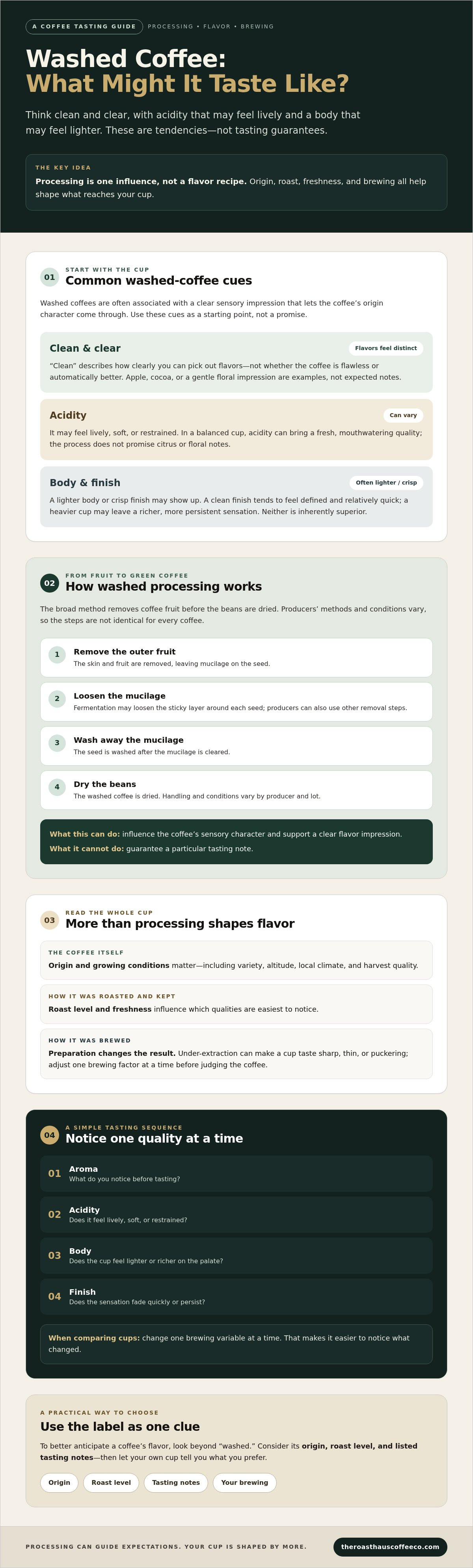
How to Taste Washed Process Coffee and Notice Its Flavor
A simple tasting routine can help you notice what’s in the cup without relying on elaborate flavor terms. Start with the aroma, take a sip while the coffee is warm, then taste it again as it cools. Temperature changes can make some differences easier to notice, so don’t rush to a verdict after the first sip.
What should you notice while tasting?
Focus on a few qualities in order. First, ask whether the flavors seem distinct or blended. Then notice sweetness and acidity: does the cup seem gently sweet, lively, soft, or restrained? Consider body, or how light or full the coffee feels in your mouth. After swallowing, pay attention to the finish. Does it fade quickly, feel crisp, or linger?
Use words that make sense to you. “Rounded,” “light,” “crisp,” and “lingering” can be more useful than searching for an exact fruit or flower note. Tasting notes are personal descriptions, not universal facts. If one sip reminds you of something familiar, write it down as your impression, not a guaranteed quality of washed coffee.
How can you make a fair coffee comparison?
Keep the brewing setup consistent so the coffee itself is the main difference. Use the same method, water, and approximate strength for both cups. Start with fresh beans and a consistent grind. Then change only one brewing variable at a time, such as grind size or water temperature. This helps you tell whether a flavor change may come from preparation rather than the beans.
Grind size, water, temperature, and extraction all affect how flavors come across. If a cup tastes thin or sharply sour, brewing may be part of the reason. Make a small adjustment, taste again, and record what changed. For more brewing fundamentals, look for How to Make Coffee: The Ultimate Guide to Crafting the Perfect Cup at Home.
Use this process to explore your preferences, not to prove that one coffee is better. Ready to put your tasting notes into practice? Browse available coffees, and check each coffee’s listed details rather than assuming its processing method.
Choosing Washed Coffee: Match the Flavor to Your Preferences
Washed coffee may suit you if you enjoy a cup where flavors seem distinct, the finish feels clean, and acidity adds a lively edge. Those are tendencies, not promises. If you prefer a fuller body or a stronger fruit impression, you may still enjoy washed coffees, but compare them with other processes instead of choosing by label alone.
What should you check on a coffee bag?
Read the details together. Processing gives you one clue, while origin and roast information help you form a more useful expectation of the cup. Check for producer or lot details when they’re provided. Tasting notes can suggest what to look for, but they’re descriptions, not ingredients or guaranteed flavors. Your brew and palate may bring out different impressions.
If processing isn’t listed, don’t infer it from a coffee’s flavor notes or origin. Ask the roaster to confirm the method. That’s the surest way to know whether a particular coffee was washed, natural, or processed another way. The word “washed” can help narrow your search, but it can’t replace details about the individual lot.
Where can you explore freshly roasted coffee?
The Roast Haus Coffee Co. is a family-owned, small-batch roaster based in Wyandotte, Oklahoma. Its coffees are roasted to order, and the business says products ship within 24 hours of roasting. This can help you consider freshness as you explore, but it doesn’t confirm the processing method or flavor notes of any specific coffee.
So, what does washed process coffee taste like? Often clean, clear, and expressive of origin, though the individual cup depends on more than processing. Compare the available coffee details, including origin, roast, and listed tasting notes. If you’re curious about a specific processing method, check with the roaster rather than assuming.
Use What You’ve Learned to Choose Your Next Cup
So, what does washed process coffee taste like? Often clean, clear, and expressive of origin, with acidity, body, sweetness, and finish that vary from cup to cup. Processing offers a useful clue, not a flavor guarantee. Origin, roast, freshness, and brewing all help shape what you taste.
Let your preferences guide you. Notice whether you enjoy distinct flavors and a lively impression, and compare coffees under similar brewing conditions. Check the bag for processing details and tasting notes rather than relying on assumptions.
The Roast Haus Coffee Co. is a family-owned, small-batch roaster operated by a husband-and-wife team in Wyandotte, Oklahoma. Its coffees are roasted to order, and the business says they ship within 24 hours of roasting. Processing details aren’t confirmed for its listed coffees, so review each coffee’s information as you explore.
Explore freshly roasted coffee from The Roast Haus Coffee Co. and use the listed details to find a cup that fits your preferences.
Frequently Asked Questions
What does washed process coffee taste like?
Washed coffee is often described as clean and clear, with flavors that can make the coffee’s origin easier to notice. If you’re asking what does washed process coffee taste like, expect tendencies rather than a fixed profile: acidity may feel lively or gentle, and body and finish can vary. The specific coffee, roast, freshness, and brewing method all influence the cup, so tasting notes are clues, not promises.
Is washed coffee more acidic than natural coffee?
Not necessarily. Washed coffees are often associated with noticeable acidity, but a natural coffee can also taste bright, and a washed one can feel soft or restrained. Acidity depends on the coffee itself, its roast, and how it’s brewed, so the process label alone can’t tell you which cup will seem more acidic. Compare coffees at similar roast levels and brew them the same way for a clearer tasting comparison.
What is the difference between washed and natural process coffee?
The main difference is how the coffee fruit is handled before the beans dry. In washed processing, producers remove the outer fruit, loosen and wash away mucilage, then dry the seeds. In natural processing, coffee generally dries with the fruit still around it. These methods can influence the cup, but neither guarantees a particular flavor. Washed coffees may seem more defined; naturals may lean fruit-forward, depending on the lot.
Does washed process coffee taste fruity?
It can. Washed processing doesn’t rule out fruit flavors, but it doesn’t guarantee them either. A washed coffee might taste like fruit, cocoa, flowers, or something else, depending on its origin, variety, growing conditions, and roast. Processing is only one part of the flavor picture. Treat tasting notes as suggestions, then try the coffee yourself and describe what you notice in plain language, such as sweet, crisp, or rounded.
Is washed coffee better for pour-over?
Washed coffee can work well in pour-over, especially if you enjoy a cup with distinct flavors and a clean finish. But it isn’t automatically better for that brew method. Coffee quality, roast, grind, water, and brewing technique all affect the result. Choose based on the flavor you enjoy, not the processing label alone. If you’re comparing coffees, keep your pour-over recipe consistent so the beans are the main variable.
Does washed processing mean coffee has been chemically treated?
No. “Washed” refers to a post-harvest method that uses water to help remove fruit material and mucilage from coffee seeds, often after fermentation loosens the sticky layer. The term doesn’t mean chemicals were used. Processing details can vary by producer, so check the coffee’s information or ask the roaster if you want to know how a specific lot was handled. Don’t infer the method from flavor alone.
Can roast level change the taste of washed coffee?
Yes. Roast level can change which qualities stand out in a washed coffee. A lighter roast may preserve more of the coffee’s distinct acidity and origin character, while a darker roast can bring more roasted, bitter, or caramelized impressions. These are general tendencies, not guarantees. Compare coffees at similar roast levels if you want to focus on processing differences, and remember that brewing also affects the flavor you experience.

