


Why does your morning cup often taste like a sour lemon when you were actually craving a rich chocolate bar? Many coffee drinkers search for that deep, comforting sweetness only to be met with overwhelming acidity or the chemical aftertaste of artificial syrups. It is a common frustration, especially when you are trying to find authentic coffee beans with chocolate notes that do not rely on additives. You deserve a brew that tastes like a treat without the sugar, but navigating the difference between flavored coffee and natural tasting notes can be confusing.
We believe that true quality comes from the bean itself and the craftsmanship of the roast. In this guide, you will learn how to identify the specific origins and processing methods that produce those coveted cocoa and milk chocolate profiles. We will show you why choosing small batch, roast to order beans is the only way to preserve these delicate flavors before they oxidize on a grocery store shelf. You will also discover practical brewing techniques to maximize natural sweetness in every cup. From understanding terroir to selecting the right roast level, you are about to master the art of the chocolate forward pour.
Key Takeaways
- Distinguish between artificial flavorings and the natural aromatic compounds that create genuine chocolate profiles.
- Identify the specific high-altitude regions in the "Chocolate Belt" that produce the best coffee beans with chocolate notes.
- Learn why medium roasts are the ideal choice for highlighting sweetness without introducing the bitterness of over-roasting.
- Master brewing techniques like immersion to maximize the rich body and heavy mouthfeel that complement cocoa flavors.
- See how a small-batch, roasted-to-order approach protects these fragile flavor notes from going stale before they reach your cup.
Understanding Chocolate Tasting Notes in Specialty Coffee
When we talk about tasting notes, we aren't talking about added syrups or powders. We are describing the inherent aromatic profile of the coffee cherry itself. These notes are identified through a standardized process called Coffee cupping. During this evaluation, experts look for specific chemical compounds that mirror familiar flavors. For many, finding high quality coffee beans with chocolate notes is the ultimate goal. These flavors result from the soil, the altitude, and the careful application of heat during roasting.
The spectrum of chocolate in coffee is broad. Some beans offer the sharp, dry intensity of 90% dark cocoa. Others provide the creamy, sugary sensation of milk chocolate or even malt. These variations depend heavily on how the bean's natural sugars interact with the roasting process. At our roastery, we focus on highlighting these differences so you can find exactly what you like without the guesswork.
Natural Sugars vs. Artificial Flavors
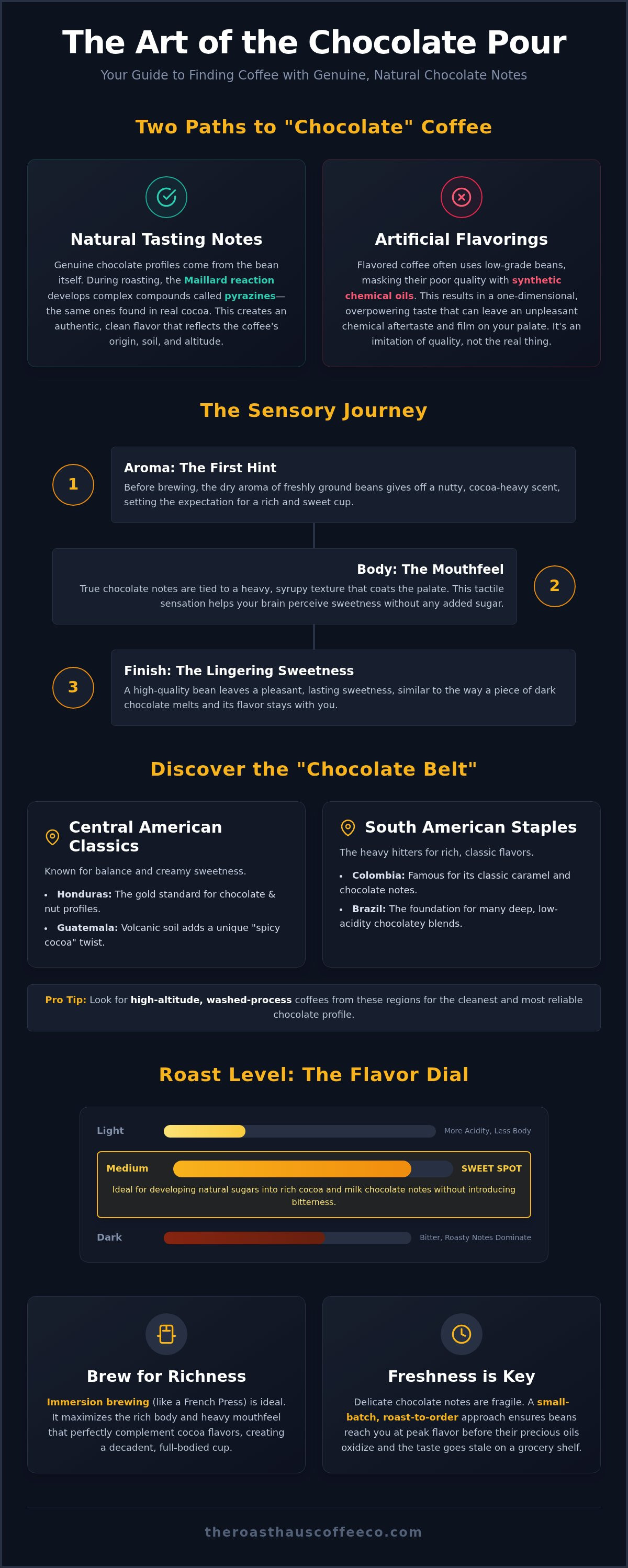
There is a massive difference between a bean that naturally tastes like cocoa and one that has been sprayed with synthetic oils. Flavored coffees often use low-grade beans that lack character. Roasters then coat them in artificial chemicals to hide bitterness. This creates a one-dimensional taste that often leaves a chemical film on your tongue. It's an imitation of quality, not the real thing.
In contrast, specialty coffee relies on the Maillard reaction. This is a chemical change between amino acids and reducing sugars that happens during the roast. It develops complex aromatics like pyrazines. These are the same compounds found in actual roasted cocoa beans. By choosing unflavored coffee beans with chocolate notes, you get a cleaner finish and a more honest representation of the farm's hard work. It's about respecting the craft from the soil to the bag.
The Sensory Experience: Aroma vs. Palate
Your brain begins tasting the chocolate before the water even hits the grounds. The dry aroma of freshly ground beans often gives off a nutty, cocoa-heavy scent. This sets your expectation for the cup. However, the real magic happens through mouthfeel, often called the "body" of the coffee. Chocolate notes are closely tied to a heavy, syrupy texture that coats the palate.
When you sip a well-brewed cup, look for a weight that stays on your tongue. This tactile sensation helps your brain perceive sweetness even without added sugar. Finally, pay attention to the finish. A high-quality bean won't just disappear. It leaves a lingering sweetness, similar to the way a piece of dark chocolate melts and stays with you. This is why we prioritize small-batch roasting. It ensures those delicate oils and sugars are fresh when they reach your kitchen.
The Best Coffee Origins for Natural Chocolate Profiles
Origin is the foundation of every flavor profile. While African beans often lean toward floral or citrus notes, Central and South American regions are widely considered the "Chocolate Belt" of the coffee world. These areas provide the perfect environment for developing deep, comforting sweetness. High altitude plays a critical role here. Beans grown at higher elevations mature more slowly. This slow growth allows them to develop denser sugars that eventually transform into rich cocoa flavors during the roasting process.
Processing methods also dictate the final taste. Washed coffees generally offer more clarity and a cleaner chocolate profile. In this method, the fruit is removed before drying, which highlights the bean's inherent characteristics. Natural processing can introduce heavy fruitiness that might distract from a pure cocoa finish. If you want a straightforward, reliable experience, look for washed coffee beans with chocolate notes from the Americas. This ensures you get the most authentic taste of the land without interference.
Central American Classics: Honduras and Guatemala
Honduras and Guatemala stand out as top performers for these profiles. Honduras is often cited as the gold standard for drinkers who love a balance of chocolate and nuts. The climate and soil there produce a very consistent, creamy sweetness. In Guatemala, volcanic soil adds a unique dimension to the crop. You might notice a "spicy cocoa" twist or a hint of smokiness that complements the base sweetness. Mexico is also an emerging leader. Regions like Chiapas and Oaxaca are gaining attention for high-quality coffee beans with chocolate notes that rival traditional staples. These origins offer a great balance of moderate acidity and heavy body.
South American Staples: Colombia and Brazil
Colombia and Brazil are the heavy hitters of the south. Colombian beans are famous for their classic "caramel and chocolate" profile. They are incredibly approachable and provide a smooth finish. Brazil, the world's largest producer, often provides the chocolatey crema found in traditional espresso. These beans tend to have lower acidity, which emphasizes the nutty and cocoa-heavy characteristics. Understanding these regional differences is a key part of choosing the best coffee beans for your specific palate.
Our Honduras Morning Splendeur is a prime example of these Central American profiles. We roast it in small batches in Wyandotte, Oklahoma, to ensure those natural chocolate notes are front and center. By focusing on these specific origins, we can guarantee a cup that satisfies your cravings naturally without any additives.
How Roast Levels Influence the Depth of Chocolate Flavors
Roasting is a delicate balance of time and temperature. It's the moment where the dense sugars found in high-altitude beans finally caramelize. If you pull the beans too early, the acidity remains high. If you wait too long, you burn the sweetness away entirely. For anyone seeking coffee beans with chocolate notes, the roast level is just as important as the country of origin. It's where the raw potential of the bean meets the skill of the roaster.
We focus on precision because even a few extra seconds in the drum can change a milk chocolate profile into something that tastes like burnt toast. Industrial roasters often over-roast their beans to hide defects or create a uniform taste across massive batches. This leads to an "ashy" flavor that many people mistake for strength. True chocolate character should be sweet and clean, not smoky or bitter. This is why our small-batch approach in Wyandotte, Oklahoma, is essential for preserving the integrity of the flavor.
The Medium Roast: Balancing Sweetness and Origin
Medium roasts are the "sweet spot" for most chocolate-forward beans. At this stage, the coffee reaches what we call the Maillard point. This chemical reaction between sugars and amino acids creates the specific aromatics we recognize as cocoa. A medium roast is long enough to develop a syrupy body but short enough to keep the bean's natural sugars from burning. This balance allows the origin's unique character to shine through.
Our Honduras Morning Splendeur thrives at this level. By applying heat carefully, we bring out a creamy milk chocolate profile that feels smooth on the palate. It's an honest cup of coffee that doesn't need additives to taste like a treat. We roast in small batches to ensure that this delicate sweetness is locked in and ready for your morning brew.
The Dark Roast: For Lovers of Bittersweet Cocoa
As the roast continues into darker territory, the flavor profile shifts toward intensity. The bright, sugary notes transform into the deep, complex flavors of baker's cocoa or 90% dark chocolate. These roasts offer a heavier mouthfeel and a pleasant bittersweet finish. They are the perfect choice for those who enjoy adding a splash of cream, as the bold chocolate character easily cuts through the milk.
However, dark roasts require extra care. The roasting process brings natural oils to the surface of the bean. These oils are where the flavor lives, but they are also very sensitive to oxygen. This makes roasted-to-order freshness absolutely critical. If dark-roasted coffee beans with chocolate notes sit on a shelf for weeks, those oils turn rancid. You lose the rich cocoa and end up with a metallic, stale taste. We ship within 24 hours of roasting to make sure you experience the peak of that bittersweet profile.
Brewing Techniques to Enhance Chocolatey Undertones
You have selected high-quality coffee beans with chocolate notes and ensured they are freshly roasted. Now, the final step is extraction. How you brew determines whether those natural sugars end up in your mug or stay trapped in the grounds. While pour-over methods are excellent for highlighting acidic fruit notes, they often use paper filters that trap the very oils responsible for a chocolatey mouthfeel. To get the most out of a cocoa-forward bean, you need a method that prioritizes body and texture.
Water temperature is a critical variable that many people overlook. While some suggest using water just off the boil at 212 degrees Fahrenheit, this can often lead to harsh bitterness. For chocolatey profiles, we recommend a slightly lower range of 195 to 200 degrees Fahrenheit. This lower temperature reduces the risk of over-extracting bitter compounds and allows the mellow, syrupy sweetness of the bean to take center stage. Pair this with a consistent brewing ratio of 1 part coffee to 15 parts water for a rich, heavy cup that mimics the experience of melting high-quality chocolate.
The French Press: The Chocolate Lover’s Best Friend
Immersion brewing is the most effective way to maximize the sensory experience of chocolatey beans. The French Press uses a metal mesh filter rather than paper. This allows the natural oils and fine particles to pass into your cup, creating the heavy body and "creamy" texture associated with milk chocolate. When these oils remain in the brew, they coat your palate and prolong the sweet finish.
A simple four-minute steep is usually all you need. Start by saturating the grounds and letting them bloom for 30 seconds, then add the rest of your water. After four minutes, give the top a gentle stir and plunge. This consistent contact between water and coffee ensures an even extraction of those deep, comforting notes. It is a straightforward, honest way to enjoy the craftsmanship of the roast.
Grind Size and Extraction
Consistency is non-negotiable if you want flavor clarity. If your grind is uneven, some particles will be over-extracted and bitter, while others will be under-extracted and sour. This "muddies" the flavor and hides the delicate chocolate aromatics you are looking for. Using a quality burr grinder is the only way to ensure every coffee particle is the same size. For immersion methods like the French Press, you should aim for a medium-coarse grind, similar in texture to sea salt.
A coarse grind allows for a longer steep time without the coffee becoming astringent. If you are unsure about your current equipment, you can read more in the ultimate guide to coffee grinders. Once you have your grind dialed in, you will notice a significant improvement in how clearly those cocoa notes present themselves. For the best results, try these techniques with our Honduras Morning Splendeur to experience a truly balanced, chocolate-forward brew.
Finally, always ensure your equipment is clean. Old coffee oils can turn rancid and introduce a metallic taste that ruins the sweetness of fresh beans. A clean brewer and a fresh grind are the two simplest ways to respect the integrity of the product and enjoy your coffee exactly as the roaster intended.
Discover Freshly Roasted Chocolatey Beans from The Roast Haus
Finding the perfect cup starts with a roaster you can trust. The Roast Haus Coffee Co. is a family-owned and operated venture based in Wyandotte, Oklahoma. We don't believe in mass production or letting coffee sit in a warehouse for months. Instead, we focus on the integrity of the bean and the precision of the roast. Our philosophy is rooted in the idea that coffee is a craft, not just a commodity. When you buy from us, you're supporting an independent business that genuinely cares about your morning ritual.
The biggest enemy of a great cup is time. Volatile compounds that create the sensation of chocolate begin to fade the moment the roast is finished. Most grocery store beans have already lost their complexity by the time they reach the shelf. We solve this by using a roasted-to-order model. We ship your coffee within 24 hours of roasting. This ensures that when you open the bag, you're experiencing the peak of its flavor profile. It's the only way to guarantee that the delicate sweetness we've worked so hard to develop is actually what ends up in your mug.
Artisan Small-Batch Excellence
We roast in small batches because it gives us total control over the heat. This allows us to "dial in" the specific temperatures needed to maximize natural sweetness. In larger industrial roasters, it's easy to scorch the beans or leave them underdeveloped. Our artisan methods ensure that every batch of coffee beans with chocolate notes meets our high standards for quality and taste. We take pride in being a local Oklahoma roaster that can deliver this level of craftsmanship to doorsteps nationwide.
It's important to understand that we never use artificial oils or synthetic additives. Our beans are never flavored, but they are always flavorful. The chocolatey profile you taste comes purely from the soil, the altitude of the farm, and our careful roasting process. We believe that the natural characteristics of specialty coffee are far superior to anything created in a lab. You get a cleaner, more honest experience that respects the work of the farmers who grew the crop.
Our Top Chocolate-Forward Recommendations
If you're looking for a reliable starting point, our Honduras Morning Splendeur is the premier choice. This selection is known for its incredibly smooth, chocolatey body and consistent sweetness. It's an approachable coffee that performs well in a variety of brewers. For those who enjoy a bit more complexity, the Kenya AA Supreme offers a bolder profile. It combines notes of dark fruit with a cocoa-heavy finish, providing a rich and layered experience for the seasoned palate.
If you can't decide on just one, The All Day Sampler is an excellent way to explore different origins and compare their unique chocolate profiles. This allows you to taste the nuances between regions and find the exact level of sweetness that suits your taste. We want you to have the best possible experience with every sip. Shop our freshly roasted beans and taste the difference. Once you've tried coffee beans with chocolate notes that were roasted specifically for you, it's hard to go back to anything else.
To complement these rich flavors at your next gathering, you can learn more about Khan's and their specialty treats that make any occasion more memorable.
Elevate Your Morning with Natural Sweetness
Mastering the flavor of your morning cup doesn't require artificial additives or sugary syrups. It starts with understanding how origin, roast level, and brewing technique work together to reveal the bean's inherent character. By choosing unflavored coffee beans with chocolate notes, you enjoy a cleaner, more complex sweetness that respects the dedicated work of both the farmer and the roaster. Remember that freshness is the ultimate differentiator; those delicate cocoa compounds dissipate quickly once the roasting process is complete. If your beans have been sitting on a shelf for months, you are missing out on the best part of the experience.
At The Roast Haus Coffee Co., we are committed to this level of quality and transparency. We are a family-owned artisan roastery in Wyandotte, Oklahoma, focusing on small-batch methods that prioritize flavor integrity over mass production. Because we ship within 24 hours of roasting, those rich milk chocolate and dark cocoa profiles remain vibrant until they reach your kitchen. Browse Our Roasted-to-Order Coffee for Natural Chocolate Notes and experience the difference that true craftsmanship makes. We are proud to share our passion with you and help you find a brew you truly love.
Frequently Asked Questions
Do coffee beans with chocolate notes actually contain chocolate?
No, authentic coffee beans with chocolate notes don't contain actual chocolate or cocoa powder. These flavors are the result of natural chemical compounds developed during the growing and roasting processes. The Maillard reaction during roasting creates aromatics that our brains perceive as cocoa. We never use artificial oils or syrups to achieve these profiles. Instead, we rely on the bean's inherent sugars and our artisan roasting methods to deliver that familiar, deep sweetness.
What is the best roast level for chocolate flavors?
Medium and medium-dark roasts are generally the best for highlighting these notes. A medium roast preserves the bean's natural sugars while allowing the Maillard reaction to develop creamy, milk chocolate characteristics. If you prefer a bittersweet or baker’s cocoa profile, a dark roast is the way to go. However, roasting too far into "dark" territory can replace these sweet notes with ashy, smoky flavors that mask the bean's natural quality and integrity.
Which coffee origin has the most natural chocolate taste?
Central and South American regions are the primary sources for these profiles. Origins like Honduras, Mexico, and Brazil are famous for their low acidity and heavy, syrupy bodies. Our Honduras Morning Splendeur is a perfect example of this regional specialty. While African beans often lean toward fruit and floral notes, the "Chocolate Belt" of the Americas provides the dense sugars needed for a reliable, cocoa-forward experience in every cup you brew.
Can I get chocolate notes in decaf coffee?
Yes, you can enjoy rich chocolate profiles without the caffeine. Our Decaf Swiss Water Process beans maintain their structural integrity and flavor compounds because the decaffeination method is chemical-free and gentle. This process removes caffeine while leaving the natural oils and sugars intact. When roasted correctly, these beans deliver the same comforting cocoa and nutty undertones as their caffeinated counterparts, making them an excellent choice for an evening treat that won't keep you awake.
Why does my coffee taste bitter instead of chocolatey?
Bitterness usually indicates over-extraction or water that's too hot. If your water temperature exceeds 205 degrees Fahrenheit, it can pull harsh, astringent compounds from the grounds that overwhelm the sweetness. Another common cause is a grind that's too fine for your brewing method. Try lowering your water temperature to around 198 degrees and ensure your grind size is consistent. This allows the smoother, chocolatey aromatics to shine through without the unpleasant bite.
How does milk affect coffee with chocolate notes?
Milk and dairy alternatives often enhance the perception of chocolate notes by adding creaminess and additional sugars. The fats in milk bind to the coffee's oils, which can make a dark cocoa profile taste more like milk chocolate. This is why chocolate-forward beans are the preferred choice for lattes and cappuccinos. They provide a sturdy, sweet base that isn't lost when mixed with milk, creating a balanced and comforting beverage that many drinkers love.
Does the brewing method change the chocolate flavor?
Your brewing method significantly impacts how you perceive these flavors. Immersion methods like the French Press are ideal because they use metal filters that allow natural oils to pass into your cup. These oils carry the weight and "mouthfeel" that we associate with chocolate. In contrast, paper filters in pour-over brewers can strip away these heavy compounds, leading to a cleaner but less syrupy cup. Choosing the right tool helps maximize the bean's potential.
How long do chocolate notes stay fresh in roasted coffee?
Chocolate notes are most vibrant within the first two to three weeks after roasting. These sweet, volatile aromatics are sensitive to oxygen and begin to dissipate as soon as the beans leave the roaster. This is why our roasted-to-order model is so important. By shipping within 24 hours of roasting in Wyandotte, Oklahoma, we ensure you receive the coffee beans with chocolate notes at their absolute peak. Stale grocery store coffee loses these delicate notes quickly.

