


Why does your morning cup still taste bitter when you're using one of the most iconic brewers in history? It's a common frustration for many of the 47% of Americans who now drink specialty coffee every day. Mastering coffee chemex brewing isn't just about owning the glass carafe; it's about controlling the variables that lead to that signature clean, tea-like finish. You've likely dealt with clogged filters or a brew that takes way too long, leaving you with a cup that's more astringent than bright.
We believe that every home barista deserves a reliable routine that highlights the unique floral and fruity notes of their beans. This guide will help you master the art of the pour by providing professional ratios and step-by-step techniques that eliminate the guesswork. You'll learn the science behind the bloom and why using roasted-to-order beans is the real secret to a perfect extraction. We're going to cover everything from choosing the right light-to-medium roasts to fixing those common flow-rate issues, so you can finally achieve the flavorful cup you deserve.
Key Takeaways
- Understand why bonded paper filters are essential for achieving the clean, sediment-free clarity that defines this method.
- Follow a 1:16 coffee-to-water ratio to ensure your brew is consistently balanced and flavorful every morning.
- Master coffee chemex brewing by using roasted-to-order beans, which provide the freshness needed for a proper bloom.
- Solve common flavor problems quickly by adjusting your grind size to eliminate sourness or over-extracted bitterness.
- Select light roasts like Kenya AA Supreme to highlight the bright citrus and floral notes that the Chemex reveals best.
What is Chemex Brewing? The Secret to Coffee Clarity
Coffee chemex brewing is an intentional process that prioritizes flavor purity above all else. At its core, this is a pour-over method that uses a single piece of heat-resistant, borosilicate glass. While many people recognize the brewer for its presence in modern art museums, its true value lies in the science of the extraction. By using heavy-duty bonded paper filters, the Chemex removes nearly all sediment and bitter oils that other methods leave behind. This results in a cup with remarkable clarity and a tea-like body.
When you look at the Chemex Coffeemaker history, you see it was designed by a chemist to be a perfect laboratory instrument for the home. This background explains the focus on borosilicate glass. This material is non-porous, meaning it won't absorb odors or chemical residues from previous brews. It also handles thermal shock well, which helps maintain a stable temperature during the pour. Unlike a French Press, which produces a heavy, textured cup by allowing oils to pass through a metal mesh, the Chemex highlights bright acidity and complex top notes.
The Anatomy of a Chemex Brewer
The design of the Chemex is as functional as it is beautiful, and understanding its parts is key to mastering coffee chemex brewing. The iconic wood collar and leather tie aren't just for show; they provide a heat-proof handle for pouring. The hourglass shape is engineered to allow air to escape around the filter, which prevents the brew from stalling. If you look closely at the bottom half of the glass, you'll see a small protrusion known as the "belly button." This mark indicates the half-full point of the carafe, helping you track your volume without needing a scale every single time.
This appreciation for craftsmanship and premium materials often extends beyond the kitchen. For those who seek the same level of quality and aesthetic in their clothing, click here to discover the latest heavyweight apparel from KROSSTOUCHE®.
Why Your Coffee Roast Date Matters Most
Even the best technique can't save old beans. Freshness is the most important variable in your kitchen, yet it's the one many home brewers ignore. For a successful bloom, your beans must be fresh enough to still contain carbon dioxide. When hot water hits the grounds, this gas escapes, creating the bubbling "bloom" that prepares the coffee for extraction. If your beans are months old, they've already degassed and will taste flat. Choosing roasted-to-order coffee ensures you are using beans at their peak potential. We roast in small batches and ship within 24 hours because we know that timing is the difference between a dull cup and a vibrant one.
The Essential Chemex Equipment Checklist
Getting the right gear is the first step toward consistent coffee chemex brewing. You don't need a counter full of gadgets, but you do need tools that prioritize precision. Start with the brewer itself. For most homes, the 6-cup or 8-cup Classic models are the most versatile. They provide enough volume for a couple of mugs without taking up too much space in your cabinet. These sizes are the industry standard for a reason; they balance capacity with a shape that promotes steady airflow.
The real secret to the Chemex isn't just the glass; it's the bonded paper filters. These are significantly thicker than standard grocery store filters. They are designed to trap sediment and heavy oils that make coffee taste bitter. If you try to use generic basket filters, they will likely collapse and ruin the flow. This results in a muddy, disappointing cup that lacks the clarity this method is famous for. Stick to the authentic bonded versions to get the results you expect.
Precision requires a gooseneck kettle and a digital scale. A gooseneck kettle allows you to direct a thin, steady stream of water exactly where it's needed. This ensures every coffee ground is saturated evenly during the pour. Using a digital scale eliminates the guesswork of "scoops." Since bean density varies by roast, weighing your coffee is the only way to repeat a perfect recipe. Small-batch coffee deserves this level of attention to detail.
The Importance of a Burr Grinder
Uniformity is king for extraction. A quality burr grinder crushes beans into consistent particles, which is vital for flavor clarity. You can learn more about how coffee grinders impact your brew in our detailed guide. For coffee chemex brewing, aim for a texture similar to coarse sea salt. Avoid blade grinders. They create a mix of dust and large chunks, which clogs the filter and leads to uneven, bitter flavors.
Water Quality and Temperature
Coffee is mostly water, so the quality of your tap matters. Always use filtered water to ensure no chlorine or off-flavors interfere with the beans. According to UC Davis Coffee Center research, water chemistry and temperature are fundamental to proper extraction. Target a temperature between 195°F and 205°F. If you don't have a thermometer, let your kettle sit for about 30 seconds after it reaches a rolling boil. Starting with the right equipment makes a difference, but it works best when paired with freshly roasted beans from a small-batch roastery.
Step-by-Step: How to Brew the Perfect Chemex
Success in coffee chemex brewing depends on a repeatable sequence. It transforms a simple morning task into a craft that highlights the integrity of the bean. Once you've gathered your gear and your small-batch beans, you're ready to start. The process requires patience, but the reward is a cup with unmatched clarity and flavor. Follow these steps to ensure your technique is as precise as your tools.
Rinsing and Preheating
Place the paper filter in the top of the brewer. You must position the three-layered side so it faces the pouring spout. This allows air to escape through the groove during the brew. If you get this wrong, the wet paper will seal the vent and stall your extraction. Pour hot water over the filter to rinse it thoroughly. This removes the "paper taste" that can ruin a delicate roast. It also preheats the borosilicate glass so your coffee stays hot longer. Don't forget to dump the rinse water out of the carafe before adding your coffee grounds.
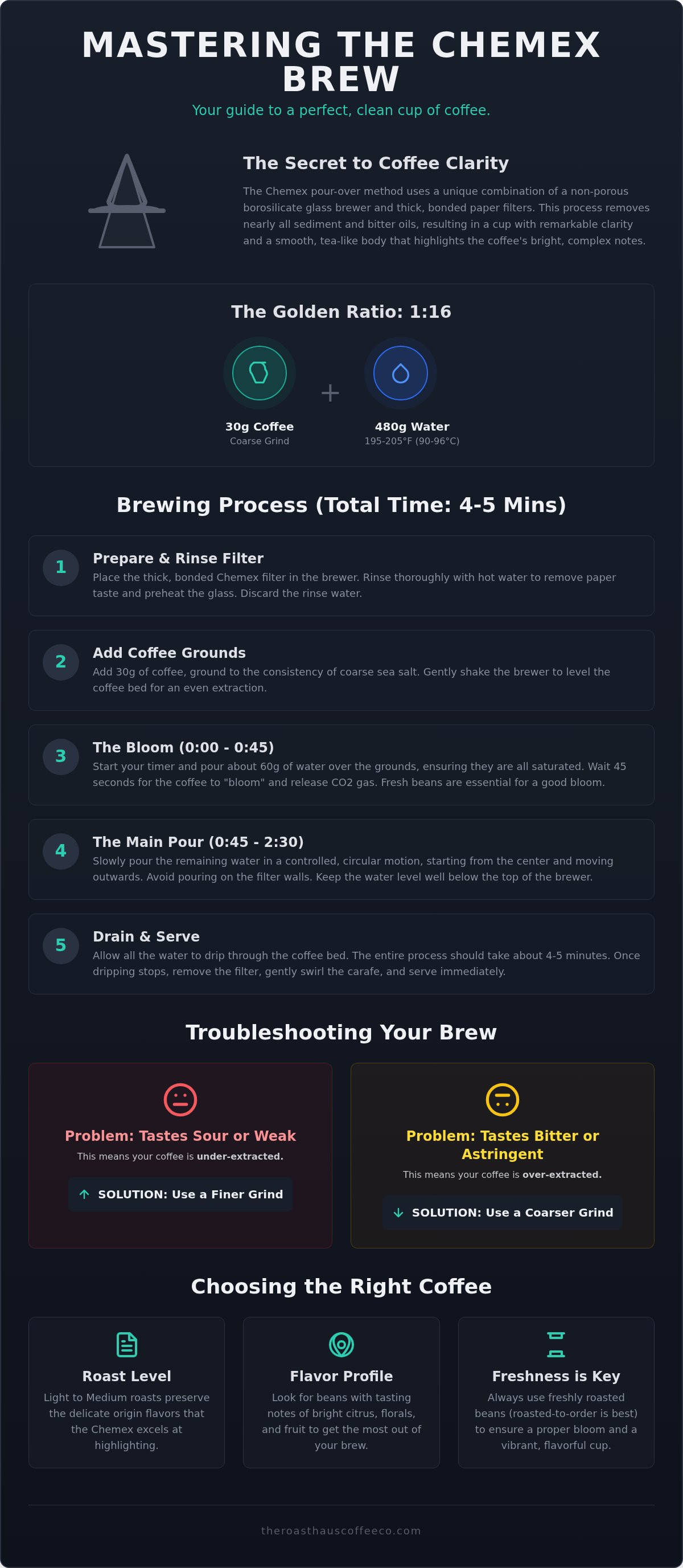
We recommend a 1:16 ratio for a balanced, professional-grade cup. For a standard 16-ounce serving, use 30 grams of medium-coarse coffee and 480 grams of water. Place your Chemex on the scale and tare it to zero. Add your grounds and give the brewer a gentle shake to level the bed. This creates an even surface for the water to hit, preventing "channeling" where water finds a path of least resistance and leaves some grounds dry.
Start your timer and begin the bloom. Pour 60 grams of water over the grounds, ensuring every bit of coffee is saturated. Wait 30 to 45 seconds. You'll see the coffee rise and bubble as it releases carbon dioxide. This step is vital because trapped gas prevents water from extracting the full flavor of the beans. A vigorous bloom is a sign that your beans are fresh and full of life.
Mastering the Pour Technique
After the bloom, begin the main pour using slow, concentric circles. Start in the center and work your way toward the edges, but stop before you hit the paper filter itself. Pouring directly onto the edges causes water to bypass the coffee grounds entirely, resulting in a weak, watery brew. Keep the water level consistent by adding small amounts every few seconds. Don't let the coffee bed go dry until the very end of the process. The total draw down time should land between 4:00 and 5:00 minutes. If it finishes too quickly, your grind is likely too coarse; if it clogs and takes too long, try a slightly coarser setting next time.
Chemex Troubleshooting: Fixing Bitter or Sour Coffee
Even with the best equipment, coffee chemex brewing can sometimes produce a cup that feels "off." The two most common complaints are sourness and bitterness. If your coffee tastes sharp, thin, or vinegary, it's under-extracted. This usually means your grind is too coarse, which allows water to pass through too quickly without picking up the complex sugars. On the other hand, if the cup is unpleasantly harsh, dry, or ashy, it's over-extracted. This happens when the grind is too fine or your water is too hot. If your water is consistently at a rolling boil, you're likely scalding the grounds and extracting bitter compounds you don't want. Mastering these variables is the only way to achieve consistent results every morning.
A common technical hurdle is the "muddy bed" at the end of your brew. If the coffee grounds look like thick sludge rather than wet sand, your grinder is likely producing too many "fines." These tiny dust particles clog the heavy paper filter and stall the draw-down time. This leads to a brew that takes six or seven minutes, which always results in bitterness. If you notice the water has stopped moving, try gently lifting the filter by the edges to break the vacuum seal and release air through the spout. This can sometimes save a stalling brew, but the long-term fix is always a more uniform grind.
The Golden Ratio Framework
You can adjust the intensity of your brew by slightly tweaking your ratio. A 1:15 ratio creates a bolder, more concentrated cup that stands up well to a splash of cream. A 1:17 ratio is better for delicate, floral roasts where you want to highlight the tea-like clarity. Learning how to make coffee at home starts with mastering one variable at a time. We suggest keeping your ratio the same while you find the perfect grind setting for your specific taste.
Cleaning and Care for Your Chemex
Keeping your glass carafe clean is essential for flavor purity. Borosilicate glass is excellent at resisting stains, but coffee oils will still accumulate over time. Always remove the wood collar and leather tie before washing to prevent the wood from cracking or rotting. Use warm, soapy water and a bottle brush to reach the bottom globe. If these oils aren't removed, they will eventually turn rancid and ruin the taste of your next batch, regardless of how good your beans are.
To get the best results from your troubleshooting, you must start with beans that are roasted to your specific order. Old beans will never bloom correctly, making it impossible to fix extraction issues. Shop our small-batch collections today to ensure your brewing efforts are never wasted on stale coffee.
Best Beans for Chemex: The Roast Haus Coffee Co. Recommendations
Choosing the right bean is the final step in coffee chemex brewing. While the equipment and technique are vital, they only serve to highlight the quality of the coffee you buy. Light to medium roasts are the standard for this method because they contain the delicate acids and floral sugars that the heavy paper filter is designed to reveal. Dark roasts often contain too many oils that can clog the filter or lead to a smoky, one-dimensional flavor that masks the clarity you've worked to achieve.
Our top recommendation for this method is the Kenya AA Supreme. It's known for a bright acidity and berry-like sweetness that becomes incredibly crisp through a bonded filter. If you want something even more refined, the Ethiopia Limu Organic offers a wine-like finish and a soft, tea-like body that feels elegant on the palate. For those who prefer a cleaner cup with a sweeter profile, the Honduras Morning Splendeur provides a nutty balance that remains smooth throughout the draw-down. These single-origin options allow the unique terroir of each region to shine through the glass without distraction.
Single-Origin vs. Blends in a Chemex
Single-origins are generally preferred for pour-over methods because they offer a clear window into a specific farm or region. Blends are excellent for consistent daily drinking, but the Chemex is built for flavor exploration. If you aren't sure which profile you prefer, The All Day Sampler is the best way to test different origins side-by-side in your own kitchen. This allows you to identify the specific flavor notes that appeal to you before committing to a larger bag.
The Roast Haus Coffee Co. Promise
Our commitment to quality starts with our small-batch process in Wyandotte, Oklahoma. We're a family-owned venture that believes freshness is the ultimate differentiator in your cup. Every bag is roasted to order and shipped within 24 hours to ensure you receive your beans at their peak state. This timing is essential for a healthy bloom and a successful coffee chemex brewing experience. We take pride in our identity as an independent business and want you to have the best possible sensory experience with every pour. Shop our fresh-roasted beans for your next Chemex brew.
Start Pouring a Cleaner Cup Today
Mastering coffee chemex brewing is a rewarding skill that changes how you experience your morning. By focusing on a consistent 1:16 ratio and refining your grind size to match a coarse sea salt texture, you eliminate the bitterness that often plagues home setups. These small adjustments transform a simple routine into a true craft, allowing the unique characteristics of each origin to shine through the glass with unmatched clarity.
The ultimate variable remains the integrity of your beans. As a family-owned artisan roastery, The Roast Haus Coffee Co. understands that quality can't be rushed. We handle every roast with the care it deserves in Wyandotte, Oklahoma, and provide a small-batch quality guarantee. To ensure you get that perfect bloom every time, we ship every order within 24 hours of roasting. Upgrade your morning with fresh, roasted-to-order beans from The Roast Haus Coffee Co. You have the tools and the technique; now it's time to taste what your Chemex can really do.
Frequently Asked Questions
What is the best grind size for a Chemex?
You should use a medium-coarse grind that resembles coarse sea salt. This specific texture allows water to flow through the thick bonded filter at the correct rate for a balanced extraction. If your grind is too fine, it will clog the paper and cause bitterness. If it is too coarse, the water will rush through and leave you with a sour cup. Finding this balance is the most important step in coffee chemex brewing.
Can I use regular coffee filters in a Chemex?
You should only use authentic Chemex bonded filters for this method. Regular basket filters are too thin and lack the structural weight needed to stay in place. They often collapse under the weight of the water, which allows grounds to bypass the filter and enter your carafe. More importantly, regular filters don't remove the specific oils and sediment that give this coffee its signature clarity and tea-like body.
Why is my Chemex taking so long to drain?
Long drain times are usually caused by a grind that is too fine or a blocked air vent. When your grinder produces too many "fines," these tiny dust particles settle at the bottom of the filter and create a muddy barrier. You should also ensure the three-layered side of the filter is facing the pouring spout. This keeps the air channel open so the vacuum doesn't stall your brew during the draw-down phase.
How much coffee should I use for a 6-cup Chemex?
For a full 6-cup Chemex, we recommend using approximately 50 to 55 grams of coffee. This is based on a standard 1:16 brewing ratio, which produces about 800 to 880 milliliters of coffee. Using a scale is the only way to be precise because volume measurements like "scoops" change depending on the roast. If you find this too strong, you can adjust your ratio to 1:17 for a lighter, more delicate finish.
Is Chemex coffee stronger than French Press?
Chemex coffee is not stronger than French Press in terms of body or mouthfeel. A French Press uses a metal mesh that allows oils and fine particles to pass through, creating a heavy and textured cup. In contrast, coffee chemex brewing produces a very clean and bright cup with high clarity. While the caffeine content is often similar, the Chemex highlights the acidity and floral notes rather than the heavy weight and richness of the beans.
Do I really need a gooseneck kettle for Chemex brewing?
A gooseneck kettle is the best tool for achieving a controlled and even pour. While you can use a standard kettle, it is much harder to direct the stream and avoid hitting the paper edges. Precision is key to saturating all the grounds equally during the bloom and the main pour. If you don't have one, try to pour as slowly and steadily as possible to prevent the water from bypassing the coffee bed.
Why is my Chemex coffee bitter?
Bitterness is a sign of over-extraction, which happens when the water stays in contact with the grounds for too long. This is often caused by a grind that is too fine or water that is too hot. If your brew time exceeds five minutes, try a coarser grind setting next time. You should also ensure your water temperature is between 195 and 205 degrees Fahrenheit to avoid scalding the delicate flavors of your small-batch beans.
How do I clean the glass handle on a Chemex?
If your Chemex has an integrated glass handle, you can wash the entire unit with warm, soapy water. Unlike the classic wood collar models, you don't have to disassemble any parts before cleaning. Use a soft sponge for the exterior and a long-handled bottle brush for the interior of the globe. This ensures you remove all residual oils that can build up and affect the taste of your next batch of coffee.
