


Why does a bag labeled "100% Colombian" so often taste like burnt charcoal and disappointment? You've likely experienced the frustration of buying colombian coffee beans from a big-box retailer only to find they've lost all their character. Most people agree that Colombia produces some of the finest coffee in the world. Yet the version you find in the supermarket is usually stale or over-roasted. At The Roast Haus Coffee Co., we believe you deserve the smooth, balanced morning cup that this region is famous for.
This guide will show you exactly what makes these beans the gold standard and how our small-batch process brings out their true potential. We'll clear up the confusion around terms like "Supremo" and "Excelso" so you know exactly what you're buying. We will also explain why our roasted-to-order mantra is the only way to ensure your coffee arrives at peak freshness. By the end, you'll understand why supporting a family-owned Oklahoma roastery makes a tangible difference in every sip you take.
Key Takeaways
- Learn how high-altitude growing conditions create the balanced body and bright acidity that define premium Colombian coffee.
- Understand the technical grading system to distinguish between Supremo and Excelso beans before you buy.
- Discover why most grocery store colombian coffee beans don't stay fresh and how small-batch roasting protects their natural oils.
- Master the essential brewing steps, from water filtration to fresh grinding, to unlock the full potential of your morning cup.
- See how our roasted-to-order model ensures your coffee is shipped from our Oklahoma roastery within 24 hours of being crafted.
What Makes Colombian Coffee Beans the World's Favorite?
High-altitude Arabica coffee is the backbone of the Colombian industry. These plants thrive in the rugged Andes Mountains. The volcanic soil is rich in minerals. The climate stays consistent throughout the year. These unique geographical factors produce colombian coffee beans with a balanced body and bright acidity. It's a clean cup of coffee that has earned its place as a global favorite for generations.
You probably recognize the name Juan Valdez. That iconic character helped the world associate Colombia with premium standards through decades of clever marketing. But the reputation isn't just advertising. The history of Colombian coffee production is built on the hard work of small-scale farmers. Most of these families manage just a few acres of land. Their dedication makes these beans the ideal entry point for anyone new to specialty coffee. They are approachable, reliable, and consistently delicious.
The Classic Flavor Profile: Chocolate, Nut, and Citrus
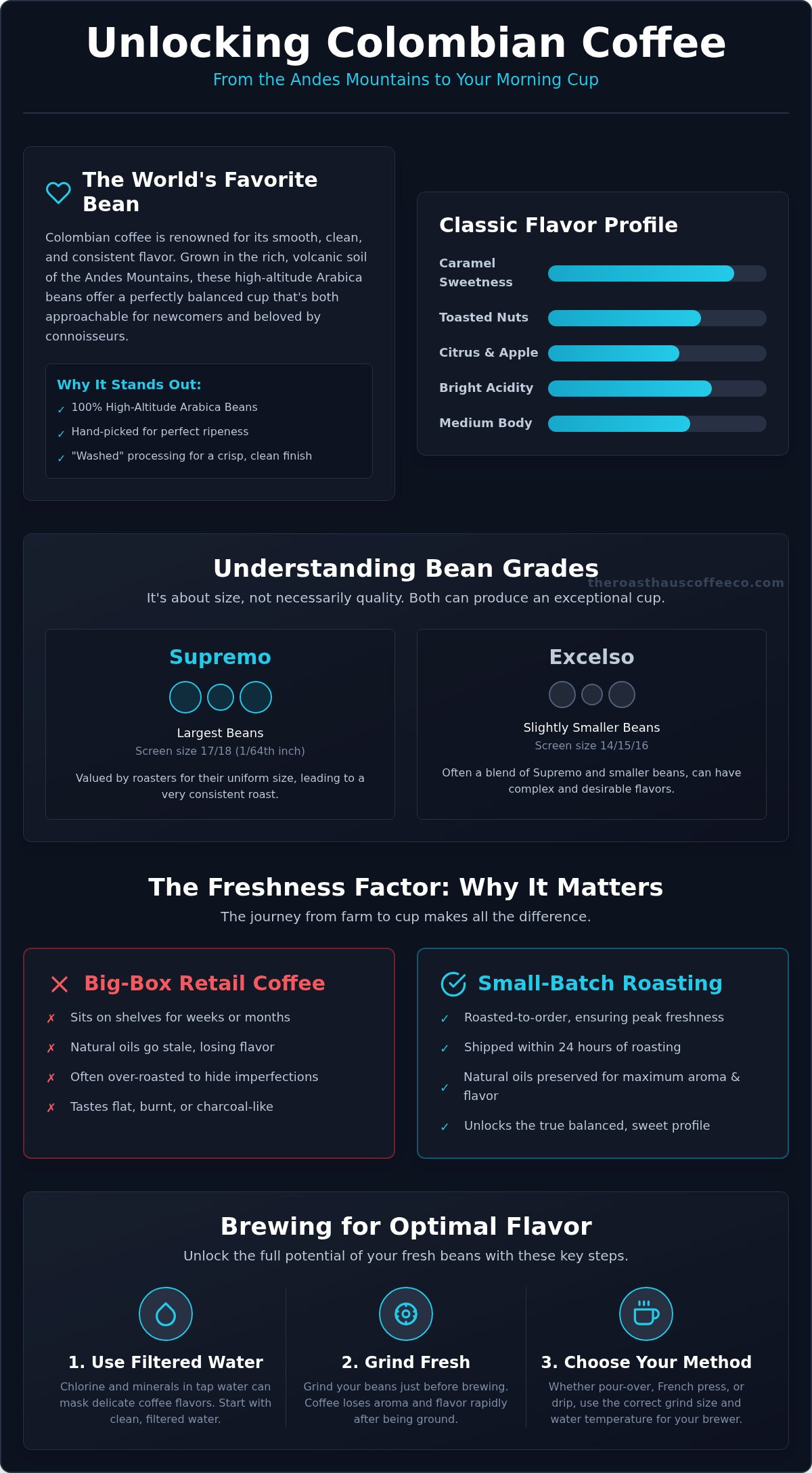
You can expect a very specific set of flavors from these beans. Most drinkers notice a distinct caramel sweetness first. This is followed by the taste of toasted nuts and a subtle hint of apple or citrus. It's a refreshing profile that works well at any time of day.
Unlike the heavy, "funky" notes often found in Sumatran varieties, colombian coffee beans offer a crisp and clean finish. This clarity allows the natural sweetness to shine through without any muddy aftertaste. The balanced nature of this origin refers to the perfect equilibrium between its bright, citrusy acidity and its smooth, medium body.
Arabica vs. Robusta: The Colombian Commitment
Colombia stands apart because of its strict commitment to Arabica plants. They don't export Robusta. This is a deliberate choice to prioritize flavor over high yields. Arabica beans are more delicate. They require specific temperatures and altitudes to grow well, which the Colombian landscape provides in abundance.
Farmers must hand-pick the cherries. The steep mountain slopes are simply too vertical for heavy machinery. This manual labor ensures that only the perfectly ripe cherries are harvested. This level of care is what defines high quality coffee beans in the modern market. It's a labor-intensive process that rewards you with a superior cup every morning.
Understanding Bean Grading: What Does 'Supremo' Really Mean?
Many people think the word "Supremo" on a bag of colombian coffee beans means it is the highest quality available. That isn't exactly true. In the coffee world, Supremo refers to the physical size of the bean, not its flavor score. This grading system uses metal screens with holes measured in 1/64ths of an inch. Supremo beans are the largest, staying on top of Screen 17 or 18. They look impressive in your bag. They are typically large, uniform, and oval shaped. Excelso beans are slightly smaller, usually falling through those screens but staying on Screen 14 or 15.
Roasters often prefer larger Supremo beans because they are uniform. When beans are the same size, they absorb heat at a similar rate during the roasting process. This leads to a more consistent batch without some beans being under-roasted while others are charred. However, don't fall for the myth that a bigger bean always means a better cup. Some of the most complex, sought-after flavors come from smaller beans grown at extremely high altitudes where the air is thinner. While Colombian coffee production statistics show that Supremo is a major export, the real magic happens in the roasting drum and the soil.
Regional Differences: Huila, Antioquia, and Beyond
The specific department where the beans grow changes the taste significantly. Huila is famous for its complex, fruity profiles and higher acidity. If you want something bright and lively, look for beans from this southern region. Antioquia, specifically the area around Medellin, is the traditional heart of the industry. It produces the classic nutty and chocolatey notes most people expect from a standard morning cup. These micro-climates create distinct single-origin experiences. You can explore our current offerings to see which regional profile fits your palate best. We roast these in small batches at our Oklahoma facility to ensure every regional note is preserved.
The Wet-Processing Method
Colombia is famous for the "washed" or wet-processing method. This involves removing the fruit pulp from the bean using water before it goes to the drying beds. It's a labor-intensive process that requires significant care and plenty of clean water. This method highlights the inherent flavor of the bean itself rather than the fruit. It results in the bright, crisp acidity and clean finish that makes colombian coffee beans so refreshing. While it uses more resources than "natural" processing, the clarity of flavor is the ultimate reward for the craftsman and the drinker alike.
Small-Batch Roasting: The Secret to Unlocking Flavor
Grocery store coffee often fails because it sits on a retail shelf for months. By the time you buy those colombian coffee beans, the delicate volatile oils have already evaporated. This leaves you with a cup that tastes like cardboard, paper, or flat bitterness. Industrial roasters prioritize volume above everything else. They roast thousands of pounds in a single cycle and store the results in massive warehouses. This model ignores the strict timing required for peak flavor and sensory excellence.
At The Roast Haus, we take a different path. We roast in small batches at our facility in Wyandotte, Oklahoma. This allows us to treat every single bean with the care it deserves. For Colombian beans, we've found that a medium roast is the absolute "Sweet Spot." It provides enough heat to develop a rich, caramel-like body and chocolatey sweetness. It does this without burning off the bright, citrusy acidity that makes this origin so famous. Our process is about finding the right balance for your morning cup.
Preserving the Aroma
Real freshness is about more than just the date printed on a bag. It's about understanding the science of degasification. After the roasting process ends, beans naturally release carbon dioxide. The first 7 to 10 days are a critical window for this release. If you brew too early, the gas interferes with the water's ability to extract flavor. If you wait too long, the aroma simply vanishes. Small-batch roasting gives us precise control over the Maillard reaction. This is the chemical process where sugars brown and develop complex, savory flavors. This level of detail is a core part of our art of roasting philosophy. While Coffee production in Colombia provides the high-quality raw material, the roast determines the final experience in your mug.
Small Business Integrity
We're a family-owned and operated roastery. That means we actually taste what we roast every day. Artisanal methods allow us to be flexible in ways big corporations can't match. We adjust our roast profiles based on the specific moisture levels and density of the green beans we receive. This ensures consistency even when environmental conditions change. Supporting an independent Oklahoma business means you aren't getting a mass-produced, industrial product. This commitment to craftsmanship is why our customers enjoy a superior coffee subscription experience. You receive beans that were roasted specifically for your order, ensuring you never have to settle for stale coffee again.
How to Brew Colombian Coffee for Optimal Flavor
You've secured your fresh beans. Now don't ruin them with poor technique. The balanced profile of colombian coffee beans is famous for its versatility, but it requires a few specific steps to truly shine in your kitchen. If you follow a consistent routine, you'll notice the difference in every sip. It's about respecting the work the farmer and the roaster already put into the product.
- Step 1: Always start with whole beans. You should grind fresh just before you start brewing to keep the aromatic oils intact.
- Step 2: Use filtered water. Tap water often contains chlorine or minerals that interfere with the bean's clean acidity.
- Step 3: Use a scale. Aim for a 1:16 coffee-to-water ratio. For every 1 gram of coffee, use 16 grams of water. This creates a medium-bodied cup that isn't too watery or too intense.
- Step 4: Check your temperature. Your water should be between 198°F and 202°F. Boiling water will scorch the grounds and cause bitterness.
- Step 5: Choose your method. Whether you steep or pour, focus on a steady extraction to highlight those classic chocolate notes.
The Drip Coffee Maker: A Colombian Classic
A standard drip machine is often the best way to serve a crowd. Colombian coffee is the ultimate "crowd-pleaser" because its flavors are approachable and balanced. To get the best results, make sure your machine is clean. Mineral buildup in the heating element can lead to uneven brewing temperatures. Once the brew cycle finishes, transfer the coffee to a thermal carafe immediately. Never leave your coffee on a warming plate. The constant heat continues to "cook" the liquid, which quickly creates a bitter, metallic taste that ruins the delicate caramel sweetness.
Pour Over vs. French Press for Single-Origins
Your choice of equipment changes which flavors stand out. If you prefer a bright, tea-like clarity, use a Pour Over method like the Hario V60. The paper filter traps sediment and oils, allowing the citrus and floral notes of the colombian coffee beans to take center stage. This method requires a steady hand and a gooseneck kettle for precision.
If you want a heavy, creamy body, reach for the French Press. This immersion method keeps the natural oils in the cup, which emphasizes the chocolatey finish and deep sweetness. You can find detailed instructions for both methods in our how to make coffee guide. To experience these flavors for yourself, browse our fresh-roasted selections and start brewing better coffee today.
The Roast Haus Difference: Fresh Colombian Coffee Shipped in 24 Hours
The Roast Haus Coffee Co. operates on a simple principle: coffee is a perishable product. Most industrial brands treat colombian coffee beans like a non-perishable commodity. They roast in massive quantities and store the results in distribution centers for months. We do things differently in Wyandotte, Oklahoma. Our 24-hour promise means we roast your beans and ship them within one business day. This ensures you receive the product at the absolute peak of its flavor profile. We don't have massive warehouses. We have a small-batch roastery where we maintain total control over every bag that leaves our door.
Being a family-owned venture means we're personally invested in your satisfaction. As a husband-and-wife team, we handle the roasting, the packaging, and the shipping ourselves. We care more about the quality of your morning cup than any faceless corporation ever could. This personal commitment extends to how we source our beans. We work to ensure our Colombian partners receive fair value for their labor. This sustainable approach supports the artisan farmers who make this world-class coffee possible in the first place. It's about integrity from the soil to the shipping label.
Why Freshness is Our Mantra
The difference between grocery store coffee and our roasted-to-order beans is something you can smell the moment you open the box. The aroma is intense, sweet, and vibrant. You can see the freshness yourself through the "bloom" test. When you pour hot water over fresh grounds, they'll swell and bubble as they release gases. Stale beans won't do this. To make sure you never run out of this experience, our roasted-to-order subscription automates the process for you. It's the easiest way to keep your pantry stocked with the highest standard of coffee without any extra effort.
Start Your Journey with a Sampler
If you're still exploring different origins, you don't have to commit to a single large bag. Our "The All Day Sampler" is designed for exactly this reason. It allows you to taste the legendary balance of our colombian coffee beans side-by-side with the bold, wine-like notes of our Kenya AA Supreme. Comparing these profiles helps you develop your palate and discover what you truly enjoy in a cup. We invite you to join the Roast Haus family today. Experience the difference that Oklahoma-roasted freshness makes in your daily routine. We're ready to roast your next favorite batch.
Experience the True Flavor of Colombia
You now understand that the secret to a perfect cup isn't just the label on the bag. It's the combination of high-altitude farming, proper bean grading, and the precision of the roast. While the "Supremo" label ensures you have large, uniform beans, it is the small-batch roasting process that truly unlocks the caramel and citrus notes you've been searching for. By avoiding the stale inventory found at big-box retailers, you can finally taste the balanced profile that made these beans famous.
At The Roast Haus Coffee Co., we take pride in our identity as a family-owned roastery in Wyandotte, Oklahoma. We don't believe in letting coffee sit in a warehouse. That's why we roast every order specifically for you and ship it within 24 hours. This dedication to craftsmanship ensures that your colombian coffee beans arrive at peak freshness, ready for your morning brew. You deserve a cup that is as honest and hardworking as the people who grew it. To complement this commitment to artisanal quality in your daily ritual, check out Dehaz Skincare for luxury botanical products.
Stop settling for flat, bitter coffee. Join our community of coffee lovers who value integrity and sensory excellence in every sip. Shop our freshly roasted Colombian coffee beans today! We look forward to roasting a fresh batch for your kitchen.
Frequently Asked Questions
Is Colombian coffee always Arabica?
Colombia focuses exclusively on the production of Arabica beans for the export market. The country has strict regulations and a cultural commitment to this species because it thrives in the high altitudes of the Andes. While Robusta is grown in other parts of the world for higher yields, Colombia prioritizes the superior flavor, aroma, and acidity that only Arabica plants can provide.
What is the difference between Colombian Supremo and Excelso?
The primary difference between these two grades is the physical size of the bean. Supremo beans are the largest, staying on top of a screen size of 17 or 18. Excelso beans are slightly smaller and typically stay on a size 14 to 16 screen. While Supremo is often marketed as the premium option, both grades can offer exceptional flavor depending on the specific farm and roast quality.
Is Colombian coffee considered low acid?
No, Colombian coffee is actually prized for its bright and crisp acidity. This isn't the same as the "stomach acid" bitterness found in low-quality roasts. Instead, it refers to a refreshing, citrus-like quality that makes the cup feel lively. Because it is so well-balanced with a medium body and caramel sweetness, it often feels smoother on the palate than other high-acid coffees from East Africa.
What is the best roast level for Colombian coffee beans?
A medium roast is widely considered the best level for colombian coffee beans because it strikes a perfect balance. This roast level is dark enough to develop rich chocolate and caramel notes without burning off the bright acidity that defines the origin. At our Oklahoma roastery, we focus on this "sweet spot" to ensure you get the most complex flavor profile possible in every bag.
Why is Colombian coffee so popular in the US?
Its popularity comes from a combination of successful historical marketing and a consistently approachable flavor profile. The iconic Juan Valdez campaign helped build trust with American consumers decades ago. More importantly, the balanced taste of chocolate, nut, and fruit makes it a reliable choice for anyone who wants a high-quality morning cup that isn't too overwhelming or "funky."
How should I store my freshly roasted Colombian beans?
Store your beans in an airtight container in a cool, dark place like a pantry. Avoid the refrigerator or freezer, as moisture and odors can seep into the beans and ruin the delicate oils. Since we ship our colombian coffee beans within 24 hours of roasting, keeping them in their original valve bag or a dedicated coffee canister will preserve that peak freshness for several weeks.
Can I use Colombian beans for espresso?
Yes, Colombian beans make an excellent base for espresso due to their natural sweetness and medium body. They provide a smooth, syrupy shot with a rich crema that stands up well in milk-based drinks like lattes or cappuccinos. Their balanced nature ensures the espresso isn't too sharp or acidic, making it a favorite for both home baristas and professional cafes looking for a versatile bean.
How long does it take for The Roast Haus to ship my order?
We ship every order within 24 hours of roasting to honor our roasted-to-order commitment. By shipping within one business day from our Wyandotte, Oklahoma facility, we ensure the coffee spends as little time as possible in transit. You receive your beans at the height of their aromatic potential, often arriving just as they finish their natural degasification process and are ready for brewing.
