


Most coffee lovers think decaf is just another word for disappointment. You've likely suffered through a cup that tasted like metallic water or stale cardboard, leaving you wondering if the health benefits are even worth the sacrifice. This flat flavor usually comes from harsh chemical solvents like methylene chloride, which strip away the bean's personality along with the caffeine. It doesn't have to be this way. By choosing decaf swiss water process coffee, you can enjoy the full, complex profile of a specialty roast without the jitters or the chemical aftertaste.
We know you want a clean cup of coffee that honors the craft of the roaster. In this guide, we'll show you how the Swiss Water Process uses nothing but time, temperature, and water to remove 99.9% of caffeine while keeping the essential flavor oils intact. You'll learn the science behind this organic, chemical-free method and discover how small-batch roasting ensures every bag arrives at your door at peak freshness. From understanding certifications to finding a roast that actually tastes like a single-origin coffee, you're about to gain total confidence in your decaf choice.
Key Takeaways
- Understand how the Swiss Water Process uses only water and temperature to remove 99.9% of caffeine without harsh solvents.
- Learn why decaf swiss water process coffee preserves the complex flavor profile and soul of the original bean.
- Compare the benefits of chemical-free decaffeination against common solvent methods that can leave a metallic taste.
- Discover how to choose the freshest beans by prioritizing roast dates over "best by" labels found in big-box stores.
- Find out why small-batch, roasted-to-order production is essential for experiencing the true quality of specialty decaf.
What is Decaf Swiss Water Process Coffee?
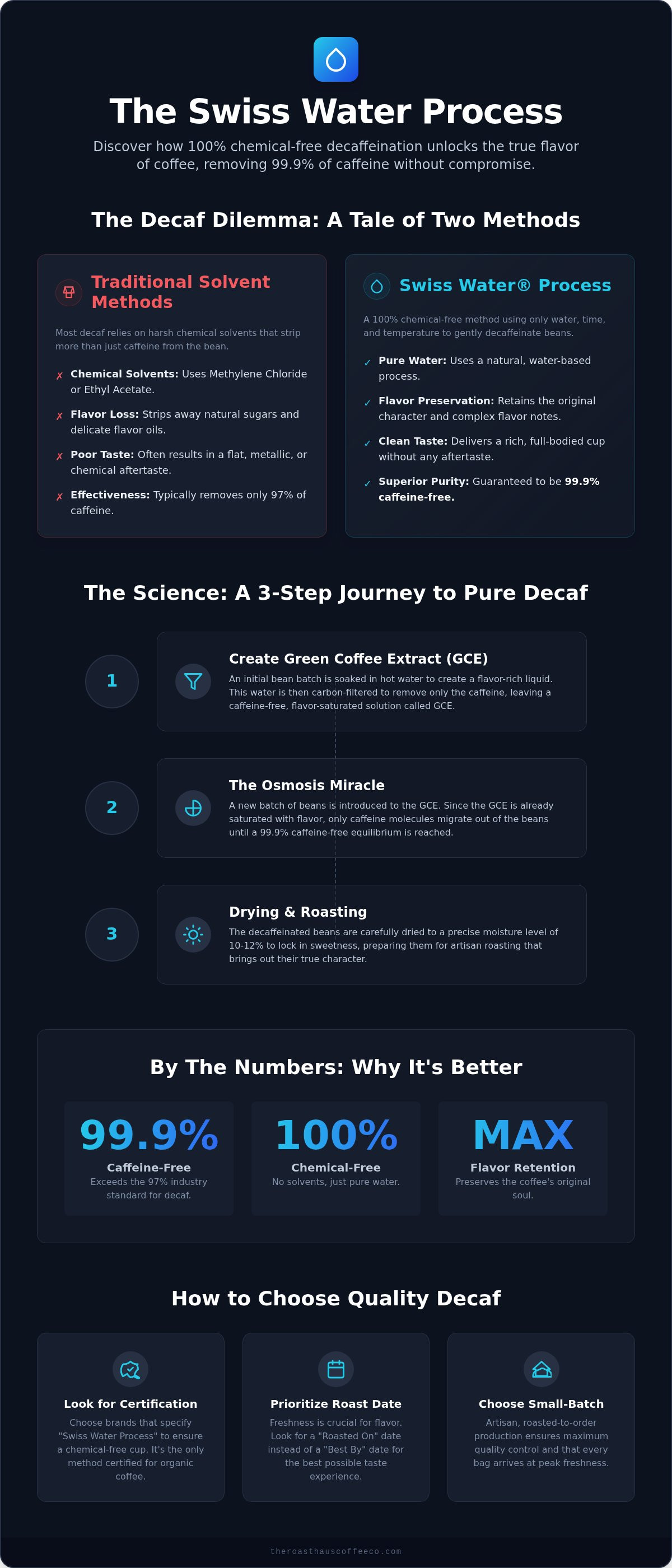
Decaf swiss water process coffee represents the gold standard for drinkers who care about what goes into their bodies. Most decaf is made using chemical solvents, but this method relies on nothing but water, temperature, and time. It's a non-solvent approach that preserves the integrity of the bean. While the industry standard for decaf is only 97% caffeine-free, the Swiss Water method guarantees 99.9% removal. This difference matters for those sensitive to caffeine. It ensures you get the flavor you want without the unwanted jitters.
The process began in 1930s Switzerland and later moved to British Columbia for commercial expansion. You can read more about the complex history of Decaffeination and its various evolutions over the decades. For an independent roastery like The Roast Haus, this method is the only logical choice. It respects the hard work of the farmers and the natural character of the green beans. We use it because it aligns with our commitment to quality and small-batch integrity.
Choosing decaf swiss water process coffee is about supporting a craft rather than a corporate factory. We focus on small-scale production in Wyandotte, Oklahoma, where we can monitor every roast. We don't want chemicals touching our beans, and we know our customers don't either. This method allows us to provide a high-standard experience for people who value sensory excellence. It keeps the specific notes of the origin alive so your decaf tastes like real coffee.
The Problem with Traditional Decaffeination
Standard decaf often relies on Methylene Chloride or Ethyl Acetate. These chemicals act as solvents to dissolve the caffeine from the green beans. Unfortunately, they don't just take the caffeine. They also strip away the natural sugars and volatile oils that give coffee its unique taste. This is why mass-produced decaf often has a flat, metallic, or chemical aftertaste. The FDA is currently reviewing petitions to ban methylene chloride in decaffeination due to health concerns, making water-based methods more relevant than ever.
Why "Chemical-Free" is More Than a Marketing Buzzword
Selecting a chemical-free option is about health and environmental responsibility. Solvent-based methods create chemical waste that must be managed carefully to avoid pollution. Using water is cleaner for the planet and safer for your cup. It's a transparent process that doesn't hide behind industrial secrets. You can drink it with peace of mind knowing no harsh residues remain. The Swiss Water Process is the only decaffeination method that is fully certified organic-compliant.
The Science: How the Swiss Water Process Works
Understanding the science behind your cup helps you appreciate the craft. It all starts with high-quality green beans. If you start with poor ingredients, you'll end up with poor coffee, regardless of the method used. The Swiss Water Process relies on two main principles: solubility and osmosis. It's a precise dance of chemistry that protects the bean's soul while removing the caffeine.
Step 1: Creating the Green Coffee Extract (GCE)
The process begins by soaking an initial batch of green beans in hot water. This water extracts everything: the sugars, the oils, and the caffeine. The beans themselves are discarded, but the water is saved. This liquid then passes through a carbon filter. These filters are specifically designed to trap caffeine molecules while letting the flavor components pass through. The result is what we call Green Coffee Extract (GCE). It's a liquid saturated with the specific flavor profile of the coffee but contains zero caffeine. According to The Nutrition Source from Harvard, coffee contains various bioactive compounds that may contribute to health. GCE ensures these compounds stay in your coffee rather than being washed away.
Step 2: The Osmosis Miracle
Now the real work begins. A fresh batch of green beans is introduced to the caffeine-free GCE. Because the GCE is already saturated with coffee flavor, the flavor molecules in the new beans have no reason to leave. They stay put inside the bean. However, the caffeine molecules sense the imbalance. They naturally migrate out of the bean and into the GCE through osmosis. This continues until exactly 99.9% of the caffeine is gone. This is how decaf swiss water process coffee keeps its original character and complexity. The GCE is then filtered again to remove the new caffeine and reused for the next batch.
Step 3: Drying and Roasting
After the caffeine is removed, the beans are very wet. They must be carefully dried until they reach a moisture level of 10-12%. This part of the process is incredibly sensitive. If the beans dry too fast, they become brittle and lose their sweetness. If they dry too slow, they can lose their structural integrity. Once they reach the perfect state, they are ready for their journey to our roastery in Wyandotte, Oklahoma. We treat these beans with the same respect as our regular roasts to ensure you get a premium experience. You can taste the difference when you try our Decaf Swiss Water Process roast. It's about maintaining the integrity of the bean from the water bath to your morning mug.
Swiss Water vs. Other Decaf Methods: A Comparison
The market is flooded with cheap decaf options made using the Direct Solvent Method. This process applies chemicals like methylene chloride or ethyl acetate directly to the green beans. It's efficient for big-box retailers because it's inexpensive, but it often leaves a distinct chemical residue and a metallic tang. The Indirect Solvent Method is slightly better because it soaks the beans in water first, but it still relies on chemical baths to strip the caffeine from that water. For those seeking decaf swiss water process coffee, these methods are unacceptable. They prioritize profit margins over the purity of the final cup.
The CO2 Process is another alternative that uses supercritical carbon dioxide under extreme pressure. It's a technical marvel, but it's mostly used for massive commercial batches. The high pressure and heat involved can sometimes dull the bright acidity found in specialty coffee. Small-batch artisan roasters avoid these industrial methods. We prefer a process that mirrors our own values of patience and precision. Swiss Water remains the favorite for independent businesses because it doesn't require massive factory infrastructure or synthetic additives. It allows the roaster to maintain control over the final product's integrity.
Flavor Retention: The Ultimate Test
Flavor retention is where the comparison truly ends. Solvent-based decaf often feels thin or lacks body because the chemicals strip away the bean's natural oils. In contrast, Swiss Water preserves the terroir and unique characteristics of the origin. It's helpful to know that these beans often roast faster and appear darker than regular coffee due to the way the water process affects the cell structure. This requires a skilled roaster to manage the heat carefully. When done right, the acidity and body remain indistinguishable from a caffeinated single-origin roast. You get the same floral or nutty notes you'd expect from a high-end bean without any of the chemical interference.
Health and Safety Certifications
Health-conscious drinkers often look for specific certifications to ensure their coffee is clean. The Swiss Water Process is certified organic by the OCIA, in accordance with USDA National Organic Program standards. It's also certified Kosher and Halal, making it accessible for diverse dietary needs. SWP is the only decaffeination process that never introduces a foreign substance to the bean. This commitment to purity is why we trust it for our customers in Wyandotte and beyond. It's not just about removing caffeine; it's about what you leave behind. If you are looking for other clean ways to boost your wellness, you can learn more about Organic Fuel and their organic herbal supplements. By choosing decaf swiss water process coffee, you are choosing a product that respects both your health and the environment.
How to Choose and Brew the Best Decaf Coffee
Freshness is often ignored in decaf circles. Many drinkers assume that because the caffeine is gone, the beans stay fresh longer. This is a mistake. Decaf actually requires more attention to timing because the decaffeination process makes the bean structure more porous and prone to oxidation. You should always look for a specific roast date on the bag. Avoid "best by" dates commonly found in big-box stores. These labels often hide beans that have been sitting on a shelf for six months or more. For more help selecting your beans, check out our Coffee Beans: The Ultimate Beginner's Guide.
When you are shopping, look for the official Swiss Water logo or specific naming conventions. Authentic decaf swiss water process coffee will always be clearly labeled as such. This transparency ensures you aren't accidentally buying a solvent-processed blend that uses chemicals. At The Roast Haus, our fulfillment model is our differentiator. We roast every bag to order and ship it within 24 hours. This commitment to timing is the only way to experience the full, clean flavor profile of a chemical-free bean. You can't get that kind of quality from a mass-produced brand.
Grinding Decaf for Optimal Flavor
Decaf beans behave differently in your grinder. Because they have been through a water-processing and re-drying cycle, they are more brittle than regular green beans. This often results in more "fines," which are tiny dust-like particles, during the grind process. These fines can clog your filter and lead to over-extraction and bitterness. If you find your cup tasting muddy, try coarsening your grind setting slightly. For a French Press, aim for a very coarse, sea salt texture. For a Pour Over, a medium-fine setting usually works best. If you want to dive deeper into equipment and technique, read The Ultimate Guide to Coffee Grinders.
Brewing Temperature and Ratios
Brewing temperature is another critical variable for decaf success. While standard coffee is often brewed at 205°F, decaf often shines at a slightly lower range of 195°F to 200°F. This lower temperature prevents the extraction of harsh, bitter compounds that can be more accessible in the porous structure of a decaf bean. You might also want to adjust your coffee-to-water ratio to compensate for the different density. If you usually use a 1:16 ratio, try a 1:15 to achieve a fuller, more robust body. Our comprehensive guide on How to Make Coffee offers more specific tips for refining your home technique and mastering the perfect extraction.
Experience the difference of a fresh roast by trying our Decaf Swiss Water Process beans today.
The Artisan Difference: Why Fresh Roasting Matters for Decaf
At The Roast Haus Coffee Co., we don't treat decaf as a secondary product. Our philosophy is rooted in small-batch precision right here in Wyandotte, Oklahoma. Since 2014, we've operated as a family-owned artisan roastery dedicated to the craft of the perfect cup. We believe that decaf swiss water process coffee deserves the same attention and expertise as our most popular caffeinated roasts. This commitment is why we focus on a fulfillment model that prioritizes the state of the bean above all else. We aren't interested in mass production; we're interested in quality.
The only way to experience the true flavor profile of SWP decaf is through a roasted-to-order approach. Most commercial brands roast in massive quantities and let the beans sit in warehouses for months before they reach a store shelf. We do things differently. We promise to roast your beans and have them shipped within 24 hours. This ensures you receive the product at its peak sensory excellence. When you compare our decaf to our Kenya AA Supreme, you'll find that the quality of the bean and the integrity of the roast are identical. You shouldn't have to compromise on taste just because you're skipping the caffeine.
Small-Batch Precision
Roasting decaf presents a unique set of challenges for any craftsman. Because the beans have already been through the Swiss Water Process, they respond to heat faster than regular green coffee. They often appear darker even before the first crack, which makes visual monitoring difficult. We have to watch the temperature curves with extreme precision to avoid scorching the delicate oils. As a husband-and-wife team, we oversee every single batch that goes through our roaster. We adjust our profiles to highlight the natural sweetness and deep chocolate notes inherent in the bean. This human element ensures a high-standard experience that a computer-controlled factory simply cannot replicate.
Supporting Independent Roasters
Choosing a local Oklahoma roaster over a national corporate giant makes a tangible impact. It supports independent business values and ensures transparency in every bag you buy. We take pride in our partnership with the Swiss Water company because it represents a shared commitment to chemical-free quality. There are no hidden ingredients or industrial shortcuts in our facility. We provide honest, grounded advice and products that we drink ourselves every day. When you buy from us, you aren't just a customer; you're part of a community that values nutritional integrity and artisanal skill. Experience the difference with our Decaf Swiss Water Process beans and taste what real craftsmanship can do for your morning routine.
Elevate Your Morning with Chemical-Free Quality
You no longer have to choose between your health and a great cup of coffee. By selecting decaf swiss water process coffee, you're opting for a method that respects the integrity of the bean and the planet. This process removes 99.9% of caffeine while leaving the oils and sugars that define a specialty roast exactly where they belong. It's a clean, honest way to enjoy your daily ritual without the chemical aftertaste common in mass-produced alternatives.
At The Roast Haus, we take this quality further by ensuring your beans are never sitting on a shelf. We provide small-batch artisan quality from our family-owned roastery in Wyandotte, OK. Every bag is roasted to order for peak freshness and ships within 24 hours of roasting. You deserve a decaf that tastes like real coffee, crafted by people who care about the final result. Take the first step toward a better brew today and Shop Our Freshly Roasted Decaf Swiss Water Process Coffee. We're confident you'll taste the difference that patience and precision make in every cup.
Frequently Asked Questions
Is Swiss Water Process coffee 100% caffeine-free?
No, it is 99.9% caffeine-free. While that is virtually caffeine-free, a very small trace amount remains. This level is significantly higher than the 97% industry standard for other decaffeination methods. It is the highest level of caffeine removal currently available in the coffee industry. For almost all drinkers, this amount is negligible and won't cause the jitters or sleep disruption often associated with regular caffeinated coffee.
Does Swiss Water decaf use any chemicals at all?
No, it is a completely chemical-free process. It uses only water, temperature, and carbon filters to remove caffeine. Standard decaf often uses methylene chloride or ethyl acetate, but the Swiss Water method avoids these synthetic solvents entirely. This makes it a cleaner choice for your health and the environment. It is the only decaffeination method that never introduces a foreign chemical substance to the coffee bean during the extraction.
Why does Swiss Water decaf coffee often cost more than regular decaf?
The process is more labor-intensive and uses higher-quality ingredients. Standard decaf is often mass-produced using cheap chemicals in large factories. The Swiss Water Process requires specialized equipment and more time to monitor every batch. Additionally, roasters like us choose premium green beans for this method rather than lower-grade commodity beans. You're paying for the artisan quality and the guarantee of a clean, chemical-free product.
Can I use Swiss Water decaf beans for espresso?
You can absolutely use these beans for espresso. In fact, decaf swiss water process coffee makes an excellent espresso because the natural oils and sugars are preserved. You might need to adjust your grind size slightly since decaf beans are more brittle than regular beans. A fine grind will help you achieve a rich crema and a full-bodied shot that tastes just as good as a caffeinated version.
How long does Swiss Water decaf stay fresh after roasting?
It stays fresh for about two to three weeks if stored in an airtight container. Because decaf beans are more porous, they can oxidize faster than regular coffee. This is why we roast to order and ship within 24 hours. Buying in smaller quantities ensures you always have the freshest possible beans. Always check the roast date on your bag to ensure you're getting the best possible flavor.
Is Swiss Water decaf coffee safe for pregnant women?
Most health professionals consider it a safe alternative because it removes 99.9% of caffeine. It also avoids the chemical solvents found in traditional decaf, which is a major concern for many expecting mothers. However, you should always consult with your doctor regarding your specific caffeine intake. Choosing a clean, water-processed bean provides peace of mind that you're avoiding unnecessary synthetic chemicals during your pregnancy and beyond. For those also preparing for a new arrival, Behappedesigns offers handcrafted knit hats for babies and kids that reflect a similar focus on quality and care.
Does the Swiss Water Process change the flavor of the coffee?
It is designed to preserve the original flavor profile as much as possible. Unlike solvent methods that strip away oils and sugars, the water-based approach ensures that only caffeine is removed. You will still taste the specific notes of the origin, whether they are chocolatey, nutty, or fruity. When you drink decaf swiss water process coffee, you're getting the true essence of the bean without any metallic aftertaste.
Is Swiss Water decaf coffee organic?
The process itself is certified organic-compliant. This means the Swiss Water facility follows strict standards to ensure no chemicals contaminate the beans. However, for the final product to be labeled as "Organic," the green coffee beans must also be certified organic before they enter the process. We prioritize sourcing high-quality beans that meet these standards to provide you with the cleanest and most transparent cup of coffee possible.

