


The most expensive organic beans in the world are worthless if they've been sitting in a warehouse since the last harvest season. You've likely felt the disappointment of opening a bag of specialty coffee only to find it tastes flat and generic. It's frustrating when you're looking for the bright, floral notes of ethiopia limu organic coffee but end up with a cup that lacks any distinct character. We believe you deserve a product that reflects the hard work of the farmers and the integrity of the soil.
In this guide, you'll discover the wine-like elegance of the Limu region and learn why its profile is so different from its neighbors in Sidamo or Yirgacheffe. With the 2026 harvest showing higher yields in Ethiopia's western highlands, there's a unique opportunity to experience these beans at their peak. We'll explain how the specific climate creates signature stone fruit notes and why our small-batch, roast-to-order process is the only way to preserve these delicate flavors. You'll also learn how to identify authentic organic lots and the best brewing methods to ensure you never settle for a stale, retail-grade cup again.
Key Takeaways
- Learn to identify the signature tasting notes of citrus, jasmine, and stone fruit that distinguish the Limu region from its neighbors.
- Understand the benefits of ethiopia limu organic coffee and how chemical-free cultivation preserves the bean's natural, delicate aromatic oils.
- Discover why small-batch roasting is the only way to achieve the even heat distribution necessary for a complex, medium-bodied finish.
- Find out how our 24-hour roast-to-ship promise ensures your beans arrive with their vibrant, floral profile fully intact.
- Master the best brewing techniques and equipment choices to highlight the wine-like elegance and clean finish of these specialty beans.
What is Ethiopia Limu Organic Coffee?
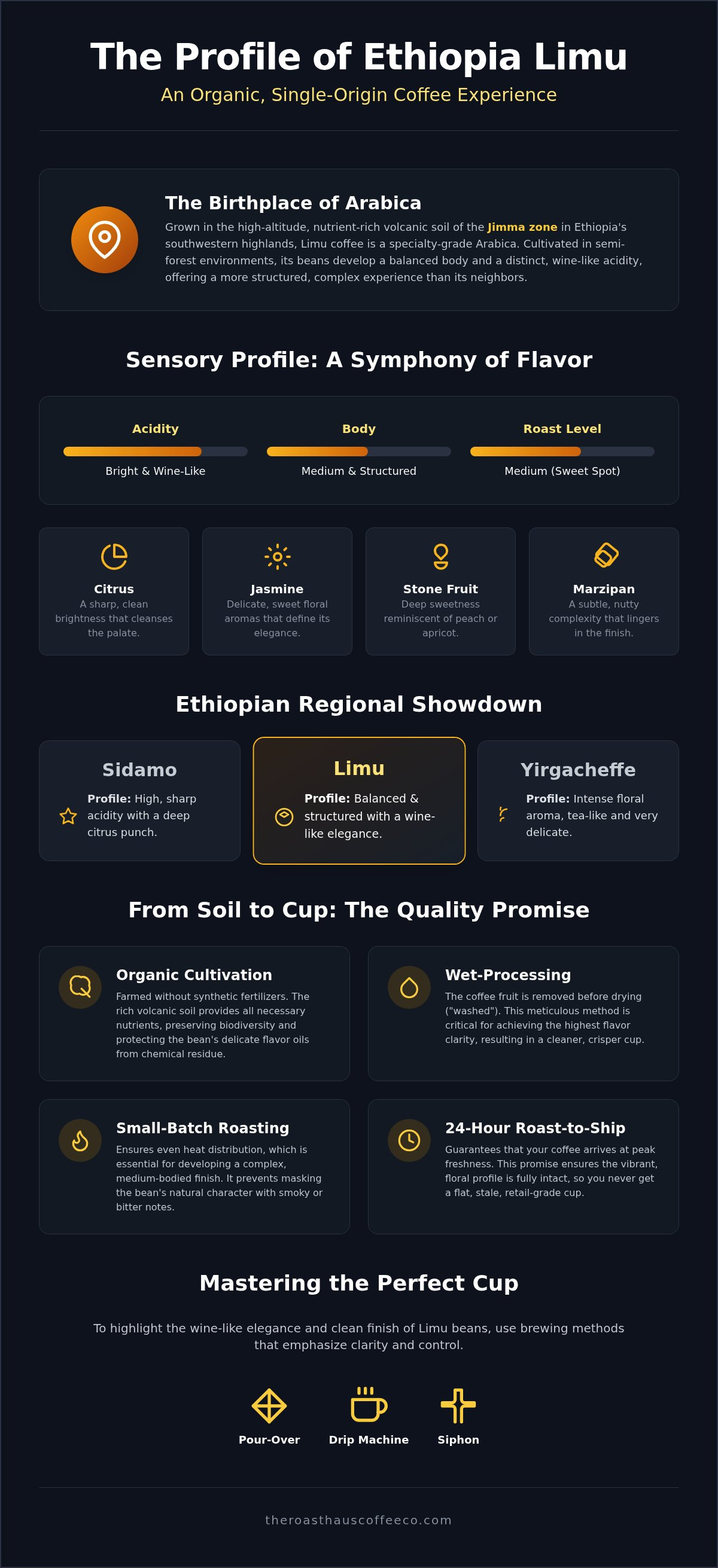
Ethiopia Limu Organic coffee is a specialty-grade Arabica that grows in the southwestern highlands of the Jimma zone. This region is famous for its high-altitude plateaus and nutrient-rich, volcanic soil. Unlike some mass-produced options, this coffee is often cultivated in semi-forest environments where the trees benefit from natural shade and a diverse ecosystem. This specific geography produces a bean with a balanced body and a distinct, wine-like acidity. While other regions like Yirgacheffe might focus heavily on floral tea-like notes, Limu offers a more structured, complex experience that many adventurous drinkers prefer. This year's 2026 harvest has seen particularly high yields in these western regions, making it an excellent time to explore this specific origin.
The History of Coffee in the Jimma Zone
The history of Coffee production in Ethiopia begins in these southwestern highlands. The Jimma zone is part of the larger Oromia region, which is widely considered the genetic birthplace of all Arabica coffee. For centuries, these beans grew wild in the forest. Local communities harvested them for personal use and traditional ceremonies long before they became a global export. Over time, these wild-grown varieties have been carefully managed to meet specialty-grade standards. This evolution hasn't stripped away the bean's wild heritage. Instead, it has refined the processing methods to highlight the unique characteristics that only the Oromia highlands can provide. It's a journey from forest floor to world-class cup that we respect in every batch we roast.
Understanding the Organic Certification in Ethiopia
When we talk about ethiopia limu organic coffee, the "organic" label means more than just a lack of chemicals. In the context of Ethiopian forest coffee, it signifies a commitment to traditional farming. The volcanic, loamy soil in Limu provides all the necessary nutrients for bean development without the need for synthetic fertilizers. Because these trees often grow alongside indigenous plants, organic farming naturally preserves the biodiversity of the highlands. This lack of chemical residue protects the delicate flavor oils within the bean. We focus on these organic lots because they offer a cleaner, more honest representation of the land. It's about respecting the soil so that the final cup tastes exactly as nature intended. By choosing these beans, you're supporting independent farmers who prioritize the health of their land over high-yield chemical shortcuts.
Sensory Profile: Tasting the Complexity of Ethiopia Limu
Drinking a cup of ethiopia limu organic coffee is an exercise in balance. Unlike darker roasts that hide a bean's origin under a layer of smoke, this coffee highlights its environment. You'll immediately notice a bright, wine-like acidity. This isn't the sourness found in low-quality beans. Instead, it's a crisp vibrancy that cleanses the palate. The primary tasting notes include sharp citrus and sweet jasmine, followed by the deep sweetness of stone fruit. A subtle hint of marzipan often lingers in the background, adding a nutty complexity to the finish. This medium-bodied profile makes it a versatile choice for those who want a sophisticated cup without the heaviness of an oily roast.
We find that a medium roast is the absolute sweet spot for these beans. If you roast too light, the stone fruit sweetness doesn't fully develop. If you go too dark, you destroy the delicate jasmine aroma. Our small-batch approach allows us to hit that precise window where the sugars caramelize without masking the bean's natural character. It's an adventurous profile for anyone tired of generic, store-bought flavors. If you're ready to taste the difference that fresh craftsmanship makes, you can order a bag of our Ethiopia Limu Organic to experience it yourself.
Limu vs. Yirgacheffe and Sidamo
Choosing between Ethiopian regions can be confusing. Yirgacheffe is famous for its intense, tea-like floral aroma. It's often very light and delicate. Sidamo is known for its high, sometimes aggressive acidity and deep citrus punch. Limu sits comfortably between them. It offers the floral elegance of Yirgacheffe but with a more structured body and a smoother finish. While Sidamo can be sharp, Limu is balanced. If you prefer a coffee that has a wine-like sophistication but still feels substantial on the tongue, Limu is the right choice. It provides a more approachable acidity that doesn't sacrifice complexity.
The Role of Wet-Processing in Flavor Clarity
Most ethiopia limu organic coffee is traditionally wet-processed, or "washed." This method involves removing the fruit from the bean before it dries. This process is critical for flavor clarity. While natural-process coffees can taste funky or fermented, washed coffees are clean and bright. The washing process strips away external influences, allowing the bean's inherent citrus and floral qualities to shine. While some farmers are shifting toward natural processing due to rising production costs in 2026, we still seek out washed lots for their superior clarity. You taste the bean, the soil, and the high-altitude climate. It results in a vibrant cup that feels precise and intentional.
The Benefits of Sourcing Organic Small-Batch Coffee
Industrial roasting often prioritizes volume over nuance. When you choose ethiopia limu organic coffee from a small-batch roastery, you're choosing precision. Small-batch roasting ensures every single bean reaches its optimal temperature evenly. This prevents the uneven scorching that happens in massive commercial drums. By monitoring the roast in smaller quantities, we can pinpoint the exact second the bean's sugars reach their peak complexity. We specifically select Grade 2 (G2) beans because they provide the ideal balance of flavor consistency and fewer physical defects, ensuring every cup meets a high specialty standard.
The organic certification isn't just a badge for marketing. It's a guarantee that your beans are free from synthetic chemical residues. These chemicals can often interfere with the delicate aromatic oils that give Limu its signature jasmine and stone fruit profile. By keeping the process clean, we protect the integrity of the bean from the highland soil to your grinder. Supporting independent roasters also fosters direct relationships with ethical farms, ensuring that the people growing your coffee are treated with the same respect as the product itself.
Why Freshness is the Ultimate Differentiator
Flavor compounds begin to degrade the moment a bean leaves the roaster. Oxygen is the enemy of quality. Mass-market ethiopia limu organic coffee often sits on grocery shelves for months, losing its regional character and becoming flat. By the time you buy it, those vibrant wine-like notes are gone. Our model is different. We roast your beans only after you place an order and ship them within 24 hours. This ensures you receive the product at its peak aromatic state. If you want to learn more about Choosing high quality coffee beans, understanding the roast date is the first place to start.
Ethical and Environmental Impact
Organic farming in the Limu region does more than produce better flavor. It protects the native forest reserves and the diverse birdlife that calls the Ethiopian highlands home. Avoiding synthetic fertilizers keeps the volcanic soil healthy for future generations of coffee trees. When you support family-owned roasteries like The Roast Haus, you're investing in this sustainable cycle. We take pride in our identity as an independent, personal venture based in Wyandotte, Oklahoma. We believe that the best coffee comes from a place of shared values and a deep commitment to craftsmanship rather than corporate bottom lines.
How to Brew Ethiopia Limu for the Perfect Cup
Brewing a world-class cup requires more than just good intentions. If you've purchased ethiopia limu organic coffee, you've already taken the first step toward a superior experience. Now you need to protect that investment with proper technique. Start with freshly roasted beans. We roast our Limu beans in small batches and ship within 24 hours because stale coffee can't be saved by a fancy machine. Use a high-quality burr grinder to ensure even extraction. Blade grinders produce inconsistent particles that lead to a muddy flavor. Measure your water temperature carefully. Aim for a range between 195°F and 205°F. If your water is boiling, let it sit for a minute before pouring. Finally, follow a consistent 1:16 coffee-to-water ratio. For every gram of coffee, use 16 grams of filtered water.
Consistency is the secret to great home brewing. We recommend using a digital scale to track your measurements. Guessing with scoops and measuring cups often leads to a different tasting cup every morning. Once you have your ratios and temperature locked in, you can focus on the method that best fits your palate. Ready to start brewing? Get your freshly roasted Ethiopia Limu Organic beans here.
The Pour-Over Method for Floral Clarity
Pour-over methods like the V60 or Chemex are the gold standard for Ethiopian coffees. These methods use paper filters that trap heavy oils and sediments. This allows the jasmine aromatics and citrus clarity that make Limu famous to stand out. For this method, use a medium-fine grind size, similar to table salt. This provides enough resistance to extract the delicate flavors without clogging the filter. If the water flows too fast, you'll get a weak, sour cup. If it's too slow, it becomes bitter. If you aren't sure about your current setup, check out The ultimate guide to coffee grinders to see why your grind matters so much.
French Press for a Wine-Like Body
If you prefer a heavier mouthfeel, the French Press is an excellent choice. This immersion method highlights the stone fruit and marzipan notes we discussed earlier. Unlike pour-over, the French Press doesn't use a paper filter. This allows the natural oils to remain in the cup, creating that wine-like body. Use a coarse grind, about the size of sea salt. Steep for exactly four minutes before plunging. If you leave it longer, the coffee will become overly bitter and lose its sweetness. For more detailed instructions on perfecting this method, read our guide on How to make coffee at home.
The Roast Haus Difference: Roasted-to-Order in Oklahoma
We don't believe in warehouse storage or "stock" inventory. When you order ethiopia limu organic coffee from us, the beans are still green in their burlap sacks. We only fire up the roaster once your order is confirmed. This is our 24-hour promise. We roast your beans and ship them within one day. This ensures you receive a product at the absolute peak of its aromatic potential. It's a fulfillment model designed for quality, not just convenience.
Our family-owned roastery in Wyandotte, Oklahoma, has operated with this level of integrity since 2014. As a husband-and-wife team, we personally monitor every roast of ethiopia limu organic coffee. We don't use automated industrial programs that treat every bean the same. Instead, we watch the temperature and the "crack" of the bean to ensure the medium roast profile is hit perfectly every time. This hands-on approach is what defines our craftsmanship. We take pride in being an independent venture that prioritizes the experience of the drinker over corporate efficiency.
Most grocery store bags show a "best by" date that can be six months in the future. That date is about safety, not quality. We provide a "roast date" on every bag. This tells you exactly when the flavor was locked in. You'll smell the difference the moment you break the seal. Freshness is the ultimate differentiator for organic beans. Without it, the delicate floral notes we've discussed simply don't survive the journey to your kitchen.
From Wyandotte to Your Doorstep
While we're based in a small Oklahoma town, our roasted-to-order model serves coffee lovers across the country. We ship quickly to ensure the transit time doesn't steal your freshness. For our neighbors in Wyandotte, we offer local pickup. It's the best way to get your beans within hours of the roast. We've built our business on the idea that you don't need to live in a major city to access world-class specialty coffee. You just need a roaster who cares about the timing as much as the bean.
Subscribe and Never Run Out of Fresh Beans
Managing your coffee supply shouldn't be a chore. Our customer portal allows you to customize your delivery frequency for ethiopia limu organic coffee. Whether you need a fresh bag every week or once a month, you can adjust your preferences easily. This ensures you always have beans at their peak freshness without having to remember to reorder. If you're new to this model, check out A guide to coffee subscription services to find the best fit for your routine. It's a simple way to keep your morning ritual consistent and high-quality.
Experience the Vibrant Character of Freshly Roasted Limu
You now understand why the high-altitude plateaus of the Jimma zone produce one of the most sophisticated beans in the world. The wine-like acidity and delicate jasmine aromas of ethiopia limu organic coffee are only possible through careful, organic cultivation. By choosing these beans, you aren't just buying coffee; you're supporting a traditional farming model that preserves the biodiversity of the Ethiopian highlands while delivering a cleaner, more vibrant cup. It's a choice that respects both the land and your palate.
The secret to capturing those stone fruit and marzipan notes lies in the timing. Our family-owned roastery in Wyandotte, Oklahoma, specializes in artisan small-batch quality that corporate retailers can't match. We don't let our beans sit on a shelf. Every bag is personally monitored and shipped within 24 hours of roasting to ensure you receive the freshest product possible. It's time to move past generic, flat flavors and experience the true complexity of a specialty medium roast.
Shop Ethiopia Limu Organic: Roasted-to-Order for Peak Freshness
We're proud to share our craftsmanship with you and your family. We hope your next cup is the most adventurous and rewarding one yet.
Frequently Asked Questions
What does Ethiopia Limu coffee taste like?
It features a complex profile of citrus, jasmine, and stone fruit with a distinct wine-like acidity. You'll often detect a subtle sweetness reminiscent of marzipan in the finish. It's a clean, medium-bodied cup. Because we focus on ethiopia limu organic coffee, these natural flavors remain vibrant and untainted by synthetic chemicals or industrial processing residues. You taste the land, not the lab.
Is Ethiopia Limu coffee low in acidity?
No, it's known for a bright and vibrant acidity that is often compared to a fine wine. This isn't a sharp or sour sensation. Instead, it provides a crisp finish that highlights the bean's floral and fruity notes. It's a refreshing profile. If you prefer very low-acid coffee, this might be too adventurous. For those seeking complexity, the balanced acidity of this region is a major draw.
What is the difference between Limu and Yirgacheffe coffee?
Limu generally offers a more pronounced body and deeper stone fruit notes compared to the tea-like delicacy of Yirgacheffe. While Yirgacheffe is famous for its intense floral aroma, Limu provides a more balanced experience with a smoother mouthfeel. It's less aggressive than Sidamo but more structured than Yirgacheffe. This makes it an ideal choice for drinkers who want elegance without sacrificing a satisfying, medium-bodied texture.
How should I grind Ethiopia Limu beans for a French Press?
You should use a coarse grind that resembles the texture of sea salt. This large particle size is essential for the immersion brewing method used in a French Press. It prevents over-extraction and ensures that the mesh filter can effectively separate the grounds from your final cup. A coarse grind allows the natural oils and marzipan sweetness of the beans to develop fully without becoming muddy.
Is all Ethiopia Limu coffee organic?
Not all coffee from this region carries an organic certification, but many specialty lots are grown using traditional, chemical-free methods. In the Jimma zone, coffee often grows in semi-forest environments where synthetic pesticides aren't used. We specifically source ethiopia limu organic coffee to ensure our customers receive beans that meet strict environmental standards. This protects the delicate flavor profile and supports sustainable farming practices in the highlands.
How soon will my coffee arrive after it is roasted?
We ship your order within 24 hours of roasting to guarantee peak freshness. Because we're a small-batch roastery in Oklahoma, we don't let our product sit in a warehouse. Your beans are roasted only after you place your order. Freshness is our mantra. Depending on your location, you can typically expect your coffee within a few business days. This speed ensures you experience the full aromatic complexity.
Can I use Ethiopia Limu beans for espresso?
Yes, these beans make an excellent single-origin espresso for those who enjoy a bright, fruit-forward shot. The wine-like acidity and citrus notes create a vibrant experience that stands out from traditional, darker espresso blends. You'll need to dial in your grinder carefully to balance the high acidity. It's a great choice if you prefer a modern espresso style that emphasizes regional character rather than just heavy bitterness.
What is the best roast level for organic Ethiopian coffee?
A medium roast is the ideal level for these beans because it balances sweetness with acidity. If the roast is too light, the stone fruit notes might taste underdeveloped. If the roast is too dark, you risk losing the delicate jasmine aromatics. We get it right every time. Our family team monitors every small batch to ensure we hit this sweet spot, preserving the bean's integrity while maximizing flavor.

