


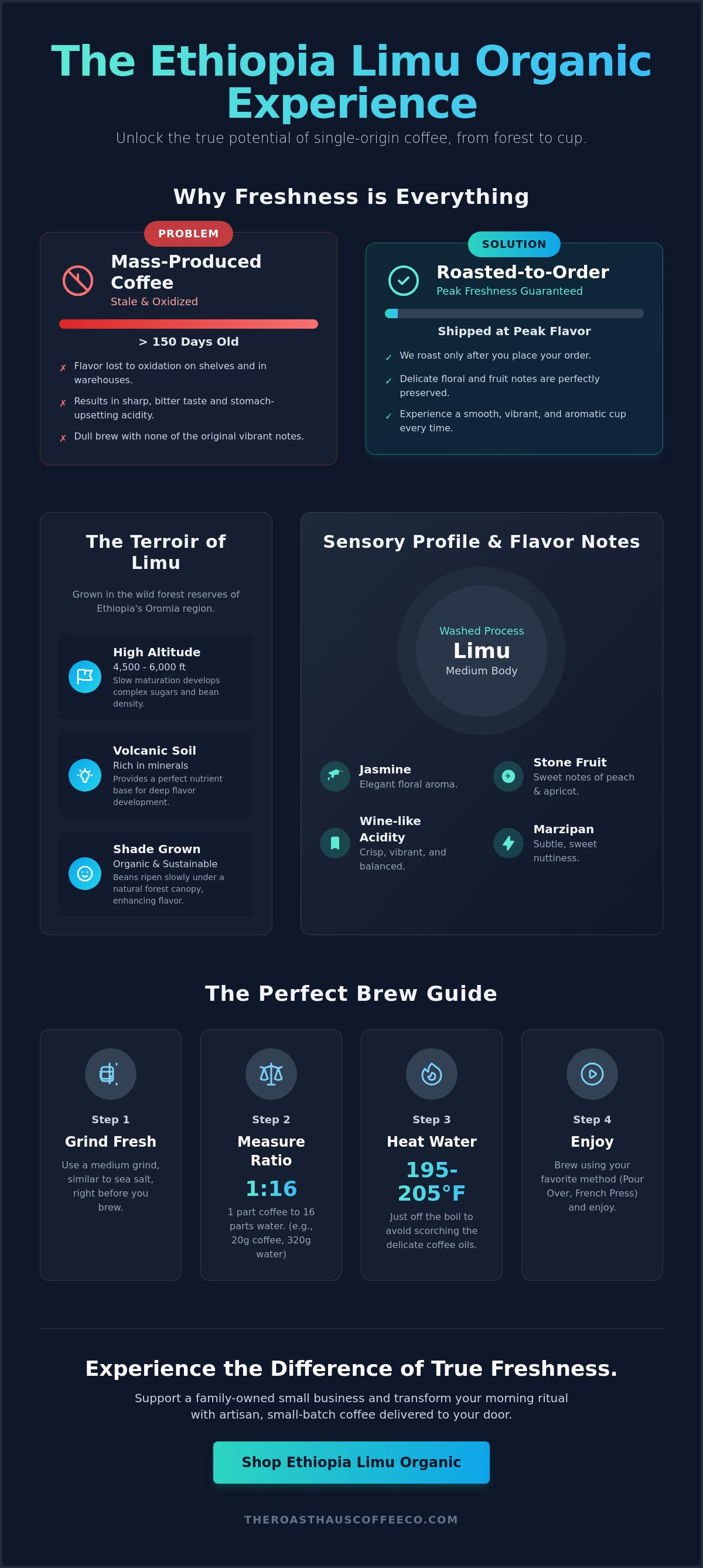
What if the bitter taste in your morning cup isn't the coffee itself, but the months of oxidation it suffered on a grocery store shelf? You've likely experienced that sharp, stomach-upsetting acidity that comes from stale beans. It's a common problem when mass-produced coffee sits in warehouses for over 150 days before reaching your kitchen. We believe you shouldn't have to settle for a dull brew or get lost in confusing technical jargon to enjoy a premium experience.
You want a smooth, vibrant cup, and that's exactly what ethiopia limu organic coffee beans provide. These beans are prized for their distinct floral notes and wine-like acidity. In this guide, we'll show you how to unlock their full potential using simple brewing techniques. You'll learn why our roasted-to-order process is the key to peak freshness and how supporting a family-owned small business leads to a better ritual.
We're going to cover everything from the unique soil of the Limu region to the exact steps for a perfect home brew. By the end, you'll feel confident preparing your coffee like a true artisan.
Key Takeaways
- Discover the unique characteristics of ethiopia limu organic coffee beans, grown naturally in the forest reserves of the Oromia region.
- Learn to identify the vibrant sensory profile of jasmine, stone fruit, and marzipan that defines this high-quality Arabica.
- Understand why our "Roasted to Order" philosophy is the only way to prevent flavor oxidation and ensure you experience peak freshness.
- Get the exact temperature and ratio secrets required to brew a perfect cup without scorching delicate coffee oils.
- Find out how small-batch, artisan roasting transforms these forest-grown beans into a premium experience delivered straight to your door.
What Is Ethiopia Limu Organic Coffee?
Ethiopia Limu organic coffee beans represent a premium single-origin Arabica variety from the Oromia region in the southwest highlands. These beans grow in wild forest settings, which sets them apart from large-scale plantation coffee. Coffee production in Ethiopia is deeply rooted in these natural ecosystems, where the plants are part of the local landscape rather than a monoculture crop. While many coffee lovers are familiar with the floral punch of Yirgacheffe, Limu offers a different experience. It's known for a more balanced profile and a wine-like body that provides a smooth, sophisticated finish. We focus on the G2 (Grade 2) classification because it ensures high quality and consistency in every small-batch roast we produce.
The Terroir of the Limu Region
The unique flavor of these beans starts with the altitude. Farmers cultivate Limu coffee at elevations ranging from 4,500 to 6,000 feet. This high-altitude environment is essential for producing high-quality ethiopia limu organic coffee beans because it forces the cherries to mature slowly. This slow growth increases bean density and develops complex sugars. The soil in these forest reserves is a mix of volcanic minerals and rich loamy topsoil, providing the perfect nutrient base. Shade-grown practices are standard here. Coffee trees grow under the canopy of native forest trees, which protects the soil from erosion and maintains the region's incredible biodiversity. This natural shade slows down the ripening process even further, resulting in a deeper flavor profile.
Organic Certification and Sustainability
Choosing organic coffee isn't just about avoiding chemicals; it's about the health of the planet and the person drinking the cup. These beans grow without synthetic pesticides or fertilizers, which results in a cleaner taste and preserves the local water table. This sustainable approach directly benefits the smallholder communities in Oromia by keeping their land fertile and their families safe from toxic exposure. Small-scale farmers manage 95% of the coffee produced in this region, often on plots smaller than 2 hectares. Certified organic in the context of Ethiopian forest coffee defines a production system where no synthetic chemicals are used and the land has been free of prohibited substances for at least 3 years. This commitment to traditional farming ensures you get a product that is as close to nature as possible.
Sensory Profile: The Flavor of Ethiopia Limu
Ethiopia Limu organic coffee beans offer a distinct profile that sets them apart from other regional varieties like Yirgacheffe. When you brew these beans, you'll notice a sophisticated balance of jasmine florals and deep stone fruit notes. We specifically look for the sweetness of peach and apricot in every batch we roast. There's a subtle nuttiness, reminiscent of marzipan, that anchors the sweetness and provides a complex foundation. This complexity isn't accidental. According to scientific research on Limu coffee quality published in 2016, these beans consistently score high for their unique cup characteristics and raw quality. The acidity is notably wine-like, providing a crisp, vibrant edge that doesn't overwhelm the palate.
The mouthfeel is typically medium-bodied and exceptionally smooth. Because we focus on organic processing, the finish remains remarkably clean. You won't find the muddy or heavy aftertaste often associated with mass-produced beans. It's a vibrant cup that feels light yet satisfying. We roast every batch to order, ensuring these delicate flavors are preserved from our roaster to your doorstep.
The Aroma Experience
The sensory journey begins before the water even hits the grounds. Dry ethiopia limu organic coffee beans release a floral fragrance with distinct hints of blueberry and honey. As you brew, a glorious aroma fills the kitchen, a scent our customers often describe as the best part of their morning routine. As the coffee cools from hot to warm, the aroma shifts. The sharp floral notes mellow, allowing the sweeter, honey-like scents to become more prominent.
Natural vs. Washed Processing
Processing methods change the flavor profile significantly. Most Limu coffee uses the washed process, which involves removing the fruit before drying. This results in a brighter, cleaner cup that highlights the bean's inherent acidity. Natural processing leaves the fruit on the bean, adding a fermented, heavy fruit sweetness. At The Roast Haus, we prioritize the washed process for our Limu beans. We believe this best preserves the delicate jasmine and stone fruit notes that define this region. It aligns with our commitment to quality and freshness. We roast every batch to order, ensuring you receive your beans at their peak flavor potential. If you want to experience this freshness yourself, you can shop our latest roast here.
Why Freshness Matters: The Roasted-to-Order Advantage
Many coffee drinkers ask if the roast date actually changes the taste of their morning cup. It does. Coffee is a perishable agricultural product, not a shelf-stable dry good. The moment heat transforms the green seeds into brown beans, a chemical countdown begins. Freshness is the single most important factor in determining whether your ethiopia limu organic coffee beans will taste like vibrant fruit or bitter cardboard.
The science centers on CO2 degassing and oxidation. During roasting, beans build up carbon dioxide. For the first 48 to 72 hours after roasting, this gas slowly escapes, preventing oxygen from entering the bean's cellular structure. Once this protective gas layer dissipates, oxygen moves in. This process, called oxidation, strips away the volatile oils that carry flavor and aroma. We solve this by roasting in small batches at our Wyandotte, Oklahoma roastery. We ship your order within 24 hours of roasting. This ensures the beans reach your door while they're still in that protective degassing phase.
Freshly roasted beans offer more than just better taste. They contain higher levels of antioxidants and chlorogenic acids compared to grocery store bags that have sat for 90 to 180 days. When you buy fresh, you're getting the full nutritional and sensory potential of the harvest.
Small-Batch Roasting vs. Commercial Production
Commercial coffee production relies on massive, automated silos that prioritize volume. These machines often use high heat that can scorch the beans, leading to a generic, burnt flavor. Our artisan process is different. We focus on precise heat management for every individual batch. This hands-on approach allows us to highlight the specific characteristics of the ethiopia limu organic coffee beans. Choosing our family-owned roastery means you're supporting a small business that values craft over corporate automation. Our Oklahoma roots drive us to maintain a level of quality control that a factory simply can't match.
The Enemy of Flavor: Oxidation
The delicate floral and citrus notes in Limu coffee are the first to disappear. These complex compounds are highly volatile and break down quickly when exposed to air. If you buy pre-ground coffee or beans that have lingered on a store shelf for months, those unique Ethiopian characteristics are already gone. Keeping your coffee beans whole and grinding them just before brewing is the only way to preserve the organic integrity of the bean. This prevents the flat, stale taste that ruins the specialty coffee experience.
How to Brew Ethiopia Limu for Maximum Flavor
Brewing ethiopia limu organic coffee beans requires a precise approach to unlock the delicate stone fruit and floral notes hidden within the bean. You don't want to waste the effort of an artisan roast by using poor technique. Start with filtered water heated to a temperature between 195°F and 205°F. If your water is hotter than 205°F, you risk scorching the delicate oils and creating a bitter cup. If it's below 195°F, you won't extract the full complexity of the Limu region. Use a digital scale to maintain a coffee-to-water ratio of 1:16 or 1:17. This specific ratio ensures the bright acidity remains balanced without becoming watery.
The Pour Over Method (V60 or Chemex)
The Pour Over is the superior choice for highlighting the bright acidity and jasmine-like floral notes of this coffee. This method provides a clean cup that allows the subtle citrus undertones to shine. Use a medium grind, similar to the consistency of table salt. Begin your brew with a "bloom" phase by pouring 50 grams of water over the grounds and waiting 30 seconds. This step allows the coffee to release trapped carbon dioxide, which prevents gas from blocking the water's path. After the bloom, use a slow, circular pour technique to keep the water level consistent. This steady movement prevents channeling and ensures every coffee particle contributes to the final flavor. For a deeper look at refining your technique, read our guide on how to make coffee.
The French Press Method
If you prefer a richer, more full-bodied cup, the French Press is an excellent alternative. It preserves the natural oils that a paper filter might remove, enhancing the stone fruit sweetness of the ethiopia limu organic coffee beans. Use a medium-coarse grind to avoid a muddy texture. Follow these steps for the best results:
- Add your coffee and saturate the grounds with a small amount of water for a 30-second bloom.
- Fill the press and let it steep for exactly 4 minutes.
- Press the plunger slowly to avoid pushing fine sediment into your cup.
A 4-minute steep time is the sweet spot for Limu. Going longer often leads to over-extraction, which masks the floral clarity with earthy bitterness.
Grinding for Freshness
Freshness is the foundation of quality. You should always grind your beans immediately before brewing to prevent oxidation. When you grind a coffee bean, its surface area increases by more than 100 times, which causes the flavor-packed oils to dissipate rapidly. This increased surface area is necessary for water to extract flavor, but it also makes the coffee highly vulnerable to the air. Using a burr grinder ensures particle uniformity, which is essential for a balanced extraction. You can find more information on selecting the right equipment in our guide to coffee grinders.
Experience the peak flavor of artisan roasting by ordering today. Shop our Roasted To Order Ethiopia Limu Coffee
Get Your Ethiopia Limu Organic from The Roast Haus
The journey of these ethiopia limu organic coffee beans begins in the high-altitude heirloom forests of Ethiopia. We bring these green beans directly to our roastery in Oklahoma to ensure they reach your cup at their absolute peak. We don't believe in letting coffee sit on warehouse shelves for months. Instead, we focus on a small-batch process that prioritizes quality over volume. Every single bag is Roasted To Order and Shipped same or day after Roasting. This dedication to speed preserves the rich nutritional content and the delicate citrus notes that define the Limu region.
By choosing our family-owned business, you're supporting a craft focused on the best possible experience. We're a team of passionate roasters who genuinely want you to taste the difference that fresh roasting makes. Our process is transparent and grounded in the values of a local artisan. We don't cut corners; we focus on the details that result in a cleaner, more vibrant cup of coffee for our community.
Subscription Savings
Signing up for a coffee subscription is the most efficient way to keep your pantry stocked with fresh beans. You save money on every order and eliminate the risk of running out of your morning brew. Our customer portal is designed for total convenience. You can pause your deliveries, skip a week, or change your frequency with just a few clicks. It's a reliable way to enjoy ethiopia limu organic coffee beans without the hassle of manual reordering every time your bag gets low.
The Roast Haus Guarantee
We stand behind every roast we produce. Our promise is direct: you get the freshest coffee possible delivered with earnest, helpful service. We want you to be completely satisfied with the flavor and aroma of your beans. For our local customers in Wyandotte, Oklahoma, we offer convenient local pickup options right at our roastery. This allows you to get your coffee even faster while connecting with the people who roast it.
We encourage you to read our customer testimonials to see real experiences from our community. Our drinkers often highlight the glorious aroma and superb flavor that our small-batch process provides. We don't use flowery language to hide the product; we let the quality of the roast speak for itself. We're proud of our identity as a small business and we work hard to earn your trust with every shipment.
Ready to experience the bright acidity and floral undertones of authentic Ethiopian coffee? Visit our Ethiopia Limu Organic product page now to place your order. We'll start roasting your beans as soon as your order comes in. Experience the difference that Roasted To Order coffee makes in your daily routine.
Elevate Your Morning Routine with Freshly Roasted Ethiopia Limu
You now understand how the high altitudes and nutrient-rich soil of the Limu region produce a cup that's perfectly balanced with citrus and floral notes. Achieving this flavor profile depends on using the right brewing methods and, most importantly, starting with fresh beans. Our ethiopia limu organic coffee beans are certified organic and handled through a small-batch artisan roasting process that preserves every delicate flavor note. We don't take shortcuts when it comes to the quality of your brew.
The Roast Haus Coffee Co. is a family-owned and operated business located in Wyandotte, OK. We believe you deserve a better cup of coffee, so we never roast your beans until you place your order. Every bag is shipped within 24 hours of roasting to ensure you experience peak freshness and maximum flavor. We take pride in our craft and focus on quality over quantity. Don't settle for stale, mass-produced beans when you can have artisan coffee delivered straight to your door.
Shop Ethiopia Limu Organic - Roasted to Order
We're excited for you to taste the difference that true freshness makes in your daily coffee ritual.
Frequently Asked Questions
Is Ethiopia Limu coffee low in acid?
Ethiopia Limu coffee is generally considered low in acid compared to other African varieties. It offers a smooth profile with a pH level typically ranging from 5.0 to 5.2. This makes it a great choice for coffee drinkers who want a bright flavor without the sharp bite found in higher acidity beans. The balanced body and wine-like undertones provide a clean finish that's gentle on your stomach and easy to enjoy every morning.
How does Limu coffee compare to Yirgacheffe or Sidamo?
Limu coffee is distinct from Yirgacheffe and Sidamo because of its balanced body and wine-like acidity. While Yirgacheffe is famous for its intense floral and citrus notes, Limu stays grounded with spicy and chocolatey undertones. These beans grow at elevations between 1,100 and 1,900 meters. This specific altitude creates a cup that's less floral than Sidamo but more structured and sweet, providing a more versatile drinking experience.
What does "Organic" mean for Ethiopian coffee specifically?
Organic certification for ethiopia limu organic coffee beans means the crop was grown without synthetic fertilizers or pesticides. In Ethiopia, approximately 95% of coffee is organic by default because smallholder farmers use traditional composting and manual weeding. Our organic beans ensure you receive a product with higher nutritional content and no chemical residue. This process protects the local ecosystem and the health of the 15 million people who rely on coffee for their livelihood.
Can I use Ethiopia Limu beans for espresso?
You can definitely use these beans for espresso. The natural sweetness and medium body of Limu beans create a rich crema and a balanced shot when pulled at 9 bars of pressure. Its spicy notes cut through milk well in lattes or cappuccinos. Because we roast to order, your espresso will benefit from the peak CO2 levels needed for a thick, flavorful extraction that highlights the bean's unique character.
How long do these beans stay fresh after roasting?
These beans stay at peak freshness for 14 days after the roast date. Oxidation begins within 24 hours of the beans leaving the roaster, which is why we ship your order the same day or the day after roasting. For the best flavor, use your beans within 30 days. Always store them in an airtight container away from direct sunlight to preserve the delicate aromatic oils that define the Limu profile.
What is the best grind size for Ethiopia Limu Organic?
The best grind size for ethiopia limu organic coffee beans depends on your brewing method. For a standard drip machine or pour over, aim for a medium grind between 700 and 900 microns, which looks like sea salt. If you use a French press, use a coarse grind to avoid over-extraction. Matching the grind to your 4 to 6 minute brew time ensures you capture the full flavor profile without any unwanted bitterness.
Does The Roast Haus ship outside of Oklahoma?
The Roast Haus ships to all 50 states across the country. While we're a family-owned business based in Oklahoma, we want every coffee lover to experience our artisan roasting process. We use reliable carriers to ensure your package arrives quickly and safely. Every order is roasted to order and shipped immediately, so you receive your coffee at its maximum flavor potential regardless of your zip code or distance from our shop.

