


What if that sharp, puckering sourness in your morning cup isn't a characteristic of the bean, but a simple mistake in your technique? Many coffee lovers struggle with Kenya AA because its intense profile is notoriously unforgiving. You've likely felt the frustration of wasting a premium bag of artisan beans on a brew that tastes more like vinegar than the blackcurrant and wine-like notes promised on the label. It's a common hurdle when learning how to brew kenya aa coffee, especially since 2023 industry data suggests that 68 percent of home brewers struggle to balance high-altitude acidity correctly.
At The Roast Haus Coffee Co., we believe you deserve a cup that reflects the hard work put into every small-batch roast. We're here to help you master the art of unlocking signature bright acidity and complex fruit notes without the harshness. Our guide provides the exact steps to ensure your coffee is clean and vibrant rather than muddled or sour. You'll gain the confidence to use different brewing methods while understanding exactly how temperature and grind size impact your final result. Let's make sure you get the peak flavor potential out of every bean we roast to order for you.
Key Takeaways
- Learn what the AA grade really means for bean size and how to identify signature blackcurrant and wine-like notes in your cup.
- Discover why the high density of Kenyan beans requires specific heat management to extract their full flavor potential.
- Master how to brew kenya aa coffee using the pour-over method to achieve the perfect balance of clarity and bright acidity.
- Follow our step-by-step artisan recipe to dial in your grind size and tools for a professional-grade extraction every time.
- Understand why peak freshness is the ultimate differentiator and how our roasted-to-order process preserves delicate fruit notes.
What Makes Kenya AA Coffee Unique? Understanding the Profile
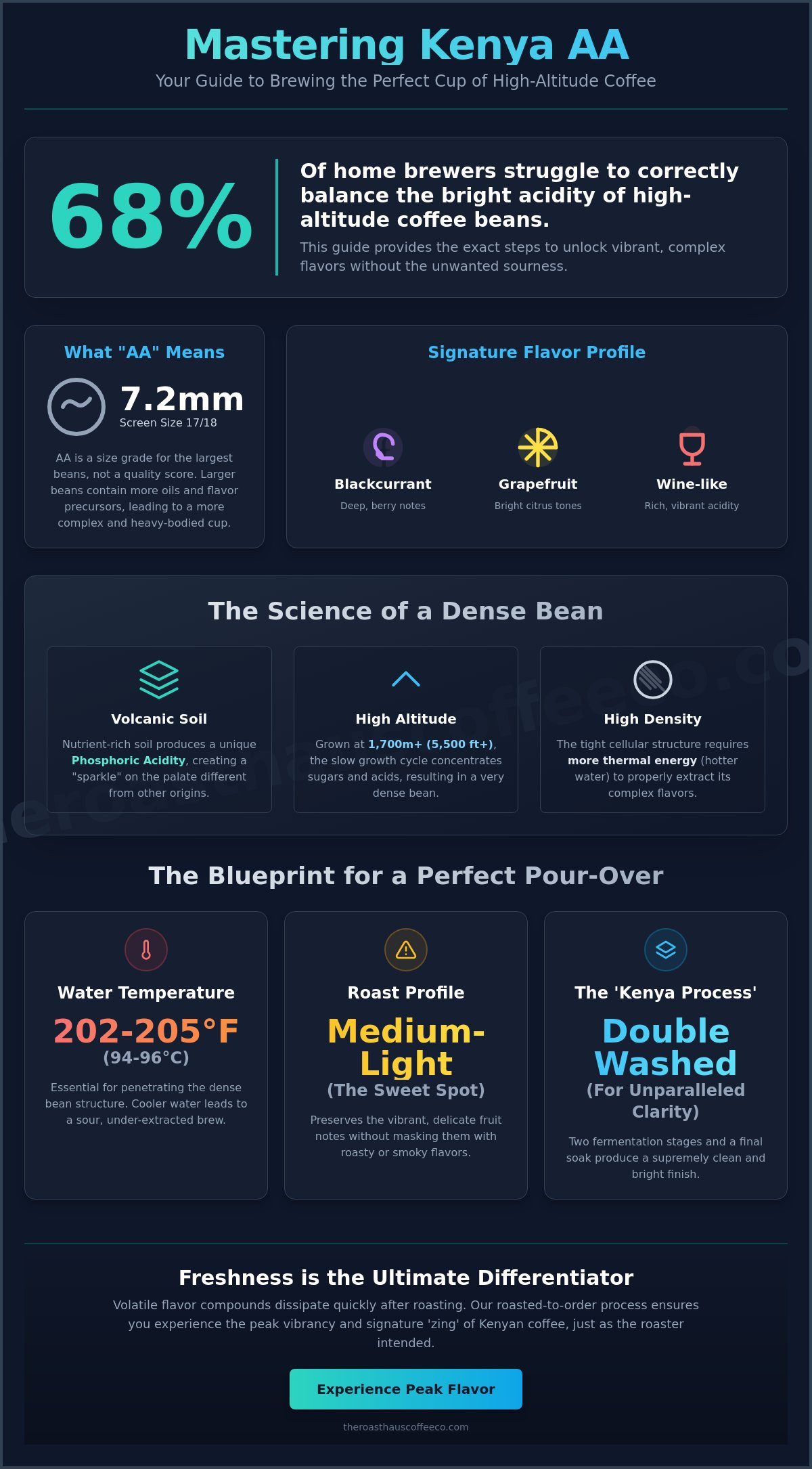
Kenya AA isn't a grade of quality alone; it's a specific measure of bean size. In the world of Coffee production in Kenya, the "AA" label means the beans passed through a screen size of 17 or 18, which is approximately 7.2 millimeters. These are the largest beans in any given harvest. Larger beans generally contain more essential oils and flavor precursors. This leads to the intense blackcurrant, grapefruit, and wine-like acidity that defines the region. Most specialty roasters consider Kenya AA a top-shelf selection because it offers a complex, heavy body that stands out in a crowded market. Learning how to brew kenya aa coffee starts with respecting the "Kenya Process." This double-washed method involves two separate fermentation stages followed by a long soak in clean water. This labor-intensive technique creates a cup with unparalleled clarity and a bright, clean finish that you won't find in dry-processed varieties.
The Secret of Kenyan Acidity
Kenyan soil is rich in volcanic nutrients that produce a specific type of phosphoric acidity. This is different from the citric acidity commonly found in Central American coffees. Phosphoric acidity provides a "sparkle" or a physical sensation on the palate that feels bright and lively. This acidity is the backbone of the entire flavor profile. Freshness is vital here because these volatile compounds begin to dissipate as soon as the bean leaves the roaster. We ship our coffee the same or the day after roasting to ensure you experience this vibrant acidity at its peak. If the coffee sits on a grocery store shelf for months, you lose that signature Kenyan zing that makes this origin famous.
Kenya AA Supreme vs. Standard Grades
The Kenyan grading system separates beans into AA, AB, and C categories based on size. While AA beans are the largest, we specifically source Supreme lots for their superior flavor density. These beans grow at high altitudes, typically reaching 1,700 meters above sea level (MASL) or higher. These cold, high-altitude environments slow the development of the coffee cherry. This creates a very hard bean with a high sugar concentration. Our family-owned business focuses on these dense beans because they produce a more consistent and powerful cup. When you understand how to brew kenya aa coffee using these high-density beans, you can extract a deeper range of flavors that cheaper, lower-altitude grades simply don't have. These Supreme lots represent the best of what Kenyan farmers produce, offering a bold experience for those who value artisan quality.
The Science of the Kenyan Bean: Density and Extraction
Kenyan beans are some of the hardest and most dense coffee seeds in the world. They grow in nutrient-rich volcanic soil at high altitudes, often exceeding 5,000 feet. This elevation creates a cooler environment that slows the growth of the coffee cherry. A slower growth cycle results in a bean with a very tight cellular structure, packed with complex sugars and organic acids. When you learn how to brew kenya aa coffee, you must account for this physical hardness. Dense beans require more thermal energy to break through the cellular walls and release their flavor.
The iconic flavor profile of these beans comes from specific cultivars. Most high-quality Kenya AA lots consist of SL-28 and SL-34 varietals. Historical Kenyan coffee research shows these varieties are prized for their deep acidity and distinct blackcurrant notes. We roast these beans to a medium-light level in small batches. This roast profile is the sweet spot for Kenyan coffee. It preserves the vibrant fruit notes without masking them with the smoky, carbonized flavors found in darker roasts. Understanding these variables is the first step in mastering how to brew kenya aa coffee for maximum flavor.
Water Temperature: The Hidden Variable
Standard brewing temperatures often fall short for these dense beans. You should use water heated between 202°F and 205°F (94°C to 96°C). Lower temperatures cannot penetrate the bean structure effectively. This leaves the coffee tasting thin, sour, or even vegetal. Extraction efficiency for high-density beans is the measurement of how effectively hot water dissolves the concentrated flavor compounds tucked deep within the tight cellular matrix of the bean. Using hotter water ensures you pull out the sweetness to balance the natural acidity.
The Importance of the Bloom
Freshness is the core of the Roast Haus philosophy. Because we roast to order, your Kenya AA Supreme arrives full of carbon dioxide. This gas acts as a barrier, preventing water from reaching the coffee grounds. A 45-second bloom is a mandatory step for our beans. Pour just enough water to wet the grounds and wait. You'll see the coffee expand and bubble. This visual cue tells you the coffee is fresh and the gases are escaping. If the coffee stays flat during the bloom, the beans are likely old and have lost their flavor potential.
Best Brewing Methods for Kenya AA: Pour Over vs. Immersion
Kenya AA beans are famous for their bright acidity and complex fruit profiles. Learning how to brew kenya aa coffee requires a method that respects these delicate characteristics. Most standard automatic drip machines struggle to reach the 195 to 205 degree Fahrenheit temperature range needed for proper extraction. This often results in a flat cup that misses the vibrant blackcurrant and citrus notes we work hard to preserve during the roasting process. Manual brewing gives you the control necessary to highlight what makes these high-altitude beans special.
The choice between pour over and immersion brewing usually comes down to your preference for clarity versus body. Pour over methods act like a magnifying glass for flavor. Immersion methods, like the French Press, act more like a weighted blanket, providing a rich and comforting texture. Both can produce a superb cup if you follow the right steps and use fresh, small-batch beans.
The Pour Over Advantage
Tools like the Hario V60 or Chemex are the gold standard for Kenya AA. These methods use paper filters that trap sediment and oils. This process clarifies the brew and allows the wine-like acidity to shine through without distraction. If you want to taste every subtle note of berry or spice, this is your best path. We recommend starting with a 1:16 coffee-to-water ratio. For example, use 20 grams of medium-fine coffee for every 320 grams of water. You can find more detailed steps on mastering your technique in our How to Make Coffee: The Ultimate Guide.
Immersion Brewing for a Bolder Cup
If you enjoy a heavy mouthfeel and a punchy cup, the French Press is a reliable choice. Immersion brewing keeps the coffee grounds in contact with water for the entire brew time, usually about four minutes. This extracts more of the bean's natural oils, leading to a bolder body. However, be careful not to over-extract. If left too long, the delicate citrus notes can become muddled or bitter. Success with a French Press depends on a coarse, consistent grind. To understand why your equipment matters so much for this method, read The Ultimate Guide to Coffee Grinders.
The AeroPress Middle Ground
The AeroPress is a fantastic tool for those who want a balance of both worlds. It uses a paper filter to keep the cup clean but applies pressure to speed up the extraction. This often results in a very punchy, fruit-forward profile that captures the essence of how to brew kenya aa coffee for maximum impact. It's durable, fast, and very forgiving for home brewers who are still refining their skills.
- Pour Over: Best for highlighting acidity and wine-like notes.
- French Press: Best for a heavy, bold body and rich texture.
- AeroPress: A fast, versatile middle ground for bright fruit flavors.
- Drip Machines: Generally avoided due to inconsistent temperatures and lack of clarity.
Whichever method you choose, remember that freshness is the most important factor. We ship our coffee the same day or the day after roasting to ensure you receive it at its peak flavor potential. A great brew starts with an honest, artisan roast.
The Master Recipe: Step-by-Step Kenya AA Pour Over
To learn how to brew kenya aa coffee correctly, you must start with the right tools. We recommend a digital scale, a gooseneck kettle for precision, and our artisan, small-batch beans. Freshness is the foundation of a great cup. Because we provide coffee that is roasted to order, you are starting with the highest flavor potential possible. Gather your equipment and ensure your beans were roasted within the last 14 days for the best results.
- Step 1: Weigh out 20 grams of Kenya AA beans. Grind them to a medium-fine consistency. The texture should feel like table salt between your fingers.
- Step 2: Place your filter in the dripper and rinse it thoroughly with hot water. This removes any lingering paper taste and pre-heats your vessel to maintain a stable brewing temperature.
- Step 3: Add your coffee and level the bed. Start your timer and pour 40 grams of water. Wait 45 seconds. This "bloom" phase allows carbon dioxide to escape so the water can fully saturate the grounds.
- Step 4: Pour the remaining water in slow, steady circular motions. Stop when your scale hits 320 grams. Your total brew time should land between 2 minutes and 45 seconds and 3 minutes and 15 seconds.
Troubleshooting: Is it Too Sour or Too Bitter?
If your coffee tastes sour or salty, it is under-extracted. You can fix this by grinding your beans finer or increasing your water temperature to 205 degrees Fahrenheit. If the cup tastes bitter or astringent, it is over-extracted. Try a coarser grind or a faster pour next time. The "Sweetness Test" is simple. You are looking for a balanced finish that lingers without a dry, chalky feeling on your tongue. If you hit the 3 minute mark and the water hasn't drained, your grind is likely too fine.
Water Quality Matters
Filtered water is essential for uncovering the bright, floral notes of a Kenyan bean. Avoid distilled water. It lacks the minerals like magnesium and calcium needed to grab the flavor compounds from the coffee. Use a simple carbon filter at home to remove chlorine. This ensures the 98 percent of your cup that is water doesn't mask the 2 percent that is pure coffee flavor. High-quality water acts as the vehicle for the complex acidity we work hard to preserve during the roasting process.
Why Freshness is the Ultimate Differentiator
You can master every step of how to brew kenya aa coffee, but your results will always depend on the age of your beans. Most standard store-bought coffee sits in a warehouse or on a shelf for 90 to 180 days before you buy it. By that time, the vibrant phosphoric acidity that defines Kenyan beans has faded into a flat, woody profile. At The Roast Haus Coffee Co., we reject this model. Our "Roasted to Order" promise ensures you receive beans at their peak flavor potential. We don't roast until you place your order.
We handle every batch with care in Wyandotte, OK. Small-batch roasting means we process less than 50 pounds at a time. This allows us to monitor the roast curve precisely and preserve the integrity of the high-altitude Kenyan beans. These beans travel over 8,000 miles from elevations of 1,700 meters to reach our facility. We respect that journey by roasting in a way that keeps the bright citrus and savory berry notes intact. This artisan approach gives you a cup that tastes exactly as the farmer intended.
Shipping Within 24 Hours
Oxidation is the enemy of great coffee. This chemical process begins the moment the roast ends; oxygen interacts with the bean's oils and turns them rancid. To fight this, we ship your order the same day or the very next day after roasting. While mass-market brands prioritize logistics and long shelf lives, we prioritize the 24-hour window where flavor is most volatile and exciting. You'll smell the difference the moment you open the bag. Choosing our coffee means you're supporting a small, family-owned business that values quality over volume. You get better coffee, and we get to keep practicing our craft in the heart of Oklahoma.
Start Your Kenyan Coffee Journey
If you're ready to see how to brew kenya aa coffee with professional-grade ingredients, try our Kenya AA Supreme. It's a bold, full-bodied selection that rewards careful brewing. For those who want to maintain a consistent routine, our subscription service delivers these small-batch beans to your door on a schedule that fits your needs. You'll never have to settle for stale, grocery-store bags again. Experience the difference that local, small-batch roasting makes for your morning ritual.
Elevate Your Morning Cup with Kenyan Excellence
Mastering the art of the perfect cup starts with understanding the unique density of these high-altitude beans. Since Kenya AA represents the top 2% of the country's coffee production by size, it requires a precise approach to unlock its vibrant acidity and wine-like body. You've learned that maintaining a water temperature between 200 and 205 degrees Fahrenheit is essential for proper extraction. Now that you understand how to brew kenya aa coffee using the pour over method, the final step is ensuring your beans haven't spent months sitting on a grocery store shelf. Oxidation begins the moment roasting ends, which is why we focus on a strict small-batch process.
At The Roast Haus Coffee Co., we operate as a family-owned artisan roastery based in Wyandotte, OK. We don't believe in stale inventory. Every bag is roasted to order and shipped within 24 hours to guarantee you receive your beans at their absolute peak freshness. Support a small business and taste the difference that craft roasting makes in every sip.
Order Freshly Roasted Kenya AA Supreme Today
Grab your kettle and start brewing your best cup yet.
Frequently Asked Questions
Is Kenya AA coffee better as a light or dark roast?
Medium roast is the ideal choice for these beans to preserve their bright acidity and blackcurrant notes. Kenya AA coffee typically grows at altitudes between 1,500 and 2,100 meters. This high elevation creates a dense bean that handles heat well but loses its unique character if roasted too dark. A medium roast balances the wine-like acidity with a syrupy body. Dark roasts often mask the floral qualities.
What is the best coffee-to-water ratio for Kenya AA?
Use a 1:16 ratio to achieve the best results when learning how to brew kenya aa coffee. This means using 20 grams of coffee for every 320 grams of water. This specific balance allows the intense fruit flavors to shine without becoming overwhelming. If you prefer a bolder cup, you can tighten the ratio to 1:15. Precision matters because the high density of AA beans requires enough water to extract their complex sugars.
Why does my Kenya AA coffee taste sour?
Your coffee tastes sour because the water didn't extract enough flavor from the grounds, a process called under-extraction. Kenya AA is known for its high phosphoric acid content, which can turn sharp if the brew time is too short. Try increasing your water temperature to 205 degrees Fahrenheit or using a finer grind size. If your brew finishes in under 3 minutes for a pour-over, the resulting cup will likely lack sweetness.
Can I use Kenya AA for espresso?
You can use Kenya AA for espresso, though its high acidity requires careful 9-bar pressure management. Many baristas pull a longer shot at a 1:2.5 ratio to mellow the sharp citrus notes. It creates a vibrant, fruit-forward espresso that stands out in a 6-ounce cappuccino. Because we provide coffee that's roasted to order, you'll get the fresh CO2 levels needed for a rich crema. It's a bold choice for modern espresso lovers.
How should I store my Kenya AA beans to keep them fresh?
Store your beans in an airtight container kept in a cool, dark place away from direct sunlight. Exposure to oxygen reduces flavor quality by 50 percent within weeks of roasting. Our small-batch process ensures you receive beans at peak freshness, so don't put them in the freezer. Moisture from the freezer can damage the cell structure of the bean. A simple ceramic jar or vacuum-sealed canister maintains the intense aroma for up to 30 days.
What does the "AA" stand for in Kenya AA coffee?
The AA refers to the specific screen size used during the grading process in Kenya. These beans are the largest available, measuring 7.2 millimeters or 17/64ths of an inch. Large beans often contain more essential oils, which contribute to a heavier body and more intense flavor profile. While size doesn't always guarantee quality, the AA grade represents the top 10 percent of the annual harvest. It's a standard established by the Kenya Coffee Board.
Does Kenya AA coffee have more caffeine than other origins?
Kenya AA contains approximately 1.2 to 1.5 percent caffeine by weight, which is standard for high-quality Arabica. While it doesn't have significantly more caffeine than other Arabica beans, its density can lead to a stronger cup. If you measure by volume instead of weight, you might use more coffee per brew. This results in a higher caffeine intake per serving. Understanding how to brew kenya aa coffee with a scale helps you control your caffeine consumption accurately.
How long should I wait to brew Kenya AA after the roast date?
Wait between 4 and 7 days after the roast date before you start brewing. This period allows the beans to degas, releasing trapped carbon dioxide that can interfere with water contact. Since we ship our coffee the same or day after roasting, your beans usually arrive exactly when they hit this peak flavor window. Brewing too early can result in a metallic taste. By day 7, the complex berry notes are fully developed.

