


Most coffee drinkers think they dislike light roasts until they taste a properly handled Ethiopian bean. You've likely spent good money on a bag of Yirgacheffe or Sidamo only to find it tastes unpleasantly sour rather than the floral, berry-like paradise promised on the label. It's frustrating to invest in specialty coffee only to receive stale beans that lost their magic sitting in a massive warehouse for months. We believe you deserve better than a guessing game when it comes to your morning cup.
This guide will help you understand the unique chemistry of ethiopian coffee beans so you can choose the perfect roast for your palate. We'll show you how to distinguish between regional profiles like the bright Ethiopia Limu Organic and the jammy naturals dominating the 2026 market. You will learn how to identify high-quality beans, understand why fresh roasting is the only way to preserve delicate aromatics, and master the brewing techniques that turn a standard cup into a sensory experience. By the end, you'll know exactly how to source and brew the gold standard of specialty coffee without the pretension or the stale results.
Key Takeaways
- Learn why thousands of wild "heirloom" varieties make Ethiopia the biological home of coffee and how this genetic diversity creates flavors you cannot find anywhere else.
- Master the distinct flavor profiles of Yirgacheffe, Sidamo, and Limu to ensure you always select a bag that matches your preferred taste for citrus or berry notes.
- Understand the critical difference between washed and natural processing so you can avoid "sour" cups and find the exact level of sweetness you enjoy.
- Discover the specific water temperatures and manual brewing methods that unlock the complex floral chemistry of ethiopian coffee beans.
- Identify why buying roasted-to-order beans from an artisan roastery ensures you receive your coffee at peak flavor, far exceeding the quality of stale warehouse brands.
What Makes Ethiopian Coffee Beans Unique?
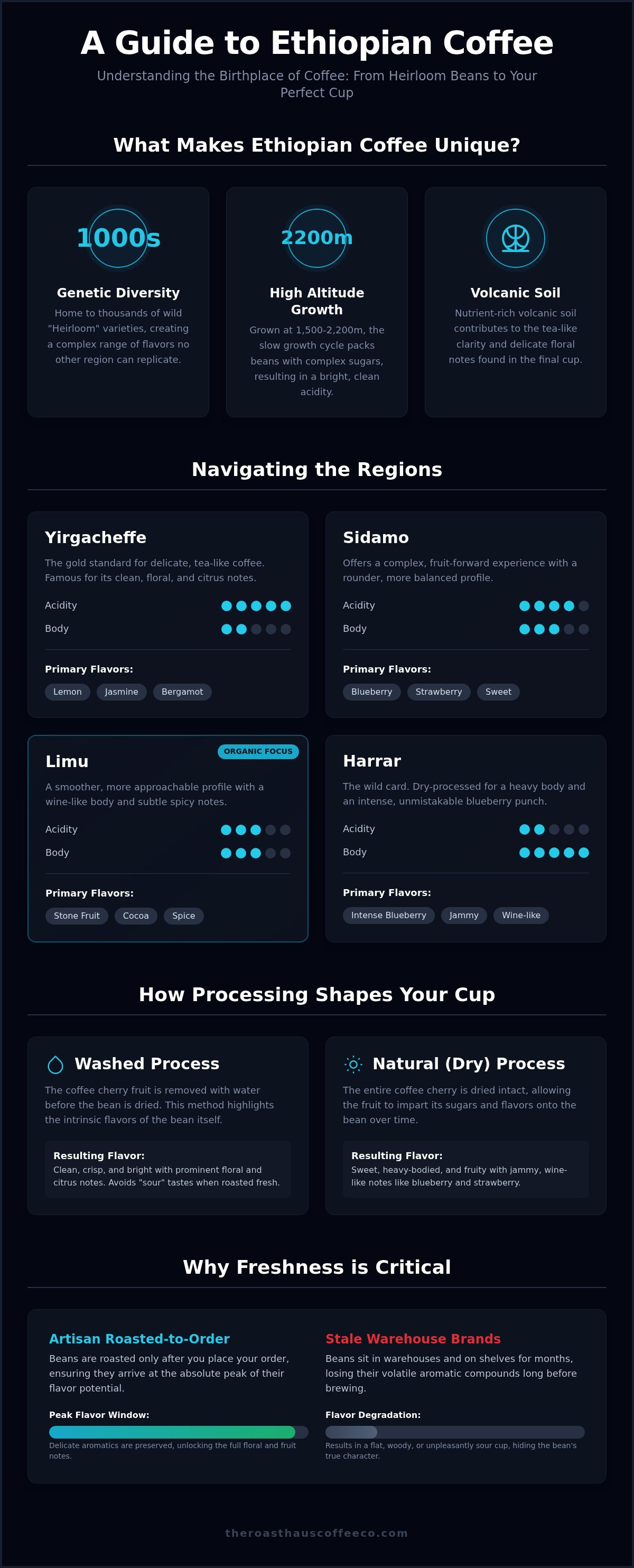
Ethiopia is the biological birthplace of Arabica coffee. Most coffee-producing countries grow specific, identified cultivars like Bourbon or Typica. Ethiopia is different. It's home to thousands of undiscovered wild coffee types. We call these "Heirloom" varieties because they've grown naturally in the forests for centuries. This genetic diversity is the primary reason ethiopian coffee beans possess such a complex range of flavors that other regions simply cannot replicate.
The environmental conditions in Ethiopia are equally rare. Most coffee grows at high altitudes between 1,500 and 2,200 meters above sea level. At these heights, the air is thinner and the temperatures are cooler. This forces the coffee cherries to grow slowly. A slower growth cycle allows the plant to pack more complex sugars and nutrients into the bean. The result is a high-density bean with a "bright" acidity. It tastes like citrus or stone fruit rather than just being bitter or burnt.
The history and scale of Coffee production in Ethiopia demonstrate why these beans remain the gold standard for specialty roasters. Unlike massive industrial plantations elsewhere, much of the coffee here is still harvested from "garden" plots or wild forest patches. This traditional approach preserves the integrity of the fruit.
The Legend of Kaldi and the Discovery of Coffee
The story of coffee begins in the Kaffa region with a goat herder named Kaldi. He noticed his goats became energetic and started "dancing" after eating red berries from a certain bush. He tried the fruit himself and felt a similar rush of energy. This discovery eventually spread to local monks and then across the globe. Today, coffee is a social foundation in Ethiopia. The traditional Coffee Ceremony involves roasting green beans over an open flame and brewing them in a clay pot called a jebena. It's a slow, intentional process that honors the craft.
Terroir: Why Altitude and Soil Matter
The soil in Ethiopia's coffee regions is rich in volcanic nutrients. These minerals feed the trees and contribute to the tea-like clarity found in the final cup. Because the beans are so dense from the high-altitude growth, they can withstand the precise heat of a roaster without losing their delicate floral notes. When you brew them correctly, you'll taste jasmine, bergamot, and lemon. If the coffee tastes "sour" or flat, it's often a sign of stale beans or poor roasting; it's not a fault of the terroir.
Yirgacheffe, Sidamo, and Limu: Navigating the Regions
Understanding the geography of ethiopian coffee beans is like learning about wine regions. Each area has a specific "voice" shaped by altitude and soil. Yirgacheffe is widely considered the gold standard for high-end specialty coffee. It's famous for its clean, floral aromatics that remind you of jasmine or bergamot. If you enjoy a cup that feels light and tea-like, this is your starting point. It's a delicate experience that rewards careful brewing.
Sidamo covers a broader area and offers a more complex, fruit-forward experience. You'll find deep berry notes here, often described as strawberry or blueberry. It has a more balanced acidity than Yirgacheffe, making it feel "rounder" in your mouth. Then there is Harrar, the wild card. These beans are almost exclusively dry-processed; this results in a heavy body and an intense blueberry punch that can be polarizing but unforgettable for fans of bold flavors.
Spotlight on Ethiopia Limu Organic
Many coffee drinkers find the high acidity of Yirgacheffe a bit too aggressive for their daily routine. This is why we focus on Ethiopia Limu Organic. It offers a smoother, more approachable profile without sacrificing the complexity of the region. Limu beans typically present a wine-like body with subtle spicy undertones and notes of cocoa and stone fruit. It's a balanced, organic option that bridges the gap between floral light roasts and rich medium roasts. We find it works perfectly for those who want a clean cup that still feels substantial.
Choosing the Right Region for Your Palate
- Yirgacheffe: Best for fans of lemon, jasmine, and bright, crisp finishes.
- Sidamo: Choose this if you want a rich, berry-heavy cup with a sweet aftertaste.
- Limu: Ideal for those who want a smooth mouthfeel, low bitterness, and hints of spice.
- Harrar: Go here if you love a heavy-bodied coffee with an unmistakable blueberry aroma.
The roast level you choose will change how these regional characteristics show up. A light roast preserves those delicate floral notes in a Yirgacheffe. A medium roast brings out the sweetness and body while keeping the acidity pleasant. If you are tired of beans that taste "sour," moving toward a Sidamo or Limu in a medium roast often solves the problem. If you are ready to move beyond generic supermarket blends, you can explore our fresh-roasted Limu to taste the difference that specific regional sourcing makes.
Washed vs. Natural Process: How Processing Shapes Your Cup
The region defines the potential of the bean, but the processing method dictates the final flavor profile in your cup. Many people buy ethiopian coffee beans based on a regional name like Sidamo or Yirgacheffe, but they're often surprised by how different two bags from the same area can taste. This happens because the way the coffee cherry is handled after harvest fundamentally changes its chemistry. If you don't understand processing, you're essentially guessing what your morning coffee will taste like.
The two primary methods used in Ethiopia are washed and natural. The choice between them determines whether your coffee tastes like a delicate floral tea or a heavy, fruit-forward syrup. Both methods are valid, but they appeal to very different palates. We believe you should know exactly how your coffee was handled so you can choose the experience you actually want.
The Cleanliness of Washed Ethiopian Beans
In the washed process, farmers remove the fruit pulp from the bean before it goes to the drying beds. This method requires significant amounts of water and specialized equipment at washing stations. Because the bean dries without the fruit attached, the final flavor is "clean." In the specialty coffee world, a clean cup means there is a total absence of fermented fruit notes. This allows the internal chemistry of the bean to shine through without distraction.
Washed beans are prized for their clarity and high acidity. You can taste individual nuances like jasmine or lemon zest with incredible precision. The mouthfeel is typically silky and light, making it the perfect choice for black coffee drinkers who enjoy subtle, tea-like characteristics.
The "Fruit Bomb" Experience of Natural Process
The natural process is the oldest and most traditional method. Farmers dry the entire coffee cherry in the sun with the fruit still attached to the bean. As the cherry shrivels, the bean absorbs the concentrated sugars and flavors from the surrounding pulp. This creates what enthusiasts call a "fruit bomb." Common notes include strawberry, blueberry, and even tropical fruits.
These beans offer a syrupy, heavy mouthfeel that feels substantial on the tongue. In the 2026 harvest, many Ethiopian producers have shifted toward natural processing because of rising costs and high cherry prices at washing stations. This means natural processed coffees are dominating the market this year. They're a favorite for adventurous brewers who want a cup that tastes more like a rich fruit juice than a traditional roast.
- Washed: High clarity, light body, floral and citrus notes.
- Natural: High sweetness, heavy body, intense berry and tropical notes.
Choosing between these two isn't about which is "better." It's about how you want your morning to feel. If you want a crisp, refreshing start, go with a washed bean. If you want a sweet, indulgent treat, the natural process is your best bet.
How to Brew the Perfect Cup of Ethiopian Coffee
High-altitude ethiopian coffee beans are physically harder and denser than beans grown at lower elevations. This density means they require more energy to extract their complex floral and fruit flavors. If you use the same settings as a standard dark roast, your cup will likely taste thin or sour. You need a specific approach to unlock the jasmine and berry notes that make these beans the gold standard of specialty coffee.
We recommend using a 1:16 brewing ratio as your starting point. This means 1 gram of coffee for every 16 grams of water. For a standard 12-ounce cup, use approximately 22 grams of coffee ground to a medium-fine consistency. Your grind should look like table salt. If the water flows through the grounds too quickly, your grind is too coarse. If the water stalls and the brew takes longer than four minutes, your grind is too fine.
The Pour-Over Method for Maximum Clarity
Pour-over brewers like the Hario V60 or Chemex are the best tools for this origin. Their paper filters catch the oils and sediment that can muddy the flavor. This highlights the tea-like clarity that makes these beans famous. Start by saturating the grounds with 40 to 50 grams of water and letting them "bloom" for 30 seconds. This releases trapped gases so the water can penetrate the bean more effectively. Continue with slow, circular pours until you reach your target weight. For a deeper dive into technique, read our guide on how to make coffee.
Common Brewing Mistakes to Avoid
Water temperature is a critical variable that many home brewers overlook. Most people use boiling water at 212°F, but this can scald the delicate aromatics of light or medium roasted ethiopian coffee beans. Aim for the 200°F to 205°F range. This temperature is hot enough to penetrate the dense bean structure without producing an acrid, burnt taste.
The quality of your water also matters. Avoid using unfiltered tap water. High mineral content or chlorine will mask the subtle floral notes you are trying to extract. Finally, grinding your beans just before brewing is essential to preserve the volatile compounds. You can learn more about choosing the right equipment in our guide to coffee grinders. If you want to experience these flavors at their peak, order a bag of our fresh-roasted beans and try this recipe tomorrow morning.
Artisan Small-Batch Freshness from Wyandotte, Oklahoma
You can buy the most expensive heirloom beans in the world, but if they've been sitting on a grocery store shelf for three months, they're dead. Ethiopian coffee beans are prized for their volatile aromatics. These floral and citrus notes are the first things to disappear when coffee goes stale. At The Roast Haus Coffee Co., we don't believe in warehouse storage. We're a family-owned artisan roastery in Wyandotte, Oklahoma, and our fulfillment model is built on one core promise: we roast your coffee only after you order it.
Big-box brands prioritize volume over integrity. They roast thousands of pounds at once and ship them to distribution centers where they sit under fluorescent lights for weeks. We take the opposite approach. We roast in small batches to ensure every bean receives the precise heat it needs. Once the roast is finished, we ship it within 24 hours. This means your coffee arrives at your door just as it's reaching its peak flavor profile. It's the difference between a mass-produced product and a piece of craftsmanship.
Why Freshness Matters for Light and Medium Roasts
Roasting triggers a chemical process called degasification. Carbon dioxide escapes the bean, carrying those delicate jasmine and berry scents with it. For the light and medium roasts common with Ethiopian origins, this window of peak excellence is narrow. Usually, the flavor is at its best between 3 and 7 days after roasting. When you buy from us, your coffee hits that sweet spot exactly when it lands on your porch. You can learn more about the science of the bean in our coffee beans pillar.
Join the Roast Haus Community
We want you to have the best possible experience with every cup. For those who never want to run out of fresh-roasted ethiopian coffee beans, our coffee subscription ensures a consistent supply of small-batch quality delivered on your schedule. If you're local to Wyandotte, OK, you can even skip the shipping and choose local pickup to meet the husband-and-wife team behind the roast.
Our Ethiopia Limu Organic is the perfect entry point for anyone ready to taste the difference that artisan craftsmanship makes. It represents everything we stand for: organic integrity, small-scale production, and a commitment to freshness that massive corporations can't match. Support independent business and taste the true birthplace of flavor by ordering your next bag from a roaster who cares about the details.
Elevate Your Morning Ritual with Fresh-Roasted Ethiopian Coffee
You now understand the genetic heritage and regional diversity that make ethiopian coffee beans the gold standard of specialty coffee. From the floral clarity of a washed Yirgacheffe to the wine-like body of our organic Limu, these beans offer a sensory depth that massive warehouse brands simply cannot replicate. Mastering the right brewing temperature and grind size is the final step in unlocking the berry and jasmine notes hidden within these dense, high-altitude seeds.
We're proud to bring this artisan quality directly to your door from our family-owned roastery in Wyandotte, OK. Our small-batch process ensures every bag is roasted-to-order and shipped within 24 hours. This commitment to timing preserves the delicate aromatics that define the Ethiopian experience. Don't settle for stale beans that have lost their character on a distribution center shelf.
Just as you might choose a specific roast to suit your personal taste, you can express your unique style with independent labels like Not Everyone's Cuppa, a UK-based brand that offers original graphic apparel for those who appreciate craftsmanship beyond the coffee mug.
It's time to experience the true birthplace of flavor in your own home. Shop Our Ethiopia Limu Organic Coffee Beans to enjoy 100% organic quality roasted specifically for you. We look forward to being a part of your perfect morning cup.
Frequently Asked Questions
Is Ethiopian coffee always acidic?
No, but it is famous for a "bright" acidity that coffee enthusiasts prize. This acidity is a result of high-altitude growing conditions and is often described as citrusy or crisp. If you prefer a smoother cup with less bite, choose a natural processed bean or a medium roast like our Ethiopia Limu Organic, which leans more toward cocoa and stone fruit sweetness.
What does "heirloom" mean on an Ethiopian coffee bag?
"Heirloom" refers to the thousands of wild, unidentified Arabica varieties that grow naturally in the forests of Ethiopia. Unlike other countries that plant specific cultivars like Bourbon or Typica, Ethiopia's genetic diversity is vast and largely undocumented. These wild types are the reason ethiopian coffee beans possess such a unique and complex range of flavors that cannot be found anywhere else on earth.
Should I drink Ethiopian coffee with milk or cream?
We recommend drinking it black to fully experience the delicate floral and fruit notes. Milk and cream tend to mask the subtle jasmine and bergamot characteristics that make this origin special. If you enjoy dairy in your coffee, choose a natural processed bean from the Sidamo region. The heavier body and berry sweetness of a natural process can stand up to milk much better than a light, washed variety.
Is Ethiopian coffee better as a light or dark roast?
Light to medium roasts are the best choice for preserving the bean's unique origin characteristics. Dark roasting often burns away the volatile aromatics and delicate fruit acids, leaving you with a generic smoky flavor. A medium roast provides a perfect balance. It develops the natural sugars for sweetness while keeping the floral and citrus notes intact for a clean, vibrant cup.
What is the best grind size for Ethiopian coffee beans?
A medium-fine grind size, similar in texture to table salt, is ideal for most manual brewing methods. Because ethiopian coffee beans are physically dense, they require more surface area for the water to extract their complex sugars effectively. If your coffee tastes sour or thin, try a slightly finer grind. If it tastes unpleasantly bitter, coarsen the grind to slow down the extraction process.
Why does my Ethiopian coffee taste like tea?
This "tea-like" clarity is a highly sought-after trait of washed Ethiopian beans, especially those from Yirgacheffe. It indicates a clean cup with high acidity and distinct floral aromatics. If the flavor feels too weak or watery, you might need to increase your coffee-to-water ratio. Aim for a 1:16 ratio to ensure the body of the coffee supports those delicate, tea-like flavors without tasting thin.
Can I use Ethiopian beans for espresso?
Yes, but it requires careful calibration to balance the natural acidity. Natural processed beans are particularly popular for single-origin espresso because they produce an intense berry-like sweetness and a rich crema. When pulling a shot, try using a slightly higher water temperature and a longer extraction time. This helps mellow the brightness and creates a more syrupy, indulgent mouthfeel.
How long do Ethiopian coffee beans stay fresh after roasting?
Peak flavor is usually reached 3 to 7 days after roasting and begins to noticeably fade after 21 days. The delicate floral scents are the first to disappear as the beans degas. This is why we prioritize a roasted-to-order model at our Wyandotte roastery. By shipping within 24 hours of roasting, we ensure the beans arrive at your door just as they are entering their window of maximum excellence.

