


For decades, Honduras coffee beans were unfairly tucked away as filler for generic supermarket blends, but that era is over. Today, these beans are winning international competitions and proving that Central American coffee is just as complex as any premium African variety. You've likely felt the frustration of opening a bag of big-box beans only to find a stale, flat aroma. It's even more confusing when you're staring at labels full of acronyms like SHG or EP without knowing what they mean for your morning cup.
You deserve a coffee experience that's consistent and vibrant. This guide will show you how to identify high-quality Honduran beans and why choosing small-batch, roasted-to-order craftsmanship makes all the difference. We'll break down the specific flavor profiles of vanilla and hazelnut, decode the grading system, and provide the best brewing methods to ensure your home experience matches the quality of a professional roastery. From understanding regional differences to discovering our own Honduras Morning Splendeur, you'll learn how to bring out the best in every bean.
Key Takeaways
- Discover why high-altitude volcanic soil gives premium honduras coffee beans their signature notes of vanilla, hazelnut, and smooth chocolate.
- Learn to decode grading terms like SHG and EP so you can confidently select the highest quality specialty beans for your kitchen.
- Compare the balanced body and medium acidity of Honduran coffee against other Central American origins to find your perfect flavor match.
- Master the specific brewing temperatures and grind sizes required to achieve a consistent, professional-grade extraction every morning.
- Understand how our roasted-to-order model ensures you receive beans within 24 hours of roasting for peak flavor and aroma.
The Rise of Honduran Coffee Beans: From Blends to Specialty Excellence
Honduras coffee beans are strictly Arabica varieties. These plants thrive in high-altitude volcanic soil that provides a unique mineral profile. Historically, Honduras was a hidden gem. While neighbors like Guatemala gained fame, Honduran farmers lacked the processing mills needed for specialty status. Most of the harvest ended up as filler for generic commercial blends. This changed through focused government investment and the work of the Honduran Institute of Coffee (IHCAFE). They built better roads and provided technical training to small-scale farmers. This transformation turned the country into a specialty powerhouse. Today, small-batch roasters seek out these beans for their consistency and exceptional sweetness.
Geography and Climate: The Secret to the Bean
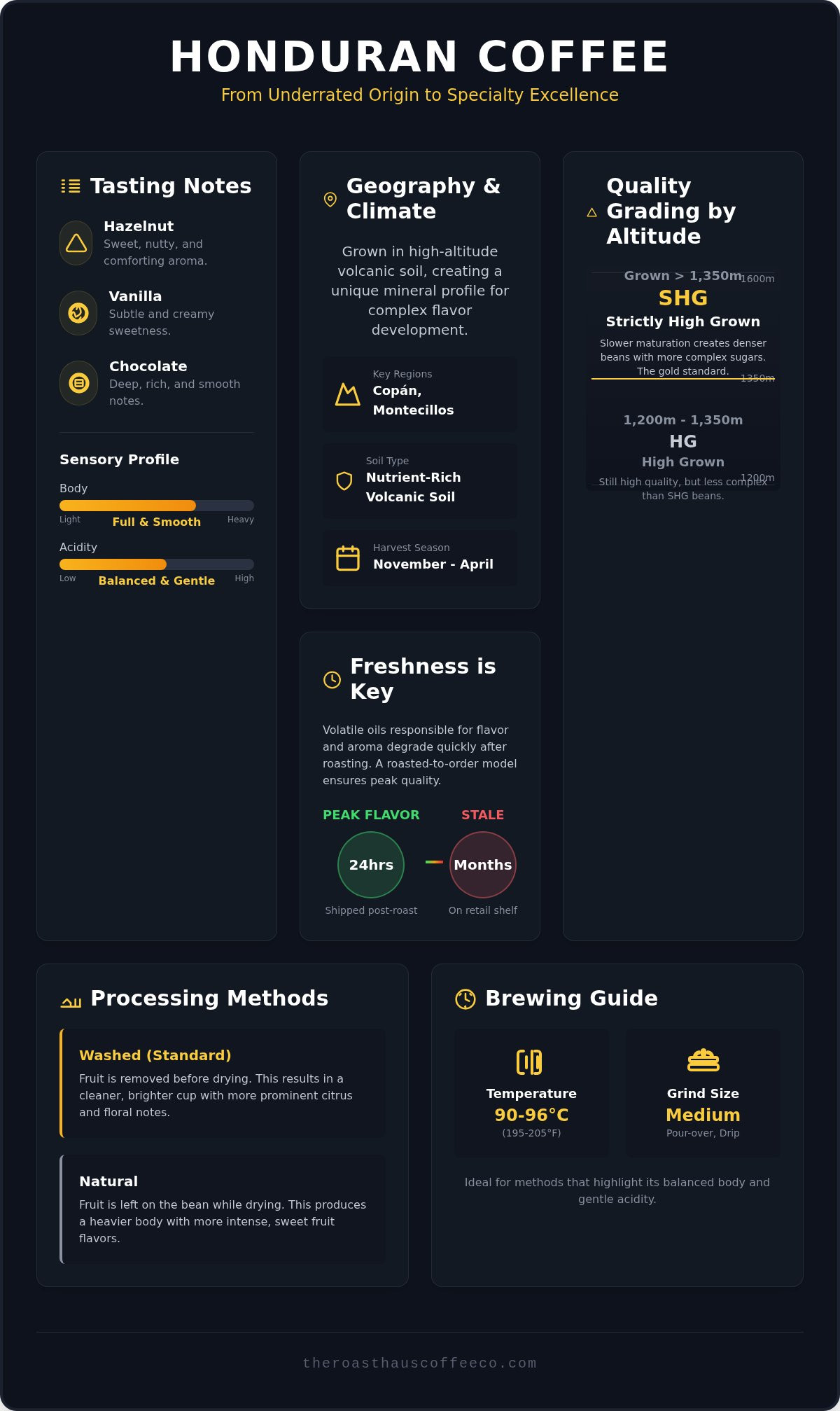
The secret to this quality lies in the landscape. High-altitude regions like Copán and Montecillos are the heart of production. These areas offer elevations between 1,200 and 1,600 meters. The thin mountain air slows the growth of the coffee cherry. This longer maturation process allows the bean to develop more complex sugars. Honduras coffee beans from these regions are prized for their density and nutrient-rich profile. The volcanic soil supports healthy root systems and robust plant growth. Most farms harvest their crop between November and April. During these months, the focus is on precision. Farmers select only the most vibrant red cherries for processing.
Why Freshness Matters for Central American Origins
Specialty coffee relies on volatile oils for its aroma and taste. These oils are fragile. Once heat is applied during roasting, the clock starts ticking. Oxygen and time are the enemies of flavor. Buying coffee that has sat on a retail shelf for months means you're missing out on the bean's true character. A roasted-to-order model is the only way to ensure those delicate notes remain intact. We ship our beans within 24 hours of roasting to protect this integrity. You can learn more about how timing impacts your brew in The Art of Roasting Pillar. Choosing fresh beans supports independent farmers and ensures your morning cup is as vibrant as the day it was roasted.
Understanding the Flavor Profile and Quality Grading of Honduras Coffee
Honduras coffee beans offer a profile that appeals to both casual drinkers and seasoned connoisseurs. Most lots from this region feature a distinct "round" body. This means the coffee feels full and smooth on your tongue without being heavy or syrupy. You'll typically find a balanced acidity that provides a gentle spark rather than a sharp bite. The primary tasting notes include vanilla, hazelnut, and deep chocolate. These are often complemented by a soft citrus finish that cleanses the palate.
How the farmer processes the fruit also dictates the final flavor. Washed processing is the standard in Honduras. This method removes the fruit before drying, which results in a cleaner cup with brighter citrus and floral notes. Natural processing, where the fruit stays on the bean while drying, produces a heavier body with more intense fruit sweetness. Both methods are valid, but they offer very different experiences for your morning brew.
The SHG (Strictly High Grown) Standard
When you shop for quality beans, you'll see acronyms like SHG and HG. These aren't just marketing terms. They tell you the exact elevation where the coffee grew. SHG stands for Strictly High Grown. This designation is reserved for coffee grown above 1,350 meters. At these heights, the air is cooler and the oxygen is thinner. This environment forces the coffee cherries to mature slowly over a longer period.
This slow growth allows for more complex sugar development within the fruit. It also creates a denser bean that can withstand the heat of the roaster without losing its flavor integrity. HG, or High Grown, refers to beans grown between 1,200 and 1,350 meters. While still high quality, SHG remains the gold standard for those seeking the most nuanced flavors available from honduras coffee beans.
Sensory Analysis: What to Expect in Your Cup
The aroma of fresh Honduran coffee is immediately recognizable. It's sweet and nutty, often carrying a hint of floral fragrance. Because of its medium acidity, it's considered a reliable "crowd-pleaser" origin. It doesn't overwhelm the palate with sourness, making it an excellent choice for those transitioning away from stale grocery store brands.
Your choice of roast level will shift these characteristics significantly. A light roast highlights the soft citrus and floral aromas. A medium roast, like our Honduras Morning Splendeur, leans into the hazelnut and chocolate notes while maintaining that signature round body. This balance is exactly why we prioritize small-batch roasting to preserve these delicate sensory details before they fade.
Comparing Honduras to Other Central American Coffee Origins
Choosing between Central American origins often comes down to a balance of acidity and body. Guatemala is famous for its bright, sparkling acidity that can sometimes feel sharp on the palate. In contrast, honduras coffee beans offer a more balanced and approachable experience. They provide a smoother, "rounder" mouthfeel that makes them easier to drink throughout the day. While a Guatemalan cup might be punchy, a Honduran cup feels comforting. Nicaragua also produces excellent coffee, but it often leans heavily into deep, dark chocolate notes. Honduras provides more complexity with its mix of nutty sweetness and soft floral undertones.
One major advantage of this origin is its value. For years, the specialty market overlooked Honduras in favor of more established names. This means you can often find specialty-grade beans at a more accessible price point than comparable lots from Costa Rica or Panama. You're paying for the quality of the bean and the skill of the farmer rather than the fame of the region. It's a smart choice for anyone who wants a premium experience without the "name brand" markup.
The Versatility Factor
These beans are incredibly flexible utility players. Their medium body and balanced profile allow them to perform well in a variety of brewing devices. If you typically enjoy the bold, citrus-heavy profile of our Kenya AA Supreme, you'll appreciate the subtle shift found in Honduran lots. It's less aggressive but still carries enough character to stand out in a crowd.
- Espresso: The natural sweetness and density create a rich, balanced shot with excellent crema.
- Drip Coffee: This is the best way to highlight the delicate hazelnut and vanilla aromas.
- Cold Brew: The inherently low acidity results in a smooth, chocolate-forward concentrate that doesn't need much milk.
Why Small-Batch Roasting Wins the Comparison
Big-box retailers often sell Central American coffee as a generic blend. This mass-production process destroys the unique characteristics of regional micro-climates. Artisan roasting is different. We focus on small-batch production to highlight the specific traits of the soil. The Roast Haus Coffee Co. never lets beans sit in a warehouse or on a retail shelf for months. Our roasted-to-order mantra ensures that the single-origin integrity of our honduras coffee beans remains intact. You get a cup that tastes like the high-altitude farm it came from, not a factory floor.
How to Brew Honduras Coffee Beans for the Best Flavor
Brewing specialty coffee is about more than just hitting a button. It's about respecting the work that went into the harvest. Because honduras coffee beans often feature a balanced, medium acidity, they're sensitive to extraction variables. If your water is too cool, you'll miss the sweetness. If it's too hot, you'll burn away the delicate vanilla notes. Aim for a water temperature between 195°F and 205°F. This range ensures you pull the complex sugars out of the bean without introducing bitterness.
Fresh grinding is the first non-negotiable step for any brewing device. Once you grind a bean, the surface area increases and oxidation speeds up. This causes those volatile oils we discussed earlier to vanish. For the best results, match your grind size to your specific gear. A medium-fine grind works for pour-overs, while a coarse, sea-salt texture is best for immersion. You can find more detail on selecting the right equipment in our Ultimate Guide to Coffee Grinders.
The Pour-Over Method for Clarity
If you enjoy the soft citrus and floral side of honduras coffee beans, the pour-over is your best choice. This method uses a paper filter to remove sediment, resulting in a clean and bright cup. Start with a 1:16 coffee-to-water ratio. For every 1 gram of coffee, use 16 grams of water. Begin with a "bloom" by pouring just enough water to saturate the grounds. Let it sit for 30 seconds to release trapped gases. Follow this with a steady, circular pour until you reach your target weight. This controlled draw-down highlights the nuances that define the region.
The French Press for Body and Sweetness
The French Press is a full-immersion method. It's the perfect way to emphasize the chocolate and hazelnut notes found in our regional lots. Because the coffee stays in contact with the water for the entire brew time, you get a heavier, more satisfying body. Use a coarse grind and steep for exactly 4 minutes. This timing provides the perfect balance between sweetness and strength. For a step-by-step breakdown of this technique, refer to our French Press Recipe.
Ready to put these techniques to the test? Start with a fresh bag of Honduras Morning Splendeur and taste the difference that roasted-to-order quality makes.
Why Roasted-to-Order Honduras Morning Splendeur Makes the Difference
Our Honduras Morning Splendeur is the culmination of everything that makes this origin special. We source these high-altitude beans specifically to capture the signature balance of hazelnut, vanilla, and chocolate. The real difference lies in our fulfillment process. Most honduras coffee beans found on grocery store shelves have sat in warehouses for months. They lose their soul long before they reach your kitchen. We operate differently. We roast your beans only after you place your order. This ensures they are shipped within 24 hours of leaving the heat. You receive a product at the absolute peak of its flavor profile.
Our roastery in Wyandotte, OK, is a family-owned operation. We don't believe in mass production. We believe in the integrity of the bean. By keeping our batches small, we maintain total control over the roast profile. This artisan approach allows us to react to the specific needs of each lot. We adjust timing and temperature to ensure every bag of Morning Splendeur meets our personal standards for excellence. You aren't just buying a bag of coffee; you're receiving a piece of our craftsmanship.
Small-Batch Craftsmanship vs. Commercial Roasting
Commercial roasters focus on volume. They often over-roast beans to hide inconsistencies in lower-quality crops. This process destroys the delicate floral and citrus notes that define premium Honduran coffee. Our artisan focus is the opposite. We prioritize the unique regional micro-climates of the farms we support. Choosing a small-batch roaster means you're supporting independent business values and global farmers who care about quality. It's a partnership built on mutual respect for the craft of coffee production.
Join the Roast Haus Community
Having a local Oklahoma expert in your corner makes a difference. We're here to help you get the best out of every cup. If you're new to specialty origins, our All Day Sampler is the perfect place to start. It allows you to taste the range of our offerings alongside the Morning Splendeur. To ensure you never run out of fresh-roasted beans, consider signing up for a Coffee Subscription. It's the easiest way to guarantee peak freshness delivered straight to your door. Try our honduras coffee beans today and experience the impact of the roasted-to-order difference for yourself.
Experience the Peak of Honduran Freshness
Honduran coffee has successfully moved from a background blend filler to a specialty staple. You now know that identifying Strictly High Grown (SHG) lots is the key to finding those complex sugars and balanced acidity. Whether you prefer the clarity of a pour-over or the rich body of a French press, the quality of your honduras coffee beans depends entirely on their state of freshness. Stale beans simply cannot deliver the hazelnut and vanilla notes that define this region.
We take pride in our family-owned artisan roastery in Wyandotte, Oklahoma. Our process is simple: we roast to order and ship within 24 hours. This small-batch approach ensures that every bag of Morning Splendeur arrives at your door with its flavor integrity intact. Supporting independent craftsmanship means you get a better cup and the farmers get the respect their hard work deserves. It's time to stop settling for grocery store coffee that has spent months in a warehouse.
Shop our fresh-roasted Honduras Morning Splendeur Coffee Beans and taste the difference that honest, small-batch roasting makes in your morning routine.
Frequently Asked Questions
What does Honduras coffee taste like?
Honduras coffee beans are known for a balanced and round body. You'll taste notes of creamy vanilla, toasted hazelnut, and deep milk chocolate. These flavors are often finished with a soft citrus brightness. This combination makes it an approachable origin for any time of day. It's sweet enough to drink black but holds up well with a splash of cream.
Is Honduras coffee high in acidity?
Honduras coffee typically features a medium level of acidity. It isn't as sharp or bright as coffee from Kenya or Ethiopia. Instead, it offers a gentle, crisp finish that cleanses the palate. This moderate acidity level makes it a popular choice for drinkers who want a vibrant cup without the intense tartness found in other high-altitude regions.
What is the best roast for Honduras coffee beans?
A medium roast is widely considered the best way to highlight the natural profile of these beans. This level of heat preserves the delicate floral and citrus aromas while allowing the chocolate and nutty undertones to develop fully. Darker roasts can sometimes mask the regional characteristics. Our Morning Splendeur is roasted to this medium standard to ensure you get the most balanced experience possible.
How should I store my Honduras coffee beans to keep them fresh?
Keep your beans in an airtight container in a cool, dark place like a pantry or cupboard. Exposure to oxygen, light, and moisture will quickly degrade the volatile oils that provide the flavor. Avoid the refrigerator or freezer, as these environments introduce moisture and odors. For the best taste, only buy what you'll drink within a few weeks of the roast date.
What is the difference between SHG and HG coffee?
The difference lies in the altitude where the coffee was grown. SHG stands for Strictly High Grown, meaning the beans were harvested above 1,350 meters. HG stands for High Grown, which covers elevations between 1,200 and 1,350 meters. SHG beans are denser and more flavorful because the cooler mountain air forces the cherries to mature more slowly, leading to more complex sugars.
Can I use Honduras coffee beans for espresso?
Yes, these beans make an excellent espresso. The natural sweetness and medium body produce a rich shot with a thick, stable crema. Because the acidity is balanced, it doesn't become overly sour when concentrated. It's a versatile bean that works just as well in a traditional latte as it does in a straight double shot.
Why is roasted-to-order coffee better than store-bought?
Roasted-to-order coffee is superior because it hasn't spent months sitting on a warehouse shelf. Coffee begins to lose its peak flavor almost immediately after roasting. By shipping within 24 hours of the roast, we ensure you receive the beans while the aromatic oils are still vibrant. Store-bought coffee is often stale by the time it reaches your kitchen, resulting in a flat and bitter brew.
Where is The Roast Haus Coffee Co. located?
We're located in Wyandotte, Oklahoma. As a family-owned and operated artisan roastery, we handle every step of the production process right here in the heart of the country. This local focus allows us to maintain strict quality control over our small-batch production. We're proud to be an independent venture dedicated to bringing the best Central American flavors to our community and beyond.

