


Honduras was once unfairly dismissed as a source for cheap blending filler, but today it produces some of the most complex specialty coffee in the world. If you've only ever bought Honduras coffee beans from a grocery store shelf, you likely missed the vibrant notes of cocoa and stone fruit that define this origin. Most big-box retailers sell beans that have sat in warehouses for months, losing the delicate oils that make Central American coffee so special. The result is a stale, inconsistent cup that doesn't do justice to the high-altitude farms where these beans are grown.
It's frustrating to see confusing labels like SHG or HG and still end up with a brew that tastes flat or bitter. You deserve a morning routine that features the rich, chocolatey depth and soft floral undertones of a fresh roast. This guide will help you decode grading standards and identify the specific flavor profiles of the region. You'll learn the best ways to brew these beans at home and why a small-batch, roasted-to-order model is the only way to guarantee peak freshness. We want to help you find a reliable source for quality beans so you can stop settling for anything less than excellence.
Key Takeaways
- Discover how Honduran coffee transitioned from a blending base to a specialty star known for its balanced notes of milk chocolate, caramel, and hazelnut.
- Learn to identify premium quality by understanding grading labels like SHG (Strictly High Grown) and how altitude affects the final flavor in your cup.
- Master the art of brewing Honduras coffee beans by using freshly ground coffee and maintaining a precise water temperature between 195°F and 205°F.
- Experience the difference of a roasted-to-order model that prioritizes craftsmanship and ships your coffee within 24 hours of roasting for peak freshness.
Why Honduras Coffee Beans are the Rising Stars of Central America
Honduras used to be the coffee industry's best-kept secret for bulk blending. It borders regional giants like Guatemala and Nicaragua, sharing the same rich volcanic soil and ideal microclimates. For years, these beans were used to add body to commercial blends without receiving much credit. That has changed. Today, Coffee production in Honduras focuses on quality over quantity. This shift has turned Honduras coffee beans into a staple for specialty roasters who want a balanced cup with a smooth body and approachable acidity. Harvesting typically occurs between November and April, which means the freshest beans hit the market just as you're looking for that perfect morning brew.
The Impact of High-Altitude Growing
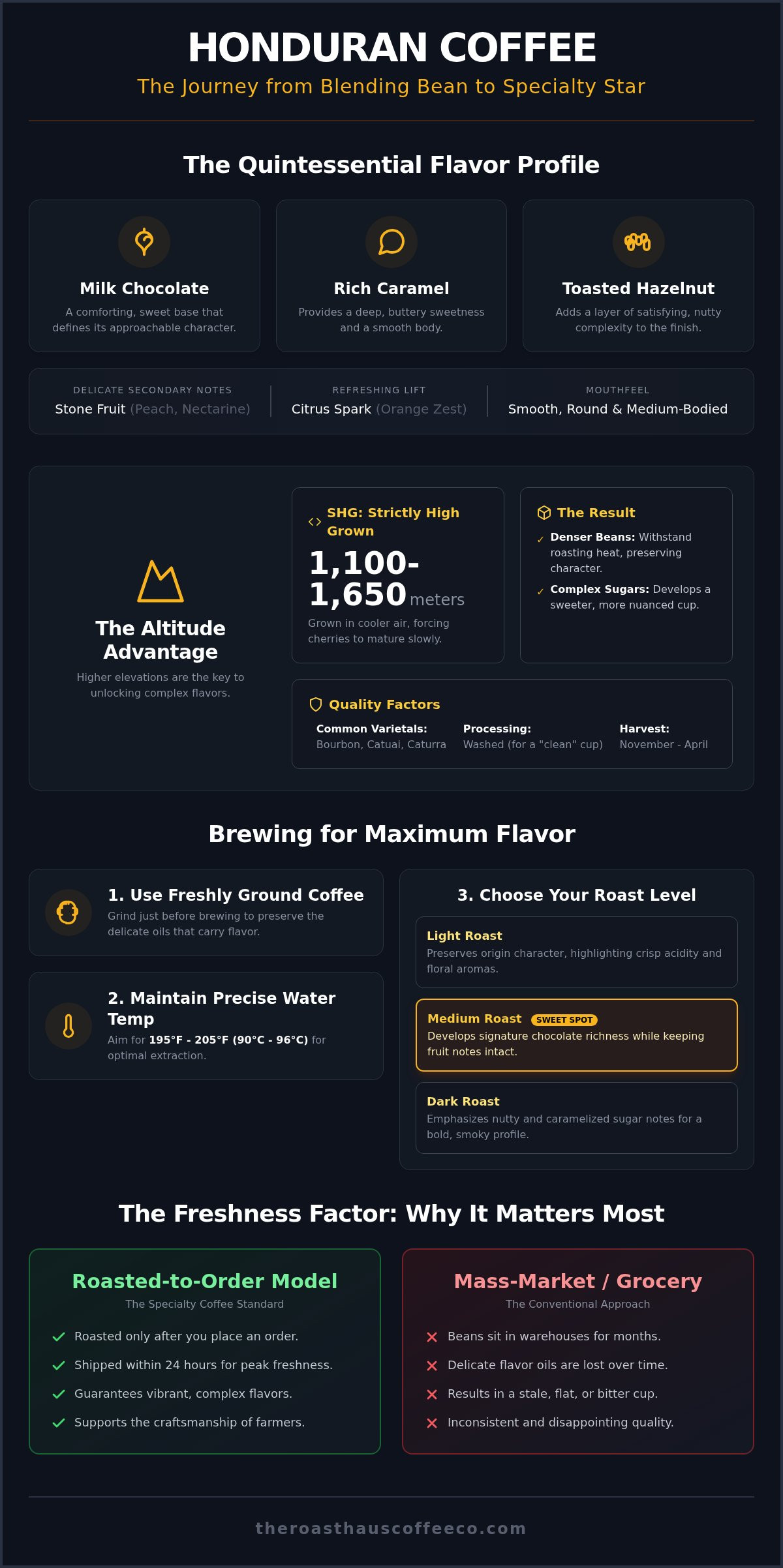
Beans grown between 1,100 and 1,650 meters above sea level develop differently than those in the lowlands. At these heights, the air is cooler and the oxygen is thinner. This forces the coffee cherries to mature slowly. A slower maturation process allows the plant to concentrate more complex sugars within the bean. It results in a higher density bean that can withstand the heat of a roaster while preserving its unique character. Most of the high-quality crops you'll find today are traditional Arabica varietals like Bourbon, Catuai, and Caturra. These plants thrive in the thin mountain air, producing the sweet, nutty profile that fans of Central American coffee love.
Sustainable Farming and Cooperatives
The rise of Honduran coffee isn't just about the weather; it's about the people. In regions like Marcala, farmer-led innovation has transformed the landscape. Small-scale producers have moved away from industrial methods to embrace organic and bird-friendly certifications. This isn't just a marketing tactic. It's a commitment to the land that ensures the soil remains fertile for generations. By joining forces in cooperatives, these farmers gain access to better processing equipment and international markets. Supporting these independent businesses directly improves the final cup quality of Honduras coffee beans. When farmers are paid fairly for their craftsmanship, they can afford the meticulous sorting and drying processes required for specialty grade beans.
The Flavor Profile: What Does Honduran Coffee Taste Like?
Honduras coffee beans offer a quintessential Central American profile. It's defined by a sweet, balanced, and remarkably clean finish. Because Honduras has climbed the ranks in global coffee production and trade, the quality has become incredibly consistent. You aren't just getting caffeine; you're getting a refined sensory experience. The primary notes usually revolve around milk chocolate, rich caramel, and toasted hazelnut. These flavors provide a comforting base that makes this origin a favorite for those who don't like overly bitter or harsh brews.
Beyond the heavy sweetness, you'll find delicate secondary notes. High-quality Honduran beans often reveal stone fruits like peach or nectarine, especially as the cup cools. Some lots might carry a subtle citrus spark, similar to orange zest, which adds a refreshing lift without being sharp. The mouthfeel is another standout feature. It's typically round and medium-bodied. It coats the tongue smoothly, leaving a lingering sweetness rather than a dry or astringent aftertaste. This balance is why many consider it the perfect daily drinker.
How Roast Levels Influence the Taste
The roast level acts as a dial for these flavors. A light roast preserves the bean's origin characteristics, highlighting floral aromas and a crisp acidity that feels bright on the palate. Medium roast is widely considered the sweet spot for these beans. It develops the sugars enough to bring out that signature chocolate richness while keeping the fruit notes intact. A medium roast is often the best choice for those new to this origin, as it showcases the bean's natural versatility without the bitterness of an over-roasted batch. If you prefer a bold, smoky experience, a dark roast will emphasize the nutty and caramelized sugar aspects while muting the acidity.
The Role of the Washed Process
Most coffee from this region undergoes the "washed" or wet milling process. In this method, the fruit is removed from the bean before it's dried. This technique is what creates that famous "clean" cup profile. It allows the inherent flavors of the seed to shine through without the fermented fruitiness found in natural processed coffees. This process requires a significant amount of fresh water and careful management, but the result is a superior clarity of flavor. For beginners, a washed Honduran coffee is the best place to start. If you want to experience this balance for yourself, our Honduras Morning Splendeur is crafted to highlight these specific chocolate and caramel characteristics.
Decoding Quality: Understanding SHG and HG Grading
Honduras uses altitude as its primary benchmark for quality. When you shop for Honduras coffee beans, you'll see labels like SHG or HG. These aren't just industry jargon; they tell you exactly where the coffee lived. Strictly High Grown (SHG) is the gold standard. It represents coffee grown at elevations above 1,350 meters. High Grown (HG) refers to beans harvested between 1,200 and 1,350 meters. While HG coffee is often more affordable, SHG beans usually command a higher price because the extreme conditions produce a more refined flavor profile.
Why High Elevation Matters for Your Cup
Cooler mountain temperatures slow down the growth of the coffee cherry. This delay allows the plant to pack more nutrients and sugars into the seed. It results in a "hard bean" with high density. Hard beans are prized by artisan roasters because they can take more heat without scorching. This uniform heat absorption leads to a more consistent roast and a cleaner taste in your cup. Understanding the environmental factors affecting coffee helps you appreciate why these high-altitude farms are so vital. SHG coffee is coffee grown above 1,350 meters.
Regional Differences: From Copán to Marcala
The specific mountain range where your beans are grown also shapes the flavor. Honduras is divided into several distinct growing regions, each with its own personality:
- Copán: This region is famous for producing beans with a heavy body and deep, chocolatey notes. It's the classic "comfort" coffee profile that many breakfast drinkers prefer.
- Marcala: Known for the first protected designation of origin in the country, Marcala coffee stands out for its bright acidity and complex floral aromas.
- Agalta: If you prefer tropical fruit flavors and a honey-like sweetness, look for beans from the Agalta forest region.
Choosing between these regions depends on your personal preference, but always prioritize the SHG label if you want the most vibrant cup. These beans have struggled against the elements at peak elevations, and that struggle is exactly what creates the complexity you're looking for. Don't settle for lower-grade beans that lack the character of true high-altitude Honduras coffee beans. If you're just starting your journey into Central American origins, looking for these specific regional labels is the best way to ensure a high-standard experience.
How to Brew Honduran Coffee for Maximum Flavor
You've chosen high-quality beans, so don't let poor technique ruin the experience. The most important rule is to use freshly ground coffee right before you brew. Once beans are ground, they lose their aromatic oils within minutes. For Honduras coffee beans, aim for a water temperature between 195°F and 205°F. If your water is too hot, you'll extract bitter flavors. If it's too cold, the cup will taste sour and thin. Precision matters when you're working with specialty grade beans.
Use filtered water. Tap water often contains chlorine or minerals that mask the subtle peach and chocolate notes we discussed earlier. A reliable starting point for your coffee-to-water ratio is 1:16. That means one gram of coffee for every sixteen grams of water. You can adjust this slightly to suit your taste, but it's a solid foundation for a balanced cup. Consistency in your measurements will help you find the exact strength you enjoy most.
The Pour-Over Method
A pour-over highlights the clarity and acidity of Honduran beans. It's the best way to experience the complexity of high-altitude crops.
- Step 1: Grind your beans to a medium-fine consistency, similar to sea salt.
- Step 2: Place the grounds in the filter and pour just enough water to wet them. Let them bloom for 30 seconds. This releases trapped CO2 and prepares the grounds for full extraction.
- Step 3: Pour the remaining water in slow, concentric circles. This steady motion ensures even saturation and brings out those bright citrus undertones.
The Automatic Drip & French Press
Honduran beans are often called the perfect everyday drip coffee. Their natural balance and medium body mean they perform well in a standard home brewer. Just make sure your machine reaches the correct temperature. If you prefer a French Press, use a coarse grind. This method accentuates the round, chocolatey body and provides a richer mouthfeel. For more detailed techniques, check out our guide on how to make coffee.
Ready to upgrade your morning routine? Order a bag of our Honduras Morning Splendeur and taste the difference that small-batch, roasted-to-order quality makes in every cup.
Experience Peak Freshness with Honduras Morning Splendeur
Freshness isn't just a marketing buzzword for us. It is the core foundation of everything we do at The Roast Haus Coffee Co. Most retailers sell beans that have spent weeks or even months in a distribution center. By the time those Honduras coffee beans reach your kitchen, the complex sugars and aromatic oils have already begun to dissipate. We do things differently. Our Honduras Morning Splendeur is the ultimate breakfast companion, but it only reaches its full potential because of our roasted-to-order model. We don't roast our beans until you place your order. This ensures that every bag arrives with the full chocolatey depth and stone fruit brightness that makes this origin famous.
Our Oklahoma roastery operates on a strict timeline designed for peak quality. We promise to ship your coffee within 24 hours of roasting. This rapid fulfillment model is our ultimate differentiator. It bridges the gap between the high-altitude farms of Central America and your morning mug. If you're curious about how these flavors compare to other regions, we encourage you to try The All Day Sampler. It's a practical way to experience the balance of Honduras alongside our other premium single-origin offerings without committing to a single bag.
Small-Batch Craftsmanship in Oklahoma
We believe in the power of small-scale production. Since 2014, our family-owned and operated roastery in Wyandotte, Oklahoma, has focused on artisan quality over mass production. Roasting in small batches allows us to monitor every temperature change and air-flow adjustment with absolute precision. This level of quality control is impossible for large, impersonal corporations. Fresh roasting is the only way to preserve the sensory excellence and integrity of the bean. We take pride in being an independent, personal venture that prioritizes your morning experience over corporate margins.
Join the Roast Haus Community
You shouldn't have to worry about running out of fresh beans or settling for stale grocery store options. Our coffee subscription makes it easy to maintain a steady supply of roasted-to-order excellence delivered straight to your door. For our neighbors here in Oklahoma, we also offer the convenience of local pickup. This fosters a sense of community and shared values that you won't find at a big-box store. We are passionate about our craft and genuinely want you to have the best possible experience every single morning. Switch to artisan coffee today and taste the difference that integrity and timing make.
Elevate Your Morning with Small-Batch Honduran Coffee
Honduran coffee is no longer just a component for commercial blends; it is a world-class origin that offers incredible balance and sweetness. By choosing SHG-rated beans, you ensure that your cup features the complex chocolate and stone fruit notes that only high-altitude farming can produce. Remember that even the best brewing techniques and the highest quality Honduras coffee beans won't matter if the coffee is stale. Freshness is the ultimate differentiator that protects the integrity of the bean and the hard work of the farmers.
At The Roast Haus Coffee Co., we believe in the craftsmanship of the small-batch model. Our family-owned Oklahoma roastery never lets a bag sit on a warehouse shelf. We roast your coffee only after you buy it and ship it within 24 hours to guarantee peak flavor. It's time to stop settling for big-box mediocrity and start enjoying the tangible benefits of artisan quality and bespoke fulfillment.
Shop Honduras Morning Splendeur – Roasted to Order
We are excited for you to experience the rich, chocolatey depth of a truly fresh roast. Your perfect morning brew is just a few clicks away. Enjoy the difference that honesty and timing make in every cup.
Frequently Asked Questions
What makes Honduras coffee beans different from Colombian beans?
Honduras beans typically offer a more pronounced chocolate and caramel sweetness compared to the balanced, nutty profile of Colombian beans. While both are approachable, Honduran varieties often have a rounder mouthfeel and softer acidity. Colombian coffee is famous for its bright, classic flavor, but Honduras coffee beans provide a deeper, more comforting experience that works exceptionally well for breakfast blends or those who prefer a smooth, creamy finish.
Is Honduras coffee high in acidity?
No, Honduran coffee is generally known for its mild to moderate acidity. While high-altitude SHG beans have some crispness, it's rarely sharp or overwhelming. Instead, you'll find a soft acidity that mimics stone fruits like peach or nectarine. This characteristic makes it an excellent choice for drinkers who find East African coffees too acidic but still want more complexity than a standard low-altitude bean provides.
What is the best roast level for Honduras coffee beans?
A medium roast is widely considered the best choice to highlight the natural sugars of this origin. This level develops the chocolate and caramel notes without burning off the delicate fruit undertones. While light roasts emphasize floral aromas, a medium roast creates the most balanced experience. It provides enough body for milk or cream while remaining clean and sweet enough to enjoy black. It's the sweet spot for Central American beans.
How should I store my Honduras coffee to keep it fresh?
Store your coffee in an airtight container in a cool, dark place away from direct sunlight. Never keep your beans in the refrigerator or freezer, as moisture and odors can ruin the flavor. Because we ship our Honduras coffee beans within 24 hours of roasting, they arrive at peak freshness. Using an opaque ceramic or stainless steel canister will protect those delicate oils and ensure your morning brew stays vibrant for several weeks.
Can I use Honduras beans for espresso?
Yes, these beans are fantastic for espresso because of their high sugar content and medium body. The chocolate and hazelnut notes create a rich, sweet shot with a thick crema. When pulled as espresso, the natural caramelization provides a sturdy base that stands up well to steamed milk in lattes or cappuccinos. It's a versatile bean that performs consistently across different pressure and temperature settings in your home machine.
What does SHG stand for on a coffee label?
SHG stands for Strictly High Grown. It's a quality designation used in Honduras for coffee grown at altitudes above 1,350 meters. These higher elevations have cooler temperatures, which slow down the maturation of the coffee cherry. This slower growth leads to a denser, harder bean with more concentrated flavors. When you see SHG on a label, it's a direct indicator of a more complex and refined cup of coffee.
How long does it take for my coffee to arrive after roasting?
We prioritize speed to ensure you get the freshest product possible. Every order is roasted to order and shipped from our Wyandotte, Oklahoma roastery within 24 hours. Depending on your location and the shipping method chosen, most customers receive their beans within two to four business days. This means your coffee is at the perfect stage of degassing just as it arrives at your front door for brewing.
Are Honduras coffee beans organic?
Many Honduran coffee beans are grown using organic practices, though not all carry the official certification. Small-scale farmers in regions like Marcala often rely on traditional, chemical-free methods because they're better for the land and the community. While we focus on the sensory excellence and integrity of the roast, we prioritize sourcing from cooperatives that emphasize sustainable farming. This commitment helps maintain the long-term health of the soil and the local ecosystem.

