


What if the secret to hot party coffee isn’t keeping one pot on a warmer, but serving smaller batches at the right pace? It’s frustrating when the first cups cool before everyone has been served, and prolonged heat can leave coffee tasting bitter or scorched. If you’re wondering how to keep coffee hot for a party without sacrificing flavor, plan the serving setup around when guests will pour and how long coffee needs to be available.
Choose equipment based on your guest count, serving style, and available counter space. A thermal carafe works well for a smaller gathering or table service. A pump airpot suits self-service because guests can dispense coffee without lifting a full pot. For a larger group, a coffee urn can provide a central serving point. Whatever you choose, brewing fresh batches as needed helps avoid leaving coffee on heat for too long.
This guide covers choosing a container, prewarming it to reduce heat loss, and managing batches so coffee stays warm without being cooked. Start with coffee you enjoy drinking, then let the serving plan do its part. The Roast Haus Coffee Co. roasts coffee to order and ships it within 24 hours of roasting, giving you a fresh foundation for the cups you serve.
Key Takeaways
- Learn how to keep coffee hot for a party by choosing a serving setup that fits your guest count and service window.
- Prewarm an insulated container and keep its lid closed between pours to limit heat loss without leaving coffee on a hot plate.
- Compare thermal carafes, pump airpots, coffee urns, and warming plates by capacity, guest access, and how long coffee will be held.
- Use a five-step plan to estimate demand, prepare the serving station, and replenish coffee in fresh batches.
- Check the coffee’s flavor as service continues, and choose beans that suit the kind of coffee you want to serve.
Why Party Coffee Cools, and What Hosts Can Control
The first guests arrive, coffee is ready, and then hosting takes over. You greet people, answer questions, and point guests toward the cups. By the time everyone has poured, the coffee may feel less inviting. The challenge isn’t just brewing it hot. It’s managing the time between brewing and pouring while people move through the serving area.
Heat retention means limiting heat loss between brewing and pouring. You can’t stop coffee from cooling completely, but you can control how long it sits, how often its container is opened, and how exposed it is to cooler air. Aim to serve hot, pleasant-tasting coffee, rather than holding one pot at heat indefinitely. Keeping coffee warm and reheating coffee that has cooled are different tasks, and treating them as the same can work against good flavor.
Why coffee loses heat while guests mingle
Freshly brewed coffee is warmer than its surroundings, so heat moves into the air and into a cooler serving vessel. Each time a lid is lifted, warm air escapes and cooler air can take its place. Coffee in an uncovered cup also loses heat while it sits. An insulated container slows heat loss, but doesn’t stop it, especially during a long stretch of self-service.
Serving habits matter, too. A guest may open a lid, pour slowly, then leave it unfastened while looking for cream or sugar. The next person repeats the process, exposing the coffee again. Keep the container closed between pours and set up cups and additions nearby, but not so close that guests have to leave the lid open while making space. Avoid relying on repeated reheating to restore warmth: holding coffee warm slows heat loss, while reheating applies more heat to coffee that has cooled.
Set a realistic plan for your party
Think about when guests are likely to want coffee, not only when you’ll brew it. At brunch, guests may pour as they arrive. After dinner, coffee service might begin later and continue while people talk. Estimate the service window, how quickly guests will pour, and whether many people will want a cup at the same time.
- Guest count: Estimate how many cups you may need, then choose a serving container and refill plan to suit.
- Serving pace: Expect a rush if many guests arrive or finish a meal together.
- Counter space: Leave room for cups and additions, with clear access to the dispenser so guests aren’t juggling items while pouring.
- Refill timing: If coffee service will be spread out, make smaller batches rather than leaving a large amount brewed for longer than needed.
For example, if guests will arrive over an extended period, serve coffee in stages instead of expecting everyone to pour at once. If most guests will want a cup together, have the serving area ready before that moment. These decisions are the foundation of how to keep coffee hot for a party: manage the serving window, limit unnecessary exposure, and match each batch to the pace of your guests.
How to Keep Coffee Hot Without Sacrificing Flavor
Once the coffee is brewed, move it into a serving setup that retains warmth without keeping the pot on continuous heat. A thermal carafe or pump airpot slows heat loss through insulation. Prewarm the empty vessel by filling it with hot water, letting it stand briefly, then emptying and drying it before adding coffee. Don’t pour brewed coffee into a container that still has water in it, as that will dilute the coffee.
Use a thermal carafe or pump airpot
Transfer the coffee promptly, then secure the lid between pours. The less time the vessel sits open, the less warm air escapes. With a pump airpot, dispense each serving directly into a cup instead of opening the container or transferring coffee to another pot. WebstaurantStore’s airpot buying guide explains common airpot types and how they’re used to serve hot beverages.
Place the container where guests can reach it without shifting it or leaving the lid open while they prepare their cups. If you’re serving from a carafe, pour what’s needed and close it again. Keep the remaining coffee covered while guests add milk, sugar, or other additions at a separate spot. These small habits make insulated serving more effective and reduce repeated exposure to cooler air.
Use a coffee urn or warming plate carefully
A coffee urn can be convenient for a larger group that needs a central supply. Follow the appliance maker’s directions for brewing, holding, and serving. A brewer’s warming plate may suit brief holding, but it isn’t a substitute for storage over a long gathering. Continuous heat can gradually change coffee’s flavor, so pay attention to how it tastes as service continues.
If coffee is sitting on a warming plate, serve it promptly instead of leaving the same pot there throughout the event. Taste it before offering another round. If it has become noticeably harsher or less pleasant, more heat is unlikely to improve it. A fresh batch may be a better choice. Holding time varies by appliance and situation, so follow the manufacturer’s instructions and use taste as a practical signal.
- Before filling: Prewarm an insulated server with hot water, then empty it.
- Between pours: Keep lids secured and avoid unnecessary transfers.
- As service continues: Follow appliance instructions and notice changes in flavor.
The serving method manages the temperature of brewed coffee; the beans contribute to the flavor in the cup. For a gathering where taste matters, start with coffee roasted to order and shipped within 24 hours of roasting. Explore freshly roasted coffee as you plan your next party batch.
Thermal Carafe, Airpot, or Coffee Urn: Which Party Setup Fits?
The right setup depends on how guests will serve themselves, how long coffee service will last, and how much room you have. Insulated servers suit coffee brewed ahead and poured over time. An urn brings service together in one place for a larger gathering, while a brewer’s warming plate can be convenient if you’re serving soon after brewing. Compare the practical trade-offs, not just the advertised capacity.
- Thermal carafe: Best for a smaller gathering or table service. It’s easy to move and pour from, but guests need to lift and tip it, and it may need refilling during longer service.
- Pump airpot: Best for accessible self-service. Guests dispense coffee without lifting a full carafe, but the pump needs room to operate and the server needs a stable, reachable spot.
- Coffee urn: Best when many guests need coffee from one central station. It can hold and serve a larger batch, but takes counter space and requires attention to appliance instructions and cleanup.
- Brewer’s warming plate: Best for short, closely managed service after brewing. It keeps the pot at the brewer, but prolonged heating may affect flavor, so it’s not suitable for holding coffee indefinitely.
Capacity and heat-retention claims vary by model. Check the manufacturer’s specifications to see whether a container suits the amount you expect to serve and the duration of the gathering. A large capacity doesn’t automatically make a setup easier. Consider where the equipment will sit, how guests will reach it, and how you’ll clean it after the party.
When a thermal carafe or airpot makes sense
Choose an insulated container if you want to brew before guests are ready for coffee, then serve without continuous heat. A carafe is straightforward for pouring at a table or serving counter. An airpot’s pump dispenses coffee in place, which can help with self-service. Either way, set it on a stable surface with enough clearance for guests to pour or pump comfortably.
Plan for guest flow, too. If several people may serve themselves at once, keep cups and additions nearby but leave room around the container. For more detail on pump dispensers, WebstaurantStore’s airpot buying guide is a useful reference.
When a coffee urn or brewer is more practical
An urn can simplify service when guests are gathering around one coffee station and you need a centralized supply. Compare its stated capacity with your expected demand, and plan for its footprint, power access, and cleanup. For a smaller gathering where you can keep an eye on the serving pace, brewing and serving from a standard brewer may be simpler. Follow the maker’s guidance for using its warming plate.
To decide, picture the busiest moment. Will guests carry cups to a shared counter, or will you pour for them? Then consider how long coffee needs to be available and whether you have space for the equipment without crowding the serving area. The right setup makes how to keep coffee hot for a party easier to manage because it matches coffee service to the way your guests move.
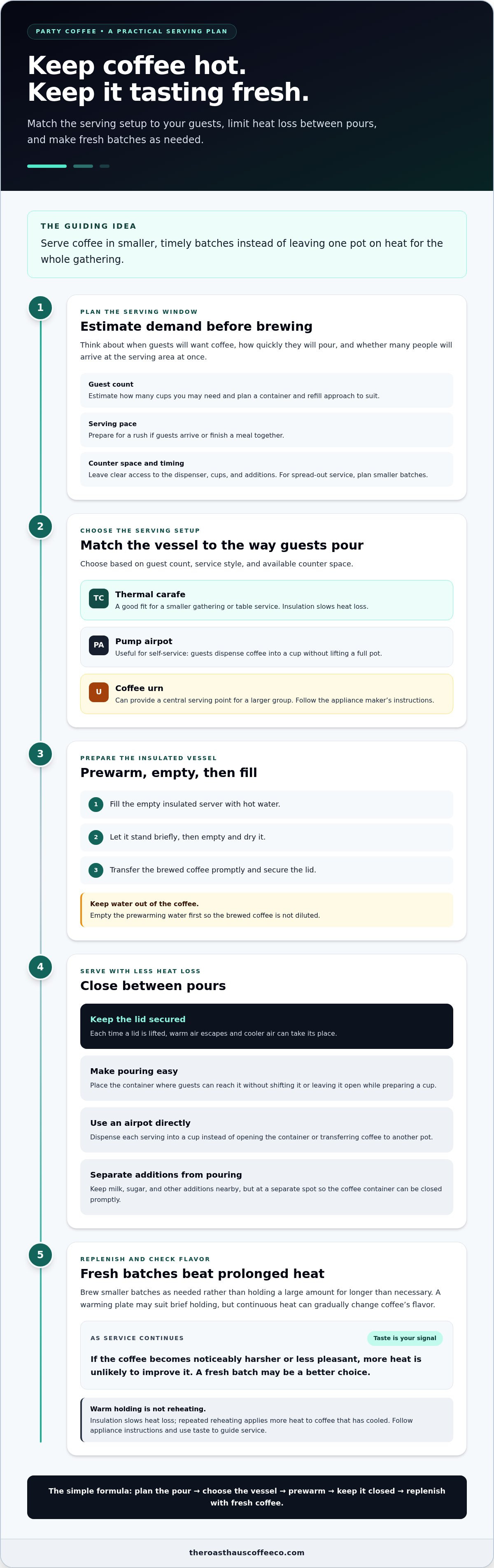
Plan Party Coffee in Five Steps, From Brewing to Refills
A simple sequence keeps coffee service from becoming another task to manage while guests are arriving. Estimate demand, choose a setup, prepare the station, and brew close to serving time. Then hold and replenish coffee in batches that match the pace of the gathering. This helps you avoid leaving more coffee sitting than guests are likely to drink.
- Estimate demand. Consider how many guests are likely to want coffee, when they’ll want it, and whether they’ll pour at once or over a longer stretch. Use that estimate to plan a first batch and possible refills, rather than brewing everything far in advance. If guests may want different additions, make space for them at the station.
- Choose equipment and prepare the station. Match the server to the way guests will pour and the space you have. Before the first batch is ready, set out cups, sweeteners, milk options, stirrers, and napkins. Place the dispenser on a stable surface with room to serve comfortably. Prewarm an insulated container with hot water, then empty it before filling.
- Brew at the right time. Make the first batch close to when guests are ready to drink, so it spends less time waiting. Brew a manageable amount that fits your estimate and serving pace. For a refresher on the fundamentals, use this guide to making coffee at home to review the steps behind a well-prepared cup.
- Hold the coffee carefully. Transfer brewed coffee to the prepared insulated server, or follow the directions for your chosen appliance. Keep lids secured between pours and place cups and additions where guests can reach them without crowding the dispenser. If you’re using a warming plate, follow the brewer’s operating instructions and keep an eye on the coffee’s flavor as service continues.
- Replenish in manageable batches. Notice how quickly the first batch is going and prepare the next one before the server is empty if guests are still asking for coffee. Keep reserve coffee and the next brewing steps organized so you can refill without searching for supplies. Use clean equipment and follow the brewer’s operating and cleaning directions.
A little setup before guests arrive makes a difference. Gather what you need, clear the serving area, and decide where the next batch will come from. That plan is the practical heart of how to keep coffee hot for a party: brew in step with demand and make each refill easy to manage. For a flavorful starting point, choose coffee roasted to order.
Serve Fresh-Tasting Party Coffee and Make the Next Cup Easy
A good party coffee setup needs more than a container that holds warmth. Make it easy for guests to pour, check the coffee’s taste as service goes on, and have a simple plan for replenishing cups and supplies. The serving method manages the temperature of brewed coffee. The beans and brewing choices contribute to its flavor.
Use a simple taste-and-service check
Check the coffee occasionally by pouring a small serving and tasting it. If the flavor no longer pleases you, replace the batch rather than relying on more holding time to improve it. Keep cups, milk, sweeteners, and stirrers tidy and stocked so guests can serve themselves without leaving the dispenser open while they search. Follow the appliance maker’s directions for handling and cleaning after service.
- Temperature: Check that the coffee is still pleasant to drink, and follow the serving appliance’s instructions.
- Taste: Sample a cup during service and decide whether the batch still tastes good.
- Guest access: Keep the dispenser, cups, and accompaniments within easy reach, with enough space to pour.
- Readiness: Refill cups and additions before they run out, and keep the serving area clear.
Choose coffee that suits a gathering
Pick a coffee you know your guests will enjoy, or offer a decaf option alongside it. Familiar choices make it easier for guests to decide, while a decaf option can suit those who prefer coffee without caffeine. Freshly roasted beans support the coffee’s flavor, but they don’t keep brewed coffee hot. That depends on how you brew, hold, and serve it.
If you’re deciding what to brew, consider the kind of coffee your guests usually enjoy and whether you want to offer more than one option. The Roast Haus Coffee Co. is a family-owned roastery run by a husband-and-wife team in Wyandotte, Oklahoma. Its coffee is roasted to order and shipped within 24 hours of roasting. Choose from options including Kenya AA Supreme, Decaf Swiss Water Process, and The All Day Sampler to plan a coffee station that fits your gathering.
Before guests arrive, make sure the coffee tastes good, everything is within reach, and you know what you’ll serve next if the batch runs low. That’s the practical end of how to keep coffee hot for a party: manage brewed coffee with a sound serving routine, and choose beans for the flavor you want in the cup. Explore coffee roasted to order for your next gathering.
Make Your Next Gathering Easy to Serve
Let the coffee station work quietly in the background so you can spend more time with your guests. Choose a serving plan that fits how people will arrive and pour. Keep the coffee tasting good, make the next cup easy to reach, and focus on the occasion instead of the equipment.
That’s the real aim behind learning how to keep coffee hot for a party: serve a cup worth enjoying, then make it simple for guests to come back for another. A thoughtful choice of beans is part of that experience. The Roast Haus Coffee Co. is a family-owned roastery in Wyandotte, Oklahoma, with “Roasted To Order” as its guiding promise.
Bring freshly roasted coffee to your next gathering. Explore coffee from The Roast Haus Coffee Co., and plan a party cup your guests will be glad to pour.
Frequently Asked Questions
How long will coffee stay hot in a thermal carafe?
How long coffee stays hot depends on the carafe, how well it was prewarmed, how full it is, and how often it’s opened. Check the manufacturer’s stated performance for that model rather than counting on a universal number of hours. A mostly full carafe may hold warmth differently from one with only a little coffee left. Keep the lid closed, and serve a fresh batch once the taste declines.
Can I keep coffee hot in a slow cooker?
A slow cooker isn’t designed specifically to hold brewed coffee, and prolonged heating may affect the flavor. Use an appliance intended for hot beverages and follow its instructions. If a slow cooker is your only option, read the manufacturer’s guidance for liquids and heat settings before using it. Don’t leave it unattended, and taste the coffee periodically so you can stop serving it if its flavor turns unpleasant.
Is a coffee urn better than a thermal carafe for a party?
Neither is best for every gathering. An urn can make centralized service easier if guests are pouring from one station, while a thermal carafe is easier to move and may suit a smaller, more closely managed group. Consider how people will queue, where the equipment can sit, and what cleanup will involve. Compare the specific appliance’s capacity and instructions with your needs before choosing.
Can I make coffee ahead of time for a party?
Yes. A practical plan for how to keep coffee hot for a party is to brew near the time guests are ready to drink, then transfer the coffee to a clean, prewarmed insulated container. Keep it closed between servings. If coffee service will continue for a while, plan a second batch rather than expecting the first to stay at its best indefinitely. This also lets you adjust the next batch to demand.
What happens if coffee sits on a warming plate?
Continued heat can change coffee’s flavor, sometimes making it taste harsh or stale. The result depends on the brewer, its warming plate, and how long the pot remains there. Follow the appliance instructions and serve the coffee promptly. If you need to hold it longer, consider transferring it to an insulated container once it’s ready, rather than leaving it on the plate throughout the gathering.
How much coffee should I make for a party?
Estimate the amount from the guests who are likely to drink coffee and when they’ll want it. Consider cup size, other drinks being served, and whether guests may have more than one cup. For example, if coffee is offered after a meal alongside tea or dessert drinks, demand may differ from a morning gathering centered on coffee. Make a manageable first batch, then decide whether to brew a refill based on how quickly it’s going.

