


What makes a balanced iced brown sugar shaken espresso is often the order of preparation, not extra syrup. If you’re wondering how to make an iced brown sugar shaken espresso that tastes rich rather than bitter or overly sweet, pay attention to when you add the sugar, how long you shake, and how much milk you pour. Espresso poured straight over ice can become watery, while simply stirring it won’t create the drink’s light foam.
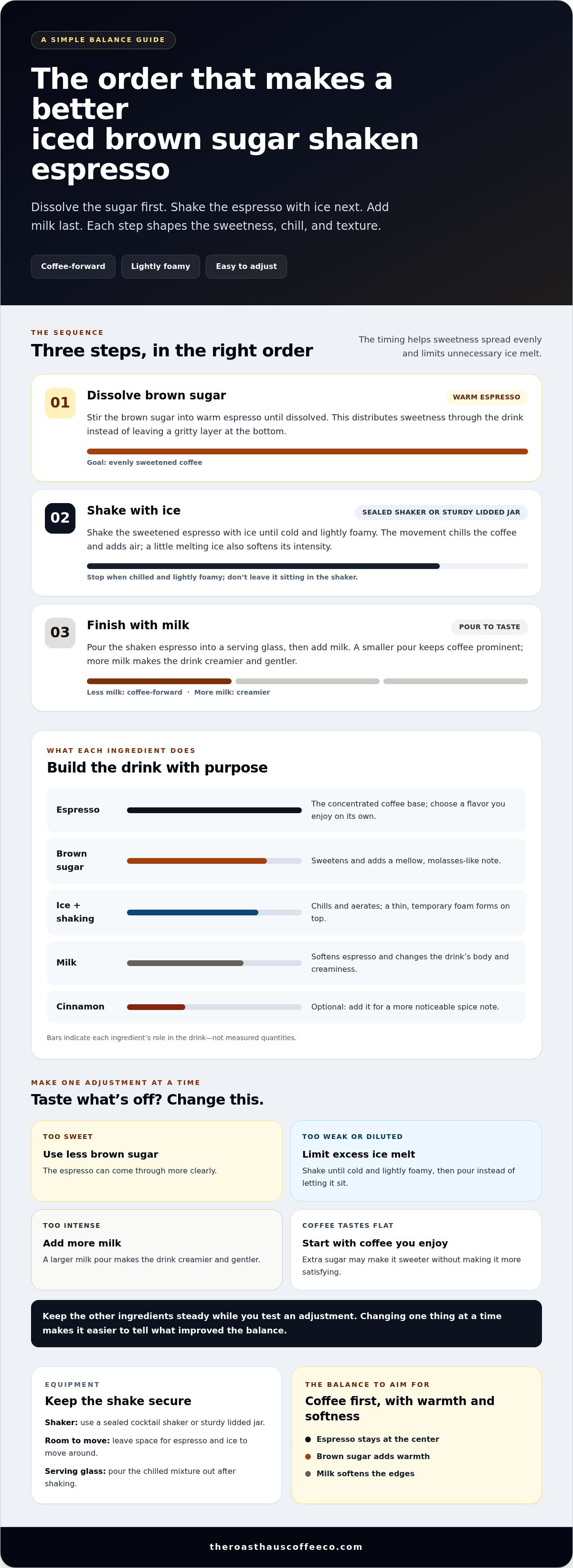
The sequence is simple: stir brown sugar into warm espresso until it dissolves, shake the sweetened coffee with ice until chilled, then finish with milk. This helps spread the sweetness evenly, cool the espresso, and add a thin layer of foam without letting the ice melt longer than necessary.
This guide covers the ingredients, equipment, method, and adjustments for sweetness, milk, and cinnamon. It also explains how to troubleshoot a drink that tastes too strong or diluted. Coffee matters, too: a flavorful espresso gives the brown sugar and spice something to complement. For a coffee-forward starting point, The Roast Haus Coffee Co. offers small-batch coffee roasted to order.
Key Takeaways
- Learn how to make an iced brown sugar shaken espresso with a clear sequence for a chilled, lightly foamy drink.
- See how espresso, brown sugar, ice, and milk each affect the drink’s flavor and texture.
- Adjust the sweetness, coffee strength, creaminess, or cinnamon one change at a time.
- Choose coffee with a flavor you enjoy as espresso, since it needs to come through after chilling and adding milk.
What Is an Iced Brown Sugar Shaken Espresso?
An iced brown sugar shaken espresso is espresso shaken with ice and brown sugar, then finished with milk. Shaking chills the concentrated coffee and mixes in air, creating a light foam on top. Brown sugar adds sweetness and a warm, molasses-like note, while milk softens the espresso’s intensity. The result is cool and lively, with a lighter texture than espresso poured over ice and stirred.
The shaking is what sets this drink apart from ordinary iced coffee. Iced coffee is brewed coffee served cold or over ice; a shaken espresso starts with espresso and gets its texture from vigorous shaking. It’s related to the Italian Caffè Shakerato, another chilled espresso drink made by shaking coffee with ice. This home version is easy to adapt to your preferred sweetness and amount of milk.
That flexibility is useful, but espresso should remain the center of the drink. A coffee with a flavor you enjoy on its own gives the brown sugar something to complement. If the coffee tastes flat before you add anything, extra sugar may make the drink sweeter without making it more satisfying.
How Shaking Changes the Espresso
Shaking espresso with ice cools it quickly and adds air. The air creates a thin, temporary foam, not a milk-based topping like cold foam. It gives the first sips a lighter feel, while the coffee beneath remains concentrated.
Some ice melts as you shake, adding water to the espresso. That dilution is part of the balance: it tempers the coffee’s intensity and makes the drink refreshing. Too much melt, however, can make the espresso taste weak. Shake until the mixture is cold and lightly foamy, then pour it rather than leaving it in the shaker.
What Brown Sugar and Milk Add
Brown sugar contributes sweetness and a mellow, molasses-like flavor. Stirring it into warm espresso helps it dissolve and spread through the drink, instead of leaving a gritty layer at the bottom. Since brown sugar can vary in richness, adjust the amount to suit your taste.
Milk softens espresso’s sharper edges and adds body. A smaller pour lets the coffee stay prominent; more milk makes the drink creamier and gentler. Oat milk is a familiar choice, but it isn’t essential. Dairy and plant-based milks can differ in sweetness and texture, so choose one you enjoy and adjust the amount based on the result.
Each ingredient has a distinct role: shaking chills and aerates, sugar sweetens, and milk changes the body. Knowing what each one does makes it easier to follow the method and make deliberate adjustments.
Ingredients and Equipment for a Homemade Shaken Espresso
The core recipe uses espresso, brown sugar, ice, and milk. Cinnamon is optional. Use a measured recipe as your starting point, then keep the amounts consistent when you make changes. That way, you can tell whether a difference in flavor came from the espresso, sugar, milk, or technique.
- Espresso: The concentrated coffee base. Choose coffee with enough flavor to come through after chilling and adding milk.
- Brown sugar: Adds sweetness and a warm, molasses-like note. Stir it into the espresso until dissolved.
- Ice: Chills the espresso during shaking and helps create a light foam. Use enough for the ice to move around in the shaker.
- Milk: Choose dairy or a plant-based option based on the flavor and body you prefer.
- Ground cinnamon, optional: Add it for a more noticeable spice note, or leave it out for a simpler coffee-and-sugar flavor.
Choosing Coffee and Preparing the Espresso
Espresso is the direct choice for this drink because its concentrated flavor can stand up to ice and milk. If you’re new to espresso, the beginner’s guide to espresso explains the basics of preparing a shot. Start with coffee you enjoy before adding sweetness, then taste the finished drink to decide whether it needs adjustment.
Use espresso for the recipe as written. Other brewing methods can produce a different strength and body, so the result may not taste the same. A concentrated coffee base gives the brown sugar a clear coffee flavor to complement. The Roast Haus Coffee Co. offers coffees including Kenya AA Supreme, Ethiopia Limu Organic, and Honduras Morning Splendeur, as well as Decaf Swiss Water Process. Choose according to the coffee flavor you want in your glass.
Selecting Sugar, Milk, Ice, and Tools
Brown sugar can clump or settle if it isn’t dissolved. Stir it into the warm espresso before adding ice so the sweetness is distributed throughout the drink. Milk is a matter of taste: dairy and plant-based options can vary in sweetness, richness, and texture, so expect the finished drink to change when you switch types.
Use a sealed cocktail shaker or a sturdy lidded jar, along with a serving glass. Check that the lid fits securely before shaking, and leave space for the espresso and ice to move. A container filled to the brim won’t allow the same movement. For a coffee-forward base, explore coffee roasted to order from The Roast Haus Coffee Co.
How to Balance Sweetness, Coffee Strength, and Texture
A balanced shaken espresso should taste like coffee first, with brown sugar adding warmth and milk softening the edges. If yours is too sweet, thin, intense, or flat, change one thing at a time and taste again. Changing several ingredients at once makes it harder to tell which adjustment helped.
Use this guide to troubleshoot your drink. The results can vary with the espresso, ice, and milk, so treat the suggestions as starting points rather than fixed rules.
| What you notice | Adjustment to try | Likely effect |
|---|---|---|
| Too sweet | Use less brown sugar next time. | Lets the espresso come through more clearly. |
| Espresso tastes too strong | Add a little milk, or slightly more brown sugar. | Milk softens the body; sugar adds sweetness without adding volume. |
| Drink tastes weak or watery | Use ice that has not already begun to melt, and stop shaking once the espresso is chilled. | Helps limit dilution; a stronger espresso base can also restore coffee flavor. |
| Sweetness varies by sip | Dissolve the brown sugar thoroughly before shaking. | Distributes the sweetener more evenly. |
| Foam is barely visible | Check that the shaker is sealed, then shake vigorously with ice. | Encourages aeration and a light surface foam. |
How to Adjust Sweetness Without Hiding the Coffee
If the finished drink tastes too sweet, reduce the brown sugar in your next serving rather than trying to cover it with more espresso or milk. For uneven sweetness, make sure the sugar has dissolved into the espresso before adding ice. If espresso dominates, add milk gradually and taste again. A small change can rebalance the drink without burying its coffee character.
How to Get a Chilled, Lightly Frothy Finish
A tight lid and vigorous shaking help chill and aerate the espresso. The ice needs room to move, but it also melts as it cools the coffee. Too much melted ice adds water and can make the drink taste diluted. Shake only until the espresso is cold and lightly foamy, rather than trying to create thick froth. The foam is a brief, airy layer, not a dense milk topping, and it will settle as the drink sits.
More espresso increases coffee strength, more brown sugar increases sweetness, and more milk makes the drink creamier and milder. To find your preferred balance, keep the starting method steady, change one ingredient or technique, and taste before adjusting again.
How to Make an Iced Brown Sugar Shaken Espresso Step by Step
The order matters: dissolve the sugar while the espresso is warm, then chill and aerate the sweetened coffee with ice before adding milk. Follow a measured recipe for the quantities, and keep them consistent as you learn what you like. The steps below focus on the sequence and technique.
Prepare and Sweeten the Espresso
- Brew the espresso. Prepare the espresso for one serving and transfer it to a heat-safe cup while it’s warm enough to dissolve the sugar.
- Stir in the brown sugar. Add the amount specified in your recipe and stir until no visible grains remain. This helps distribute the sweetness instead of leaving a sugary layer at the bottom.
- Add cinnamon only if you want it. If your recipe includes cinnamon, stir in the specified amount now. Otherwise, leave it out. It isn’t required for the base drink.
Shake, Pour, and Finish with Milk
- Set up the shaker. Add the recipe’s measured ice to a cocktail shaker or sturdy lidded jar, then pour in the sweetened espresso. Leave space for the liquid and ice to move as you shake.
- Secure the lid and shake firmly. Check that the lid is fully closed before shaking. The espresso is hot, so keep the container pointed away from your face and hands, and hold the lid in place. If the container feels hot or the lid loosens, stop and let it settle before handling it further.
- Pour the chilled espresso into a serving glass. Pour carefully, keeping the light foam with the coffee. Some ice melt is expected. Don’t leave the mixture in the shaker longer than needed, since additional melting can dilute the flavor.
- Finish with milk. Add the recipe’s measured milk and serve promptly. Taste the drink, then keep the quantities steady in your next serving if you want to compare adjustments.
For a reliable result, use the same measured amounts each time and change only one ingredient in a later batch. That makes it easier to tell whether a change in sweetness, strength, or creaminess came from the espresso, brown sugar, or milk. The coffee’s flavor is the foundation, so choose beans you enjoy drinking as espresso. Explore coffee from The Roast Haus Coffee Co. for your next homemade shaken espresso.
Customize the Drink and Choose Coffee That Tastes Good Over Ice
Once you’ve made the base drink, adjust it to suit your preference rather than changing several ingredients at once. Keep the espresso and ice method steady, make one small change, and note what you used. This simple record helps you repeat a version you like and compare new adjustments without losing the coffee’s character.
Simple Ways to Make the Recipe Your Own
Use these variations as starting points, not fixed formulas. Espresso and milk can affect the result, so taste the drink before deciding whether it needs another change.
- For a less-sweet drink: Reduce the brown sugar slightly in your next serving. Note the amount you prefer so you can repeat it.
- For a creamier, milder sip: Add a little more milk. Dairy and plant-based milks can differ in flavor and body, so choose the one you enjoy rather than expecting them to taste identical.
- For more cinnamon flavor: Add a small pinch of ground cinnamon, then adjust gradually in later servings. Cinnamon is optional, not a requirement.
- For a stronger coffee impression: Keep the milk modest, or choose coffee you enjoy as espresso. This keeps the coffee more prominent than a larger pour of milk would.
Small changes are easier to assess than a full overhaul. If you reduce the sugar and change the milk in the same glass, it’s hard to tell which adjustment made the difference. Taste each version before making another change.
Fresh Coffee for a Better Home-Brewed Drink
Coffee flavor matters in a cold drink. Ice melt and milk can soften the espresso’s intensity, so the coffee still needs to come through in the finished glass. Coffee’s aroma and flavor can shift over time. Choose beans you enjoy and store them well so their character is ready to show in the cup. For help considering your options, see the guide to choosing coffee beans.
The Roast Haus Coffee Co. is a family-owned Oklahoma roastery with a “Roasted To Order” approach. Its coffees include single origins and blends, available to order online as individual bags and samplers. If you’re ready to choose coffee for your next homemade espresso, explore coffee roasted to order.
Make Your Next Glass Your Own
Let your first serving be a starting point, not a final formula. After you try how to make an iced brown sugar shaken espresso, decide what you’d like to adjust next time: less sweetness, a different milk, or a coffee flavor that stands out more over ice. One small change can help you find a version that feels like yours.
The coffee you choose shapes that experience. The Roast Haus Coffee Co. is family-owned and operated, follows a “Roasted To Order” approach, and works to support sustainable farming and local farmers. Those values are part of the care behind each cup, whether you enjoy your coffee hot or shaken over ice.
Choose coffee you’re excited to brew, then give your next glass a try. Explore coffee roasted to order.
Frequently Asked Questions
Can I make an iced brown sugar shaken espresso without an espresso machine?
Yes, if you can make concentrated coffee that suits the recipe. The result may taste different from espresso made with an espresso machine because the strength and flavor can vary. Use a concentrated coffee method you know, rather than assuming any brewed coffee will be strong enough. Make the drink as directed, taste it, and adjust the sweetness only if the coffee’s flavor calls for it.
What kind of milk is best in an iced brown sugar shaken espresso?
The best milk depends on the flavor and texture you like. Oat milk is common in familiar versions of this drink, while dairy and other plant-based milks can work in a home variation. Each can change the drink’s body and taste. Start with the amount in your recipe, then try another milk in a separate serving if you want to compare how it complements your espresso.
Can I use regular sugar instead of brown sugar?
Yes, but the drink will taste different. Brown sugar brings a warm, molasses-like note that white sugar doesn’t contribute in the same way. Stir your chosen sweetener into the warm espresso until it dissolves, then taste before adding more. Treat the substitution as a variation, not the exact brown sugar version, and note the amount you used.
Why is my shaken espresso watery?
A watery drink can mean too much ice melted before serving, or that the coffee base wasn’t concentrated enough for the amount of ice and milk. Measure the ingredients consistently, shake only until chilled, and pour promptly. If the next serving still tastes weak, adjust the coffee strength rather than adding sugar. More sweetness can mask the coffee without correcting a diluted flavor.
How long should I shake an iced espresso?
Shake firmly until the espresso mixture feels well chilled and looks lightly aerated. Follow the timing in your chosen recipe, if it provides one, and avoid shaking longer just to chase thick foam. The goal is a light layer, not milk froth. Use a suitable container with a secure lid and enough room for the ingredients to move, then pour and serve soon after shaking.
Can I make an iced brown sugar shaken espresso ahead of time?
It’s best to prepare the drink shortly before serving. As it sits, ice continues to melt and the light foam settles, so the texture can change. For an easier routine, measure the sugar, milk, and other ingredients ahead of time, then make the espresso and combine everything when you’re ready to drink. This keeps the final mixing and shaking close to serving time.
Is an iced brown sugar shaken espresso the same as iced coffee?
No, the preparation differs. A shaken espresso starts with espresso, or concentrated coffee suited to the recipe, and is shaken with ice before it’s finished with milk. Iced coffee is brewed coffee served cold or over ice. That distinction affects the drink’s strength and texture. For this recipe, follow the steps in order so the coffee is sweetened before shaking and the milk is added afterward.

