


Fresh coffee takes a simple plan, not a crowded cupboard. To learn how to not run out of coffee at home, keep unopened beans in a cool, dry place for a few months, or freeze them for six months up to a year. Store coffee away from water, heat, and light, and plan your next brew before the bag is empty.
Busy mornings make it easy to lose track of a bag, and coffee left open can taste flat after a week or so. A little preparation helps keep beans fresh and your morning routine moving without guesswork.
This guide covers how long coffee can be stored at home, how to store and freeze it, and how to prepare for brewing the night before. You’ll also find practical ways to spot dwindling supplies and make your current batch last until fresh beans are ready.
Key Takeaways
- Keep coffee beans away from water, heat, and light to help preserve their freshness.
- Unopened beans can stay in a cool, dry place for a few months; freezing can extend storage to six months up to a year.
- Choose a storage container that limits exposure to air, and use opened coffee before it loses its fresh taste.
- Freeze coffee only once, then let it defrost overnight before opening the bag.
- Make mornings easier by weighing beans, setting out a mug, and preparing water the night before.
1. How Long Can I Store Coffee at Home?
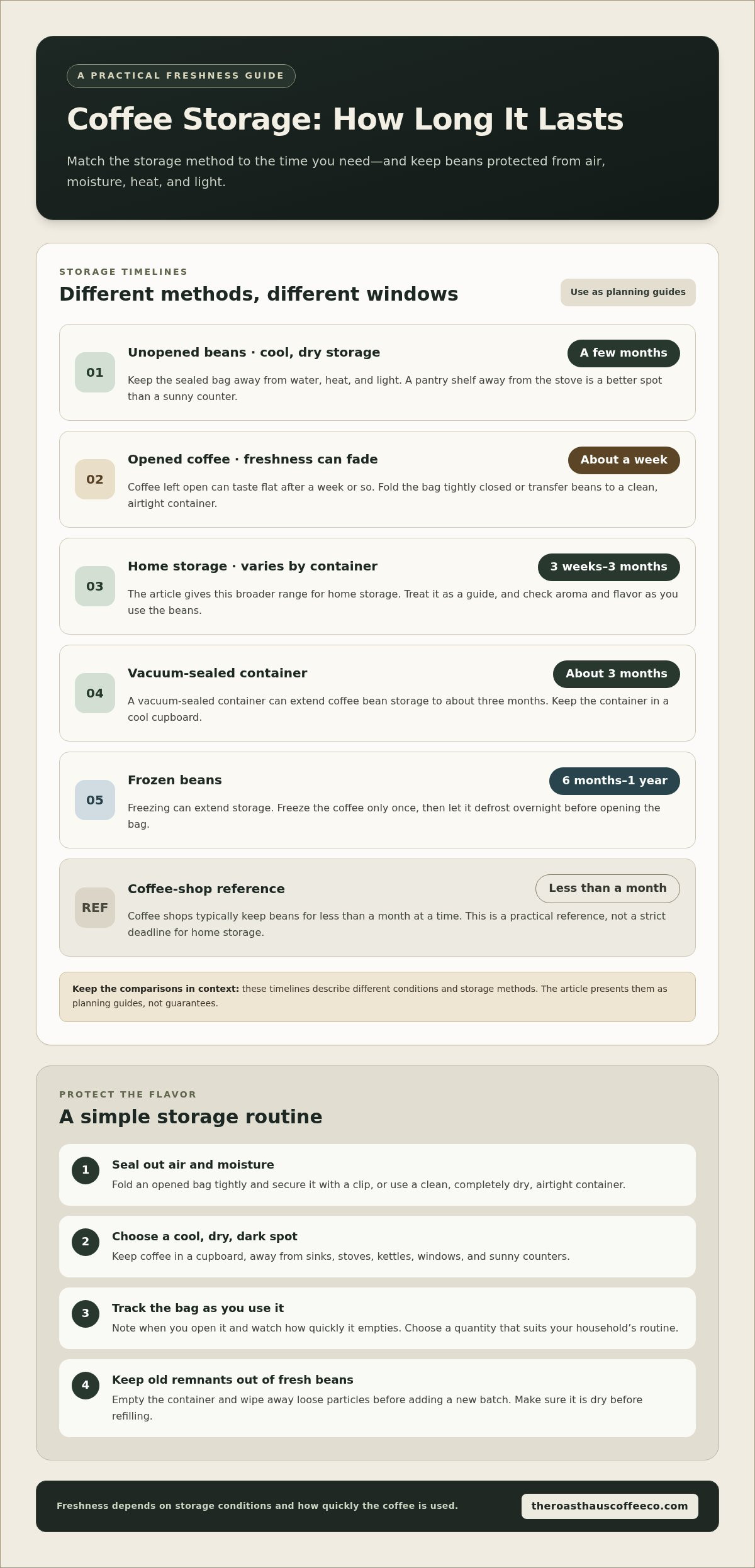
Unopened coffee beans can stay in a cool, dry place for a few months. Keep the bag away from water, heat, and light, which can affect flavor. A pantry shelf away from the stove is a better spot than a sunny counter or a cupboard beside the kettle. Choose a place with a steady environment, then leave the sealed bag there until you’re ready to open it. These simple steps make home storage easier to manage and help protect your supply between brews.
Once you open a bag, limit the beans’ exposure to air and moisture. Fold the top tightly closed or transfer the beans to a clean, airtight container, then store it in a cool, dry cupboard. Avoid placing coffee beside a hot appliance or near a sink, where heat and splashes can affect the beans. Use opened coffee fairly quickly, especially if it has already been stored for months. Even fresher beans can develop a flat taste after a week or so, so choose a quantity you can use while the flavor still suits you.
Whole beans generally hold their flavor better than ground coffee because grinding exposes more surface area to air. Ground coffee is more convenient when you want to scoop and brew without a grinder, but it can lose freshness sooner. Choose whole beans if you grind just before brewing; choose ground coffee if convenience matters more. To learn how to not run out of coffee at home, match the bag size to your actual routine rather than buying more than you can use fresh.
There’s no single daily amount that works for everyone. How much coffee a household brews depends on its habits, serving sizes, and how often people drink coffee. Track how quickly your current bag empties, then use that pace to plan your next purchase. If you finish a bag before the next one arrives, adjust your order timing or keep a sealed backup bag. If coffee sits open for weeks, try buying a smaller quantity or freezing part of your supply.
Grocery-store and online subscription prices vary by product, bag size, and delivery terms. Compare the price per ounce and the full checkout total, including shipping, rather than judging a bag by its headline price alone. To arrange automatic bean deliveries, choose a subscription, set a delivery interval that matches your household’s use, and adjust it after seeing how long each bag lasts. A calendar reminder can prompt you to review the next shipment before your current supply runs low.
Use a simple routine: check how many beans remain when you make coffee, keep opened coffee sealed, and note when you started the bag. Store any unopened backup in the pantry, away from water, heat, and light. Frozen beans can keep for six months up to a year; follow careful freezing and defrosting steps before opening the bag. A suitable storage spot and a basic restocking habit work together: one protects flavor, while the other prevents an empty container at breakfast.
2. Coffee bags, valves, and storage containers
The bag or container affects how you manage coffee after opening it. Many coffee bags have a one-way valve that lets gas escape without allowing outside air back in. This helps a sealed bag release gas while protecting the beans from exposure. It’s no reason to leave an opened bag loose: fold the top down, gently press out excess air, and close it with a clip. Store it upright in a cupboard, away from appliances that warm the shelf.
A dedicated airtight container offers another practical option. Choose one that closes securely, fits the amount of coffee you use, and can be kept in a cool cupboard. A vacuum-sealed container can extend coffee bean storage to about three months. The broader home-storage estimate ranges from three weeks to three months, partly depending on the container. Treat these periods as planning guides, not a reason to keep beans indefinitely. Check the aroma and flavor as you use them.
Keep your storage setup simple. If you transfer beans from their original bag, use a clean, completely dry container. Any moisture left inside can reach the coffee, so let a washed container dry fully before filling it. Avoid a clear jar on a sunny counter, even if it looks tidy; light and heat make it a poor storage spot. An opaque container in a pantry keeps beans out of sight and away from those exposures.
- Keep the bag: Fold it closed and secure it with a clip after each use.
- Choose a container: Use a clean, dry, airtight option that fits your supply.
- Pick its place: Store it in a cupboard, not beside a stove, kettle, or window.
- Track the supply: Note when you open the bag and watch how quickly it empties.
Don’t pour new beans onto old grounds or leftover beans in a container. Empty it first, wipe away loose particles, and make sure the inside is dry. This keeps stale remnants from mixing into a fresh batch. If your household uses coffee slowly, divide a larger supply into smaller portions before storing it. Keep only the portion you’re using in the everyday container, and leave the rest sealed until needed.
Storage also affects how you plan your next purchase. A vacuum-sealed container may preserve beans for about three months, but the right amount still depends on your household’s pace. Choose a bag size you can finish while its flavor remains enjoyable, then set a reminder when you open it. If you’re selecting beans for a storage routine, explore freshly roasted coffee options and choose a supply that fits how you brew at home.
The local roasters mentioned here do not sell bags smaller than a half-pound. Choose that minimum only if it fits your household’s pace. If it may outlast your preferred window, divide the beans into smaller portions after opening and keep the unused portion sealed. You could also plan to share the supply, so the bag is used at a pace that suits your routine.
3. Coffee storage timelines
A useful coffee timeline considers both freshness and household use. Coffee shops typically keep their beans for less than a month at a time, which gives home drinkers a practical reference, not a strict deadline. At home, unopened beans can remain in a cool, dry place for a few months. Once opened, beans may develop a flat taste after a week or so. Track both the opening date and how quickly you use your supply.
Whole beans retain more flavor when ground close to brewing, but an opened bag still needs a plan. Use it fairly quickly, especially if it has already been stored for months. Mark the opening date on the bag, then pay attention to aroma and flavor as you brew. If the coffee tastes noticeably flat, use that bag before opening another.
To estimate how much coffee to buy each week or month, record how much you use during a typical stretch of brewing. Compare the amount at the start and end, then use your observed pace to plan your next purchase. Repeat the check when your routine changes, such as when you host guests or brew more often at home.
Keep enough backup coffee to cover the gap between noticing low stock and your next purchase or delivery. Base its size on your household’s use, rather than a fixed amount that might sit unopened too long. Store the reserve sealed, and start using it when the current bag is nearly finished. Replace the backup with your next regular order.
Choose a purchase schedule based on your brewing habits, not the calendar alone. If you brew daily, check the bag as part of your routine and plan a refill before it empties. If you brew occasionally, smaller purchases can help you finish beans while their flavor remains enjoyable. A coffee log or recurring calendar reminder makes your pattern easier to spot.
- At opening: Write the date on the bag.
- During brewing: Notice how quickly the beans are used and whether flavor changes.
- Near empty: Place or schedule the next order before the supply runs out.
- After a routine change: Reassess your purchase pace and backup supply.
Set a delivery interval according to how quickly your household finishes coffee, not simply how often a subscription offers shipments. Check the remaining beans before each scheduled delivery and adjust the timing to match your actual use. This helps keep fresh coffee available without leaving opened bags unused for too long. A steady check-and-order habit turns storage timelines into a practical supply plan.
4. Freezing and defrosting coffee
Freezing can help preserve coffee beans you won’t use soon. Beans stored in a freezer can keep for six months up to a year. Treat the freezer as a reserve, not a place to cycle your everyday bag in and out. Frequent handling exposes coffee to changing conditions and makes it harder to keep track of what you’ve stored.
Before freezing, decide how you’ll use the beans. If you expect to need them at different times, divide the supply into portions before placing it in the freezer. Seal each portion well to limit exposure to air and moisture. Label it with the freezing date, so you can use the oldest portion first. Keep your everyday supply outside the freezer and take out only what you expect to use.
Freeze coffee only once. Repeatedly freezing and thawing the same beans can expose them to moisture and changing temperatures. Make a simple note on the container after freezing, and don’t return a thawed portion to the freezer. This one-time approach keeps your reserve plan clear and avoids uncertainty about how often a bag has been handled.
Defrost frozen coffee overnight before opening the bag. Keep it sealed as it returns to room temperature. Opening it too soon can expose cold beans to warmer, humid air, which may cause condensation on the coffee. Letting the sealed bag rest overnight avoids that rush. The next morning, open it and use the beans as part of your regular brewing routine.
- Choose the coffee you want to hold as a reserve.
- Divide it into portions before freezing, if you’ll use it at different times.
- Seal and label each portion with its freezing date.
- Remove one portion when needed and let it defrost overnight, unopened.
- Use the thawed portion, and don’t freeze it again.
Match portion sizes to your brewing habits. A small household that brews occasionally may prefer several smaller portions, while a household that uses coffee steadily may thaw a larger portion. The aim is to avoid opening the entire reserve before you need it. Keep the remaining portions sealed in the freezer until their turn, and maintain a separate everyday supply so your morning routine doesn’t depend on thawing coffee at the last minute.
Freezing is most useful when you have more beans than you can use soon or want a backup for later. It doesn’t replace a straightforward restocking habit. Note when you remove a portion, and plan to replace the reserve with your next purchase. That way, the freezer supports your supply instead of becoming a forgotten stash. Keep the key steps together: freeze once, defrost overnight while sealed, then open and brew.
5. Preparing coffee supplies the night before
A short evening routine can remove decisions from a busy morning. Weigh the beans you plan to brew, set out your favorite mug, and leave both somewhere clean and dry. If you use a coffee machine, prepare it according to its usual instructions. Keep the beans sealed overnight and add fresh water when you’re ready to brew. These small steps make the start of your morning easier without requiring a complicated setup.
Match preparation to the time you have. A coffee routine that takes twenty minutes may be hard to maintain on a busy morning. Set up only the steps that genuinely save time, such as weighing beans or placing a filter beside your brewing gear. If you value five minutes of quiet with your coffee, prepare enough in the evening to protect that pause rather than rushing through it.
Track your supply as part of your evening reset. Each night, glance at the beans left in the bag or container and note when the supply is getting low. Use a calendar reminder or a simple note near your coffee station to prompt your next purchase. Your household’s actual pace is the useful signal: if the container is nearly empty, arrange a refill before it becomes tomorrow morning’s problem.
- Set out: Place your mug and any clean filters or brewing tools together.
- Measure: Weigh the beans for your next brew and keep them covered.
- Check: Look at the remaining supply and note whether it’s time to reorder.
- Prepare water: Make sure enough water is ready for your morning routine.
Plan for an unusually early start. Keep a convenient alternative ready, such as coffee that takes fewer steps to prepare, instead of relying on a full routine when time is tight. If you prefer freshly ground beans, measure the portion in advance but grind it when you’re ready to brew. That keeps the evening task simple while preserving the routine you enjoy.
Set up your space for your brewing method. A pour-over routine may need a filter and kettle ready, while another method may call for different supplies. Keep only regularly used items on the counter, and return sealed beans to their storage spot after measuring. A clear, repeatable setup makes it easier to notice an empty bag before the next morning.
Ready to restock beans for your morning routine? Choose coffee for your next brew and keep your evening prep simple.
Keep your evening setup focused on what will make the next morning easier. Weighing the beans or setting out a mug is enough to make your coffee routine manageable. If you use a machine, preparing it in advance or keeping your preferred beans readily available can also simplify the routine.
If you expect to wake up very early, have an alternative ready to simplify your coffee routine. Make sure enough water is ready too, so you can avoid rushing in the morning. Choose preparations that fit your usual routine, and leave the rest until you’re ready to brew.
The Roast Haus Coffee Co.: Kenya AA Supreme
The Roast Haus Coffee Co. offers Kenya AA Supreme for keeping your home coffee supply stocked with freshly roasted beans. Its coffee ships within 24 hours of roasting, helping you plan your next bag around your household’s brewing habits. Choose Kenya AA Supreme, or consider Decaf Swiss Water Process and Ethiopia Limu Organic for different preferences at home. Pair your choice with a restocking routine that works for you. Contact The Roast Haus Coffee Co. to take the next step.
Make Your Next Coffee Choice Count
A dependable routine starts with choosing coffee you’ll look forward to brewing. The Roast Haus Coffee Co. offers Kenya AA Supreme, Decaf Swiss Water Process, and Ethiopia Limu Organic for your home supply. Pick the one that suits your preferences, or choose different coffees for different moments in your routine.
Learning how to not run out of coffee at home also means making your next purchase part of a routine you’ll stick to. Let your favorite morning cup guide your choice, then build a simple restocking habit around it. That turns an everyday necessity into a small pleasure worth planning for.
Explore the available coffees and choose what belongs in your next brew. Contact The Roast Haus Coffee Co. to take the next step. A considered choice today can make tomorrow’s coffee ritual feel ready and rewarding.
Frequently Asked Questions
How Long Can I Store Coffee at Home?
Unopened coffee beans can stay in a cool, dry place for a few months; frozen beans can keep for six months up to a year. Once opened, use them fairly quickly, since they can develop a flat taste after a week or so. Write the opening date on the bag to track its age, and use older opened coffee before starting a newer bag.
How much coffee does an average person drink at home per day?
There’s no single daily amount that works for everyone; it depends on household habits, serving sizes, and how often people drink coffee.
