


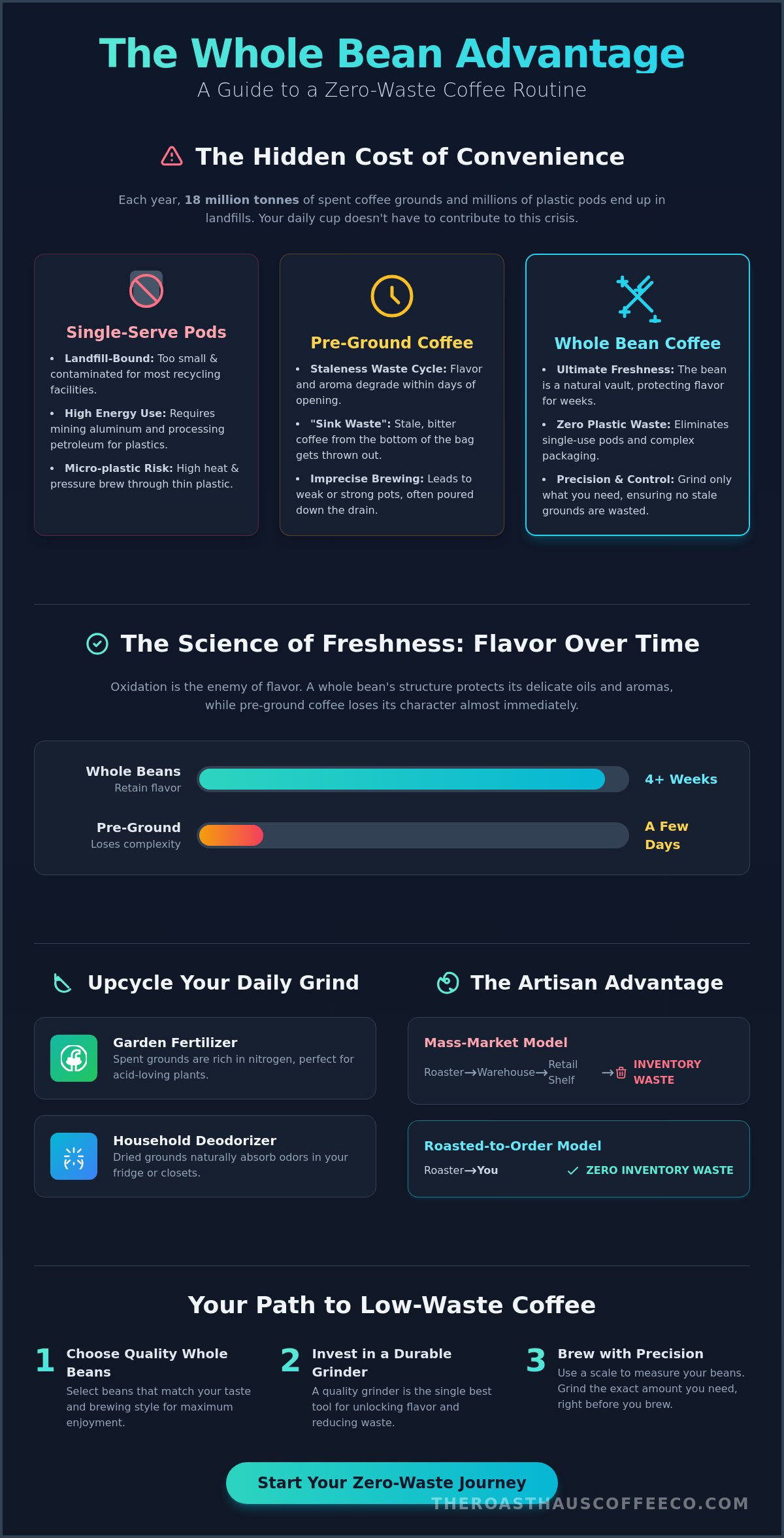
Did you know that an estimated 18 million tonnes of wet spent coffee grounds are produced every year? Most of this ends up in landfills, alongside the millions of plastic pods currently facing legal scrutiny for misleading environmental claims. It's frustrating to feel like your morning cup is contributing to a global waste crisis. One of the most effective ways to reduce waste with whole bean coffee is to move away from these disposable systems and focus on the integrity of the bean itself.
You want a morning routine that respects the planet as much as it respects your palate. By switching to whole beans, you eliminate plastic waste, keep your coffee fresh for much longer, and unlock practical upcycling options for your home. This guide will help you build a zero-waste kitchen routine that delivers better tasting coffee and honors the work of independent producers. We'll explore how to maximize the value of every bag and ensure nothing goes to waste.
Key Takeaways
- Understand why most "recyclable" pods still end up in landfills and how whole beans solve this problem at the source.
- Learn how to reduce waste with whole bean coffee by grinding only the exact amount you need to prevent stale grounds from being thrown away.
- Discover practical ways to upcycle spent coffee grounds into nutrient-rich garden fertilizer or effective household deodorizers.
- Explore the environmental benefits of the roasted-to-order model, which eliminates the massive inventory waste found in mass-market retail.
- Get advice on selecting the right beans for your brewing style and investing in durable tools for a long-term, low-waste kitchen.
The Hidden Environmental Cost of Coffee Convenience
Convenience often masks a heavy environmental price. Every time you pop a single-serve capsule into a machine, you're contributing to a waste stream that is increasingly difficult to manage. Most people want to do the right thing, but marketing can be deceptive. To effectively reduce waste with whole bean coffee, we must first acknowledge that the current pod-based system is fundamentally broken. It prioritizes a few seconds of saved time over the long-term health of our ecosystems.
The Problem with Single-Serve Pods and Capsules
Millions of pods are discarded every single day. Even those labeled as recyclable often fail at the sorting facility. As of early 2026, Keurig Dr. Pepper is facing multiple class-action lawsuits and FTC scrutiny regarding these claims. These legal challenges highlight that pods are not truly recyclable in most facilities because they are too small and contaminated with wet grounds. They usually end up in the landfill regardless of the recycling symbol on the box. There's also the issue of micro-plastics. High-pressure brewing through thin plastic walls at high temperatures is a growing concern for many health-conscious drinkers. The energy required to manufacture these complex, multi-material packages is immense. This process includes several high-impact stages:
- Mining raw aluminum and processing petroleum for plastics.
- High-heat manufacturing of multi-layer foils and adhesive seals.
- Increased carbon emissions from transporting bulky, low-density packaging compared to dense coffee bags.
Pre-Ground Coffee: The 'Staleness' Waste Cycle
Pre-ground coffee creates a different kind of waste. Once a bean is ground, its surface area increases exponentially. This allows oxygen to strip away the volatile oils and delicate aromas within minutes. By the time you reach the bottom half of a pre-ground bag, the coffee is usually stale, flat, and bitter. Many drinkers end up throwing this "sink waste" away because it simply tastes bad. This is a waste of your money and the hard work of the farmers who grew the crop. Learning how to make coffee with fresh-ground whole beans ensures you only use exactly what you need for each cup. While there are many Creative Ways to Reuse Grounds, the most sustainable strategy is to avoid creating excessive waste in the first place. Choosing to reduce waste with whole bean coffee keeps the product protected in its natural shell until the moment you are ready to brew.
Why Whole Bean Coffee is the Ultimate Zero-Waste Choice
The coffee bean is a natural protective vessel. It is designed to keep delicate oils and gases trapped inside until the moment you break the seal. When you choose to reduce waste with whole bean coffee, you are opting for a product that is inherently stable. It is the most direct way to ensure your morning routine doesn't lead to unnecessary disposals of stale product. This shift in habits respects the integrity of the bean and the environment.
The Science of Freshness and Longevity
The cellular structure of a roasted coffee bean acts like a vault. It holds onto the aromatic compounds and essential oils that define a high-quality cup. Oxidation is the primary enemy of coffee flavor and shelf life. Once the bean is cracked open, these compounds begin to dissipate almost immediately. After four weeks, whole beans stored in a cool, dark place still retain a high percentage of their original flavor profile. In contrast, pre-ground coffee loses its complexity within just a few days. By keeping the beans whole, you avoid the cycle of throwing away flavorless, stale coffee. This ensures that every gram you purchase actually makes it into your cup instead of the bin.
Precision Brewing: Grinding Only What You Use
Waste often happens at the brewer. Many people scoop pre-ground coffee by eye, which leads to pots that are either too strong or too weak. This often results in "sink waste," where the extra half-pot is poured down the drain because it wasn't measured correctly. Using a coffee grinder changes this dynamic entirely. It allows you to measure your dose by the gram. You only grind exactly what you need for that specific brew. This precision eliminates guesswork and ensures you use every bit of your investment. It is a practical way to reduce waste with whole bean coffee while improving the taste of your drink.
When we waste coffee, we are also wasting the water, energy, and labor used at the farm level. This contributes to the overall environmental impact of coffee production. Whole bean coffee also requires less intensive packaging than single-serve alternatives. While pods require complex combinations of plastic, aluminum, and cardboard, whole beans usually come in a single, high-barrier bag. This minimalist approach is significantly easier to manufacture and transport. If you are ready to make the switch, exploring a quality option like our Ethiopia Limu Organic beans is a great way to start your journey toward a zero-waste kitchen.
Upcycling Your Daily Grind: Creative Ways to Reuse Grounds
Brewing a perfect cup of coffee is only the first half of the journey. To truly reduce waste with whole bean coffee, you must look at what remains in your filter. Spent grounds are not trash. They are a valuable resource packed with nitrogen, minerals, and aromatic oils. Adopting a circular mindset at home supports broader coffee industry sustainability efforts by keeping organic matter out of landfills where it would otherwise produce methane gas. You can easily turn these leftovers into high-performance tools for your home and garden.
Dried grounds are exceptional at absorbing stubborn odors. Instead of reaching for synthetic sprays, place a small bowl of dried grounds in the back of your fridge or pantry. You can also fill a small cloth sachet with grounds and drop it into a gym bag or a pair of work boots to neutralize smells naturally. If you use paper filters, remember that most are compostable. Tossing the filter and the grounds directly into your compost bin is the simplest way to close the loop in a zero-waste kitchen.
In the Garden: Fertilizer and Pest Control
Most of the acidity in coffee is water-soluble and ends up in your mug. This leaves the spent grounds nearly pH neutral, making them safe for most soil types. To use them as fertilizer, don't just dump a thick layer on top of the dirt. This can create a water-resistant crust. Instead, scratch the grounds into the top two inches of soil or mix them into your potting soil at a ratio of about 20 percent grounds to 80 percent soil. This provides a steady release of nitrogen as the organic matter breaks down.
- Plants that love grounds: Blueberries, roses, azaleas, and hydrangeas benefit from the nutrient boost.
- Plants to avoid: Keep grounds away from young seedlings or plants that prefer highly alkaline soil.
- Natural deterrent: The abrasive texture and scent of coffee help deter slugs, snails, and even some neighborhood cats from digging in your flower beds.
Sustainable Self-Care: DIY Coffee Scrubs
Coffee is a staple in high-end skincare because caffeine helps stimulate blood flow and reduce inflammation when applied topically. You can create a professional-grade exfoliant in your kitchen without the plastic packaging or chemical preservatives found in store-bought brands. To reduce waste with whole bean coffee in your beauty routine, follow this simple 3-ingredient recipe:
Mix one part dried spent grounds with one part melted coconut oil and one part brown sugar. Use this scrub in the shower to remove dead skin cells and improve circulation. To prevent mold, it is vital to dry your grounds completely before mixing. Spread them on a baking sheet and leave them in a low oven for 20 minutes. Store your finished scrub in a sealed glass jar. Because this recipe is chemical-free, keep it in the fridge and use it within two weeks for the best results.
The Artisan Advantage: Reducing Waste Before the Roast
Waste in the coffee industry starts long before a bag reaches your kitchen. Mass-market production relies on a model of oversupply and long-term storage. Large corporations roast massive quantities of beans and ship them to regional warehouses. From there, the coffee sits on grocery store shelves for weeks or even months. When these bags pass their expiration date, they are often discarded by the ton. Choosing to reduce waste with whole bean coffee is more than a home habit; it is a vote for a more efficient production cycle. Similarly, in the beauty industry, salons are increasingly turning to direct-to-professional suppliers like Rufful to eliminate the waste and mark-ups associated with traditional distribution. Supporting a small-batch model ensures that every bean has a destination before it ever enters the roaster.
Roasted-to-Order vs. Warehouse Storage
Large retailers create significant environmental impact through inventory waste. When demand is overestimated, thousands of pounds of pre-ground and whole bean coffee lose their freshness in storage and eventually end up in landfills. This is particularly wasteful in 2026, as retail coffee prices have seen a 40-60% increase due to climate impacts in major growing regions. We take a different approach. The Roast Haus operates on a roasted-to-order model. We ship your order within 24 hours of roasting. This eliminates the need for massive warehouses and ensures that no product ever goes stale on a shelf. This commitment to artisan coffee is a commitment to environmental stewardship. We don't roast for shelves. We roast for you.
Supporting Small-Batch Craftsmanship
Our focus on ethical sourcing also helps reduce waste with whole bean coffee at the origin. By working through direct trade models, we reduce the number of middlemen involved in transportation. This means fewer stops, less fuel consumption, and less packaging waste throughout the global supply chain. It ensures that the farmers who produce exceptional beans, like our Honduras Morning Splendeur, are compensated fairly for their craftsmanship. If you want to support a system that values quality over volume, consider trying The All Day Sampler to experience the difference that fresh, small-batch roasting makes for the planet and your morning cup.
Making the Switch: Your Path to Low-Waste Coffee
Changing your morning habits is the most direct way to reduce waste with whole bean coffee. It starts with choosing the right tools and a reliable source for your beans. When you move away from pre-packaged pods and stale pre-ground bags, you take control of your environmental footprint. This shift requires a small initial investment in equipment, but the long-term benefits for the planet and your palate are significant. You will find that a low-waste routine is often simpler and more rewarding than a high-waste one.
The first step is selecting high-quality coffee beans that match your brewing style. If you enjoy a bold, complex cup, our Kenya AA Supreme is an excellent choice. For those who want the flavor without the stimulant, our Decaf Swiss Water Process provides a clean, chemical-free option. Managing your supply is also vital. A coffee subscription helps you receive fresh beans exactly when you need them. This prevents you from over-buying and ensures no bag sits in your pantry long enough to go stale.
The Essential Low-Waste Coffee Kit
Invest in a durable burr grinder. Unlike blade grinders, burr grinders crush the beans into uniform particles. This ensures even extraction and prevents the waste of under-extracted, sour coffee. Manual hand grinders are the ultimate zero-energy option. They are portable and often last a lifetime because they have fewer electronic parts to fail. If you prefer an electric model, look for one with a repairable motor and replaceable burrs. This keeps the machine out of the landfill for decades.
- Filters: Switch to reusable stainless steel or organic cloth filters. This eliminates the daily waste of bleached paper filters.
- Storage: Use an airtight, opaque canister. Keep it in a cool, dark place. Never store beans in the freezer, as moisture can ruin the delicate oils.
- Scale: Use a simple digital scale to weigh your beans. Grinding by weight instead of volume ensures you never waste a single bean.
The Roast Haus Commitment to Sustainability
We believe in the integrity of small-scale production. Our roastery in Wyandotte, Oklahoma, focuses on a bespoke fulfillment model. We only roast what is ordered. This eliminates the massive inventory waste found in corporate supply chains. If you are a local Oklahoma resident, we encourage you to use our local pickup option. This reduces the packaging materials and carbon emissions associated with traditional shipping. It also allows us to connect with our community of fellow coffee enthusiasts.
If you are new to whole beans, start with The All Day Sampler. It is the best way to find your favorite roast without the risk of wasting a large bag. Every step we take, from sourcing our Ethiopia Limu Organic to packing your order, is designed to respect the craft and the environment. Join us in our mission to reduce waste with whole bean coffee and experience the difference that fresh, honest production makes in every cup.
Build Your Sustainable Coffee Routine Today
Transitioning to a zero-waste kitchen doesn't have to be complicated. You've seen how choosing whole beans protects flavor and significantly cuts down on the plastic waste associated with single-serve pods. By grinding only what you need and upcycling spent grounds in your garden, you can effectively reduce waste with whole bean coffee every single morning. Supporting a craft roaster also means you're moving away from the environmental cost of industrial warehouse storage and overproduction.
At The Roast Haus, we're committed to this sustainable path. We're a family-owned venture focused on artisan craftsmanship and integrity. Our fulfillment model is our differentiator. We roast your coffee to order to ensure there's zero warehouse waste. Every bag ships within 24 hours of roasting. This process guarantees you receive the freshest product possible while supporting an independent business that values quality over mass production. We take pride in our process and want you to have the best experience with every cup.
Switch to sustainable, small-batch whole beans today at The Roast Haus. We look forward to being a part of your daily ritual and helping you build a more sustainable home.
Frequently Asked Questions
Are whole beans really more sustainable than compostable pods?
Yes, whole beans are more sustainable because they avoid the energy-intensive manufacturing of complex packaging. Even compostable pods often require industrial facilities that many municipalities don't have. Choosing to reduce waste with whole bean coffee eliminates the need for these single-use items entirely. You are left with only organic matter that can be easily repurposed at home.
How long do whole coffee beans stay fresh compared to pre-ground?
Whole beans stay fresh for about four weeks when stored correctly, while pre-ground coffee begins to lose its peak flavor within days. The bean's cellular structure acts as a natural vault for volatile oils and aromas. This extended shelf life helps you avoid throwing away stale coffee. It ensures that every gram you purchase actually makes it into your mug.
Can I put coffee grounds directly on my houseplants?
You should mix spent grounds into the soil rather than just dumping them on top. A thick layer of grounds on the surface can create a water-resistant crust and encourage mold growth. Mix them into the top few inches of soil for nitrogen-loving plants. This is a practical way to repurpose organic material and keep it out of the trash.
What is the best way to store whole beans to prevent waste?
Store your beans in an airtight, opaque container in a cool, dark pantry. Exposure to air, light, and heat causes oxidation, which makes coffee go stale and leads to waste. Avoid the refrigerator or freezer. These environments introduce moisture that can damage the delicate oils and ruin the flavor profile of high-quality beans like our Ethiopia Limu Organic.
Do I need an expensive grinder to switch to whole bean coffee?
You don't need a high-end machine to start, but a burr grinder is better than a blade grinder. Burr grinders provide a uniform particle size, which leads to better extraction and less wasted coffee from bad brews. Manual hand grinders are a durable, low-energy, and affordable entry point. They are built to last and don't rely on complex electronics.
Is it okay to compost coffee filters with the grounds?
Yes, it is perfectly fine to compost unbleached paper filters along with your grounds. Most standard paper filters are made from natural fibers and break down easily in a home compost bin. This allows you to discard your brewing waste in one simple step. It is a key part of maintaining a circular, zero-waste kitchen routine every morning.
How does buying from a local roaster reduce my carbon footprint?
Buying from a local roaster like The Roast Haus reduces shipping distances and eliminates the need for regional warehouse storage. Our roasted-to-order model ensures that we don't have stale inventory sitting on grocery shelves. This direct path from the roaster to your door cuts down on transportation emissions and the excessive packaging used in national distribution networks.
What can I do with coffee beans that have already gone stale?
Stale beans are still useful for several household applications. You can grind them up to use as a natural deodorizer for your fridge or mix them with coconut oil for a DIY exfoliating body scrub. These creative upcycling methods ensure you reduce waste with whole bean coffee even when the beans are past their peak brewing window.

