


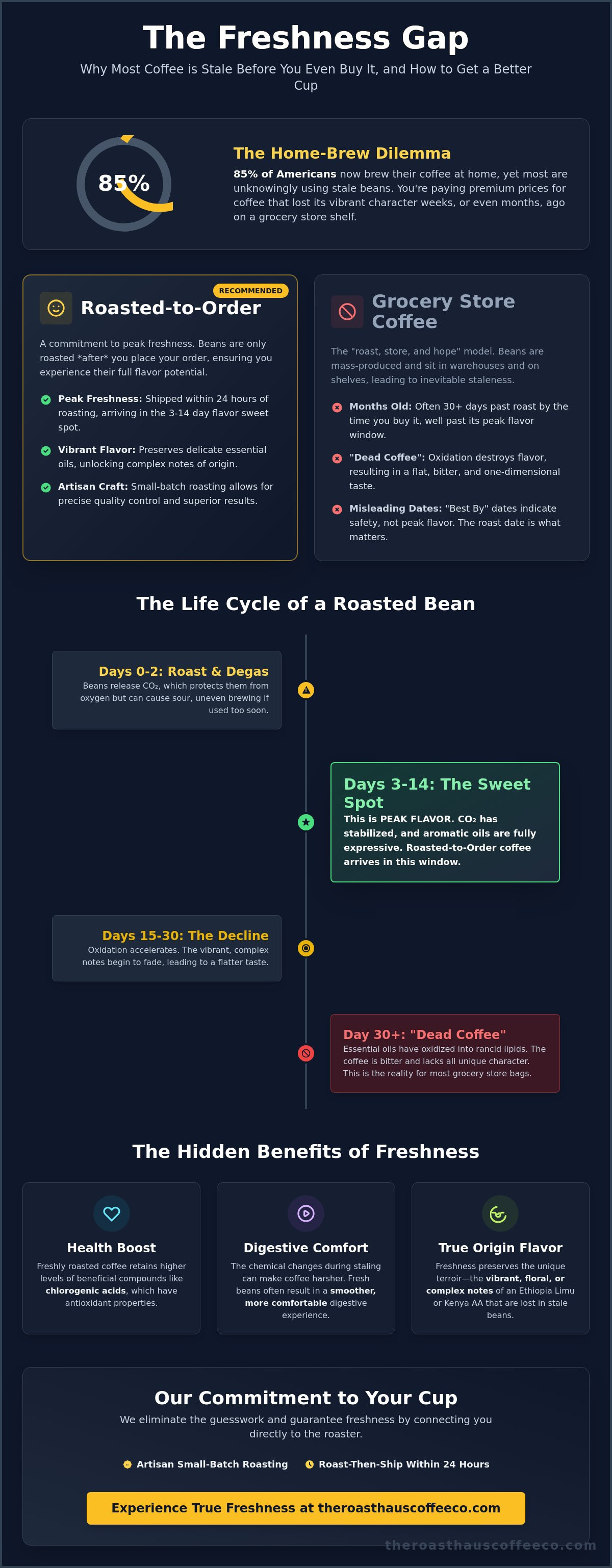
85% of Americans now brew their coffee at home, yet most are still settling for beans that lost their soul weeks ago on a grocery store shelf. It's frustrating to spend your hard-earned money on a bag only to be met with a bitter, flat cup that lacks any real character. If you've been confused by "best-by" dates or wondered why your expensive beans taste stale, you aren't alone. The real solution lies in understanding the benefits of roasted to order coffee, a model that prioritizes chemical integrity over mass-market convenience.
We believe that coffee is a craft, not just a commodity. You deserve to experience the vibrant, floral notes of an Ethiopia Limu Organic or the deep complexity of our Kenya AA Supreme exactly as they were intended. In this guide, we'll show you how roasted-to-order beans preserve the essential oils and health benefits that the FDA now officially recognizes in specialty coffee. You will learn how to navigate confusing new labeling laws and why choosing a dedicated craftsman ensures you never waste money on a dull brew again.
Key Takeaways
- Learn how the roasted-to-order model eliminates the mystery of "best-by" dates by ensuring beans are only fired after you place your order.
- Discover how protecting beans from oxidation preserves the distinct terroir and vibrant flavor profiles found in our Ethiopia Limu Organic.
- Explore the health benefits of roasted to order coffee, including higher levels of chlorogenic acids and improved digestive comfort.
- Understand why a strict 24-hour shipping rule and small-batch production prevent the chemical breakdown that makes grocery store coffee taste flat.
What is Roasted to Order Coffee? Beyond the Grocery Store Shelf
Roasted to order coffee isn't just a buzzword. It's a specific logistical commitment where the beans are only fired after your purchase is confirmed. Most retail coffee follows a "roast, store, and hope" model. Large companies roast massive batches and store them in bins or warehouses until an order comes in. We don't. The beans remain in their green, stable state until you decide you want them. This ensures you receive the product at its absolute peak of flavor and chemical integrity. One of the main benefits of roasted to order coffee is that the clock only starts ticking when your package is ready to ship.
The grocery store shelf is where quality goes to die. By April 2026, the average price for grocery coffee reached nearly ten dollars per pound. You're paying more than ever for beans that might have been roasted six months ago. "Best By" dates are often misleading. They tell you when the coffee becomes undrinkable, not when it stops being delicious. California is even moving to restrict date labeling to "Best if used by" starting in July 2026 to help consumers, but even these new labels don't reveal the roast date. This artisan approach prioritizes the quality of your morning cup over simple inventory management.
The "Dead Coffee" Problem
Coffee starts to oxidize the moment it leaves the roaster. Think of it like a sliced avocado; once the interior hits the oxygen, the clock starts. The coffee roasting process creates essential oils that carry all the flavor. When these oils are exposed to air for too long, they turn into rancid lipids. Vacuum-sealed bags with one-way valves help, but they aren't magic. They only slow the degradation. If your beans look dull or lack that punchy aroma when you open the bag, you're looking at "dead coffee." Fresh beans should have a slight sheen and a scent that fills the room.
Artisan Roasting vs. Industrial Production
The Science of Freshness: Oxidation, Degassing, and Flavor
Freshness is a chemical state, not just a date on a calendar. When we roast beans, they undergo intense physical changes that release carbon dioxide (CO2). This gas is vital because it acts as a temporary shield against oxygen. However, if you brew coffee immediately after it leaves the roaster, that same CO2 creates bubbles that push water away from the grounds. This leads to a sour, uneven extraction. One of the key benefits of roasted to order coffee is that the beans degas while they are in transit to your home, arriving exactly when they are ready to perform.
The "sweet spot" for most specialty roasts is between day 3 and day 14. During this window, the CO2 has settled enough to allow for a balanced extraction, but the aromatic oils haven't yet begun to break down. By the time a bag from a grocery store reaches your pantry, it's often well past day 30. Even with vacuum sealing, the flavor has already peaked and started its decline. Our fulfillment model ensures you receive your freshly roasted beans as they enter this prime window, not after they've left it.
The Importance of Degassing
Inside every bean, gas is trapped under pressure. During the first 48 hours, this pressure is at its highest. If you've ever seen a "bloom" while brewing, that's the gas escaping. While it looks great, too much gas prevents the water from penetrating the coffee particles. This is why we don't recommend brewing the second the roast finishes. Our shipping time perfectly aligns with this natural degassing period. By the time the package hits your porch, the beans have stabilized and are ready for your grinder.
Lipid Oxidation and Stale Tastes
Oxygen is the primary enemy of specialty coffee flavor. Once the protective CO2 dissipates, oxygen begins to attack the lipids. These are the natural oils responsible for the body and sweetness in your cup. This process is called oxidation. It's the same chemical reaction that makes butter go rancid or an apple turn brown. As these oils degrade, the volatile compounds that provide the floral notes in our Ethiopia Limu Organic or the brightness in our Kenya AA Supreme simply vanish.
You might notice your coffee starts to taste like cardboard, straw, or even wood. This isn't a fault of the bean's origin; it's a symptom of age. Beyond flavor, keeping coffee fresh ensures you receive the full health benefits of coffee, as antioxidants are also sensitive to time and air. Oxidation is the primary enemy of specialty coffee flavor. We avoid this by roasting only what is needed, ensuring those delicate oils remain intact until they hit your cup.
Sensory Superiority: Unlocking Complex Flavor Profiles
Fresh coffee is a sensory experience that grocery store beans simply can't match. One of the primary benefits of roasted to order coffee is the ability to witness the "bloom" in your own kitchen. This bubbling reaction occurs when hot water hits fresh grounds, forcing out residual carbon dioxide and releasing a massive aromatic explosion. Much like the immediate impact of fresh-cut flowers, this aroma is a key indicator of quality; you can learn more about Rose Garden Florist to see how they emphasize freshness in their handcrafted designs. If your coffee doesn't swell and bubble, it's already lost the volatile compounds that define its character. Stale beans sit flat and silent, resulting in a thin, watery cup that lacks life.
Acidity and brightness are the first qualities to vanish as coffee ages. In specialty coffee, acidity isn't a bad thing; it's the "sparkle" that makes a cup taste vibrant rather than muddy. When you brew our Kenya AA Supreme, you should taste the distinct citrus notes and bright finish that define its volcanic origin. As beans oxidize, this brightness is replaced by a flat, woody bitterness. Freshness also impacts mouthfeel. A fresh brew carries a rich, creamy texture due to the intact lipids, while older coffee feels thin and hollow on the palate.
Terroir and Origin Nuance
The delicate floral and fruit notes of our Ethiopia Limu Organic are extremely fragile. These nuances represent the "terroir," which is the specific taste of the soil and climate where the beans grew. Large-scale industrial roasters often use very dark roasts to mask the flat, cardboard-like taste of old beans. They trade nuance for a generic, charred consistency. Freshness preserves the chemical integrity of the bean. Scientific research in The Science of Coffee's Antioxidant Power shows that these compounds are most potent when the coffee is fresh. This means you aren't just tasting the berry or chocolate notes; you're also getting the full nutritional value of the craft.
Aroma: The First Sign of Quality
Scent is the most important part of the tasting process. Scientists suggest that up to 80% of what we perceive as flavor is actually aroma. When you open a bag of roasted-to-order beans, the scent should fill the entire room immediately. This is a sign that the volatile organic compounds are still present and active. To maximize these aromatics, we always recommend using a high-quality coffee grinder. Grinding your beans just seconds before brewing unlocks the final tier of scent, ensuring that none of the flavor is lost to the air before it hits your water.
Health Benefits and Ethical Perks of Artisan Coffee
The FDA officially recognized coffee as a "healthy" beverage under its revised labeling definitions in late 2024. This change reflects what researchers have known for years; coffee is a powerhouse of nutrition. However, these benefits aren't permanent. One of the most significant benefits of roasted to order coffee is the preservation of chlorogenic acids. These are the antioxidants responsible for reducing inflammation and protecting your cells. When coffee sits on a grocery shelf for months, these delicate compounds degrade. Fresh roasting ensures you get the highest antioxidant density possible in every cup.
Freshness also plays a vital role in how your body processes your morning brew. Stale coffee is a common culprit behind acid reflux and stomach discomfort. As the natural oils in the beans oxidize and turn rancid, they become more irritating to the digestive tract. Many drinkers find that switching to fresh beans eliminates the "heavy" or sour feeling associated with mass-produced coffee. It isn't just about the caffeine; it's about the chemical stability of the bean.
Preserving Nutritional Integrity
Nutritional integrity is a matter of timing. Scientific studies show that antioxidant levels in coffee drop significantly as the beans age and are exposed to oxygen. Choosing a roasted-to-order model means your coffee is at its nutritional peak when it reaches your door. This commitment to health extends to our decaf options as well. We use the Decaf Swiss Water Process to remove caffeine without the use of harsh chemical solvents. This leaves the health-boosting compounds intact, providing a clean and nutritious experience for those who want the flavor without the buzz.
Traceability and Community Impact
When you buy from a global conglomerate, you lose the story of the bean. These companies often blend old inventory from multiple regions to maintain a generic flavor profile. We take a different path. Our model relies on a transparent ethical chain. We pay higher premiums for high-quality green beans like our Ethiopia Limu Organic or Honduras Morning Splendeur. This ensures that farmers are fairly compensated for their labor and environmental stewardship. Supporting The Roast Haus also means you are investing in the local Oklahoma economy rather than a faceless corporation. We are a family-owned venture, and we believe in the integrity of the craftsman. Your support allows us to maintain these high standards and keep the focus on quality over mass-market convenience.
You can taste the difference that ethical sourcing and fresh roasting make. Shop our collection of fresh-roasted specialty coffee and experience the peak of flavor and health.
The Roast Haus Promise: From Roaster to Door in 24 Hours
Many companies claim to offer fresh beans, but they still let their product sit in a warehouse for days or weeks. One of the unique benefits of roasted to order coffee at The Roast Haus is our strict 24-hour shipping rule. We don't roast until your order hits our system. Once the beans leave the cooling tray, they're bagged and shipped within one business day. This speed is the only way to ensure you receive the chemical integrity we've discussed throughout this guide. Your coffee arrives while it's still in its prime flavor window, not after it's been sitting on a shelf.
Small-batch production allows for a level of quality control that global conglomerates can't match. We monitor every roast curve manually; we don't rely on automated presets that ignore the unique moisture content of the beans. This precision is especially important when you're tailoring your choice to your specific home brewing method. Whether you use a French press or a pour-over, the roast date matters more than any other factor in your setup. Freshness is the foundation of a great cup.
Consistency is the hardest part of being a home barista. To solve this, we offer a coffee subscription that puts your fresh-roasted beans on autopilot. You'll never have to worry about running out of beans or settling for stale grocery store options again. It's a simple way to lock in the sensory and health benefits of roasted to order coffee without having to remember to reorder every two weeks. We take the guesswork out of your morning routine.
Craftsmanship in Wyandotte, Oklahoma
We are a family-owned roastery based in Wyandotte, Oklahoma. We don't answer to shareholders; we answer to our customers. Our commitment to artisan standards means we spend more time sourcing high-quality greens like our Kenya AA Supreme and Honduras Morning Splendeur. We treat every bag as a direct reflection of our family name, ensuring the roast profile is perfect before it ever leaves our hands. This personal touch is what defines our independent business values and ensures a high-standard experience for you.
How to Get Started with Roasted-to-Order
If you're new to specialty coffee, start with your flavor preference. Light roasts like our Ethiopia Limu Organic offer tea-like, floral notes, while darker options provide more body and chocolate tones. If you can't decide, our All Day Sampler is the best way to discover which origin speaks to you. It's time to stop wasting money on flat, bitter beans that have spent months in a supply chain. Experience the peak of freshness—shop our roasted-to-order coffee now.
Experience the Peak of Coffee Freshness
You no longer have to settle for the bitter, flat-tasting beans found on grocery store shelves. By understanding the chemical integrity of the bean, you can unlock a world of vibrant flavor and verified health benefits. The benefits of roasted to order coffee come down to timing and care. From preserving essential antioxidants to ensuring the perfect degassing window during transit, this model is the only way to experience specialty coffee as the farmer intended. It's a commitment to quality that mass production simply can't replicate.
We invite you to join our community of coffee lovers who value artisan quality over corporate convenience. Our family-owned roastery maintains strict small-batch quality control; we don't believe in letting beans sit in a warehouse. We promise that your coffee is shipped within 24 hours of roasting to ensure peak freshness. Whether you start with our Ethiopia Limu Organic or try a variety with The All Day Sampler, we are here to support your journey toward a better brew. Order Your Freshly Roasted Beans from The Roast Haus Today and discover why freshness always wins. Your perfect morning cup is just a roast away.
Frequently Asked Questions
How long does roasted-to-order coffee stay fresh?
Peak flavor typically lasts about two to three weeks after the roast date. While the beans are safe to drink for several months, the delicate aromatics and oils degrade quickly after day 14. One of the benefits of roasted to order coffee is that you receive the bag right as this peak window begins. This ensures you don't waste the best days of the bean's life on a warehouse shelf.
Is it better to buy whole bean or ground coffee for freshness?
Whole bean is the superior choice for maintaining the chemical integrity of the coffee. Once beans are ground, the increased surface area causes the essential oils to oxidize almost immediately. To experience the full flavor of our Ethiopia Limu Organic, grind your beans just before brewing. Ground coffee loses its vibrant character within minutes, making whole bean the only way to guarantee a high-standard experience.
Why does fresh coffee cost more than grocery store brands?
Specialty coffee costs more due to small-batch labor and the higher premiums paid for high-quality green beans. In April 2026, grocery store coffee prices reached a record average of $9.72 per pound, but those brands prioritize volume over quality. We focus on sourcing beans like Kenya AA Supreme and roasting them individually after you order. This artisan approach requires more time and resources than industrial mass production.
What is the "roast date" and where can I find it?
The roast date is the calendar day the beans were processed in our roaster. You can find this date stamped clearly on the back or bottom of our bags. This date is different from a "best-by" label, which only tells you when the coffee is expected to become stale. Knowing the roast date helps you track the degassing period and brew during the peak window when the flavor is most complex.
Can I freeze my coffee beans to keep them fresh longer?
You can freeze coffee beans if you use a vacuum-sealed, airtight container to prevent moisture from seeping in. Freezing is only recommended for long-term storage of beans you won't use for several weeks. Don't take the bag in and out of the freezer daily. This creates condensation that damages the oils and ruins the flavor. For your daily brew, a dark cupboard at room temperature is the most effective solution.
How soon after roasting should I brew my coffee?
Wait at least 48 hours after the roast date before you start brewing your first cup. This period allows the beans to degas, which is the process of releasing carbon dioxide trapped during the roasting process. If you brew too early, the gas prevents water from properly extracting the coffee's true flavor. Our shipping timeline ensures that your beans are usually ready to brew the moment they arrive at your door.
Do different roasts (light vs. dark) stay fresh for the same amount of time?
Dark roasts lose their freshness more quickly than light roasts because they are more porous. The longer roasting time brings oils to the surface, making them vulnerable to immediate oxidation. Light roasts, such as our Honduras Morning Splendeur, have a tighter cell structure that protects the flavor compounds longer. Both roast levels require airtight storage to prevent them from tasting flat or woody over time.
What is the best way to store my roasted-to-order beans?
Store your beans in an opaque, airtight canister kept in a cool, dark place like a pantry. Exposure to light, heat, and oxygen are the three fastest ways to ruin the quality of specialty coffee. Keep your container away from the oven or direct sunlight to prevent temperature swings that cause condensation. Proper storage is the final step in securing the benefits of roasted to order coffee for your daily routine.

