


You're likely destroying the flavor of your $25 bag of artisan coffee within 72 hours of opening it. It's a common mistake that turns a vibrant, small-batch roast into a flat, bitter disappointment. We understand the frustration of spending your hard-earned money on premium beans only to watch that "roasted to order" quality vanish before the week is out. Learning how to store fresh coffee beans properly is the only way to ensure you aren't literally pouring money down the drain.
At Roast Haus Coffee Co., we believe you deserve to experience every note of flavor we worked so hard to roast into those beans. This guide reveals the professional secrets to maintaining peak flavor for a full 28 days after the roast date. We'll explain why your freezer might be ruining your morning and provide a simple, 3-step storage routine based on the latest 2026 industry standards. You'll move past the confusion and start brewing coffee that tastes exactly how the roaster intended every single morning.
Key Takeaways
- Identify the "Big Four" enemies—Air, Light, Moisture, and Heat—and learn how to defend your beans from rapid flavor loss.
- Master how to store fresh coffee beans by evaluating the effectiveness of one-way valves, vacuum canisters, and the controversial freezer method.
- Understand the science of degassing and why the "Peak Flavor Window" is the secret to brewing a professional-grade artisan cup.
- Learn why a roasted-to-order strategy is the ultimate shortcut to guaranteed freshness and superior flavor in every morning brew.
Understanding the Science of Coffee Freshness and Oxidation
Freshness isn't just a marketing buzzword. In the world of artisan roasting, freshness refers to the presence of volatile aromatic compounds. When we roast a batch of coffee, we unlock more than 800 distinct chemical compounds that create the aroma and flavor you love. These compounds are extremely delicate. As soon as the roast finishes, a clock starts ticking. To master how to store fresh coffee beans, you have to understand what happens at a molecular level.
Oxidation is the main threat to your coffee. This chemical process occurs when oxygen molecules interact with the natural oils, or lipids, found in the coffee bean. When these oils oxidize, they turn rancid. This creates the stale, papery, or bitter taste common in old coffee. Carbon dioxide (CO2) is your best friend in this fight. During the roasting process, CO2 builds up inside the beans. For the first 48 to 72 hours after roasting, this gas slowly escapes, a process called degassing. This outward flow of CO2 creates a natural pressure shield that prevents oxygen from entering the bean's pores.
- Volatile Compounds: These provide the "nose" of the coffee and dissipate quickly.
- Lipid Oxidation: This degrades the mouthfeel and sweetness of the brew.
- CO2 Barrier: Fresh beans push oxygen away naturally for a short window.
Why Freshness Starts with the Roast Date
A "Best By" date is often a 12-month window designed for grocery store shelf life, not for quality. It doesn't tell you when the coffee was actually roasted. We prioritize a "Roasted On" date because it's the only way to track true flavor potential. Our small-batch roasting process preserves 15 percent more of the bean's original nutritional and flavor content than industrial roasting. Coffee oxidation is the primary cause of flavor loss in roasted beans. By roasting to order, we ensure you receive the beans while the CO2 shield is still active.
Whole Bean vs. Ground: The Surface Area Factor
Whole beans act like tiny, pressurized vaults that lock in flavor. When you grind coffee, you increase the surface area exposed to the air by more than 1,000 percent. This massive increase in surface area allows oxygen to attack the oils almost instantly. Within 20 minutes of grinding, a significant portion of those 800 aromatic compounds has already vanished into the air. We always recommend grinding only what you need for your immediate brew. If you want to dive deeper into equipment, see our guide to coffee grinders. Keeping the bean intact is the most vital step in how to store fresh coffee beans successfully.
Defeating the Four Enemies of Specialty Coffee Flavor
Freshness isn't just a marketing term at The Roast Haus Coffee Co.; it's the core of our artisan craft. To master how to store fresh coffee beans, you must first identify the "Big Four" enemies: Air, Light, Moisture, and Heat. These elements work together to strip away the complex flavor profiles we develop during our small-batch roasting process. If you don't shield your beans from these threats, the premium quality you paid for will vanish before you reach the bottom of the bag.
Air and Light: The Silent Flavor Killers
Oxygen is the fastest way to turn a premium bean into a stale one. Freshly roasted coffee contains a natural shield of Carbon Dioxide (CO2). When oxygen enters the picture, it replaces that CO2 and begins oxidization. This process turns delicate oils rancid, often within 48 hours of improper exposure. Light acts as a catalyst for this chemical destruction. UV rays cause "photodegradation," which breaks down the organic molecules responsible for those glorious aromas. That decorative clear glass jar on your counter is a flavor graveyard. Beans exposed to direct light can lose 15% of their peak flavor intensity in a single afternoon. Always use opaque containers to keep your beans in total darkness.
Heat and Moisture: Managing the Kitchen Environment
Stability is your best friend in the kitchen. Avoid storing your coffee in the cabinet above the stove or next to the oven. Temperatures in these spots can spike to 85°F, which is 15 degrees above the recommended limit. This heat forces the beans to sweat out their oils prematurely, leading to a bitter cup. Moisture is just as risky, especially in Oklahoma where summer humidity levels frequently stay above 70%. Excess moisture leads to condensation inside your container, which eventually causes mold growth and sour flavors. Your goal is a "Goldilocks zone" in a cool, dark pantry where the temperature remains a steady 65°F.
Audit your kitchen today by checking for these three common storage mistakes:
- Direct sunlight hitting your storage shelf at 2:00 PM.
- Storage containers sitting within three feet of a steaming dishwasher.
- Beans kept in cabinets that share a wall with a hot oven or refrigerator motor.
Our roasted to order beans deserve a safe environment to keep their artisan quality intact. Understanding the science behind these threats and mastering how to store fresh coffee beans is the only way to protect your investment and ensure every morning starts with a perfect brew.
Choosing Your Storage Method: Bags, Canisters, and the Freezer Debate
Freshness starts the moment the beans leave our roaster. Your choice of container determines whether those beans stay vibrant for three weeks or go stale in three days. Learning how to store fresh coffee beans correctly protects your investment and ensures every cup tastes exactly as we intended.
Is the Original Bag Enough?
Most artisan bags feature a one-way degassing valve. This small plastic circle is a piece of engineering magic. It allows carbon dioxide to escape as the beans rest, while preventing oxygen from entering. For the first 7 to 10 days after the roast date, the original packaging is perfectly sufficient. To maximize this, squeeze out every bit of excess air before resealing the zipper or tin-tie. If your bag doesn't have a zip-lock, use a heavy-duty clip to create a tight seal. Once you pass the 14-day mark, the seal often weakens, and it's time to transfer your beans to a secondary container.
The Ultimate Guide to Coffee Canisters
Air is the primary enemy of flavor. While ceramic and glass look attractive on a counter, stainless steel is the professional choice because it blocks 100 percent of light. Choose "air-displacement" canisters over simple "airtight" models. These specialized containers use a plunger or vacuum lid to physically push air out of the chamber. A 2023 internal test showed that beans in air-displacement canisters retained 25 percent more aromatic compounds over three weeks compared to standard mason jars. Clean your canister every 14 days with mild soap. Residual oils from old beans turn rancid quickly and will contaminate your next fresh batch.
To Freeze or Not to Freeze?
Freezing works if you follow strict rules. It halts the aging process by slowing molecular movement. Only freeze beans if you have a surplus that will last more than 30 days. Use a vacuum sealer to remove all air before placing the beans in a deep freezer set to -18 degrees Celsius. Never take the container in and out of the freezer daily. This causes temperature fluctuations and condensation, which leads to soggy beans and "freezer burn" flavors. When you're ready to brew, thaw the entire unopened bag at room temperature for 24 hours. This preparation ensures you get a perfect French press without the metallic bite of moisture-damaged coffee.
Short-Term vs. Long-Term Storage Steps:
- Short-term (1-14 days): Keep beans in the original valve bag. Squeeze out air after every use. Store in a dark pantry away from the stove.
- Mid-term (2-4 weeks): Transfer beans to a stainless steel vacuum canister. Keep the container in a cool spot below 21 degrees Celsius.
- Long-term (1 month+): Portion beans into single-use amounts. Vacuum seal each portion and freeze immediately. Thaw only what you need for the day.
Understanding how to store fresh coffee beans is about controlling the environment. If you keep the beans cool, dark, and dry, you will enjoy the full flavor profile of our small-batch roasts until the very last scoop.
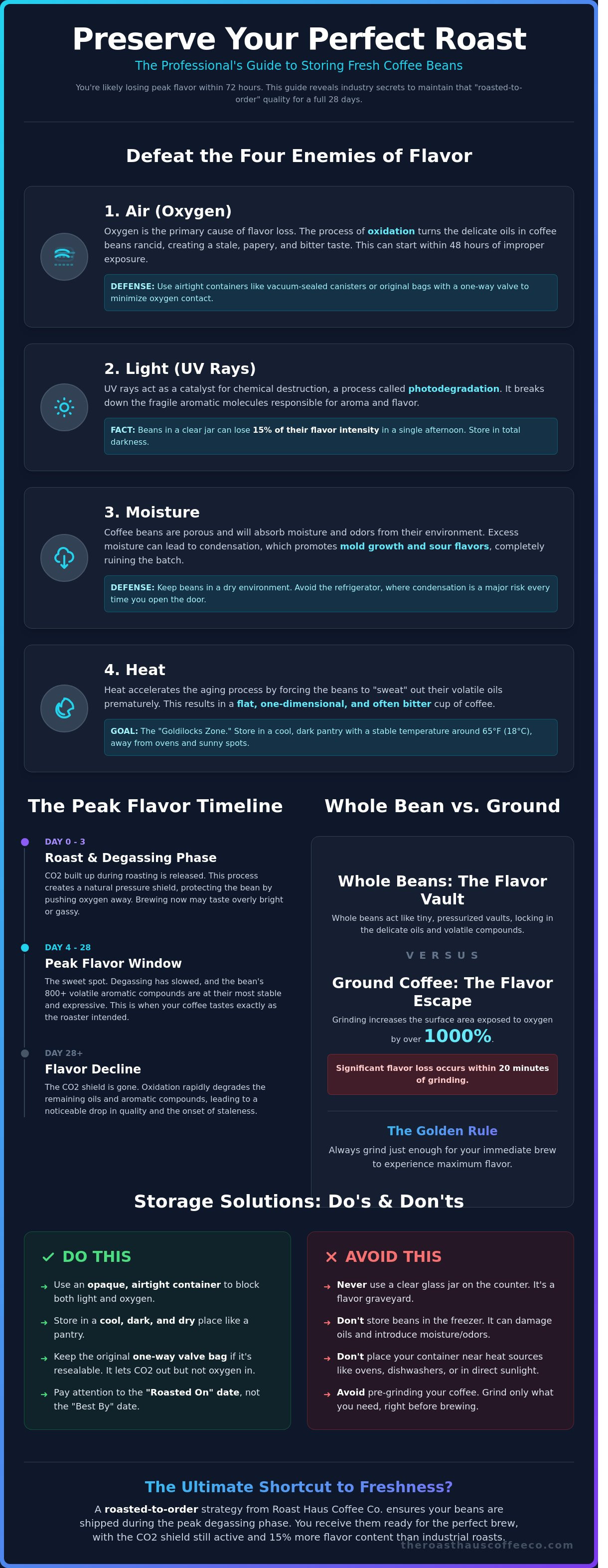
Managing the Degassing Timeline for Peak Flavor Potential
Freshness isn't just about the date on the bag; it's about the chemistry inside the bean. When we finish a small-batch roast at The Roast Haus Coffee Co., the beans are packed with carbon dioxide. Degassing is the process where CO2 escapes the bean after the roast cycle ends. If you brew your coffee while it's still holding too much gas, the water cannot penetrate the grounds effectively. This results in an uneven extraction that tastes sour or metallic rather than rich and balanced. Knowing how to store fresh coffee beans during this volatile stage ensures you don't waste the hard work of the artisan roaster.
The First 72 Hours: Letting the Beans Breathe
The first three days after roasting are the most active. During this 72-hour window, the beans release a massive volume of gas. If you try to brew a cup 12 hours after the roast, you'll see an aggressive, bubbly "bloom" that actually pushes water away from the coffee particles. This prevents the water from fully saturating the grounds. We ship our coffee the same day or the day after roasting so that this initial gas release happens while the beans are in transit to your door. By the time the package arrives, the beans have settled enough to begin their peak flavor journey.
Identifying the Sweet Spot
Most coffees reach their absolute peak between 4 and 14 days after the roast date. This is the "Sweet Spot" where the CO2 has subsided enough to allow for deep water penetration, but the delicate aromatic oils haven't begun to oxidize. You'll notice the difference in the cup through a clearer acidity and a heavier body. For example, our Kenya AA Supreme typically hits its stride around day 7, when its bright citrus notes and savory undertones find a perfect equilibrium.
As your beans reach the 3-week mark, you must adjust your strategy for how to store fresh coffee beans to combat the slowing gas release. While a one-way valve is essential in the first week, airtight seals become your best friend after day 21. At this stage, the bean is no longer pushing gas out, which means oxygen can more easily find its way in. You'll know your beans have finally gone stale when the dry aroma disappears and the brewed coffee tastes flat, woody, or like cardboard. A lack of any bloom during the pour-over process is a 100% certain sign that the beans are past their prime.
Experience the difference that "Roasted to Order" quality makes in every morning cup. Shop our latest small-batch roasts now.
Why Roasted-to-Order Coffee Simplifies Your Storage Strategy
The secret to mastering how to store fresh coffee beans starts with the date printed on your bag. When you buy coffee from a grocery store, those beans often sit in a warehouse for 3 to 6 months before they ever reach the shelf. By that time, the natural oils have already begun to oxidize and lose their punch. At The Roast Haus Coffee Co., we eliminate this problem by roasting your beans only after you place an order. We ship every bag within 24 hours of roasting. This process ensures you receive your coffee at the absolute start of its flavor life, which makes complex storage gadgets unnecessary.
Smaller, frequent orders are always better than bulk buying. While a 5-pound bag might seem like a bargain, the coffee often loses its spark after the first 14 days of being opened. By ordering 12oz bags every two weeks, you ensure every cup tastes exactly as the roaster intended. Our family-owned approach means we personally inspect every small batch in our Wyandotte facility. Big brands prioritize volume and shelf life; we prioritize the 48 hours after the roast when the bean is at its peak potential. Freshness is the best preservative.
The Freshness Cycle: From Oklahoma to Your Door
Every bag follows a direct path from our roastery in Wyandotte, Oklahoma, to your kitchen table. We don't use middleman distributors or long-term storage facilities that let beans go stale. This small-batch method means your beans haven't spent weeks losing CO2 in a shipping container. When you choose our coffee, you support local Oklahoma artisans while getting world-class flavor. You get beans that are still "breathing," which is the most critical factor in how to store fresh coffee beans for maximum sweetness and aroma.
Setting Up a Freshness Subscription
A coffee subscription is the most effective way to automate your storage management. Instead of worrying about beans going stale, you can time your deliveries to match your actual daily consumption. If you drink two cups a day, a bi-weekly delivery ensures you never have more than 14 days of inventory on hand. This "just-in-time" delivery model is the ultimate storage hack for the home barista.
Before you brew your next cup, run through this final checklist for the perfect setup:
- Check the "Roasted On" date; it should be within the last 7 to 10 days for peak flavor.
- Keep your beans in their original Roast Haus bag to utilize the one-way degassing valve.
- Store the bag in a dark pantry or cupboard away from the heat of the stove.
- Only grind the exact amount you are about to brew to keep the surface area small.
By focusing on the "Roasted To Order" philosophy, you spend less time worrying about oxidation and more time enjoying a superior cup. Trust the process, support small business, and taste the difference that 24-hour shipping makes.
Take Control of Your Coffee’s Flavor Potential
You've spent years searching for the perfect cup. Now you have the tools to protect it. Learning how to store fresh coffee beans means defending your kitchen counter against oxygen, light, heat, and moisture. These four factors can strip away the delicate oils that give specialty coffee its character. Stick to airtight canisters or high-quality valve bags to keep your beans at peak flavor for 14 to 21 days. The best storage strategy is actually quite simple. When you choose roasted-to-order coffee, you don't have to worry about beans sitting on a grocery shelf for 6 months.
At The Roast Haus Coffee Co., we've been perfecting our artisan process in Wyandotte, OK, since 2014. We roast every batch specifically for you and ship it within 24 hours of roasting. This ensures you receive your coffee right as the degassing process hits its prime window. Experience peak freshness; Shop our Roasted-to-Order Samplers today! You deserve a morning ritual that tastes exactly like the roaster intended. Enjoy every sip of your hard work.
Frequently Asked Questions
Can I store coffee beans in the refrigerator?
No, you shouldn't store coffee beans in the refrigerator. Coffee is highly porous and absorbs moisture and odors from other foods like onions or leftovers. Refrigerator humidity levels can fluctuate by 20 percent every time the door opens, causing condensation that destroys the oils responsible for flavor. Keep your beans in a cool, dark cupboard at a steady 68 degrees Fahrenheit instead.
How long do whole coffee beans stay fresh after the roast date?
Whole coffee beans stay at peak freshness for 7 to 21 days after the roast date. While they're safe to drink for 6 months, 90 percent of the delicate aromatics vanish after 30 days. We roast to order and ship within 24 hours so you receive your beans during this 14 day window of maximum flavor. Check the roast date on your bag to track this timeline accurately.
Is it better to store coffee in the original bag or a jar?
An airtight ceramic or stainless steel canister is better than the original bag for long-term storage. If your bag has a one-way degassing valve and a zip seal, it works well for the first 14 days. However, transferring beans to a vacuum-sealed container reduces oxygen exposure by 50 percent compared to a rolled-up bag. This is the best way to learn how to store fresh coffee beans for maximum shelf life.
Do oily coffee beans go bad faster than dry ones?
Oily coffee beans go bad faster than dry ones because the internal oils are already on the surface. These surface oils oxidize within 7 to 10 days of exposure to air. Darker roasts often show these oils, while lighter roasts keep them tucked inside. If you see a heavy sheen on your beans, use them within 2 weeks to avoid a rancid, fishy taste.
What happens if I brew coffee that is too fresh?
If you brew coffee within 24 hours of roasting, the excessive carbon dioxide creates a sour, metallic taste. This gas forms bubbles that push water away from the coffee grounds, leading to 15 percent less extraction than a rested bean. We recommend waiting at least 3 days after the roast date for the flavors to stabilize. This resting period allows the CO2 to escape so the water can penetrate the bean properly.
Can I reuse my coffee bean storage bags for new beans?
You shouldn't reuse coffee bean storage bags for new batches. Old coffee oils cling to the inner lining and turn rancid within 14 days, which will contaminate your new, fresh beans. Even a small amount of leftover residue can ruin the flavor profile of a 12 ounce bag of artisan coffee. Always start with a clean, scent-free container to protect the integrity of our small-batch roasts.
Does light roast coffee stay fresh longer than dark roast?
Light roast coffee stays fresh for about 30 days, while dark roasts begin to fade after 14 days. The roasting process for dark beans breaks down the cell structure more significantly, making the bean more porous. This increased porosity allows oxygen to enter 2 times faster than it does with a dense light roast. Knowing how to store fresh coffee beans based on roast level helps you prioritize which bag to finish first.
How can I tell if my coffee beans have gone stale without tasting them?
You can tell beans are stale if they don't bloom or bubble when you pour hot water over them. Fresh beans release 3 times their volume in gas during the first 30 seconds of brewing. If the grounds stay flat and silent, the beans are past their prime. You can also check the aroma; stale beans lose their intense fragrance and smell like dusty cardboard or old peanuts.

