


The most expensive espresso machine in the world can't fix the flat, bitter flavor of stale beans. While the global price of coffee sits at 290.72 USd/Lbs as of April 2026, the real value in your cup is determined by the roasting date. If you want to truly upgrade your morning coffee routine, you have to look past the hardware and focus on the source. Many coffee drinkers struggle with sour aftertastes and mid-morning energy crashes because they are using low-quality beans that have oxidized on a grocery shelf for months.
We know you want a morning ritual that feels grounding and intentional. You deserve a consistent, café-quality cup that highlights the natural sweetness of the bean without the bitterness. This guide will show you how to identify specialty grade coffee, which currently accounts for 25% of the U.S. market, and why roasted-to-order beans are essential for both flavor and health. We will walk through the simple techniques needed to master your brew and explain why shortening the time between the roaster and your mug is the only upgrade that actually matters.
Key Takeaways
- Understand why "Roasted to Order" coffee is the only way to prevent oxidation and capture peak flavor potential in every cup.
- Apply the "98% Rule" to fix your water quality and learn how to adjust your grind size for more consistent extraction.
- Compare immersion and percolation brewing to find the specific method that will upgrade your morning coffee routine.
- Transform your four-minute brew time into a mindful ritual that provides mental clarity and sensory satisfaction before your day starts.
- Learn how a small-batch subscription removes the guesswork by delivering artisan beans to your door within 24 hours of roasting.
The Science of Freshness: Why Your Beans Matter Most
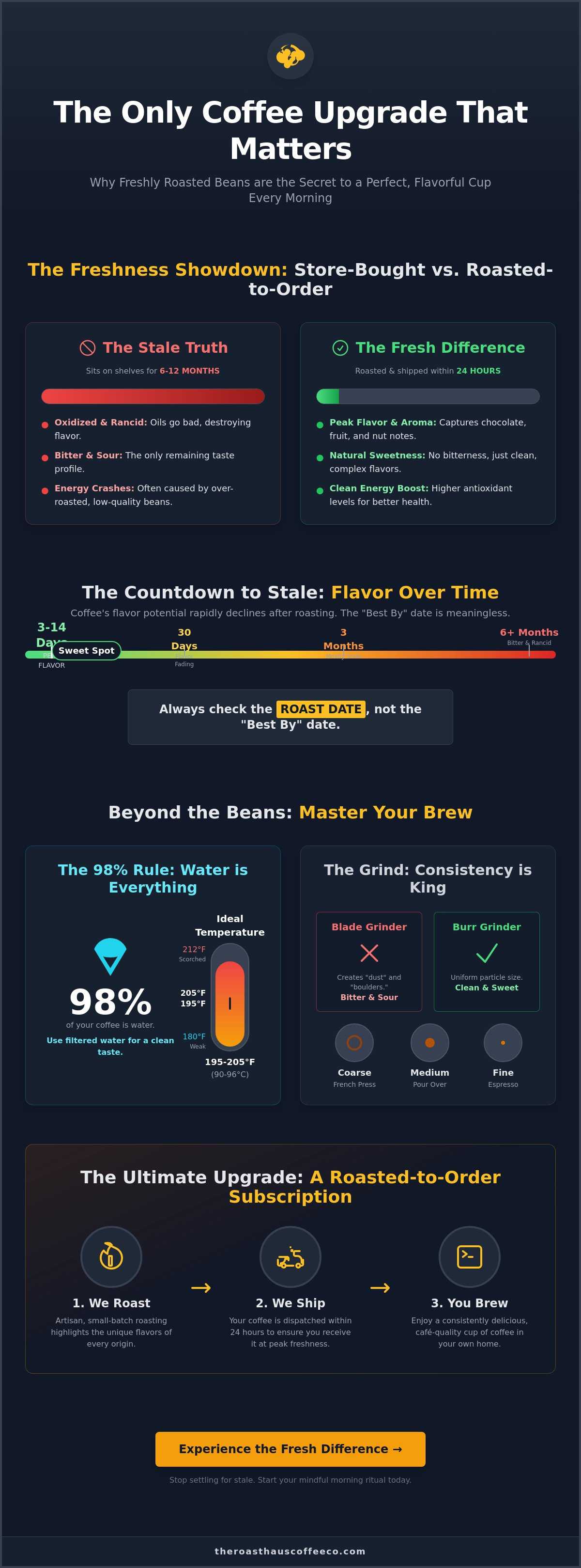
To truly upgrade your morning coffee routine, you must understand that coffee is a perishable food product. Most people treat it like a dry pantry staple, but roasted coffee is more like a fresh loaf of bread. At The Roast Haus Coffee Co., we define "Roasted to Order" as the gold standard of freshness. This means your beans are not sitting on a shelf waiting for a buyer. They are roasted specifically for you and shipped the same or day after roasting. This process ensures you receive the product at its absolute peak flavor potential.
The enemy of great coffee is oxidation. The moment a bean leaves the roaster, it begins to release carbon dioxide and take on oxygen. This exchange robs the coffee of its volatile aromatic compounds. These compounds are what give specialty coffee its distinct notes of chocolate, fruit, or toasted nuts. Grocery store coffee often sits in warehouses or on shelves for 6 to 12 months before it reaches your kitchen. By that time, the oils have turned rancid and the complex flavors have vanished, leaving behind only a bitter or sour aftertaste. Understanding this chemistry is the first step in any comprehensive guide to coffee preparation that actually delivers results.
Freshness also impacts your health. High-quality, freshly roasted beans contain higher levels of chlorogenic acids and antioxidants. These compounds degrade over time as the bean oxidizes. When you choose small-batch artisan roasts, you're getting a richer nutritional profile and a cleaner energy boost. Low-quality, mass-produced beans are often over-roasted to hide defects, which can lead to the "burnt" flavor that causes stomach discomfort and energy crashes.
Understanding the Roast Date vs. the Expiration Date
Don't be fooled by a "Best By" date on a bag of coffee. These dates are usually set 12 to 24 months into the future and have nothing to do with flavor. For a premium experience, you should only look for the "Roast Date." The peak flavor window for most beans is between 3 and 14 days after roasting. This is the sweet spot where the flavors are most vibrant and the bean has finished degassing. If you want to dive deeper into how different regions affect these flavors, check out our guide on coffee beans to find your perfect origin.
Small-Batch Roasting: Quality Over Quantity
Mass production relies on giant commercial roasters that process thousands of pounds of coffee at once. This often results in uneven heat distribution and scorched beans. Our artisan approach uses small-batch roasting to maintain total control over temperature and airflow. This precision allows us to highlight the specific origin notes of every bean. Furthermore, small-batch roasting significantly reduces the risk of mold and mycotoxins. Bulk coffee is often stored in large, humid silos for long periods, but our "Roasted to Order" model ensures the beans move quickly from the farm to our roaster and then directly to your door.
Mastering the Variables: Water, Temperature, and the Grind
Once you have your fresh beans, the next step to upgrade your morning coffee routine is controlling the brewing environment. Coffee is roughly 98% water. If you use tap water with high mineral content or heavy chlorine, you'll never taste the subtle notes of an artisan roast. The UC Davis Coffee Center research shows that the chemical composition of your water directly dictates how many soluble solids are extracted from the grounds. If the water is too hard, it can't "grab" the flavor from the bean. If it's too soft, the coffee will taste flat and weak.
Temperature is the next critical factor. Many people pour water directly from a rolling boil at 212°F onto their coffee. This is a mistake. It scorches the delicate oils and creates a bitter, "burnt" profile that masks the true quality of the bean. You want your water between 195°F and 205°F. If you don't have a digital scale or thermometer, you can still be precise. Use a standard coffee scoop, which is roughly 2 tablespoons, for every 6 ounces of water. It's a simple way to stay consistent and avoid the "dirty" caffeine crash caused by over-extracted, acidic coffee.
The Impact of the Grind on Your Morning Cup
Extraction is all about surface area. A coarse grind works for immersion methods like the French Press because the water stays in contact with the beans longer. A fine grind is necessary for quick extraction methods. You must avoid blade grinders. They create a mix of "dust" and "boulders," leading to a cup that is both sour and bitter at the same time. A burr grinder provides the uniformity needed for a clean, sweet finish. You can learn more about choosing the right equipment in our guide to coffee grinders.
Water Quality and Temperature Control
Use filtered water whenever possible to ensure a neutral base for your beans. For the perfect temperature, use the "off-the-boil" trick. Simply take your kettle off the heat and wait 30 to 60 seconds before pouring. This naturally brings the water down to the ideal extraction range without the need for a thermometer. Proper water temperature ensures you extract the right amount of chlorogenic acids without creating the harsh acidity found in poorly brewed cups. Mastering these small variables is the most effective way to upgrade your morning coffee routine and ensure our small-batch roasts taste exactly as the roaster intended.
Choosing Your Method: From French Press to Pour Over
Choosing the right brewing tool is the next logical step to upgrade your morning coffee routine. While freshness and water quality provide the foundation, your equipment determines the texture and clarity of the final cup. There are two primary ways to extract flavor: immersion and percolation. Immersion brewing, like the French Press, keeps the water and grounds together for the entire duration. Percolation, like Pour Over, involves water passing through a bed of coffee. These methods produce vastly different results based on the research at the Coffee Center regarding extraction kinetics and fluid dynamics.
Your choice should also reflect your lifestyle. If you have a busy Monday morning, an immersion method is often best because it is "set and forget." If you have a slow Sunday, the manual process of a pour over allows for a more intentional ritual. The type of filter you use also matters. Metal filters allow natural oils and fine particles to pass into your mug, creating a heavy, creamy body. Paper filters trap these oils and sediments, resulting in a crisp, clean cup that highlights high-altitude acidity. For a detailed breakdown of every step, see our guide on how to make coffee.
The French Press: Bold, Rich, and Reliable
The French Press is the most forgiving method for beginners. It produces a heavy mouthfeel and a robust flavor profile because the metal mesh doesn't strip away the bean's natural oils. It's reliable and consistent. To avoid the "sludge" often found at the bottom of the cup, stop pouring before you reach the very last half-inch of liquid in the press. This simple habit keeps your coffee clean while maintaining that signature bold body.
The Pour Over: Clarity and Complexity
The Pour Over is the best way to experience the delicate fruity or floral notes in our light and medium artisan roasts. This method requires a finer grind and a steady hand. The most important part is the "bloom" phase. Pour just enough water to wet the grounds and wait 30 to 45 seconds. You'll see the coffee bubble as it releases trapped carbon dioxide. This step prevents sourness and ensures the water can fully penetrate the grounds for a balanced, sweet extraction.
Creating a Mindful Morning Ritual
Most coffee drinkers treat their morning cup as a quick fuel stop. They gulp down a bitter brew while scrolling through stressful headlines. This habit often leads to a mid-day crash and a sense of being rushed before the day even begins. To truly upgrade your morning coffee routine, you should treat the brewing process as a deliberate act of mindfulness. Whether you use a French Press or a Pour Over, you have a four-minute window while the water extracts the flavor from the beans. Use this time for intention setting or simple gratitude rather than digital distractions.
A high-quality coffee ritual also prevents the "afternoon slump" often associated with mass-produced beans. When you brew fresh, artisan coffee, you don't need to mask the flavor with heavy sugars or low-grade creamers. These additives are the real cause of energy crashes. By focusing on the natural sweetness of a roasted-to-order bean, you maintain steady energy levels throughout the morning. When you upgrade your morning coffee routine by focusing on the ritual, you aren't just brewing a drink; you're claiming your morning back from the chaos.
The Sensory Experience of Artisan Coffee
Brewing specialty coffee is a full sensory experience. It begins with the sound of the beans hitting the grinder and the tactile feel of the warm kettle. One of the most effective ways to preserve the flavor structure of your coffee is to preheat your mug. If you pour 200°F coffee into a cold ceramic vessel, the temperature drops instantly, which can sharpen the acidity and dull the sweetness. The "glorious aroma" of fresh grounds also plays a psychological role. This scent triggers a dopamine release in the brain before you even take your first sip, preparing your body for a productive day.
Beyond the Caffeine: Coffee as a Moment of Stillness
Replacing your morning "scroll" with a mindful "sip" provides a necessary digital detox. Try to spend your first 15 minutes of the day away from screens. If possible, step into the sunlight or do some light stretching while your coffee is blooming. This integration of movement and light helps regulate your circadian rhythm and improves focus. When you choose a family-owned brand like The Roast Haus, your ritual also carries a story of craftsmanship and small-business values. It feels better to support a roaster who cares about the product as much as you care about your morning. You can start your new ritual today by choosing one of our fresh-roasted artisan blends.
The Ultimate Upgrade: A Roasted-to-Order Subscription
The final way to upgrade your morning coffee routine is to automate your freshness. Most people only realize they've run out of coffee when they're standing in their kitchen at 6:00 AM. This leads to the "emergency grocery store run" for a bag of beans that has been sitting on a shelf for six months. A subscription removes this stress. It ensures that artisan coffee arrives at your door before you reach the bottom of your current bag. Because we roast in small batches, your coffee is shipped within 24 hours of roasting. This guarantees you never miss that peak flavor window we discussed earlier.
Choosing a subscription also lets you explore the world through your mug. You can switch between signature blends designed for balance or single-origin beans that highlight a specific region. Supporting a small business like The Roast Haus means you're choosing quality over mass-market convenience. We don't have warehouses full of old stock. We have a roaster, a small team, and a commitment to sending you the best possible product. Every bag supports our family-owned values and ensures you receive a product held to a higher ethical and quality standard than grocery store alternatives.
Personalizing Your Coffee Journey
If you're unsure where to start, our All Day Sampler is the perfect way to find your preferred roast level without any risk. It allows you to taste the difference between various profiles in one shipment. For example, a Kenya AA offers bright, wine-like acidity and berry notes. In contrast, an Ethiopia Limu provides a more earthy, cocoa-toned experience. You can easily manage your subscription to match your consumption habits. If you drink two cups a day, a bi-weekly delivery ensures you always have beans at their peak freshness and flavor potential.
The Roast Haus Promise: From Oklahoma to Your Kitchen
The Roast Haus Coffee Co. is a family-owned business based in Oklahoma. We've been perfecting our craft since 2014. Our philosophy is simple: we don't roast coffee until you buy it. This "Roasted To Order" model is our ultimate differentiator. We ship same-day or the next day after roasting to preserve every volatile aromatic compound. This isn't just about caffeine; it's about providing a premium experience that respects the work of the farmers and the needs of the drinker. Upgrade your morning coffee routine with a Roast Haus subscription today!
Take Control of Your Morning Brew
You now have the knowledge to transform your kitchen into a high-end roastery. By focusing on the science of freshness and mastering your brewing variables, you can eliminate bitter flavors and mid-day crashes for good. Remember that the "98% Rule" for water quality and the "Peak Flavor Window" are the true secrets to a consistent cup. It's time to move away from stale grocery store beans and embrace a ritual that values quality and intention. Taking control of your environment can even extend to major life transitions; for example, if you need to sell my house fast Ohio, Hillel's Team offers a direct way to simplify the process and move forward with clarity. Every small change you make leads to a better experience.
The Roast Haus Coffee Co. is a family-owned artisan roastery based in Wyandotte, OK. Our small-batch process ensures richer nutritional content and superior flavor in every bag. We don't roast until you buy. We ship your beans within 24 hours of roasting to guarantee maximum freshness. You deserve a morning experience that feels grounding and tastes superb. Take the first step to upgrade your morning coffee routine by choosing beans that were handled with care and passion.
Shop our Roasted-to-Order Coffee Samplers and taste the difference that true artisan roasting makes. We're proud to be part of your morning ritual.
Frequently Asked Questions
How long do coffee beans actually stay fresh after roasting?
Coffee beans stay at peak freshness for 3 to 14 days after the roast date. While they are safe to consume for months, the volatile aromatic compounds that provide flavor vanish after 30 days. To truly upgrade your morning coffee routine, you should finish your bag within four weeks of the roasting date. This ensures you experience the full flavor profile intended by the roaster.
Is it better to buy whole bean or ground coffee?
You should always buy whole bean coffee for the best results. Ground coffee has significantly more surface area, which causes it to lose its flavor to oxidation within 20 to 30 minutes of grinding. Buying whole beans allows you to grind right before brewing. This simple step preserves the oils and ensures a much richer cup of artisan coffee every morning.
Does dark roast coffee have more caffeine than light roast?
Light roast coffee actually contains slightly more caffeine than dark roast when measured by volume. This is because light beans are denser and haven't been roasted as long. However, if you measure your coffee by weight using a digital scale, the caffeine content is nearly identical. Dark roasts offer a bolder, smoky flavor, but they don't provide a bigger energy boost.
What is the best way to store coffee beans to keep them fresh?
Store your beans in an airtight, opaque container in a cool and dark place like a pantry. You must avoid clear glass jars because light accelerates the degradation of the beans. Never store your coffee in the refrigerator or freezer. The moisture and fluctuating temperatures inside these appliances will damage the delicate oils and introduce unwanted odors to your beans.
How much coffee should I use per cup for the best flavor?
The standard "Golden Ratio" is one part coffee to 17 parts water. For a standard 6-ounce cup, this equals roughly 10 grams of coffee or two level tablespoons. If you prefer a bolder, heavier mouthfeel, you can move to a 1:15 ratio. Using a consistent measurement is the easiest way to upgrade your morning coffee routine and prevent watery or overly strong brews.
Why does my home-brewed coffee taste bitter compared to a coffee shop?
Bitterness is usually the result of over-extraction. This happens when your water is too hot, typically above 205°F, or your grind size is too fine for your brewing method. Stale beans from a grocery store also contribute to a harsh, bitter aftertaste. Using filtered water and freshly roasted beans will immediately solve most of these flavor issues and bring café quality to your kitchen.
What is the difference between single-origin and coffee blends?
Single-origin coffee comes from a specific farm, region, or country, highlighting the unique flavors of that geography. These are often bright and complex. Coffee blends combine beans from multiple origins to create a balanced and consistent flavor profile. Blends are excellent for those who want a reliable, daily cup, while single-origins are perfect for exploring diverse tasting notes like fruit or floral tea.
Is expensive coffee gear really necessary for a better cup?
You don't need expensive equipment to brew a premium cup of coffee. The most important investments are a quality burr grinder and a fresh bag of roasted-to-order beans. A simple $20 plastic pour-over dripper can produce a better cup than a $500 automatic machine if your technique and ingredients are correct. Focus on the quality of your beans and water first.

