


If your daily brew requires three spoonfuls of sugar and a heavy pour of cream just to be drinkable, you aren't actually enjoying coffee; you're masking a mediocre product. It's time to stop drinking bad coffee and reclaim your mornings from the bitterness of stale, mass-produced beans. Most people accept a burnt or sour aftertaste as a normal part of their routine, but you shouldn't have to settle for a drink that lacks flavor and aroma.
We know how it feels to want a better cup but not know where to start. This guide will teach you how to identify low-quality beans that often sit on grocery shelves for 180 days or more before they reach your kitchen. You'll learn exactly what to look for on a label to ensure your beans are fresh and truly artisan. We'll show you how to find a reliable source for roasted to order coffee that transforms your morning ritual into a smooth, flavorful experience. Here is how you can upgrade your daily routine and finally taste what real coffee is supposed to be.
Key Takeaways
- Identify why grocery store "Best By" dates are red flags and how to spot stale, over-roasted beans before they reach your mug.
- Master the science of freshness by understanding the 15-day rule and the critical role of degassing in flavor development.
- Learn the simple steps to stop drinking bad coffee by switching to whole beans and filtered water for a professional-grade experience at home.
- Compare mass-market industrial blends with traceable, small-batch single origins to see why scale matters for your palate.
- Discover how our roasted-to-order process ensures your beans are shipped within 24 hours of roasting for maximum flavor and nutrition.
What Exactly Is "Bad Coffee" and Why Do We Settle?
Bad coffee isn't just a matter of personal taste. It is a scientific reality defined by stale beans, over-roasted profiles, and low-quality blending. Most people consume industrial coffee that was roasted 6 to 12 months ago. These mass-market brands prioritize shelf-life over flavor potential. They use "Best By" dates to hide the truth about when the beans actually left the roaster. For a comprehensive overview of coffee, one must understand that the bean is a fresh agricultural product, not a non-perishable canned good.
The "Grocery Store Trap" is designed to keep you buying old inventory. Industrial roasters roast in massive batches and ship to warehouses where the product sits for weeks before reaching the shelf. By the time you buy it, the natural oils have often turned rancid. If you want to stop drinking bad coffee, you have to look past the grocery store shelf. Real quality starts with a "Roasted On" date. This is the only way to ensure you're getting peak flavor and the richest nutritional content.
We often settle because we've been conditioned to think coffee is supposed to be bitter. This is a psychological trick. Industrial roasters over-roast low-grade beans to hide defects and create a uniform, charred flavor. You aren't tasting the unique notes of the bean; you're tasting the fire. High-quality coffee should have natural sweetness and clarity, not a burnt aftertaste that requires cream and sugar to mask.
The Three Pillars of Poor Quality
Oxidation is the silent killer of coffee aroma. When coffee is exposed to air, oxygen breaks down the organic compounds. This destroys the flavor profile and the natural health benefits. Most grocery store coffee is "commodity grade," which allows for a higher percentage of defective beans. These beans are often stored in clear bins or non-sealed bags, exposed to light and oxygen. This accelerates the degradation process long before the bag reaches your kitchen. At Roast Haus, we combat this by ensuring every batch is small-batch and roasted to order.
Signs Your Current Coffee Is Stale
You can identify stale coffee by looking at the beans and the brewing process. If your coffee shows these signs, it's time to stop drinking bad coffee and upgrade to artisan freshness.
- Lack of a Bloom: Freshly roasted coffee releases carbon dioxide when it hits hot water. If your grounds don't bubble or "bloom" during a pour-over, the gas has escaped, and the flavor has gone with it.
- Flat Flavor Profile: Stale coffee tastes like cardboard, wood, or paper. You won't find any of the vibrant fruit, chocolate, or nut notes present in fresh, specialty-grade beans.
- Oily Surfaces: While some dark roasts are naturally oily, a heavy, greasy film on the beans often indicates they are old. These oils have migrated to the surface and are actively oxidizing, leading to a rancid taste.
The Science of Freshness: Why Roast Dates Matter More Than Brands
Most people buy coffee based on a fancy label or a familiar logo. That is a major mistake. If you want to stop drinking bad coffee, you need to ignore the brand name and look for a roast date. Coffee is a perishable agricultural product, not a shelf-stable pantry staple. It hits its absolute peak flavor between 3 and 7 days after the roast. By the 15th day, the volatile compounds that create those rich, nutty, or fruity notes begin a rapid decline. By day 30, most of the unique character is gone.
Freshness isn't just about taste; it is about chemistry. Immediately after roasting, beans undergo a process called degassing. This is when carbon dioxide escapes the bean. You generally need to wait 24 to 48 hours before brewing to let the heaviest gases dissipate. If you brew too early, the gas bubbles block water from properly extracting the flavor. If you wait too long, oxygen moves into the pores of the bean. This oxidation destroys the antioxidants and healthy polyphenols that make coffee a nutritional powerhouse.
We focus on small-batch roasting because it is the only way to maintain total control over the bean's development. Industrial roasters process thousands of pounds at once. They cannot monitor the internal temperature of every bean with precision. Our roasted to order approach ensures you receive beans at their peak nutritional and flavor potential, often arriving at your door just 48 hours after leaving the roaster. This level of care is how you finally stop drinking bad coffee and start enjoying a real artisan experience.
What Happens During the Maillard Reaction?
This reaction occurs when heat transforms green seeds into flavor bombs. It creates hundreds of different aromatic compounds by breaking down sugars and proteins. Industrial machines often over-roast to mask low-quality beans, which kills these delicate sugars. The Maillard reaction is the chemical process between amino acids and reducing sugars that creates the complex sweetness and savory depth in every cup of coffee.
The Problem with Pre-Ground Coffee
Grinding increases the surface area of the bean by more than 10,000 percent. This exposes the delicate oils to oxygen instantly. Research shows that pre-ground coffee can lose a significant portion of its aromatic complexity in as little as 20 minutes. This is why choosing the best coffee beans in whole bean form is the most important step you can take. Don't be fooled by the "vacuum seal" on supermarket bags. Those bags often sit in distribution centers for 4 to 6 months. By the time you open them, the coffee is already stale.
If you're ready to taste the difference that artisan craft makes, you can explore our small-batch roasts and have them delivered fresh to your kitchen.
Grocery Store Coffee vs. Artisan Small-Batch Roasting
Most people buy coffee based on convenience. They pick a bag off a shelf that might have been sitting there for six months. If you want to stop drinking bad coffee, you have to look at the scale of production. Industrial roasters handle 2,000 to 5,000 pounds of beans in a single cycle. At that volume, consistency is impossible. Small-batch roasters keep batches under 50 pounds. This allows for precision and care that a factory simply cannot match.
Sourcing is the next major hurdle. Massive brands buy commodity blends. These are often a mix of leftover beans from various regions. They use vague "100% Arabica" labels to sound premium, but they lack any real data. Artisan roasters focus on traceable single-origins like Kenya AA or Ethiopia Limu. You know exactly which farm the beans came from and when they were harvested. This transparency ensures you aren't drinking old, stale inventory.
Roast profiles also tell a story. Grocery store beans are usually dark and oily. This isn't a style choice; it's a way to hide defects in low-grade beans. Roasting them until they're charred masks the taste of mold or under-ripe fruit. Small-batch roasters use light or medium profiles. They want to highlight the natural sugars and unique origin flavors. When the beans are high quality, there's nothing to hide.
The Real Cost of "Cheap" Coffee
Cheap coffee has hidden costs that affect the planet and your palate. Commodity buyers often pay farmers the bare minimum. Small-batch roasters prioritize direct relationships and pay premiums that support sustainable farming. You also get better flavor value. When coffee is high quality, it isn't bitter. You don't need to mask the taste with expensive creamers or heaps of sugar. You actually use less coffee per cup because the flavor is more concentrated and complex. It's a more efficient way to stop drinking bad coffee while supporting ethical supply chains.
Why Small-Batch Is the Gold Standard
Small-batch roasting is the gold standard because it respects the science of the bean. A master roaster monitors the moisture content and ambient temperature of every 50-pound lot. They adjust the heat in real time based on how the beans react. This human element beats an automated factory line every time. It's the difference between a home-cooked meal and a frozen dinner. Supporting local coffee roasters and small family businesses ensures your money stays in the community. You get a product that was roasted to order, not one that's been dying on a warehouse pallet for half a year.
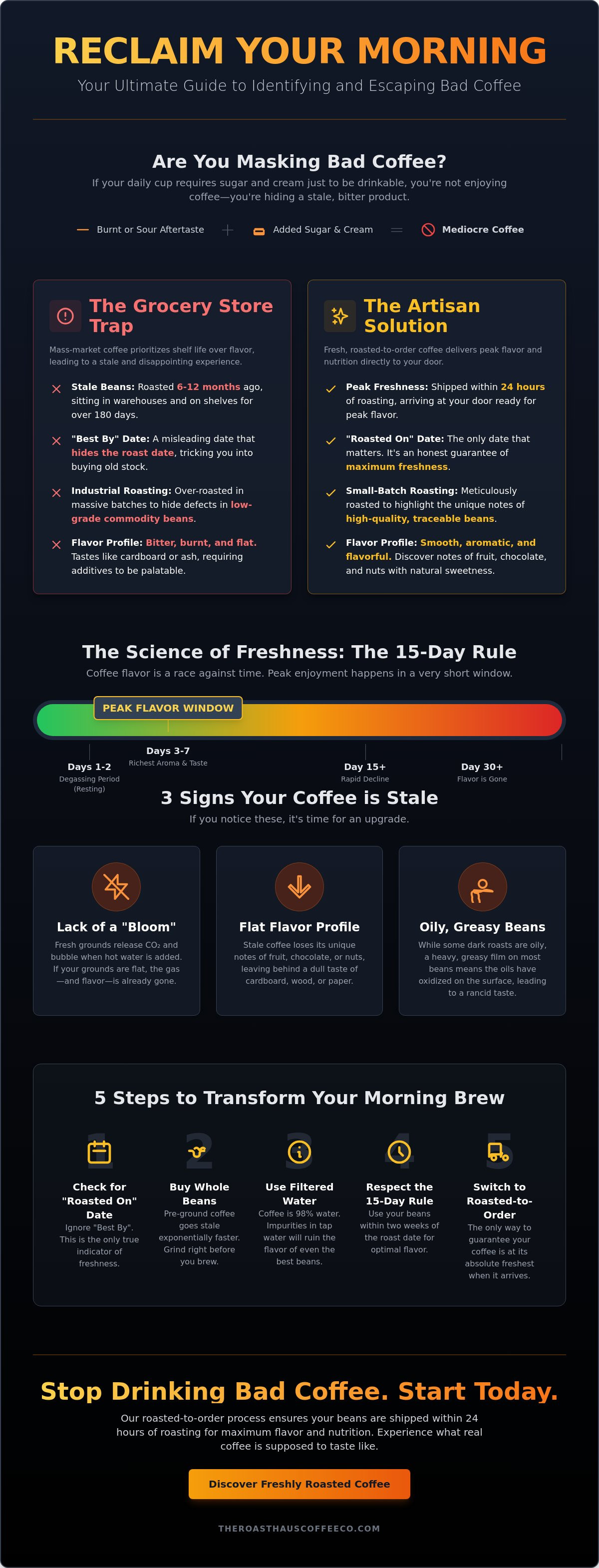
5 Simple Steps to Transform Your Morning Brew Today
You can stop drinking bad coffee by making small, intentional changes to your daily routine. It doesn't require a chemistry degree, just better habits and a focus on freshness. Start with your beans. Pre-ground coffee loses up to 60% of its aroma within 15 minutes of grinding. Buy whole beans and use a burr grinder to ensure uniform particle size. This consistency prevents the bitter or sour notes caused by uneven extraction that ruins your morning.
- Use filtered water. Since coffee is 98% water, tap water minerals and chlorine will destroy the flavor profile. Aim for a Total Dissolved Solids (TDS) level of roughly 150 mg/L for the best results.
- Ditch the scoop. A digital scale ensures a precise 1:16 or 1:17 ratio every time. A scoop can vary by 2 or 3 grams depending on the bean density, leading to inconsistent strength.
- Scrub your gear. Coffee oils turn rancid quickly and cling to your equipment. If your carafe or filter basket smells like old oils, your coffee will taste metallic and stale.
- Buy small batches. To stop drinking bad coffee, only purchase what you can finish in 14 days. Freshness is the enemy of oxidation, and even the best beans lose their peak flavor after two weeks.
Finding Your Perfect Brewing Method
Choosing between the French Press vs Pour Over depends on your texture preference. French Press offers a heavy, oily body, while Pour Over highlights clarity and bright acidity. Many automatic drip machines fail to reach the industry-standard 195 to 205 degrees Fahrenheit required for proper extraction. Always remember that freshness starts with the grind, so adjust your settings to match your specific device for a balanced cup.
How to Read a Specialty Coffee Label
Look for a "Roast Date" within the last 7 to 21 days. If a bag only shows an expiration date, it's likely months old and lacks flavor. Check the altitude; beans grown above 1,200 meters generally offer more complex acidity and sweetness. For decaf lovers, look for the Swiss Water Process, which removes caffeine without using harsh chemicals like methylene chloride. Tasting notes like "Chocolate" or "Citrus" describe the bean's natural profile based on its origin, not added syrups or artificial flavorings.
The Roast Haus Solution: Why Roasted-to-Order Changes Everything
Most coffee drinkers don't realize they're consuming a product that's often months old. When you grab a bag from a grocery store shelf, you're buying beans that have been sitting in warehouses and transit since long before they reached you. At The Roast Haus Coffee Co., we've built our entire business model to solve this problem. Our "Roasted-to-Order" promise is simple. We don't roast a single bean until you actually place your order. This ensures you receive the highest possible quality without the bitterness associated with stale, oxidized coffee.
Freshness isn't just a buzzword; it's a scientific necessity for flavor. Once coffee is roasted, it begins to release gases and oils that carry its unique taste. We ship every order within 24 hours of roasting. This tight window captures the peak flavor potential of the bean, delivering it to your doorstep in Wyandotte, Oklahoma, or anywhere else across the country while it's still at its best. We're a family-owned business that values craftsmanship over mass production. Every batch we produce reflects our commitment to the art of the roast.
If you're ready to make this high standard your new daily routine, you can explore our coffee subscription options. It's the most reliable way to ensure you never run out of fresh beans and helps you maintain a consistent brewing ritual without the hassle of reordering every week.
From Our Kitchen to Your Cup
Our journey began as a kitchen hobby driven by a simple desire for a better cup of coffee. That personal interest evolved into a commercial passion because we saw how much better life is when you stop drinking bad coffee. We focus our efforts on sourcing exceptional single-origins like Kenya AA Supreme and Ethiopia Limu. These specific regions produce beans with distinct flavor profiles that you simply won't find in a generic supermarket blend.
We believe in transparency and direct connection. Because we're a small, family-run operation, you aren't just an order number to us. You can reach out to us directly with your brewing questions. Whether you need advice on grind size for your new Chemex or tips on water temperature, we're here to help you succeed in your home kitchen. We want you to love every sip as much as we do.
Stop Settling and Start Sipping
You've likely spent years settling for "good enough" coffee that requires cream and sugar to be drinkable. We're inviting you to join a community of enthusiasts who value quality, ethics, and the honest work of small-batch roasting. When you choose an artisan roaster, you're choosing a richer, more flavorful experience that respects the hard work of the farmers and the roasters alike.
If you're overwhelmed by the options, our All Day Sampler is the perfect starting point for those who want to explore different flavor profiles before committing to a full bag. It's time to upgrade your morning routine and experience what real freshness tastes like. Stop drinking bad coffee today and start your journey with a roaster that treats every bean with the respect it deserves.
Start Your Morning With Peak Freshness
You deserve a better cup of coffee. The difference between a stale grocery store bag and artisan beans comes down to the roast date. When coffee sits on a shelf for 3 or 4 months, it loses the oils and aromatics that create real flavor. You can stop drinking bad coffee by switching to a small-batch process that prioritizes quality over mass production. Our family-owned operation in Wyandotte, OK, handles every bean with care.
We believe freshness isn't a luxury; it's a standard. That's why we roast and ship your order within 24 hours. This ensures you receive your beans at their absolute peak flavor potential. Our small-batch artisan process focuses on the science of the roast to bring out the best in every single batch. You don't have to settle for bitter, burnt flavors anymore. It's time to experience what a truly fresh cup tastes like.
Shop Roasted-to-Order Artisan Coffee Now
Your perfect morning brew is just one fresh roast away.
Frequently Asked Questions
Why does my coffee always taste bitter even with expensive beans?
Bitter coffee usually results from using water that's too hot or leaving the grounds in contact with water for too long. If you want to stop drinking bad coffee, keep your water temperature between 195 and 205 degrees Fahrenheit. Brewing for more than 5 minutes in a French press pulls out harsh tannins. Use a digital timer to ensure you hit the 4 minute mark for a cleaner, sweeter cup every morning.
Is it really worth buying a coffee grinder for home use?
Buying a burr grinder is the best investment you can make for your kitchen. Ground coffee loses 60 percent of its volatile aroma compounds within 15 minutes of exposure to air. When you grind right before brewing, you lock in the oils and flavors we worked hard to develop during the roast. It's the only way to experience the true potential of a fresh, small batch roast.
How long does roasted-to-order coffee actually stay fresh?
Freshly roasted coffee stays at its peak flavor for 7 to 21 days after the roast date. We ship our beans the same day or the day after roasting to ensure they arrive at your door during this window. After 30 days, the natural oils begin to oxidize and the vibrant flavor notes start to fade. You'll notice a flat, woody taste once the beans pass the 6 week mark.
What is the difference between single-origin and coffee blends?
Single-origin coffee comes from one specific farm or geographic region, while blends combine beans from 2 or more locations. Single-origin beans highlight the unique soil and climate of 1 place, like the citrus notes found in Ethiopian Yirgacheffe. Blends are crafted to provide a balanced, consistent flavor profile that tastes the same every morning. Both options offer a massive quality leap for those ready to stop drinking bad coffee.
Does dark roast coffee have more caffeine than light roast?
Light roast coffee contains more caffeine by volume because the beans are denser than dark roasts. A bean loses about 15 percent of its mass during a dark roast cycle, which burns off more organic material. If you measure your coffee by the scoop, the denser light roast beans will deliver a higher caffeine kick. If you weigh your coffee in grams, the caffeine content stays nearly identical across different roast levels.
How can I tell if my coffee beans have gone bad?
You can tell beans are stale if they lack a strong aroma or feel dusty and dry. Fresh beans release carbon dioxide for 48 to 72 hours after roasting, which creates a bloom or bubbles when you pour hot water over them. If your coffee doesn't bubble during the initial pour, it's likely been sitting on a shelf for more than 3 months. Stale beans often smell like cardboard or old peanuts.
What is the best way to store coffee beans to keep them fresh?
The best way to store your beans is in an airtight, opaque container kept in a cool, dry pantry. Exposure to oxygen, light, heat, and moisture will ruin your coffee's flavor in less than 24 hours. Don't store your beans in the freezer. The 10 degree temperature shifts every time you open the door cause condensation, which destroys the delicate oils inside the bean. Keep it in a dark cupboard instead.
Can I buy high-quality decaf that actually tastes like coffee?
You can find excellent decaf by choosing beans processed with the Swiss Water method. This 100 percent chemical-free process removes 99.9 percent of caffeine while leaving the original flavor molecules intact. Most grocery store decaf uses ethyl acetate or methylene chloride, which leaves a metallic aftertaste. Our artisan decaf options provide the same rich, full-bodied experience as our regular small-batch roasts without any of the jitters or chemical residues.

