


Most people think Italian roast is just a fancy name for burnt coffee. It's a common complaint because many commercial brands push their beans too far, leaving you with a bag that tastes like charcoal and looks like it was dipped in oil. You've likely felt the frustration of inconsistent flavors that vary wildly from one brand to the next. However, when you choose genuine artisan dark roast coffee beans, the experience changes completely. A true Italian roast isn't about masking low-quality beans with smoke; it's a technical masterclass in deep caramelization that requires more precision, not less.
We're here to help you understand the bold truth about this classic style. In this article, you'll discover the history of the roast and the specific flavor profile that defines it. We'll also give you the brewing secrets needed to enjoy a heavy-bodied cup without the lingering bitterness. You will learn how to identify high-quality roasts that maintain their integrity even when roasted to the trade standard of 455°F. It's time to stop settling for acrid beans and start enjoying the rich, syrupy sweetness that only a dedicated craftsman can produce.
Key Takeaways
- Identify genuine Italian roast by its signature ebony color and oily surface, which signals a deep, syrupy flavor profile.
- Understand the science of the second crack to see how precision roasting transforms beans without scorching them.
- Learn to adjust your brewing temperature and extraction time to enjoy the bold body of dark coffee without any harsh bitterness.
- Discover why choosing artisan dark roast coffee beans from small-batch roasters prevents the burnt, charcoal flavors found in industrial brands.
What is Italian Roast Coffee? Defining the Darkest Standard
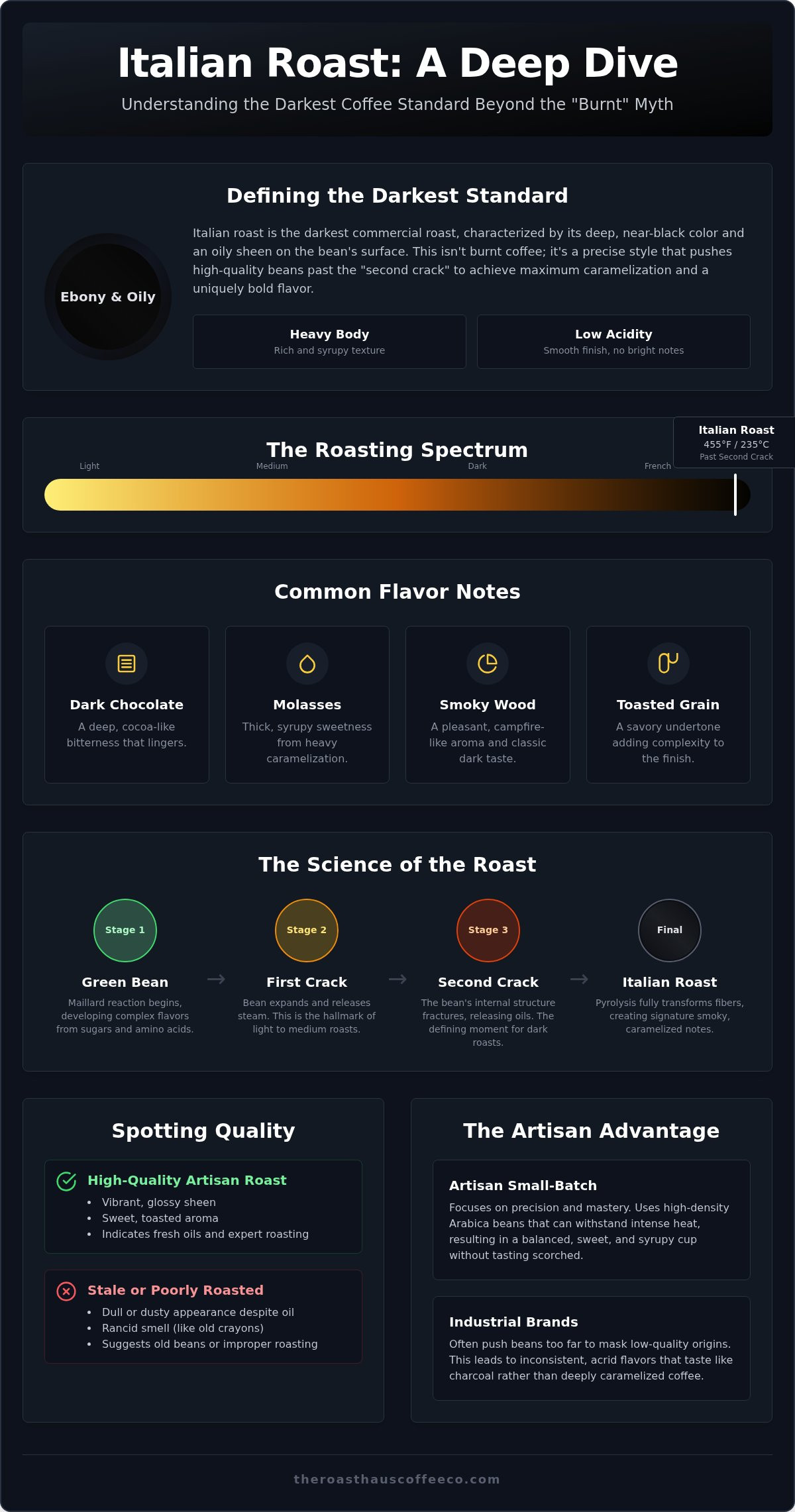
Italian roast represents the absolute peak of the roasting spectrum. It is the darkest commercial roast available, often appearing as a deep ebony or near-black bean. This style requires a high level of mastery because there is a very thin line between a perfect dark roast and a ruined batch of charcoal. Italian roast is a style that pushes beans past the second crack to achieve maximum caramelization.
While lighter roasts focus on preserving the delicate floral or fruity notes of the coffee's origin, the Italian style leans into the transformation of the bean itself. The flavor profile shifts toward toasted grain, burnt sugar, and intense smoky notes. It is a bold choice for those who prefer a heavy-bodied cup that leaves a lasting impression on the palate. Using high-quality artisan dark roast coffee beans ensures that these flavors remain balanced and sweet rather than just tasting like ash.
The Visual Profile: Why Are the Beans Oily?
When you look at a bag of Italian roast, the first thing you notice is the shine. This isn't a coating or an additive. During the coffee roasting process, intense heat causes the internal cell structures of the bean to expand and eventually fracture. This physical change pushes the natural oils from the center of the bean to the surface. In lighter roasts, these oils stay trapped inside the bean's structure.
It's a common misconception that oily beans are simply old. In this specific roast level, visible oil is actually a hallmark of roast depth and intensity. However, you should still know how to tell the difference between quality and age. Freshly roasted artisan dark roast coffee beans will have a vibrant, glossy sheen and a sweet, toasted aroma. If the beans look dull or dusty despite the oil, or if they smell like old crayons, the oils have likely gone rancid. Because these oils are exposed to the air, freshness is even more critical for Italian roasts than for any other variety.
Common Flavor Notes and Sensory Experience
As the roast progresses into Italian territory, the original characteristics of the coffee bean's origin begin to fade. The bright acidity found in lighter roasts disappears. It's replaced by a heavy body and intense, bittersweet flavors. You aren't tasting the fruit of the coffee cherry anymore. Instead, you are tasting the results of high-heat chemical reactions that create a unique sensory experience.
The primary notes in a well-executed Italian roast include:
- Dark Chocolate: A deep, cocoa-like bitterness that lingers on the tongue.
- Molasses: A thick, syrupy sweetness from heavy caramelization.
- Smoky Wood: A pleasant, campfire-like aroma that provides a classic dark experience.
- Toasted Grain: A savory undertone that adds complexity to the finish.
This intense profile is why Italian roast is the traditional choice for classic espresso. The heavy body and lack of acidity allow the coffee to cut through milk in lattes and cappuccinos. It provides the punchy, bold base that traditional espresso drinkers expect without being drowned out by cream or sugar.
The Science of the Roast: From First Crack to Italian
Roasting coffee is a precise chemical journey. It begins with the Maillard reaction, where sugars and amino acids react to create complex flavors. As the heat rises, the beans reach the industry standard roast levels known as the First Crack. This is where the bean physically expands and releases steam. For an Italian roast, the process goes much further than a standard medium or light roast.
The Second Crack is the defining moment for dark roasting. It sounds like the snap of dry twigs. This happens as the internal structure of the bean fractures under intense pressure. Moisture is almost entirely removed at this stage. The bean becomes highly porous and brittle. While some believe dark roasts are a way to hide low-quality beans, the opposite is true for a master roaster. Only high-quality Arabica beans have the density required to survive this heat without turning into flavorless ash.
The Role of Pyrolysis in Flavor Development
Pyrolysis is the chemical decomposition of the bean's organic matter by heat. It starts around 400°F and continues until the roast is pulled. During this phase, the wood-like fibers of the bean transform into carbonized flavor compounds. This creates that signature smoky profile. A craftsman must watch the drum closely. Seconds can be the difference between a bold, syrupy cup and a batch that is literally on fire. Using artisan dark roast coffee beans ensures the starting material can handle this intense transformation.
Why Freshness Matters More for Dark Roasts
Freshness is the biggest hurdle for Italian roast lovers. Because the roasting process pushes oils to the surface, the coffee has more surface area exposed to oxygen. This leads to rapid oxidation. Grocery store options often sit on shelves for months. By the time you buy them, those oils have turned rancid and taste like old ash. Freshly roasted artisan dark roast coffee beans provide a completely different experience. To get the best results, you need coffee that hasn't had time to degrade.
This is why The Roast Haus Coffee Co. ships every order within 24 hours of roasting. It preserves the volatile oils that provide the deep, chocolatey sweetness you expect from a premium dark roast. When you brew coffee this fresh, you taste the intended profile instead of the stale carbon flavors common in mass-produced alternatives.
Italian Roast vs. French Roast: What's the Difference?
Many coffee drinkers find regional naming conventions confusing. It is a common mistake to think these names refer to where the coffee was grown. In reality, French and Italian roasts are trade terms that describe how long the beans stayed in the roaster. Both are dark roasts, but they offer distinct visual and sensory experiences. French roast is typically a deep, dark brown with a moderate sheen of oil. Italian roast goes a step further, reaching a near-black ebony color with a surface that is completely saturated in oil.
The flavor profiles also diverge at these high temperatures. French roast focuses on intense sweetness and heavy caramelization. You will often taste notes of burnt sugar or toasted nuts. Italian roast moves past these sweet stages into a smoky, bittersweet territory. It has a more carbonized profile that some describe as "charred" in a pleasant, traditional way. Selecting high-quality artisan dark roast coffee beans is the only way to ensure these smoky notes don't turn into a flat, ashy taste.
Roast Level Comparison Table
This table shows where Italian roast sits compared to other popular levels. It is the final stage of the roasting process before the bean's structure fails entirely.
| Roast Level | Internal Temp | Surface Oil | Primary Flavor |
|---|---|---|---|
| Medium | 410°F - 430°F | None (Dry) | Nutty, Balanced, Sweet |
| French | 440°F - 450°F | Moderate Sheen | Caramel, Toasted, Dark Chocolate |
| Italian | 455°F+ | Heavy/Glossy | Smoky, Bittersweet, Molasses |
Which One Should You Choose?
Your choice depends on how you take your coffee. French roast is an excellent middle ground for those who want a bold, "coffee-forward" cup without the intense smoky finish. It works well in a French press or as a sturdy drip coffee. It provides a rich body that feels substantial on the tongue but still retains a hint of the bean's original sweetness.
Italian roast is the best choice for traditional espresso lovers. The extreme roast level creates a heavy body and a thick crema that defines the classic Italian cafe experience. This roast also stands up best to milk. If you enjoy lattes or cappuccinos, the smoky intensity of an Italian roast won't get lost in the cream. Using fresh artisan dark roast coffee beans ensures that your milk-based drinks remain syrupy and bold rather than bitter and watery.
How to Brew the Perfect Cup of Italian Roast
Brewing an Italian roast requires a different approach than light or medium varieties. Because these beans have spent more time in the roaster, their physical structure is much more porous and brittle. This means they give up their soluble compounds very quickly. If you use standard brewing parameters, you'll likely end up with a cup that is unpleasantly bitter. You need to control the variables of temperature and time to highlight the syrupy sweetness of your artisan dark roast coffee beans.
Water temperature is your most important tool. Most people brew with water just off the boil, around 205°F. For an Italian roast, this is too hot. High heat extracts the harsher, carbonized compounds too fast. Drop your temperature to between 195°F and 200°F. This cooler water allows you to pull out the chocolate and molasses notes without the acrid bite. It's a simple adjustment that makes a massive difference in the final taste.
You also need to be mindful of your equipment. The heavy oils that characterize this roast level will cling to your grinder burrs and brewing carafes. These oils can go rancid quickly, ruining the flavor of future batches. Clean your gear after every use with a dedicated coffee detergent or a simple solution of vinegar and water. Keeping your setup pristine ensures you only taste the fresh, smoky profile of the coffee. To experience the true potential of these brewing methods, try our small-batch coffee and taste the difference that freshness makes.
Espresso and Moka Pot: The Italian Way
The brittle nature of dark beans makes them ideal for fine grinding. In an espresso machine or a Moka pot, this fine grind creates the necessary resistance for pressure-based extraction. This is how you achieve a thick, persistent crema. An oily Italian roast produces a rich, velvety mouthfeel that is the hallmark of traditional cafes. For a deeper look at pulling the perfect shot, check out our guide on What Is Espresso? to master your technique.
French Press for Italian Roast
If you prefer a full-immersion method, the French press is an excellent choice. Use a coarse grind to prevent over-extraction and allow the natural oils to pass through the metal mesh. This creates a heavy, satisfying body that complements the dark profile. Remember to keep your water temperature around 195°F to avoid scalding the delicate oils in your artisan dark roast coffee beans. For a step-by-step breakdown of various methods, see our ultimate guide on How to Make Coffee.
The Artisan Approach: Why Small-Batch Italian Roast Wins
The biggest problem with industrial dark roasts is the motivation behind the roast. Large corporations often use extreme heat as a tool to mask low-grade, inconsistent beans. By roasting everything to a uniform charred state, they hide defects that would be obvious in a lighter roast. This practice is why many people associate dark coffee with a flat, ashy taste. When you choose artisan dark roast coffee beans, the roast isn't a mask; it's a deliberate choice to develop the heaviest body and deepest sweetness possible from a high-quality crop.
Small-batch roasting allows for a level of precision that massive industrial drums simply can't match. In a smaller roaster, we can control the internal temperature with incredible accuracy, ensuring the beans reach that critical ebony color without scorching the exterior. Scorched beans are the primary cause of that "charcoal" flavor. By managing the airflow and heat application in small quantities, we ensure every bean in the batch undergoes the same transformation. This results in a consistent, syrupy cup that retains its integrity even at the darkest levels.
The Roast Haus Coffee Co. operates on a roasted-to-order model because it is the only way to protect the volatile oils we've discussed. Industrial coffee loses its character while sitting in distribution centers. Our small-batch process in Wyandotte, Oklahoma, focuses on immediate fulfillment. By shipping your coffee within 24 hours, we guarantee you receive the product before those exposed oils have a chance to oxidize. This artisan approach turns a historically "bitter" roast into a smooth, indulgent experience.
Quality Beans, Dark Roast: A Rare Combination
We only use high-elevation Arabica beans for our Italian roast. These beans are dense enough to withstand the intense heat required to reach the second crack without falling apart. The Roast Haus Coffee Co. philosophy is built on craftsmanship rather than volume. We monitor the roast by ear and sight, pulled at the exact second the beans reach their peak gloss. This hands-on method in our Oklahoma roastery ensures that your artisan dark roast coffee beans are never over-processed or neglected.
Experience Freshness with The Roast Haus Coffee Co.
You can taste the difference the moment the water hits the grounds. A fresh Italian roast will bloom and release a rich, smoky aroma that stale beans simply can't produce. To keep your coffee at this peak level, you must store it correctly to prevent the oils from turning rancid. You can find our specific recommendations for keeping your beans fresh in our Coffee Beans: The Ultimate Beginner's Guide. Supporting a family-owned roaster means you get a superior product while investing in the integrity of independent business.
Master the Boldness of the Italian Roast
You now have the knowledge to distinguish a masterfully crafted dark roast from a generic, burnt alternative. True Italian roast is defined by its deep ebony color and glossy surface oils. These oils provide the signature syrupy body and smoky sweetness you expect from a premium cup. However, they're also highly sensitive to oxygen and age. By choosing high-quality artisan dark roast coffee beans and lowering your brewing temperature, you can enjoy an intense experience that is bold without the acrid bitterness of stale coffee.
Don't settle for mass-produced beans that have been sitting in a warehouse for months. Our family-owned operation focuses on small-batch precision right here in Wyandotte, Oklahoma. We maintain the integrity of every roast by shipping your order within 24 hours of it leaving the drum. This commitment to freshness ensures that the volatile oils and complex flavors arrive at your door at their absolute peak. Experience the Boldness: Order Freshly Roasted Artisan Coffee and discover the difference that genuine craftsmanship makes in your morning routine. You're ready to brew a cup that finally lives up to the classic Italian standard.
Frequently Asked Questions
Does Italian roast coffee have more caffeine than light roast?
Italian roast actually has slightly less caffeine per bean because the intense heat breaks down some of the caffeine molecules during the roasting cycle. Since dark beans are less dense and larger, you'll have more beans in a scoop than you would with a light roast. If you measure your coffee by weight, the difference in the energy boost you get is almost unnoticeable.
Is Italian roast the same as espresso roast?
Italian roast is a specific darkness level, while espresso roast is a label suggesting a bean is suited for high-pressure brewing. Many roasters use the Italian style for their espresso blends because the heavy body and low acidity work well in lattes. You can use any roast for espresso, but the smoky profile of an Italian roast is the traditional choice for classic shots.
Why does my Italian roast coffee taste like charcoal?
Charcoal flavors are usually the result of scorched beans or poor temperature control in large commercial roasters. Many big brands use extreme heat to hide defects in low-quality crops. When you switch to artisan dark roast coffee beans, the roast is carefully monitored to ensure the sugars caramelize without burning. This creates a sweet, smoky profile instead of a bitter, ashy one.
Are oily coffee beans bad for my grinder?
Oily beans can cause buildup on your grinder's burrs if you don't clean your equipment regularly. These oils are a natural part of the dark roasting process, but they become sticky over time. This residue can attract old coffee dust and lead to clumping or inconsistent grind sizes. Use a dedicated grinder cleaning product every month to keep your setup running smoothly and your coffee tasting fresh.
What is the best way to store dark, oily coffee beans?
The best way to store these beans is in an airtight, ceramic or stainless steel canister kept at room temperature. Dark roasts have a very porous structure, which makes them absorb moisture and odors from the air quickly. Avoid clear glass jars because light causes the surface oils to go rancid. Proper storage ensures your coffee maintains its syrupy sweetness for as long as possible.
Can I use Italian roast for cold brew?
Italian roast makes an excellent cold brew if you enjoy deep, chocolatey, and smoky flavors. The long, cold steeping process avoids extracting the bitter compounds that can appear when using hot water. This results in a very smooth concentrate with almost zero acidity. It is a fantastic base for iced lattes because the bold profile doesn't get lost when you add milk or sugar.
What kind of beans are typically used for Italian roast?
High-elevation Arabica beans are the best choice for this roast level. These beans have a tighter cell structure that can handle intense heat without turning into flavorless ash. While commercial roasters might use cheaper Robusta beans to cut costs, they often result in a rubbery aftertaste. Genuine artisan dark roast coffee beans rely on quality Arabica to provide the necessary sweetness and complexity.
Is Italian roast less acidic than other coffees?
Italian roast is the least acidic option on the coffee menu. The high temperatures reached during the roasting process break down the chlorogenic acids that give light roasts their bright, citrusy punch. This makes the coffee much gentler on the digestive system. If you find that lighter coffees cause heartburn or discomfort, switching to a dark Italian roast is often a helpful and effective solution.

