


Why does the world's most celebrated coffee often taste like battery acid when it reaches your kitchen? You've likely heard that kenya aa coffee beans are the gold standard of the specialty world, prized for a complex, wine-like acidity and deep berry notes. It's a frustrating experience to pay a premium price for a bag only to find it tastes thin, stale, or unpleasantly sour instead of vibrantly bright. We understand that disappointment. You deserve a cup that lives up to the reputation of the high-altitude farms where these beans are grown.
In this guide, we'll help you master the nuances of this legendary origin. You'll learn exactly what the AA grading system means and how the new Coffee Act of 2026 is impacting quality and farmer income at the source. Discover how to unlock those iconic fruit notes through precise brewing. We'll also explain why our Kenya AA Supreme must be roasted to order to maintain its integrity. From the volcanic soils of Africa to our small-batch roastery in Wyandotte, Oklahoma, you're about to discover why freshness is the only way to experience the world's brightest brew.
Key Takeaways
- Learn why the AA grade represents the largest and most flavorful beans in the Kenyan classification system.
- Identify the signature wine-like acidity and notes of blackcurrant that define high-quality kenya aa coffee beans.
- Understand why roasted-to-order fulfillment is the only way to prevent delicate fruit aromatics from turning stale.
- Master the ideal brewing parameters, including water temperatures between 195°F and 205°F, to extract maximum flavor.
- Discover how our Kenya AA Supreme is small-batch roasted and shipped within 24 hours to ensure peak quality.
What Are Kenya AA Coffee Beans? Defining the Standard
Specialty coffee enthusiasts often place Kenya at the top of their list. The top-tier Kenyan harvest has earned the nickname "Connoisseur’s Cup" because of its unmatched complexity. When you buy kenya aa coffee beans, you're looking at a specific classification within the national grading system. This isn't a subjective quality score; it's a technical measurement of bean size and density. The grading process is a foundational part of Coffee production in Kenya, ensuring that only the most robust beans reach the international market. At our roastery, we select only the finest lots to create our Kenya AA Supreme.
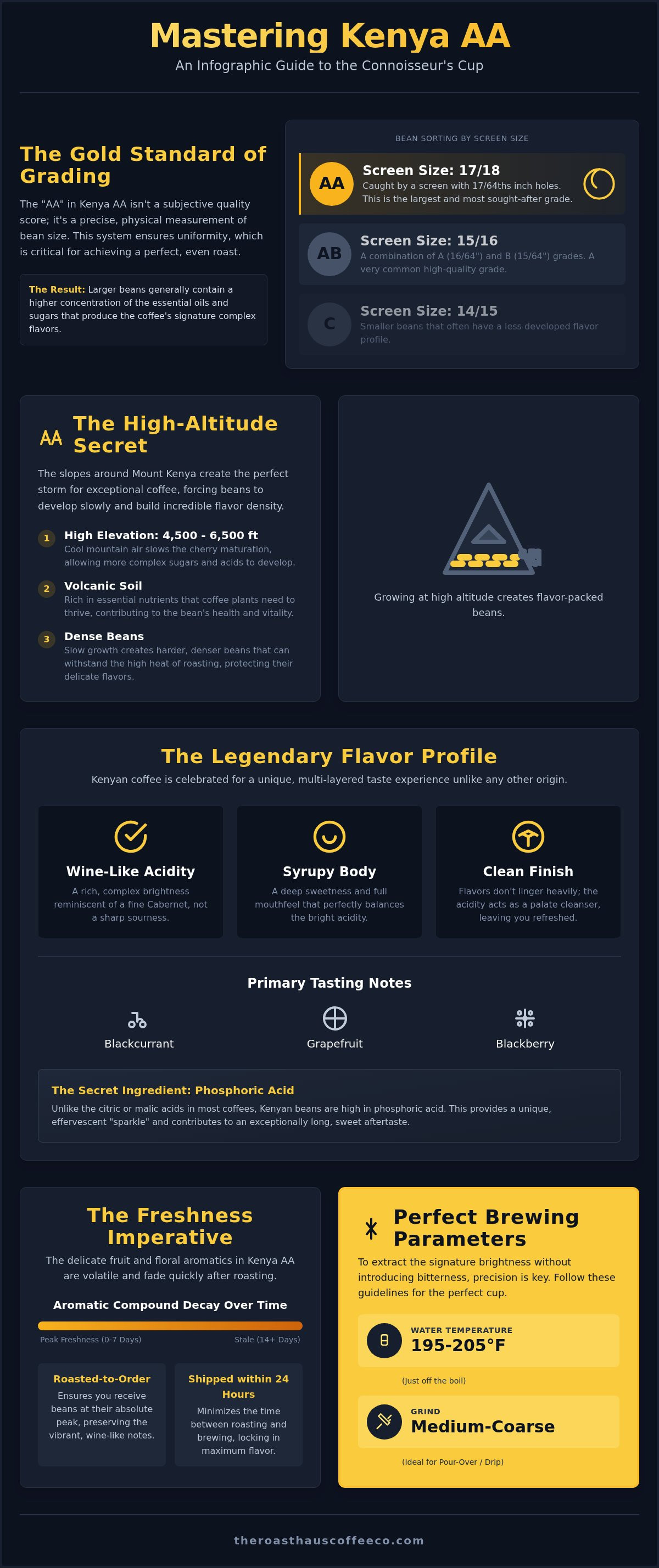
AA beans are the largest available, but size is only half the story. These beans are prized because their large physical structure often correlates with a higher concentration of essential oils. These oils carry the blackcurrant and grapefruit notes that make the origin famous. Smaller beans, like those in the AB or C categories, often lack this same depth of flavor.
The Significance of Screen Size 17 and 18
Sorting happens through a series of metal screens with specific hole diameters. To earn the AA designation, a bean must be large enough to be caught by a screen with 17/64ths of an inch holes. This corresponds to sizes 17 and 18. This mechanical sorting is vital for artisan roasting. Uniformity is the key to a perfect cup. If a bag contains beans of varying sizes, the smaller ones will char while the larger ones remain raw in the center. By selecting only AA beans, we ensure a consistent heat transfer throughout the entire batch. This allows us to develop the sugars perfectly without introducing smoky or bitter off-flavors from burnt smaller beans.
Why High-Altitude Growing Matters
The environment around Mount Kenya provides the perfect laboratory for specialty coffee. Volcanic soil is rich in nutrients that the coffee trees need to thrive. However, the altitude is the real secret. Growing at 4,500 to 6,500 feet creates a high-pressure environment for the plant. The cool mountain air slows down the maturation process of the coffee cherry significantly. This extended time on the branch allows the bean to accumulate more organic acids and complex sugars. Slow growth creates denser, flavor-packed beans that possess a structural integrity you won't find in lower-altitude crops. This density is what protects the delicate, wine-like acidity during the roasting process.
The Legendary Flavor Profile of Kenyan Coffee
The sensory experience of brewing kenya aa coffee beans is unlike any other origin. While many African coffees offer simple citrus notes, Kenyan lots are famous for a deep, wine-like acidity that mirrors a complex Cabernet. This isn't a sharp or sour sensation. Instead, it's a rich brightness that carries layers of dark fruit and zesty aromatics. Much of this flavor comes from the specific SL28 and SL34 varieties commonly grown in the region, which thrive in the high-altitude volcanic soil.
You can expect a distinct set of primary tasting notes in every well-roasted cup:
- Blackcurrant: A tart, dark fruit sweetness that is the signature of the region.
- Grapefruit: A bright, zesty citrus note that provides a refreshing zing.
- Blackberry: A deep, jammy undertone that rounds out the higher acidity.
The finish of a high-quality Kenyan brew is notably clean. This means the flavors don't linger in a heavy, cloying way. Instead, the acidity acts as a palate cleanser, leaving your mouth feeling refreshed. This clarity is a hallmark of the meticulous processing standards enforced by Kenyan cooperatives. When you open a bag of fresh beans, the aroma is often intoxicatingly floral, sometimes reminiscent of hibiscus, underpinned by a deep sweetness that hints at the syrupy body to come.
Understanding Phosphoric Acidity
Most coffees derive their brightness from citric or malic acids. Kenyan beans are unique because they contain high levels of phosphoric acid. This provides a distinct sparkle or effervescence that specialty coffee judges prize. This specific acidity doesn't just provide a punch; it contributes to a remarkably long and sweet aftertaste. It's the reason why a well-roasted cup feels so vibrant from the first sip to the final drop. A USDA report on Kenyan coffee notes that this exceptional quality profile allows these beans to command some of the highest prices in international auctions.
The Role of Wet Processing (Washed Coffee)
The clarity of these fruit notes is the result of a rigorous double-fermentation wet process. After the cherries are picked, the skin is removed and the beans soak in fermentation tanks for up to 24 hours. They are then washed and soaked a second time. This intensive method removes every trace of mucilage, the sticky fruit layer that can lead to inconsistent or earthy flavors. By stripping away these sugars before drying on raised African beds, the innate fruitiness of the bean is allowed to shine through. The result is a refined cup with no muddy residue. You can experience this clarity yourself with our fresh-roasted Kenya AA Supreme, which we roast in small batches to preserve the delicate organic acids of the kenya aa coffee beans.
Freshness vs. Shelf Life: Why Roasted-to-Order is Vital
The bright acidity of kenya aa coffee beans is its greatest asset, but it's also incredibly fragile. These beans contain volatile aromatics that begin to dissipate the moment they leave the roaster. Most large online retailers and grocery stores stock coffee that was roasted weeks or even months ago. By the time that bag reaches your kitchen, the iconic blackcurrant and grapefruit notes have likely vanished. To avoid this, read our guide on choosing the best coffee beans to see why roast dates are the most important detail on any label.
Stale coffee isn't just less flavorful; it's chemically different. Oxygen reacts with the oils inside the bean to create "off" flavors that mask the natural fruitiness. The Kenyan Coffee Origin Report highlights that the high phosphoric acid content in these beans makes them particularly sensitive to poor storage and long shelf lives. We believe that a 24-hour shipping window is the only way to protect your investment and ensure you experience the bean's true character.
The Degassing Phase and Peak Flavor
Freshly roasted coffee needs a short period to rest. During the first 24 to 48 hours after roasting, beans release carbon dioxide. This is known as degassing. If you brew coffee immediately after it pops out of the roaster, the escaping gas can interfere with water contact, leading to an uneven extraction. We ship our Kenya AA Supreme within 24 hours of roasting for a specific reason. The beans spend their degassing phase in the mail. When they arrive at your door, they're ready for immediate brewing at their absolute flavor peak. You should also watch out for beans with a shiny, oily surface. This is a red flag. Oil on the outside of the bean means it has been exposed to too much heat or oxygen. Those oils should stay inside the bean until the moment you grind them.
Small-Batch Craftsmanship in Oklahoma
The Roast Haus Coffee Co. is a family-owned artisan roastery based in Wyandotte, Oklahoma. We've focused on quality and integrity since 2014. Unlike industrial roasters that process massive quantities, we work in small batches. This small-scale production allows us to manage the specific heat requirements of dense kenya aa coffee beans with precision. We don't use automated systems that ignore the subtle changes in ambient humidity or bean temperature. Instead, we use our experience to ensure every batch meets our standards. Choosing a small, independent business means you're getting a product that hasn't been sitting in a distribution center. You're getting coffee that was roasted specifically for you.
How to Brew Kenya AA Beans for Maximum Flavor
Brewing kenya aa coffee beans requires a careful balance. You've invested in a high-grade bean with legendary acidity. If you use water that's too cool, you'll end up with a sour, under-extracted cup that lacks depth. We recommend keeping your water temperature between 195°F and 205°F. This specific range is hot enough to pull out the complex phosphoric acids and sugars without scalding the grounds. To master the basics of your setup and learn about different equipment, check out our guide on how to make coffee at home.
The density of these beans also means they resist extraction more than softer, low-altitude beans. You must use a precise grind size to get the results you want. If your coffee tastes like vinegar, your grind is likely too coarse. If it feels dusty and bitter, you've gone too fine. Small adjustments to your grinder can make the difference between a mediocre morning and a world-class experience.
The Pour-Over Method: Highlighting the Brightness
The Hario V60 and Chemex are the best tools for this origin. These methods use paper filters that trap fine particles and sediment. This highlights the "clean" finish we discussed earlier and lets the floral aromatics shine. Use a brewing ratio of 1:16 or 1:17. This means using about 20 grams of coffee for every 320 to 340 grams of water. This slightly thinner ratio prevents the intense fruit notes from becoming over-concentrated or muddy. A medium-fine grind, similar to table salt, works best here. It ensures water flows through at the right speed to extract those vibrant berry notes without picking up bitter tannins.
French Press: A Bold, Syrupy Alternative
If you prefer a heavy, syrupy body, use a French Press. This immersion method allows the coffee oils to remain in the final cup. It brings out the deep blackcurrant sweetness and creates a mouthfeel similar to a full-bodied red wine. You must use a coarse, consistent grind to avoid a gritty, "muddy" texture. Achieving this consistency is only possible with a quality coffee grinder. A poor-quality blade grinder will produce tiny dust particles called "fines" that over-extract and make your bright Kenyan coffee taste bitter. Don't let a bad grind ruin a world-class bean.
Ready to put these techniques to the test? Order a bag of our Kenya AA Supreme and experience the difference that fresh-roasted quality makes in every sip.
Experience Kenya AA Supreme from The Roast Haus Coffee Co.
Kenyan coffee is widely regarded as the pinnacle of single-origin offerings. Our Kenya AA Supreme represents the absolute best of what this legendary region produces. We don't believe in letting these world-class beans sit in a warehouse or on a retail shelf for weeks at a time. Instead, we follow a strict roasted-to-order mantra. This means your beans aren't touched by heat until your order is actually processed. We ship every bag within 24 hours of roasting. It's the only way to ensure the vibrant, wine-like acidity and blackcurrant notes actually make it to your kitchen at their peak intensity.
From Our Oklahoma Roastery to Your Door
The Roast Haus Coffee Co. is an earnest, family-owned venture based in Wyandotte, Oklahoma. When you buy from us, you're dealing directly with a husband-and-wife team dedicated to the integrity of our craft. We've been roasting since 2014; we've never lost our focus on the tangible benefits of small-batch production. We source only the highest-density kenya aa coffee beans for our Supreme line. We monitor every roast manually to ensure these beans develop their flavors perfectly without the interference of automated industrial systems. If you live in or near Wyandotte, you don't even have to wait for the mail. We offer a convenient local pickup option for our Oklahoma neighbors. It's a great way to support an independent business while getting your hands on the freshest coffee in the state.
Never Run Out with a Coffee Subscription
Consistency is the secret to a great morning routine. Our kenya aa coffee beans are in high demand; the best way to secure your supply is through a recurring order. You can learn more about how these programs work in our guide to the best coffee subscription services in 2026. Subscribers are our top priority. They always receive the absolute freshest batches from our daily roasts. You can easily manage your delivery frequency through our simple customer portal. Whether you need a fresh bag every week or once a month, you have total control over the schedule. This flexibility ensures you never have to settle for stale, oily grocery store alternatives again. We invite you to join our community of coffee lovers who refuse to compromise on quality or freshness.
Elevate Your Morning with Authentic Kenyan Quality
You now understand why kenya aa coffee beans are considered the gold standard for specialty coffee lovers. From the precise screen size sorting to the unique phosphoric acidity that creates a wine-like sparkle, these beans offer a sensory experience that lower-altitude crops simply can't match. However, the most important takeaway is that these delicate fruit notes only survive when the coffee is truly fresh. Buying from a warehouse or a grocery shelf will always leave you with a flat, stale cup that hides the bean's true potential.
At The Roast Haus Coffee Co., we're proud to be a family-owned and operated roastery in Wyandotte, Oklahoma. We treat every batch of Kenya AA Supreme with the respect it deserves, roasting in small quantities to ensure peak flavor development. We don't roast until you order, and we ship within 24 hours to protect the integrity of your brew. Shop Kenya AA Supreme: Roasted to order and shipped within 24 hours. Don't forget that we offer free shipping on all orders over $65. We're excited for you to experience the vibrant, complex flavors that only a fresh-roasted Kenyan bean can provide.
Frequently Asked Questions
What does the "AA" stand for in Kenya AA coffee?
The "AA" designation refers to the physical size of the bean based on the Kenyan grading system. These beans are sorted using metal screens. To be graded as AA, the beans must be large enough to be caught by a screen with 17/64ths of an inch holes. This corresponds to the largest and often densest beans in the harvest. Larger beans generally contain more essential oils, which leads to a more intense flavor profile in your cup.
Is Kenya AA coffee high in caffeine?
Kenya AA beans don't contain significantly more caffeine than other Arabica varieties. Most Arabica beans contain about 1.2% to 1.5% caffeine by weight. However, because Kenyan beans are grown at high altitudes of 4,500 to 6,500 feet, they are much denser than low-grown varieties. This density means you might use fewer beans by volume to reach your desired weight, but the caffeine content per gram remains standard for the species. It's the flavor, not the caffeine, that is more intense.
Should I drink Kenya AA with milk or sugar?
We recommend drinking kenya aa coffee beans black to fully experience the legendary wine-like acidity and fruit notes. Adding heavy milk or cream can mask the delicate phosphoric acidity and blackcurrant flavors that make this origin famous. If you prefer a smoother cup, try a small amount of sugar to balance the brightness. Ultimately, the best way to enjoy it is however you find it most satisfying in your own morning routine.
What is the best roast level for Kenya AA beans?
A light to medium roast is ideal for Kenyan coffee. Roasting too dark will destroy the volatile organic acids that provide the signature grapefruit and berry tasting notes. We focus on a medium roast for our Kenya AA Supreme. This level develops enough sugar for a syrupy body while preserving the "sparkle" of the bean's natural acidity. Darker roasts often result in an oily surface and a smoky flavor that hides the origin's unique character.
Why is Kenyan coffee more expensive than other origins?
Kenyan coffee commands higher prices because of the country's unique auction system and high quality standards. Direct exports in March 2026 fetched an average of $397 per 50kg bag, which is significantly higher than many other regions. The labor-intensive double-fermentation process and the strictly regulated grading system ensure a premium product. Additionally, the limited supply of high-altitude AA grade beans creates high demand among specialty roasters who value the origin's complex and vibrant flavor profile.
How long do Kenya AA beans stay fresh after roasting?
You'll find the peak flavor between 48 hours and two weeks after the roast date. The bright acidity begins to fade once the beans are exposed to oxygen for extended periods. This is why we ship our kenya aa coffee beans within 24 hours of roasting. If you store them in an airtight container away from light, they'll remain delicious for about 30 days. After that point, the vibrant fruit notes will start to taste flat.
Can I use Kenya AA beans for espresso?
You can certainly use these beans for espresso, but be prepared for a very bright and punchy shot. The high acidity of Kenyan coffee creates a "fruit bomb" effect that works well in milk-based drinks like lattes or cappuccinos. For a straight shot, you'll need a precise grind and a slightly higher water temperature to balance the intensity. It's a popular choice for baristas who want to showcase a modern, acidic profile rather than a traditional chocolatey one.
Where can I find Kenya AA coffee in Oklahoma?
You can find fresh-roasted Kenya AA Supreme at our roastery in Wyandotte, Oklahoma. We are a family-owned business located at 66301 E Highway 60. While we primarily operate through our online store, we offer a local pickup option for our neighbors in the region. This allows Oklahoma residents to get their coffee directly from the source without waiting for shipping. It's the best way to support a local artisan business while ensuring your beans are fresh.

