


Availability can matter more than the first cup you taste. The most useful questions to ask a wholesale coffee roaster are whether your usual bag sizes and whole-bean options can be supplied consistently, how much notice reorders need, and how roasting and delivery schedules affect freshness. Clarify these practical details before building a menu or retail plan around a coffee.
It’s reasonable to expect dependable supply without compromising the flavor and quality your customers value. A clear conversation about order options, terms, support, and roast timing helps you assess whether a roaster fits the way your business operates.
This guide covers the questions that reveal how availability works, what a commitment involves, and what support you can expect. It also explains what to ask about coffee quality, custom roasting, bag sizes, and whole-bean orders, so you can compare the details that matter to your business.
Key Takeaways
- Clarify minimum order expectations, payment terms, contract length, and any equipment tied to exclusivity before committing.
- Ask what training and ongoing support can help your team prepare and serve coffee consistently.
- Compare coffees by origin, grade, roast profile, and the roaster’s approach to quality, not just by name.
- Discuss roast timing, delivery schedules, and private-label options to see how coffee supply can fit your business.
- Match bag sizes and whole-bean orders to your sales pace, storage, and preferred brewing approach.
1. Do they require contracts or offer terms?
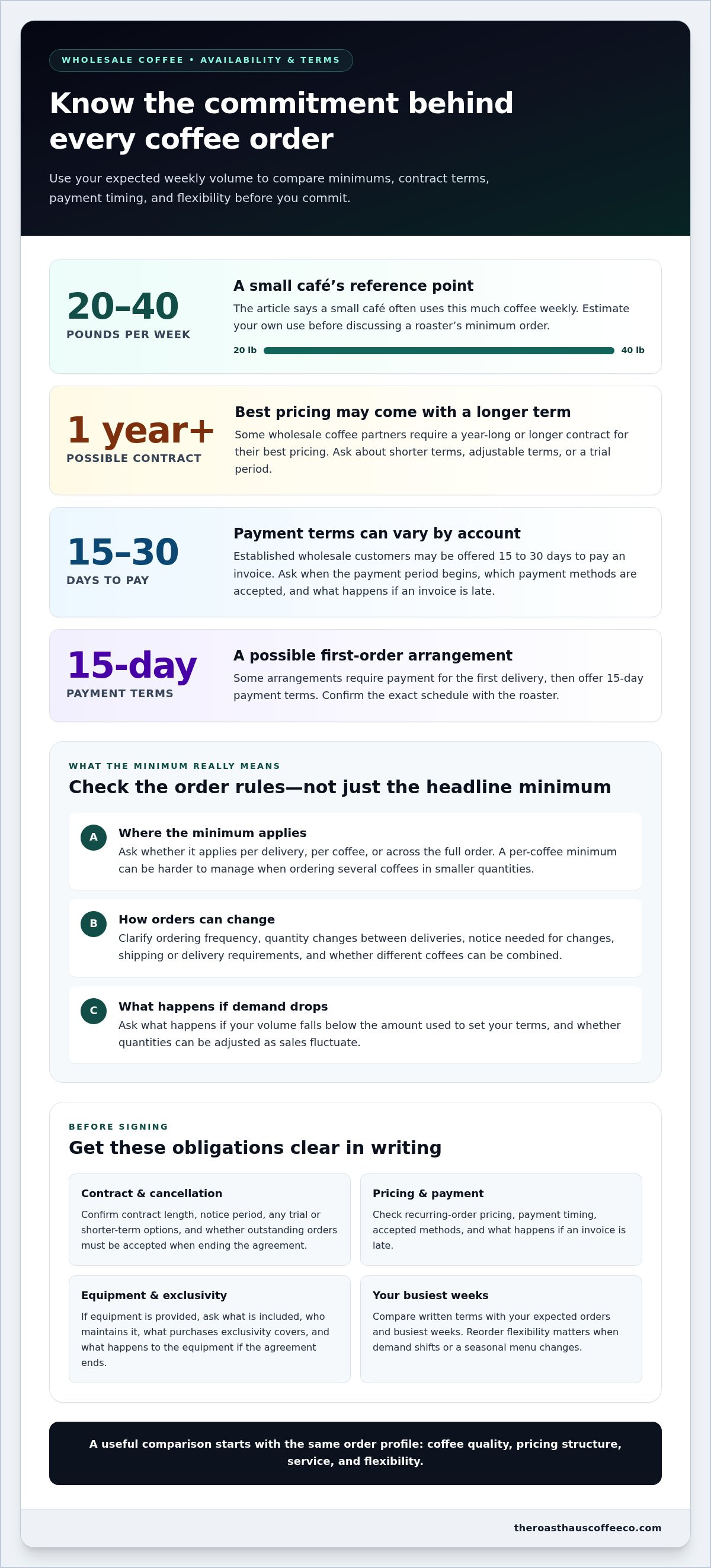
Compare wholesale roasters using the same order profile: coffee quality, pricing structure, service, and flexibility. Ask each to explain how recurring orders are priced, what happens when demand changes, and what support comes with an account. This makes the questions to ask a wholesale coffee roaster specific and useful.
Start with your expected volume. A small café often uses 20 to 40 pounds of coffee per week, so estimate your weekly use before discussing a minimum order. Ask whether the minimum applies per delivery, per coffee, or across the full order. A per-coffee minimum can be harder to manage if you want several offerings in smaller quantities.
Clarify how often you can order and whether you can adjust quantities between deliveries. If sales fluctuate, ask how much notice is needed for changes. Find out whether shipping or delivery requirements affect the minimum order and whether you can combine different coffees. These details reveal the real commitment behind the stated minimum.
Read the contract length alongside its pricing conditions. Some wholesale coffee partners require a year-long or longer contract for their best pricing. Before committing, ask whether shorter terms, adjustable contract terms, or a trial period are available. Also ask what happens if your volume falls below the amount used to set the terms.
Payment timing deserves a clear answer before the first order. Established wholesale customers may be offered 15 to 30 days to pay an invoice. Some arrangements require payment for the first delivery, then offer 15-day payment terms. Ask when the payment period begins, which methods are accepted, and what happens if an invoice is late.
Equipment can create another obligation. Some roasters provide equipment in exchange for an exclusive coffee-purchasing contract. Ask what equipment is included, who maintains it, and whether exclusivity applies to every coffee purchase or only specified products. Get the terms in writing, including what happens to the equipment if the agreement ends.
Ask how cancellation works before signing. Clarify the required notice period, whether you must accept outstanding orders, and whether ending the agreement affects equipment obligations or pricing. The contract should explain each step, from giving notice to settling the final invoice.
Before signing up, ask about the minimum order, contract length, payment schedule, cancellation process, and any equipment or exclusivity conditions. Compare the written terms with your expected orders and busiest weeks. Reorder flexibility is among the key questions to ask a wholesale coffee roaster when demand shifts or a seasonal menu changes.
2. Training, consulting, and customer support
A wholesale relationship involves more than deliveries. Ask what training, consulting, and ongoing support the roaster provides, then connect each answer to a task your team handles. A new barista, for example, may need help dialing in espresso, while a manager may need guidance choosing coffees for a changing menu.
Be specific about training. Does it cover espresso preparation, batch brewing, grind adjustment, storage, or explaining a coffee’s origin to customers? Ask whether instruction is available to the whole team or only designated staff. Find out whether it comes as a written guide, a scheduled session, or advice during an account conversation.
Use a real service scenario to understand the practical value. If an espresso tastes sour after a new coffee arrives, ask what troubleshooting guidance the roaster can offer. A useful discussion may consider grind size, dose, brew time, and roast profile. Ask which issues the roaster can help diagnose and what details your staff should provide.
Consulting can also support decisions beyond the bar. Ask whether the roaster can discuss how an origin or roast profile might suit your menu, customer preferences, and brewing method. If you plan to add a specialty coffee, discuss how staff can describe its flavor clearly without relying on technical terms customers may not know.
Support matters during routine reordering, too. Ask how to place repeat orders, change quantities, and report a delivery problem. Find out which details help the roaster process a request accurately, such as the coffee, bag format, and delivery address. A simple written reorder routine can reduce confusion when several employees handle purchasing.
Ask how delivery updates are shared and who handles a missed or damaged shipment. Clarify what information to provide, such as the order reference, delivery date, and affected items. These steps give your team a clear response plan without assuming every issue follows the same process.
Before choosing a roaster, describe a typical week at your business. Include staff experience, brewing methods, customer questions, and who handles orders. Then ask what support fits those needs and how your team can access it as new employees join. Specific examples make it easier to judge whether the relationship supports daily work.
Use a tasting as a practical training exercise: compare coffees from different origins and ask staff to describe aroma, acidity, body, and finish. To choose coffees for that discussion, browse coffee selections for tasting.
3. Coffee bean grades and quality standards
A roaster can explain quality through grading criteria, sourcing details, and repeatable roast results. Ask how suppliers grade green coffee, how each lot is evaluated, and what checks help keep the finished cup consistent. For ethical sourcing, ask how the roaster traces coffee to its origin and explains the terms behind producer relationships.
Start with the grade itself. Ask which grading system applies to each coffee and what it measures, such as bean size, defects, or other lot characteristics. A grade can describe green coffee, but it doesn’t tell you everything about flavor. Ask the roaster to relate the grade to a sample you can taste.
Use a side-by-side tasting to judge quality in the cup. Compare coffees by aroma, acidity, body, sweetness, and finish, then ask how those qualities suit your brewing method. A light, fruity roast may behave differently in espresso than a darker, bolder profile. Ask for the roast profile and a clear description of the intended flavor.
Consistency takes more than a good first sample. Ask how the roaster records and repeats a roast profile, and how it evaluates new batches against the target cup. Taste the same coffee from separate deliveries and note any changes in aroma, body, or finish. Ask how the roaster investigates a batch that tastes different.
Ask where the coffee comes from and what traceability information accompanies it. Direct trade relationships can support traceability and typically provide higher-quality coffee. Ask what the roaster means by direct trade in practice, which suppliers are involved, and how it shares information about the farm or producing region.
Ethical claims need clear explanations. Ask what a label or sourcing term means, who verifies it, and what information supports the claim. Fairtrade certification is described as ensuring coffee producers receive a minimum price above the market commodity rate. In the United States, both the farm and the business roasting and packing coffee need certification under the USDA National Organic Program for it to be sold as certified organic.
Finally, ask how blends and single-origin coffees are selected and maintained. A blend may combine coffees from different origins to create a steady flavor profile, while a single-origin coffee highlights a particular place. Ask what happens when a component coffee changes and how the roaster preserves the intended taste without misrepresenting the coffee’s sourcing.
4. White-label coffee and roasting to order
Ask whether the roaster offers private-label coffee, roasting to order, or both. White-label coffee lets a business sell roasted beans under its own brand, while roasting to order describes when the coffee is produced. These are separate decisions. A retail shop may want its own packaging while still needing an agreed roasting and delivery schedule.
For U.S. certified organic coffee, both the farm and the business that roasts and packs it need certification under the USDA National Organic Program. For other food-safety and labeling details, ask who manages package information and what handling practices apply. Clarify how the label will describe the coffee, its origin, and any claims, keeping the brand and product details accurate.
Freshness depends on the roast date and the time between roasting and brewing. Coffee tastes best a few days after roasting and within a month of being roasted. Some specialty roasters ship coffee on the day it is roasted or the following day, while others fulfill orders from inventory that may already be a few weeks old. Ask whether each shipment is roasted for your order and how roast dates appear on bags.
Plan delivery around your inventory, not just the roast schedule. Ask what ordering cutoff affects the next roast, how delivery timing is communicated, and what happens if an order is delayed. Request a clear process for urgent replenishment, distinguishing an emergency option from the normal fulfillment routine. This helps you set reorder points without relying on assumptions.
Whole coffee beans also need time to rest after roasting. Espresso beans generally need about 5 days of rest to pull balanced shots. If your menu depends on espresso, coordinate the roast date, delivery date, and service date. For retail bags, explain how quickly customers are likely to use the coffee, then choose a schedule that keeps stock moving while preserving freshness.
Ask how the roaster handles white-label artwork, bag specifications, and approval before production. Confirm who supplies packaging, who checks the printed details, and how a revised blend or origin affects existing labels. A straightforward approval step can prevent an outdated description from appearing on a new coffee’s packaging.
Equipment support may be part of a wholesale relationship, but it can come with conditions. Some wholesale roasters provide and maintain equipment for restaurant and hotel clients. Ask whether equipment support is tied to exclusive purchasing, what maintenance covers, and who handles service requests. Keep equipment terms separate from the coffee’s roast and delivery plan.
Before committing, map one order from production through the customer’s cup. Include private-label approval, roast timing, bag details, delivery, and any equipment obligations. This practical walkthrough can expose gaps that a general promise of fresh coffee or custom branding may miss.
5. Bag sizes and whole-bean coffee
Bag size affects inventory, freshness, and how easily customers can buy your coffee. Ask which sizes are available for wholesale orders, whether sizes differ by coffee, and whether one order can combine them. Don’t assume the smallest retail bag suits a café or that a large bag works for every shelf. Match each format to its users and likely sales pace.
Estimate demand before choosing a bag format. A busy café can use well over 100 pounds of coffee per week, while a smaller account may need a different ordering pattern. Track the coffee used for espresso, batch brewing, and retail sales separately. Then ask how the roaster’s minimum order applies across those needs, so the size you select doesn't leave slow-moving stock.
For a practical yield estimate, one pound of coffee makes roughly 30-40 eight-ounce cups at a typical brew ratio. Use your actual recipes to refine that estimate. A stronger brew, larger serving, or calibration adjustment changes how many cups each bag produces. Compare the resulting use with your weekly sales, then choose order quantities that keep service supplied without letting retail bags sit.
Whole-bean coffee gives a business more control over grinding for different brew methods. Ask whether the coffee arrives whole bean, how staff should store opened bags, and how long the beans retain quality under your storage routine. Whole beans stored in an airtight container at room temperature stay fresh for about 4 to 6 weeks after roasting. Keep bags sealed between uses and rotate older roast dates forward.
Retail packaging needs its own plan. Consider shelf space, customer buying habits, and how much coffee people are likely to use at home. Ask how roast dates appear on each bag and whether the packaging clearly identifies the product. If you sell several coffees, distinguish them by origin, roast profile, or another accurate detail. For example, packaging for an organic single-origin coffee should clearly identify the product.
Ask how bag size affects reordering and delivery planning. If your café serves espresso and sells smaller retail bags, determine whether both formats can go into a routine order. Check how changes in demand affect the quantity you request. A simple inventory record with bag size, roast date, and remaining stock helps staff make consistent reorder decisions.
For a sample plan, estimate weekly cups, retail bag sales, and storage capacity, then compare that forecast with available sizes. The right format follows use, not habit. If you want to add an organic whole-bean option, choose Ethiopia Limu Organic for your lineup.
The Roast Haus Coffee Co.: Kenya AA Supreme
The Roast Haus Coffee Co. gives you specific coffees to consider as you assess fit, flavor, and order options. Kenya AA Supreme offers a clear starting point for discussing a coffee with your menu or retail lineup. You can also consider Decaf Swiss Water Process, Ethiopia Limu Organic, and Honduras Morning Splendeur when matching choices to different customer preferences. The company ships its coffee within 24 hours of roasting, a useful detail when freshness matters to your stock planning. Compare these offerings with the qualities your business values, such as roast timing, origin, and whole-bean formats. For more information about the coffees, visit The Roast Haus Coffee Co. website.
Choose a Coffee Partner That Fits Your Next Stage
Take a practical next step: decide what role coffee should play in your menu or retail plans, then choose options that support it. The questions to ask a wholesale coffee roaster turn broad preferences into useful criteria, helping you assess the fit for your customers and day-to-day operation.
The Roast Haus Coffee Co. offers Kenya AA Supreme, Decaf Swiss Water Process, and Ethiopia Limu Organic. These provide distinct options to consider as you shape a lineup around customer preferences. Focus on the coffee types you want to represent and how each fits your business, rather than choosing by name alone.
Keep your priorities close as you take the next step. A clear sense of your goals makes a conversation more useful and helps you decide what belongs in your coffee program. Contact The Roast Haus Coffee Co. to explore its coffee offerings, and move forward with a choice that feels right for your business.
Frequently Asked Questions
Will they be available?
Availability depends on the coffee, order timing, and how the roaster fulfills orders. Ask whether your preferred coffee is roasted for each order or drawn from finished inventory, and what happens if a particular lot runs out. For a seasonal menu, identify a suitable alternative before launch. That gives your team a practical plan if the original coffee cannot fill a future order.
Are Their Contracts Fixed or Flexible?
Contracts can set a fixed commitment or allow changes under stated conditions. Read the clauses on renewal, volume adjustments, exclusivity, and ending the agreement. A business with seasonal demand, for example, should examine whether order quantities can shift during the term. Get the terms in writing, including how an agreed change takes effect, so your purchasing plan matches the commitment.
Are They Certified to Roast and Sell Fairtrade Coffee?
Ask which coffees carry Fairtrade certification and what the certification covers. Fairtrade certification is described as ensuring coffee producers receive a minimum price above the market commodity rate for coffee beans. Treat the claim as specific to the coffee and its supply chain, not as a blanket label for everything a roaster sells. Clear product documentation helps staff explain the sourcing claim accurately to customers.
Do They Buy and Sell Direct Trade?
Direct trade relationships can support coffee traceability and typically provide higher-quality coffee. Ask how the roaster uses the term, which parties are involved, and what information links a finished coffee to its origin. For a blend, ask whether sourcing details apply to every component or only some. Those distinctions help you describe the coffee honestly instead of relying on a broad label.
Do They Provide Certified Organic Coffee?
Ask which specific coffees are certified organic and who holds the relevant certification. In the United States, both the farm and the business that roasts and packs coffee need certification under the USDA National Organic Program for the coffee to be sold as certified organic. A coffee name or sourcing description alone doesn’t establish certification. Make sure product packaging and sales materials use the claim accurately.
Do they require contracts or offer terms?
Some wholesale coffee partners offer established customers 15 to 30 days to pay an invoice; others may collect payment for an initial delivery before offering 15-day terms. Ask when an invoice becomes due, how payment is handled, and whether the arrangement changes after an account is established. Separately, clarify whether ordering creates a continuing commitment or simply covers each individual purchase.
How do they source their coffee?
Ask the roaster to explain the route from origin to your order. Useful details include the producing region, the supplier relationship, and how the roaster identifies the coffee’s lot. If you serve a blend, ask whether its components can change and how those changes affect the flavor description. These answers give staff clear, accurate language for customers who ask where their coffee comes from.
What are wholesale coffee bean prices, minimum order quantities, and shipping costs?
Wholesale prices, minimums, and shipping costs depend on the coffee, order format, delivery destination, and fulfillment schedule. Ask for an itemized quote that separates the coffee from freight and any order-related charges. Compare quotes using the same bag sizes and order quantities. Then estimate how quickly your business uses each format, so the minimum suits your inventory needs rather than creating excess stock.

