


Match the coffee to the brewer: use pods for a single-serve machine and ground coffee for a drip maker or French press. A coffee supplier for Grand Lake vacation rentals should make it easy to keep the right format stocked, whether you order bags as needed or choose recurring delivery. The best fit depends on how guests brew and how often your property turns over.
A ready-to-use coffee station gives guests an easy first cup without an early trip out, and brewing in the rental can help them save on café visits. When comparing a coffee supplier for Grand Lake vacation rentals, focus on the practical details: coffee that works with the equipment, enough for the stay, and clear brewing and cleanup instructions.
This guide compares pods and ground coffee, explains what to consider when choosing a brewer and planning supplies, and shows how specialty coffee can add a thoughtful touch to a Grand Lake rental. You’ll also learn how bulk orders or recurring delivery can fit your restocking routine, helping you choose a coffee supplier for Grand Lake vacation rentals that supports a welcoming guest experience without adding needless work between bookings.
Key Takeaways
- Choose a coffee format that matches the brewer guests will find in the rental, and make brewing and cleanup instructions easy to follow.
- Estimate supplies around guest capacity and booking turnover so the coffee station feels ready without creating avoidable waste.
- Compare bulk restocking with recurring delivery by considering storage space, usage patterns, and how you manage turnovers.
- Learn how pods and ground coffee differ in convenience, equipment fit, and the kind of brewing experience they offer.
- Use specialty-coffee quality as one way to make the first cup feel more considered, then explore the available roast options.
Using local coffee to create a memorable guest experience
A useful coffee station pairs the right coffee with a brewer guests can use easily. Consider offering decaf, tea, and coffee with a local connection to suit different preferences. For example, Decaf Swiss Water Process gives guests a decaffeinated coffee option, while tea suits those who don’t drink coffee.
Guest-Friendly Coffee Options
Decaf, tea, and locally sourced coffee each add a different option to the welcome setup. Decaf keeps coffee available for guests avoiding caffeine, while tea suits those who prefer another hot drink. A local product can give the station a sense of place. Label each item clearly so guests can choose without guessing.
For a Grand Lake rental, consider how each choice fits the coffee maker and guest experience. Decaf Swiss Water Process is an option for guests who want decaffeinated coffee. Tea is separate from the coffee supply and doesn’t use the coffee maker’s usual coffee format.
Coffee Stocking for Guest Stays
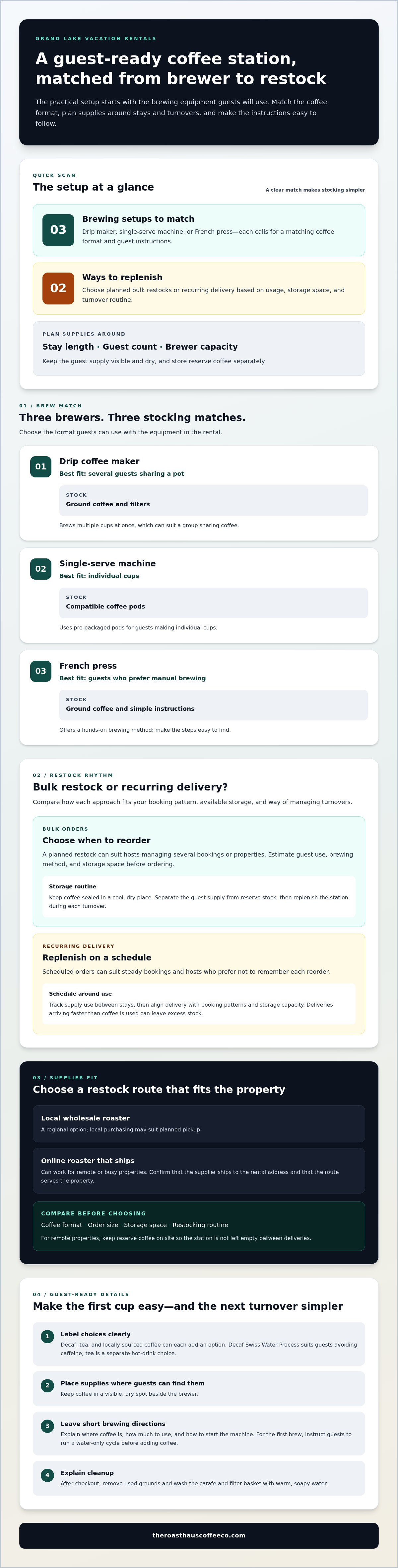
Plan coffee supplies around the length of each stay, the number of guests, and the brewer’s capacity. A drip coffee maker can brew multiple cups at once, making it useful for groups sharing a pot. For a single-serve machine, consider supplying coffee pods. Keep supplies in a visible, dry spot beside the brewer.
Use this table to match the setup to how guests are likely to brew:
| Option | Best fit | Guest convenience | Stocking consideration |
|---|---|---|---|
| Drip coffee maker | Several guests brewing together | Makes multiple cups at once | Provide ground coffee and filters |
| Single-serve machine | Guests making individual cups | Uses pre-packaged pods | Provide compatible coffee pods |
| French press | Guests who prefer manual brewing | Offers a hands-on method | Provide ground coffee and simple instructions |
Choose based on guest capacity and how easily you can restock the matching coffee format.
Convenience and Cost Savings
A coffee maker lets guests prepare a cup in the rental instead of going out early to find a café. Brewing there can also help guests save on café visits during their stay. For a group, a drip maker can serve several people from one pot; a single-serve machine suits guests who prefer individual cups.
Place a short manual beside the coffee maker. Explain where to find the coffee, how much to use, and how to start the machine. For the first brew, tell guests to run a water-only cycle before adding coffee. Include cleanup instructions: remove used grounds and wash the carafe and filter basket with warm, soapy water after checkout. Clear directions help guests use the equipment and leave it ready for the next stay.
Bulk ordering and recurring coffee delivery
For a Grand Lake rental, compare roasters selling coffee in bulk with suppliers offering recurring orders. For properties near Grand Lake o' the Cherokees, delivery depends on whether the supplier ships directly to the rental address.
Nearby wholesale roasters and online roasters that ship are the main options to consider as a trusted coffee supplier for Grand Lake vacation rentals. Compare order format and restocking needs, and choose a delivery approach that suits the property.
Bulk Coffee Orders
A bulk order combines more coffee into a planned restock, which can suit hosts managing several bookings or properties. Unlike recurring delivery, it lets the host choose when to reorder rather than setting an ongoing schedule. Before ordering, estimate how many guests use the station, which brewing method they use, and how much storage space is available.
Keep bulk coffee sealed in a cool, dry place. Separate the guest supply from reserve stock, then replenish the station during each turnover. This makes it easier to spot low supplies without opening every package.
Recurring Coffee Delivery
Recurring delivery replenishes supplies on a schedule, rather than relying on the host to remember each order. It can help a rental with steady bookings maintain a consistent supply for morning brewing. Set the schedule to fit booking patterns and storage capacity: deliveries that arrive faster than guests use the coffee can leave you with excess stock.
Track usage between stays before settling on a routine. Note when supplies need replenishing, then align future deliveries with the property’s turnover rhythm. A subscription suits hosts who prefer scheduled orders to occasional bulk restocks.
Local Wholesale Roasters
Local roasters near Grand Lake that offer wholesale or bulk orders give rental hosts a regional option. Online roasters that ship offer another route, especially for hosts who want to order without visiting a shop. The main difference is fulfillment: local purchasing may suit planned pickup, while shipped orders can work for remote or busy properties.
Compare options by coffee format, order size, and how you’ll restock. For example, a host seeking a regional touch may prioritize a local roaster, while one managing supplies remotely may prefer shipped orders.
Delivery to Remote Properties
For a cabin outside central Grand Lake or near Wyandotte, delivery depends on the property address and the supplier’s shipping route. A shipped order can reduce the need to collect supplies in person, but plan replenishment around the rental’s access and turnover routine.
Keep a reserve supply on site so a busy booking stretch doesn’t leave the coffee station empty between deliveries. Store that reserve separately, track what gets used, and reorder before the guest-facing supply runs out. Hosts comparing scheduled orders can explore recurring coffee delivery with The Roast Haus Coffee Co. as one way to organize replenishment.
Common vacation-rental coffee stocking mistakes
For a Colorado vacation rental, keep the coffee station clean, store coffee sealed, and give guests clear handling instructions. Property operators must also follow the lodging and food-handling rules that apply to their operation.
A common mistake is stocking coffee that doesn’t suit the machine. Ground coffee and paper filters work with many drip makers, while a pod machine needs compatible pods. Before each restock, match the coffee format to the equipment and check that filters or pods are on hand. A mismatch leaves guests with supplies they can’t use.
Another mistake is treating the guest-facing supply as the entire inventory. A busy stretch of bookings can use more coffee than expected, while excess open stock can lose freshness. Keep reserve coffee sealed and separate from the container guests use. During each turnover, check the remaining supply and replenish it before the next arrival.
- Match the supply: Pair ground coffee with the machine and filter type.
- Protect the reserve: Store unopened coffee in a dry, sealed place.
- Review turnover needs: Refill the guest station after checking what remains.
Leaving old grounds or a dirty carafe is another avoidable lapse. After checkout, remove leftover grounds, wash the carafe and filter basket with warm, soapy water, then wipe the machine exterior with a damp cloth. Deep-clean the coffee maker every few months to remove residue and mineral deposits. A simple turnover checklist helps make these steps routine.
Don’t overlook instructions. Guests unfamiliar with the machine may use too much coffee, skip a needed filter, or leave grounds behind. Place concise directions beside the brewer. Explain the coffee format, basic brewing steps, and where used grounds belong. For the first pot, tell guests to run a water-only cycle before brewing.
Storage mistakes can also undermine the setup. Leaving a bag open beside a warm appliance exposes coffee to air and heat. Keep working quantities in a closed container away from the machine, and leave unopened packages sealed until needed. Label decaf clearly so guests can distinguish it from regular coffee without opening multiple bags.
Finally, don’t change the setup without updating its supplies and instructions. Replacing a drip maker with a pod machine changes what guests need to brew. During turnover, confirm that the machine, coffee, filter or pod supply, and written directions all match. This final check catches small stocking errors before they interrupt a guest’s first morning cup.
Keep the brewer and coffee station clean, store reserve coffee unopened in a dry, sealed place, and give guests clear handling instructions. Operators must also comply with the lodging and food-handling rules that apply to their operation.
Providing coffee pods or ground coffee
Start with the coffee maker, then choose the matching format. A single-serve machine needs compatible coffee pods, while a drip maker or French press uses ground coffee. Supplying the wrong format leaves guests with coffee they can’t brew. Match the product to the equipment before setting up the welcome station.
For a single-serve brewer such as a Keurig, provide compatible pods. Pods make individual cups without measuring loose grounds, which can suit guests with different morning routines. Choose a clear selection and keep the pods together beside the brewer. Guests shouldn’t need to search cupboards for the right fit.
Ground coffee works with brewers that accept loose grounds. A drip machine can make multiple cups in one pot, while a French press gives guests a manual brewing option. Keep the coffee near the matching equipment and label the container with simple directions. That small step helps first-time users distinguish ground coffee from pods.
| Coffee format | Matching brewer | Guest experience | Host stocking step |
|---|---|---|---|
| Pods | Compatible single-serve machine | Individual cups with little measuring | Match pods to the machine |
| Ground coffee | Drip coffee maker | Can brew several cups together | Supply the required filter |
| Ground coffee | French press | Manual brewing experience | Place clear brewing directions nearby |
A French press can suit hosts looking for a setup without paper filters. Often made of glass and stainless steel, it requires guests to brew manually. That differs from pods, which prioritize individual serving convenience, and drip coffee, which can make a shared pot. Choose based on the equipment and the guest experience you want to offer.
Make each format unmistakable. Store pods beside the single-serve machine and place ground coffee near the drip maker or French press. If the rental has more than one brewer, label each supply by machine. Clear placement prevents guests from trying to use pods in a French press or grounds in a pod brewer.
Before each arrival, confirm the brewer matches the coffee format, replenish the correct supply, and leave concise instructions. For a pod machine, explain where the pods go. For ground coffee, show guests how to add it and use the filter or French press. This simple setup gives guests a usable choice without complicating the coffee station.
Vacation rental hosts should provide coffee pods when their property has a single-serve coffee maker such as a Keurig. Let the brewer determine the coffee supply: check which machine the property has, then leave the matching format. This ties the choice to the equipment guests will use, rather than choosing coffee first and considering the machine later. For a single-serve coffee maker, pods are the appropriate option. Keeping that match in mind makes it straightforward to prepare a welcome station suited to the property’s brewer.
Specialty-grade coffee
Specialty-grade coffee gives rental hosts a quality marker to consider when choosing beans for guests. The threshold identified for specialty-grade coffee is 80 points. That score can help distinguish a specialty selection from coffee chosen without a comparable grade reference. It doesn’t tell you which flavors every guest will prefer, so pair the quality marker with a guest-friendly brewing setup.
Use the score as a starting point, then consider the coffee’s origin and tasting notes. A bag might describe flavors such as citrus, chocolate, or nuts. These terms give guests a useful preview, though individual preferences vary. Make tasting notes easy to read and offer a straightforward choice rather than a long list of unfamiliar terms.
For a rental coffee station, consider how guests will use the beans. A smooth, approachable cup may suit someone making a quick morning brew, while a guest who enjoys exploring coffee may appreciate a more distinctive flavor profile. A short card with the origin and tasting notes adds context without turning the station into a lesson.
Brewing method also shapes the experience. A drip maker can produce a balanced pot for sharing, while espresso preparation makes a concentrated cup. Don’t assume one grind or preparation suits every brewer. Match the coffee format and grind to the equipment, and explain the intended method in concise instructions. A mismatch can make good beans difficult to brew well.
Use a simple selection process for the rental:
- Look for the 80-point specialty-grade threshold as a quality reference.
- Read the origin and tasting notes to understand the coffee’s character.
- Match the coffee format and grind to the rental’s brewing equipment.
- Give guests a brief description so they can choose with confidence.
For example, place the coffee’s origin and flavor notes beside the brewer, then provide a familiar preparation option. This gives guests a clear introduction without requiring specialist knowledge. Keep the language plain: name the coffee, describe its flavor notes, and explain how to brew it with the equipment provided.
To build a guest coffee offering around specialty-grade beans, explore specialty coffee options and compare their origins and flavor profiles.
The Roast Haus Coffee Co.: Kenya AA Supreme
The Roast Haus Coffee Co. offers Kenya AA Supreme for hosts seeking a distinctive option for rental guests. Other choices include Decaf Swiss Water Process, Ethiopia Limu Organic, and Honduras Morning Splendeur, giving hosts coffees to consider for different guest preferences.
Roasted-to-order coffee can be a practical fit when freshness matters to your welcome setup. The Roast Haus Coffee Co. ships products within 24 hours of roasting, and customers can choose individual bags, samplers, or recurring deliveries. That gives hosts ways to plan restocking around their rental routine.
If Kenya AA Supreme or another option suits your guest coffee station, visit theroasthauscoffeeco.com to explore the offerings.
Make the Next Guest’s First Cup Count
When choosing a coffee supplier for Grand Lake vacation rentals, treat the coffee station as part of the welcome, not just another item to restock. Select coffee that suits the kind of stay you want to create, then make it easy for guests to discover and enjoy. The right choice can feel personal without making the setup complicated.
The Roast Haus Coffee Co. offers Kenya AA Supreme, Decaf Swiss Water Process, and Ethiopia Limu Organic. These options give you distinct coffees to consider for guests with different tastes and preferences. Choose the one that best fits the experience you want your rental to offer.
Take the next step by exploring the coffee options and deciding what belongs in your guest setup. Contact The Roast Haus Coffee Co. to discuss your coffee needs. A thoughtful cup can help set a welcoming tone for the stay.
Frequently Asked Questions
What are the wholesale prices and minimum order quantities for coffee suppliers serving Grand Lake?
Wholesale prices and minimum order quantities depend on the supplier’s terms and coffee format. The Roast Haus Coffee Co. sells individual bags and samplers, which rental hosts can use to estimate demand before planning recurring purchases. Compare package size and ordering format with your property’s usage, and keep wholesale terms separate from retail bag pricing when planning a restocking budget.
Can Grand Lake coffee suppliers provide recurring delivery or vacation-rental restocking?
Recurring coffee delivery is an option for rental hosts who prefer scheduled replenishment. The Roast Haus Coffee Co. offers a monthly coffee subscription, with preferences and delivery frequency managed through a customer portal. Use booking activity and remaining stock to estimate what your rental needs. A recurring plan can support a consistent supply without making every restock a separate order.
What are the delivery fees, schedules, and lead times for coffee orders in Grand Lake?
Delivery fees, schedules, and transit times depend on the order and its destination in Grand Lake. For practical planning, distinguish the roasting or order-processing timeline from carrier transit, then schedule replenishment before guest supplies run low. Track order dates alongside turnovers and keep reserve stock on hand, so a delivery arriving between bookings doesn’t disrupt the next guest’s coffee routine.

