


What if the chemical aftertaste in your morning cup isn't the coffee at all, but the industrial solvents used to process it? For too long, drinkers of swiss water process decaf and standard decaf have searched for a brew that doesn't compromise on quality. You've likely dealt with beans that taste thin or leave a metallic tang on your tongue. It's frustrating to settle for a flat, uninspired cup just because you want to avoid a caffeine crash or concerns about methylene chloride residues.
We believe you shouldn't have to sacrifice flavor or peace of mind for a good night's sleep. This guide explains why this method is the gold standard for coffee lovers who demand integrity in every sip. By using only water, temperature, and time, this process removes 99.9% of caffeine while keeping the bean's original flavor profile intact. You'll discover exactly how this chemical-free journey works, why it results in a richer body, and how our small-batch roasting approach preserves the soul of the bean. It's time to enjoy a decaf that finally tastes like the real thing.
Key Takeaways
- Understand why the Swiss Water Process is the only 100% chemical-free method that removes caffeine without using industrial solvents.
- Learn how the use of Green Coffee Extract and carbon filtration preserves delicate flavor oils while achieving a 99.9% caffeine-free result.
- Discover why swiss water process decaf is the superior choice for those who want a rich, full-bodied cup without any metallic aftertaste.
- Find out how small-batch roasting techniques protect the integrity of decaf beans, which are naturally more porous and fragile.
- See how a roasted-to-order fulfillment model ensures your chemical-free coffee maintains its peak aroma and sensory excellence.
What is Swiss Water Process Decaf? The Chemical-Free Standard
The Swiss Water Process is a patented decaffeination method that relies on science instead of synthetic chemicals. It was first discovered in the 1930s in Switzerland and has since been perfected into a high-tech, organic system. The goal is straightforward. We want to remove the caffeine while leaving every ounce of flavor and aroma intact. To understand how this fits into the history of coffee, you might ask What is Swiss Water Process Decaf? and how it differs from older, harsher techniques. This method is the gold standard for anyone seeking swiss water process decaf because it is certified 99.9% caffeine-free. For sensitive drinkers, that percentage provides peace of mind that their evening cup won't lead to a restless night.
Preserving the bean's integrity is the core philosophy of this process. Most decaffeination methods focus only on the removal of caffeine; they often ignore the collateral damage to flavor oils. The Swiss Water method uses a specialized Green Coffee Extract (GCE) to create an environment where only caffeine can escape. It works. This ensures that the unique characteristics of the bean, from fruity acidity to chocolatey depths, remain exactly where they belong.
The 'Chemical-Free' Difference
Many standard decaf coffees are processed using synthetic solvents like methylene chloride or ethyl acetate. These chemicals are effective at stripping caffeine, but they can leave behind a faint, metallic aftertaste. There are also environmental concerns regarding the disposal of these solvents. In contrast, the Swiss Water method uses only water, temperature, and time. It is a clean-label process that respects both your health and the environment. By avoiding harsh chemicals, the coffee maintains its terroir. This means you can still taste the specific soil and climate of the region where the beans were grown.
Identifying Genuine Swiss Water Coffee
Transparency in the supply chain is vital for anyone who cares about what they consume. You should always look for the official Swiss Water seal on your coffee packaging. This logo is a guarantee that the beans were processed without chemicals. At The Roast Haus Coffee Co., we are committed to this level of quality. We source certified beans for our Decaf Swiss Water Process coffee to ensure our customers get the best possible experience. We don't believe in shortcuts. Our family-owned roastery in Wyandotte, Oklahoma, focuses on small-batch production to maintain total control over the final product. When you choose our decaf, you're supporting an independent business that values craftsmanship over mass production.
How the Swiss Water Process Works: A Science-Backed Breakdown
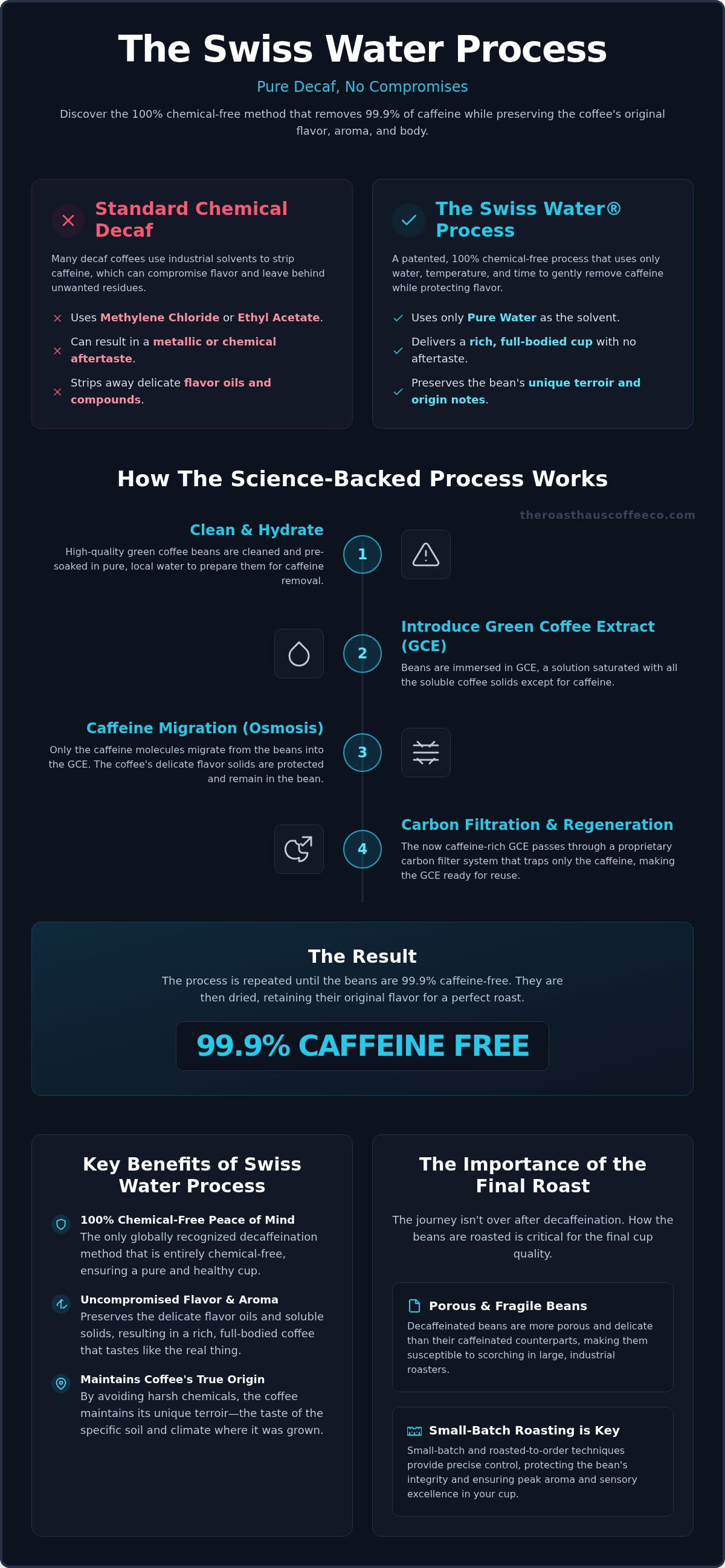
The Swiss Water Process isn't magic; it's physics. It relies on four specific pillars to achieve its goal: water, temperature, time, and carbon. This method doesn't use any synthetic additives to strip the caffeine away. Instead, it uses a scientific principle called osmosis to move caffeine from a high-concentration environment to a low-concentration one. It is a slow, careful journey that respects the integrity of the bean. We start with high-quality green coffee beans and prepare them for a bath in a very specific liquid known as Green Coffee Extract (GCE). This liquid is the heart of the swiss water process decaf system.
During the process, the GCE flows over the green beans. Because the GCE is already saturated with coffee flavor solids, it cannot absorb any more flavor from the new beans. However, it is hungry for caffeine. Through osmosis, the caffeine molecules naturally migrate out of the beans and into the GCE. This migration continues until a state of equilibrium is reached. It is a delicate balance that requires precise monitoring of temperature and flow rates. The result is a bean that has lost its caffeine but kept every ounce of its original character. It's a level of precision you won't find in mass-produced, solvent-based decaf.
The Green Coffee Extract (GCE) Explained
Creating the GCE is a foundational step. We soak an initial batch of green beans in pure water to extract all soluble solids. These first beans are then discarded. What remains is a liquid packed with the sugars, oils, and acids that give coffee its unique profile. This liquid is the medium that makes the entire process possible. Since it's already full of flavor, it acts as a barrier. It ensures that only the caffeine leaves the next batch of beans. This equilibrium ensures your cup of Decaf Swiss Water Process coffee tastes exactly like a standard specialty roast.
Carbon Filtration and Regeneration
Sustainability is built into this scientific model. Once the GCE has absorbed the caffeine from the beans, it isn't thrown away. Instead, it flows through proprietary carbon filters. These filters are sized specifically to trap the larger caffeine molecules while letting the smaller flavor-rich GCE pass through. The now-decaffeinated GCE is then recirculated to be used again. This closed-loop system minimizes waste and ensures every bean is treated with the same level of care. The carbon itself is later regenerated by burning off the trapped caffeine, making it ready for the next cycle. It is a meticulous, step-by-step process that demands constant attention to detail to achieve the 99.9% caffeine-free standard.
Swiss Water vs. Other Decaffeination Methods
Choosing a decaf bean often feels like a compromise. You want the coffee taste without the jitters, but most methods strip away more than just caffeine. There are three main ways to decaffeinate coffee: chemical solvents, carbon dioxide, and the water-based approach. While solvent methods are cheaper and more common, swiss water process decaf stands out because it prioritizes the bean's original flavor profile and your long-term health. It is a premium choice for a reason. Industrial methods focus on speed and cost, while the Swiss Water method focuses on the integrity of the final cup.
Safety is a significant factor in this comparison. Many coffee drinkers are increasingly concerned about methylene chloride, a solvent used in standard decaffeination that has faced scrutiny for its potential health risks. While the industry maintains that residues are roasted away, the "clean label" appeal of a water-only process is undeniable. You shouldn't have to worry about synthetic solvents when you're just trying to enjoy a late-night brew. This is why we've committed to a process that uses zero chemicals from start to finish.
The Solvent Methods (Methylene Chloride & Ethyl Acetate)
The most common industrial method is the "European Process." It uses methylene chloride to bind with caffeine. This synthetic solvent is effective but aggressive. Then there is the "Sugarcane" method, which uses ethyl acetate. While ethyl acetate is a naturally occurring compound, it often imparts a distinct, sweet, or fruity aftertaste. This can mask the subtle notes of a high-quality single-origin bean. The process involves steaming the beans to open their pores before the solvent is applied. This extra heat can "pre-cook" the bean, leading to a flat or metallic profile. Solvent-processed beans frequently lose the very oils that create a rich, satisfying mouthfeel.
The CO2 (Carbon Dioxide) Method
This technique uses liquid carbon dioxide at extremely high pressure to act as a solvent. It is highly efficient and leaves no chemical residue, but the infrastructure required is massive. Because of the high cost of the machinery, this method is almost exclusively used for large-scale commercial grocery brands. It is rarely used by small-batch artisans who focus on specialty-grade beans. While it is safer than methylene chloride, the high-pressure environment can still be aggressive on the delicate structure of the coffee bean. It lacks the gentle, batch-by-batch care found in swiss water process decaf production.
Quality comes at a price. The Swiss Water method is more expensive because it is a slow process that requires specialized expertise. However, for those who refuse to settle for a thin, chemical-tainted cup, it is the only logical choice. It is about choosing a clean label and a full-bodied experience over industrial efficiency. When you drink our decaf, you're tasting the coffee, not the process.
Roasting Swiss Water Decaf: Why Freshness is Paramount
The science behind the Swiss Water Process is fascinating, but the journey doesn't end when the caffeine is gone. In fact, the most critical stage for flavor happens in the roaster. When beans go through the swiss water process decaf journey, their physical structure changes. The soaking and drying process leaves the beans more porous and fragile than standard green coffee. This means they react to heat much faster. If a roaster treats decaf exactly like a regular bean, the result is often scorched, bitter, and flat. We take a different approach in our Wyandotte roastery. We treat these beans with the specific care their delicate structure requires.
Freshness is the ultimate differentiator for high-quality decaf. Because these beans are more porous, they oxidize and lose their aromatic oils at a faster rate than caffeinated beans. This is why our roasted-to-order model is a non-negotiable part of our philosophy. We don't let beans sit on a shelf for weeks. We ship within 24 hours of roasting to ensure you receive the coffee at its absolute peak. When you open a bag of our Decaf Swiss Water Process, you're getting a product that still has its soul intact.
The Challenges of Roasting Decaf
Roasting decaf is an exercise in precision and intuition. One of the biggest hurdles is that decaf beans change color much faster in the drum. They often look dark and oily long before they've reached a traditional dark roast profile. This can lead inexperienced roasters to pull the beans too early or leave them in too long. We rely on more than just sight. We listen for the specific timing of the "crack" and monitor the aroma to ensure we're highlighting the natural sweetness of the origin. Whether it's a bright Mexican bean or a chocolatey Colombian, we match the roast profile to the specific character of the seed.
Brewing Tips for Swiss Water Decaf
Because these beans are so porous, they extract very quickly. If your coffee tastes too intense or bitter, you may need to adjust your grind size to be slightly coarser than usual. This slows down the water flow and prevents over-extraction. We also recommend dropping your water temperature by a few degrees. Instead of boiling water, aim for around 195 to 200 degrees Fahrenheit. This gentler approach protects the delicate flavor oils that the Swiss Water Process worked so hard to save. For more detailed recipe inspiration, check out our guide on how to make coffee at home. Small adjustments in your technique make a massive difference in the final cup.
Experience the Best Decaf from The Roast Haus Coffee Co.
At The Roast Haus Coffee Co., we don't just sell beans; we curate an experience based on integrity. Our choice to offer swiss water process decaf is a direct reflection of our commitment to your health and the coffee's flavor. We believe that decaf drinkers deserve the same artisanal quality as any other coffee enthusiast. By focusing on this chemical-free method, we ensure that the natural complexity of the bean is never overshadowed by synthetic solvents. This is why we've made it a priority in our lineup since we started as a family-owned venture in 2014. We want you to taste the bean, not the chemistry.
Every bag of our Decaf Swiss Water Process is roasted in small batches at our facility in Wyandotte, Oklahoma. This artisan approach allows us to monitor every second of the roast. We protect the fragile structure of the decaffeinated bean through careful temperature control. We take pride in our identity as an independent, personal venture. When you buy from us, you're supporting a local expert who genuinely cares about the final result. We don't hide behind corporate jargon. We focus on tangible benefits like sensory excellence and nutritional integrity.
From Our Roastery to Your Door in 24 Hours
The biggest threat to high-quality decaf is time. Because these beans are more porous, they lose their aromatics quickly. Our roasted-to-order coffee model is designed to combat this. We roast your beans, bag them immediately, and ship them within 24 hours. This efficient timeline ensures that the volatile flavor compounds stay in the bag until they reach your kitchen. You won't find this level of freshness in a grocery store aisle. Large-scale industrial production simply cannot match the speed or the quality control of a dedicated craftsman.
Finding Your Perfect Match
Whether you prefer a rich espresso or a clean drip brew, our swiss water process decaf adapts to your routine. The lack of chemical residue means the natural sweetness and body shine through in every method. To make sure you never run out of peak-fresh beans, consider our coffee subscription. It is the most reliable way to support independent Oklahoma roasting. You'll enjoy a consistent, high-standard experience at home without the stress of reordering. Join our community of coffee lovers who refuse to settle for anything less than the best. We're here to help you find your perfect match.
A Better Way to Enjoy Decaf
Choosing your coffee shouldn't feel like a compromise between flavor and health. You now understand that swiss water process decaf isn't just a marketing term; it's a scientific standard for purity. By removing caffeine without synthetic solvents, this method preserves the complex flavor profile of the original bean. However, the process only succeeds when paired with careful, small-batch roasting. Freshness is the final piece of the puzzle that turns a standard cup into a sensory experience.
The Roast Haus Coffee Co. is a family-owned artisan roastery dedicated to this level of integrity. We ensure our Swiss Water certified beans are roasted-to-order and shipped within 24 hours from Wyandotte, Oklahoma. This commitment to speed and quality means you get the richest, most aromatic decaf possible. Don't settle for flat, chemical-laden beans from a grocery store shelf. It's time to support independent craftsmanship and taste the difference for yourself. Shop our fresh, roasted-to-order Swiss Water Process Decaf today. We look forward to being your trusted local expert for every cup you brew.
Frequently Asked Questions
Is Swiss Water decaf 100% caffeine-free?
Swiss Water decaf is 99.9% caffeine-free, which is the highest standard in the specialty coffee industry. While it's technically impossible to remove every single molecule of caffeine, this level is safe for almost all sensitive drinkers. Most other methods only reach 97% or 98% removal. By choosing this process, you ensure that your evening cup won't interfere with your sleep or cause the jitters associated with standard coffee.
Does Swiss Water decaf use chemicals?
This process uses zero synthetic chemicals. It relies entirely on water, temperature, and time to extract caffeine molecules through osmosis. Unlike the "European Process" which uses methylene chloride, this method leaves no chemical residue on the beans. It is a clean-label choice for those who care about what they put into their bodies. You get a pure product that respects the environment and your long-term health.
Why does Swiss Water decaf cost more than regular decaf?
The higher cost reflects the specialized technology and time required for this patented method. It's a slow, batch-by-batch process that demands constant monitoring and expertise. Industrial solvent methods are cheaper because they're faster and easier to scale. However, the premium you pay for swiss water process decaf ensures you aren't sacrificing flavor or safety for a lower price point. Quality craftsmanship simply requires more resources and attention to detail.
Does Swiss Water decaf taste different than regular coffee?
It is designed to be indistinguishable from regular caffeinated coffee. Because no harsh solvents are used, the delicate flavor oils and regional characteristics stay within the bean. You'll taste the specific notes of the origin, whether that's chocolate, citrus, or spice. The key to maintaining this flavor is freshness. Our small-batch roasting approach ensures that the beans don't lose their soul before they reach your kitchen for brewing.
Is Swiss Water decaf better for your health?
Many consumers believe it's a healthier choice because it avoids exposure to industrial solvents. Methylene chloride, used in many decaffeination plants, is a synthetic chemical that some drinkers prefer to avoid entirely. By using only water and carbon filtration, the Swiss Water method provides a clean, organic-compliant alternative. It is a wellness-focused option for coffee lovers who want the ritual without the potential risks of chemical residues in their morning mug.
What is the shelf life of roasted Swiss Water decaf beans?
Roasted decaf beans have a shorter shelf life than caffeinated beans because they're more porous. This physical change causes them to oxidize and lose their aromatic oils more quickly. For the best experience, we recommend using the beans within four weeks of roasting. This is exactly why we ship our orders within 24 hours. Peak freshness is non-negotiable when you want to enjoy the full complexity and aroma of the roast.
Can I use Swiss Water decaf for espresso?
You can certainly use these beans for espresso. They produce a rich, full-bodied shot with excellent crema. You just need to be mindful of your grind settings. Since the beans are more fragile and porous, they extract faster than regular coffee. Using a slightly coarser grind and a slightly lower water temperature will prevent the shot from becoming over-extracted or bitter. It's a favorite choice for late-night lattes and cappuccinos.
How can I tell if my coffee is actually Swiss Water Process?
The most reliable way to verify the process is to look for the official Swiss Water seal on the bag. This trademark is only granted to roasters who source beans processed at the official facility. Transparency is a core value for us. We only use certified beans for our swiss water process decaf offerings. If a brand isn't willing to name the process, they're likely using a cheaper solvent method.

