


Most coffee lovers assume that any dark roast will make a great latte, but bitterness isn't the same as actual strength. You've likely felt the frustration of pouring silky microfoam over an expensive espresso shot, only for the coffee flavor to vanish completely. It's disappointing when your homemade cappuccino tastes like warm, coffee-scented milk rather than the rich, chocolatey treat you expect. Finding the best coffee beans for milk drinks requires looking past generic labels and understanding how specific bean profiles interact with dairy.
We believe a great latte depends on two things: the right bean origin and peak freshness. When beans are roasted in small batches and shipped within 24 hours, they retain the carbon dioxide needed to create a thick crema. This crema is what carries the flavor through the milk. In this 2026 guide, you'll learn which roast levels cut through the fat of dairy to reveal notes of caramel and cocoa. We'll also show you how bold options like our Kenya AA Supreme can transform your morning routine into a professional cafe experience at home.
Key Takeaways
- Learn why "milk cut-through" is essential for a balanced latte and how to avoid the common mistake of using beans that get lost in dairy.
- Understand why medium and dark roasts from Central America are often considered the best coffee beans for milk drinks due to their natural notes of chocolate and nut.
- Discover how bold African origins, such as Kenya AA Supreme, provide a unique punch that creates complex and vibrant cappuccinos.
- See why peak freshness and the resulting crema act as the vital bridge between coffee oils and textured milk foam.
- Master the art of matching your bean selection to the specific milk-to-coffee ratio of your favorite drink, from a small cortado to a large latte.
Why Certain Coffee Beans Fail in Milk Drinks
Many home baristas assume a high price tag or a "light roast" label guarantees a better latte. It's often the opposite. When you add milk to coffee, you aren't just diluting the liquid. You're changing the chemical composition of the beverage. If you choose the wrong profile, you'll end up with a drink that tastes like hot milk with a hint of ash. Finding the best coffee beans for milk drinks means looking for beans that can survive the addition of dairy without losing their identity.
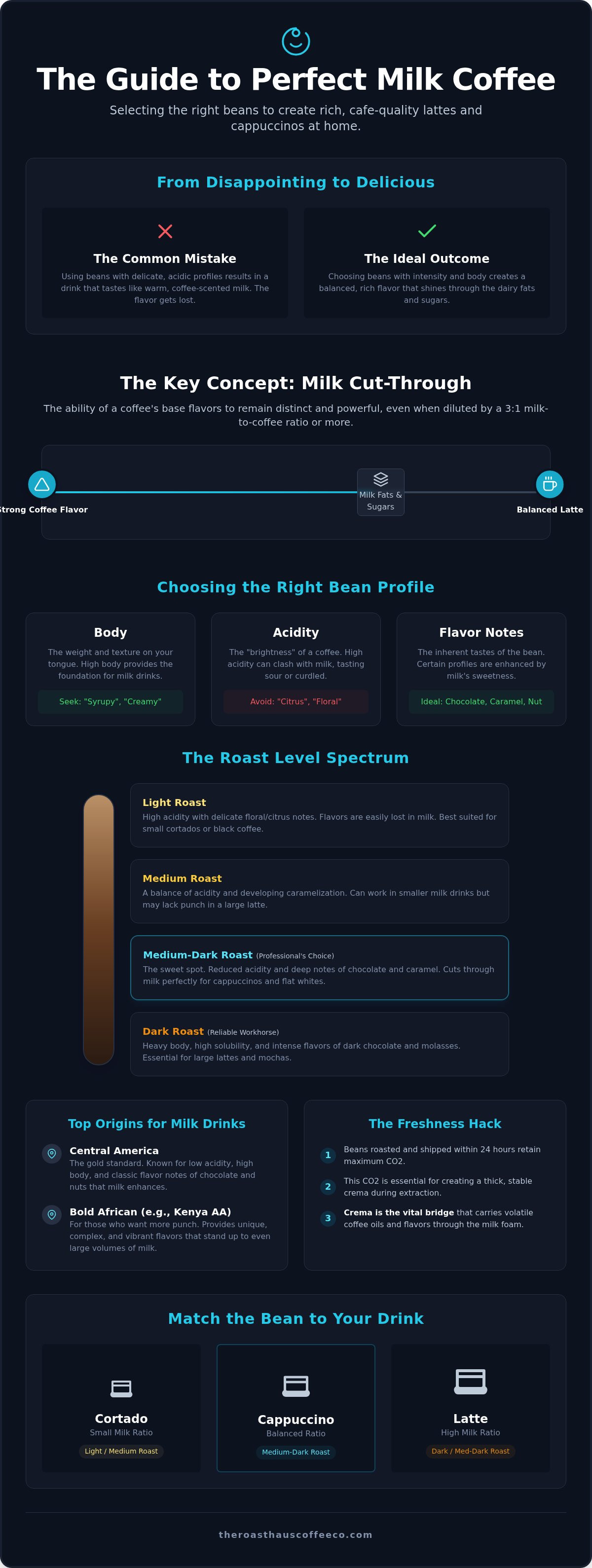
Milk Cut-Through is the ability of a coffee's base flavors to remain distinct when diluted by 3:1 milk ratios. To achieve this, the bean needs a heavy body and high intensity. Without these, the delicate nuances are simply drowned out by the lactose and fats in the milk. While some argue that any bean can be used for espresso, an "espresso roast" is actually a specific flavor profile designed to cut through milk. It's about finding that balance where the coffee oils can punch through the creamy texture of a flat white or cappuccino.
The Science of Solubilities and Milk Solids
Milk is a complex substance containing proteins, fats, and sugars. When poured into coffee, milk proteins like casein bind to coffee polyphenols. This process softens the "bite" or bitterness that some enjoy in black coffee. However, this binding also masks the very flavors you paid for. High-acidity beans, particularly light roasts with citrus or floral profiles, often clash with the sweetness of lactose. In some cases, the high acid content can even make the milk taste slightly curdled or "off" on the palate. Achieving a high level of Total Dissolved Solids (TDS) in your shot is critical for that creamy mouthfeel that defines a professional-quality cappuccino.
Body vs. Acidity: The Eternal Struggle
Body refers to the weight and texture of the coffee on your tongue. In a milk-based drink, body is your best friend. Low-acid, high-body beans, like many Central American origins, are the gold standard for a reason. They provide a sturdy foundation of chocolate and nut flavors that the milk actually enhances. Consider these factors when choosing your beans:
- Body: Look for beans described as "syrupy" or "creamy" to ensure the texture isn't lost.
- Acidity: Avoid high-citrus notes that can turn sour when mixed with milk sugars.
- Flavor Notes: Chocolate, caramel, and toasted nuts are the most reliable profiles for pairing with dairy.
Our Honduras Morning Splendeur is crafted to provide that reliable, sweet baseline. If you prefer something punchier that won't get lost, the Kenya AA Supreme offers the bold intensity needed to stand up to even a large 12-ounce latte. These roasts are designed to ensure your coffee remains the star of the show, regardless of how much milk you add.
The Best Roast Levels for Lattes, Cappuccinos, and Flat Whites
Roast level is the most significant factor in determining how your coffee will taste once you add milk. While personal preference plays a role, the chemistry of the roast determines whether the coffee stands up to dairy or disappears. During the roasting process, beans undergo the Maillard Reaction. This chemical reaction between amino acids and reducing sugars creates the toasted, savory, and complex flavors we associate with high-quality coffee. For those seeking the best coffee beans for milk drinks, understanding this reaction is the key to achieving that perfect cafe-style balance at home.
Light roasts often fail in milk-based drinks larger than a four-ounce cortado. Because these beans are roasted for a shorter time, they retain high acidity and delicate floral or citrus notes. While these qualities are prized in black coffee, they often taste sour or thin when mixed with the sweetness of lactose. Medium roasts offer a better balance, where caramelization begins to bridge the gap between the bean's natural sweetness and the creamy texture of the milk. However, for most traditional lattes and cappuccinos, you need the intensity found in darker profiles.
Dark Roasts: The Reliable Workhorse
Dark roasts are the classic choice for a reason. They offer high solubility, which means it's easier to extract the oils and compounds that create a heavy body. These beans provide a consistent flavor profile dominated by notes of dark chocolate, molasses, and a hint of smoke. This intensity allows the coffee to cut through heavy cream or large volumes of milk without losing its punch. While poorly roasted dark beans can taste ashy or burnt, a careful artisan roast maintains the bean's integrity. These are best for 12-ounce lattes or mochas where the coffee needs to be the unmistakable foundation of the drink.
Medium-Dark: The Professional Choice
Most specialty cafes prefer a medium-dark profile for their house espresso. This roast level is the "sweet spot" where you get the best of both worlds. It features the deep sugar-browning notes of a darker roast but still retains a hint of the coffee's unique origin character. This balance prevents the drink from tasting one-note. If you want a bold, wine-like punch that survives dairy, we recommend using our Kenya AA Supreme. It provides a sophisticated complexity that creates a truly professional-grade cappuccino.
Choosing the right roast level is just the first step in your journey toward better home brewing. If you aren't sure where to start, you can explore The Roast Haus Coffee Co. to see how our small-batch process ensures every roast level is optimized for peak flavor and freshness.
Top Coffee Origins for Milk-Based Drinks
While roast level provides the intensity needed for a latte, the origin of the bean determines the specific flavor notes that will emerge through the foam. Different soil compositions and altitudes dictate the base characteristics of the coffee. Some origins provide a gentle, sweet foundation, while others offer a sharp contrast that cuts through the fat of the milk. Choosing the best coffee beans for milk drinks often starts with geography. Many grocery store "espresso" bags are blends of older beans from unknown sources, but choosing specific origins allows you to tailor your drink to your exact palate.
Honduras and Colombia: The Crowd Pleasers
Central and South American beans are widely considered the gold standard for milk-based drinks. These origins typically feature naturally low acidity and high sweetness profiles. They provide the classic "chocolate and nut" baseline that most people associate with a high-quality cafe latte. Because these beans are predictable and balanced, they are the safest bet for beginners or those who prefer a traditional flavor profile. Our Honduras Morning Splendeur is a perfect example of this. It provides a rich, caramel-heavy base that makes a flat white taste like a liquid dessert without the need for added syrups.
Kenya AA: The Bold Exception
If you find that South American beans are too mild, African origins offer a more adventurous alternative. While many African coffees are too floral for milk, Kenya AA is a powerful exception. It features an intense savory-sweet profile that stands up to even the thickest, creamiest milk. We use the "Supreme" grade for our Kenya AA to ensure a heavier mouthfeel that doesn't get lost in a large cup. Kenya AA beans are unique because their high phosphoric acid content creates a 'sparkling' finish even through milk. This creates a complex, wine-like latte that is far more sophisticated than a standard dark roast.
There is a common myth that you must use an "espresso blend" for milk drinks. In reality, single-origin beans often provide a cleaner and more distinct flavor. The key isn't the blend; it's the freshness. A single-origin bean that is roasted to order will always outperform a mass-produced grocery store blend. Freshly roasted beans retain the oils and gasses necessary for a vibrant crema, which acts as the bridge between the coffee and the milk. By focusing on small-batch production, we ensure the integrity of these origin flavors remains intact from our roaster to your kitchen.
Matching the Bean to Your Specific Drink
The ratio of coffee to milk is the most overlooked variable in home brewing. A drink with a 1:1 ratio, like a macchiato, requires a different approach than a 1:6 ratio latte. When you use less milk, the coffee's original character remains the star. As the milk volume increases, you need a bean with enough raw power to punch through the dilution. Understanding this balance is essential for selecting the best coffee beans for milk drinks that actually taste like coffee.
The volume of milk in your cup changes everything. A traditional latte often contains three or four times more milk than espresso, which means a delicate bean will simply disappear into the background. Conversely, using an overly aggressive dark roast in a small cortado can result in a drink that feels unbalanced and harsh. Matching the bean to the specific recipe ensures that neither the coffee nor the milk dominates the other.
Beans for the 'Small and Strong' Drinks
For drinks like the cortado or macchiato, you don't need a heavy, smoky dark roast. Because the milk volume is low, you can prioritize complexity over raw intensity. This is the perfect opportunity to use a single-origin bean like our Ethiopia Limu Organic. The 1:1 milk ratio allows the bean's natural floral and citrus notes to peek through without being overwhelmed. In these shorter drinks, the goal is to maintain the espresso's identity while the milk adds a creamy, sweet texture.
The Plant-Milk Pairing Guide
Plant-based milks have unique chemical properties that interact differently with coffee oils. Unlike dairy, these milks often have their own strong flavor profiles that can clash with certain beans. Choosing the right bean can bridge the gap between the plant's natural taste and the coffee's roast profile.
- Oat Milk: This is a favorite for baristas because of its creamy texture. It pairs best with nutty, medium-roast beans that complement its grain-like sweetness.
- Almond Milk: This milk has a thinner body and an inherent bitterness. To counteract this, use a darker roast with low acidity to provide a smoother, more balanced cup.
- Soy Milk: Known for its slightly bean-like aftertaste, soy milk works best with earthy, low-acid Central American origins that can ground the flavor.
Finding the right match for your favorite morning ritual takes a bit of experimentation. If you want to test how different profiles handle your preferred milk, you can browse our full collection of small-batch roasts to find your perfect pairing.
Why Freshness is the Ultimate 'Milk Drink' Hack
Freshness is often treated as a luxury, but for milk-based drinks, it is a technical requirement. When coffee beans are roasted, they build up carbon dioxide. This gas is what creates crema during the extraction process. Crema isn't just a pretty foam; it is an emulsified layer of coffee oils and gases that acts as the vital bridge between the liquid espresso and your steamed milk. Without a healthy layer of crema, the milk foam cannot properly bind to the coffee. This results in a flat, watery drink where the flavors feel separated rather than integrated. Even the best coffee beans for milk drinks will fail if they have been sitting on a shelf for months.
Our small-batch model is designed to solve this specific problem. We ship your beans within 24 hours of roasting. This timing ensures that the beans arrive at your door during their peak degassing window. You get the maximum amount of carbon dioxide needed to produce a thick, stable crema that survives the pour. To keep that milk-ready punch for weeks, store your beans in an airtight container in a cool, dark place. Avoid the refrigerator, as moisture can damage the delicate oils that provide the flavor you need to cut through dairy.
Wyandotte's Small-Batch Advantage
At The Roast Haus Coffee Co., we believe in the integrity of the artisan process. Based in Wyandotte, Oklahoma, our family-owned operation focuses on small-batch roasting to ensure every bean is treated with care. Large-scale grocery store brands often produce massive quantities that sit in warehouses for weeks or months. By the time those "premium" beans hit the shelf, they are often stale and lack the chemical vitality required for a professional-grade latte. Choosing a roaster who roasts to order means you are getting a product at its absolute best.
Finding Your Perfect Match with Samplers
Every milk type and every palate is different. If you are still searching for the best coffee beans for milk drinks to suit your routine, experimentation is the only way forward. The All Day Sampler is the most efficient way to test different origins side-by-side. You can compare the caramel sweetness of our Honduras Morning Splendeur against the bold intensity of our Kenya AA Supreme in your morning cappuccino. Once you find your favorite, you might consider a guide to the best coffee subscription services to ensure you never run out of fresh, roasted-to-order beans again.
Craft the Perfect Latte in Your Own Kitchen
Achieving cafe-quality results at home isn't about expensive machinery; it's about the integrity of your ingredients. You now know that the best coffee beans for milk drinks require a specific balance of body and freshness to survive the addition of dairy. Whether you choose a bold medium-dark roast or a single-origin powerhouse, the goal is to find that perfect milk cut-through that highlights the coffee's natural sweetness. Remember that freshness is your secret weapon. Crema acts as the bridge between your espresso and the microfoam, so using beans that haven't been sitting on a grocery shelf for months is non-negotiable.
At The Roast Haus Coffee Co., we take pride in our family-owned artisan roastery in Wyandotte, Oklahoma. We ensure every small-batch order is shipped within 24 hours of roasting to guarantee peak flavor. You won't find this level of quality in mass-produced store brands. Ready to transform your morning routine? Shop our Roasted-to-Order Coffee Beans for the Perfect Home Latte and experience the difference that genuine craftsmanship makes. Your perfect cup is just a few days away.
Frequently Asked Questions
Do I need 'espresso' beans for lattes, or can I use regular coffee beans?
You don't need beans specifically labeled as "espresso" to make a great latte. Any high-quality coffee bean can be used if it has the right roast profile. For milk drinks, you should choose beans with high solubility and a heavy body. These characteristics ensure the coffee remains the star of the show. Medium-dark roasts are often the most reliable choice for home baristas.
Which coffee roast is best for a cappuccino?
A medium-dark roast is the ideal choice for a cappuccino. This roast level develops the sugar-browning flavors like chocolate and caramel that pair naturally with steamed milk. It provides enough intensity to cut through the thick layer of foam without tasting burnt. Using a small-batch roast ensures these flavors are vibrant and clean rather than ashy or one-note.
Why does my coffee taste bitter when I add milk?
Bitterness in milk drinks often results from over-extraction or using stale, mass-produced beans. When coffee is roasted in large commercial batches, it can develop an ashy taste that milk actually highlights. Switching to fresh, artisan beans can fix this issue. Our Honduras Morning Splendeur is roasted to order, providing a naturally sweet and smooth foundation that eliminates the harsh aftertaste often found in grocery store bags.
Can I use single-origin beans for milk drinks, or should I use a blend?
You can certainly use single-origin beans for milk-based drinks. While blends are often designed for consistency, single-origin beans offer a more distinct and adventurous flavor. A bold choice like our Kenya AA Supreme provides a savory-sweet complexity that stands up well to dairy. The best coffee beans for milk drinks are those with enough body to remain distinct, regardless of whether they come from one farm or several.
What are the best coffee beans for oat milk lattes?
Oat milk lattes pair best with nutty, medium-roast beans from Central or South America. These beans complement the natural, grain-like sweetness of oat milk without overpowering it. When looking for the best coffee beans for milk drinks using plant-based alternatives, avoid very high-acidity roasts. Those bright, citrusy notes can sometimes clash with the unique flavor profile of oats, leading to a sour-tasting beverage.
Does decaf coffee taste good in milk drinks?
Decaf coffee can taste just as good as regular coffee in milk drinks if the caffeine was removed gently. Our Decaf Swiss Water Process beans are a perfect example. This chemical-free method preserves the bean's original oils and body. You get a rich, chocolatey latte base that doesn't sacrifice flavor for the sake of being caffeine-free. It's a great option for enjoying a cappuccino in the evening.
How long after the roast date should I use beans for milk drinks?
You'll get the best results if you use your beans between 7 and 14 days after the roast date. During this window, the beans have degassed enough to be stable but still contain plenty of carbon dioxide. This gas is critical for creating the thick crema that carries flavor through your milk. Because we ship within 24 hours of roasting, your beans arrive at the perfect time for brewing.
Is light roast coffee good for flat whites?
Light roasts usually aren't the best fit for a flat white. Even though a flat white has less milk than a latte, the high acidity of a light roast often tastes sour when mixed with dairy. You'll have a much better experience with a medium roast like our Ethiopia Limu Organic. It provides a more balanced sweetness and a smoother texture that integrates better with the velvety microfoam.

