


That papery mess clinging to your grinder isn't a defect. It's a badge of honor for truly fresh coffee. We get it; those tiny, static-charged flakes seem like nothing but a nuisance, creating a cleanup job before you've even had your first sip. Many coffee drinkers even wonder if it's a sign of a poor-quality roast when they see it in their bag of beans.
But as roasters dedicated to freshness, we see it as a sign of a job done right. That leftover material is called coffee chaff, and it’s a direct byproduct of the artisan roasting process. We're here to show you exactly what it is, how it affects your brew, and how you can turn this coffee waste into a secret weapon for your garden. Get ready to understand the hidden side of your beans, master the mess, and feel good about using every part of your coffee.
Key Takeaways
- Understand what those papery flakes in your coffee bag are and why they are a natural sign of a fresh roast.
- Discover the truth about whether those tiny flakes actually affect the flavor profile of your final cup.
- Learn how to repurpose coffee chaff as a valuable addition to your compost or as a natural amendment for healthier soil.
- Find out why the amount of chaff you see can tell you a lot about a roaster's commitment to quality and small-batch precision.
What is Coffee Chaff? Defining the "Silver Skin"
If you’ve ever seen a coffee roaster in action, you’ve seen the small, papery flakes flying around. That, in short, is coffee chaff. At its core, chaff is the dried, papery skin that covers the green coffee bean. It's the final layer that needs to be shed before you get to the roasted bean you know and love. While the term can refer to the husks of any grain, the question of what is coffee chaff specifically points to this "silver skin," a natural part of the coffee seed that is absolutely essential to understand.
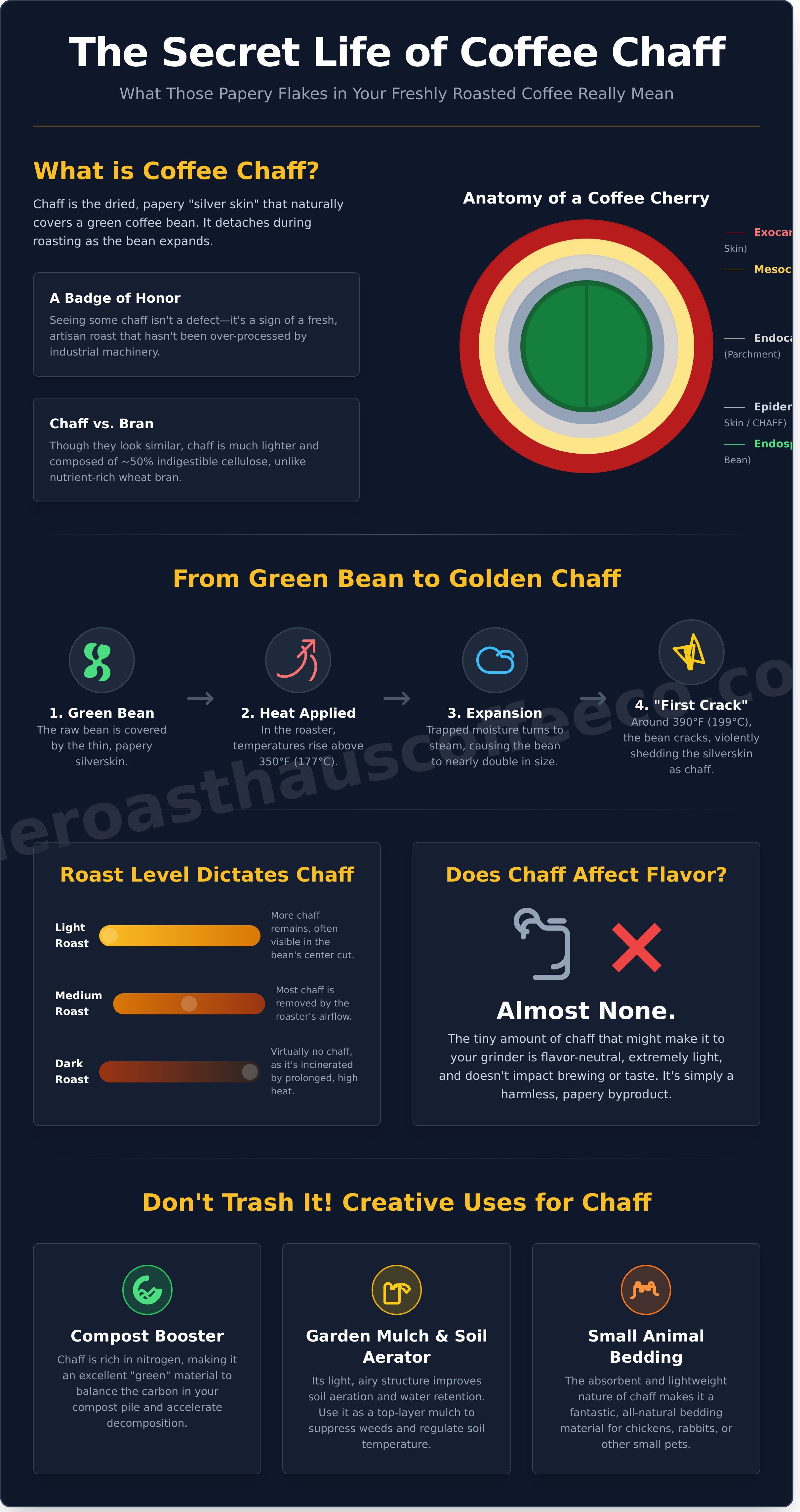
To really get it, you need to picture the anatomy of a coffee cherry. The bean we roast is just one part of a complex fruit. From the outside in, the layers are:
- Exocarp: The red or purple outer skin of the cherry.
- Mesocarp: The sweet, fruity pulp underneath the skin.
- Endocarp: A tough, parchment-like layer protecting the bean.
- Epidermis: The "silver skin" or chaff, which clings directly to the bean.
- Endosperm: The green coffee bean itself.
During processing at the farm, the outer skin, pulp, and parchment are removed. But the delicate silver skin remains, tucked into the bean's center cut and clinging to its surface. This makes chaff an inseparable part of the roasting experience. As we apply heat, the bean expands and sheds this skin. It’s not a sign of a problem; it’s a sign that the roast is progressing exactly as it should. Many people mistake these flakes for dirt or a filler, but that couldn’t be further from the truth. This material is a clean, organic part of the coffee seed's own biology.
The Botany of the Silver Skin
The silver skin, or epidermis, serves a vital biological role: it protects the coffee seed’s embryo from pests and moisture. While processing methods like "washed" or "honey" remove the outer fruit layers, this thin skin tenaciously holds on. Natural processed coffees, which are dried whole, often retain even more of this layer. No matter the origin or process, some of it will always make it to our roaster. Coffee chaff is the cellulose-based byproduct of the roasting process.
Chaff vs. Bran: Clearing the Confusion
It’s easy to see why some people confuse coffee chaff with wheat bran. They look similar. But their properties are very different. Chaff is incredibly lightweight and papery, with a texture like delicate dried leaves. Its color ranges from a pale gold to a deep brown, depending on the roast level. Composed of approximately 50% cellulose, it's indigestible for humans. This doesn't matter for your coffee, because nearly all of it is separated from the roasted beans by air flow within the roaster before you ever brew a cup.
From Bean to Bag: How Chaff is Created During Roasting
Every green coffee bean wears a thin, papery layer called the silverskin. It's barely noticeable on the raw, dense bean. But once we introduce heat, a dramatic transformation begins. Roasting is a thermodynamic process. As the temperature inside our roaster climbs past 350°F, the moisture trapped within the bean turns to steam, creating immense internal pressure. The bean itself physically expands, nearly doubling in size.
This expansion forces the silverskin to crack and peel away. The most dramatic moment comes during the "First Crack," an audible popping sound that occurs around 390°F. This is the point where the bean's structure fractures, violently releasing built-up steam, carbon dioxide, and a flurry of silverskin. This liberated silverskin is what we call chaff.
How this material is handled separates artisan roasters from industrial giants. In massive commercial plants, collection systems are designed for high volume, often pulling everything into vast collectors. As a small-batch, family-owned roaster, our process is more hands-on. Because we roast to order, we're focused on the quality of your specific batch, not meeting a quota of 10,000 pounds per hour. This allows for a level of precision that large-scale operations simply can't match. You might notice a tiny flake or two in your bag, a natural sign of coffee that hasn't been aggressively handled by industrial machinery.
Roast Levels and Chaff Volume
The roast profile directly impacts how much, if any, silverskin remains. A light roast like our Kenya AA Supreme is dropped from the roaster just after the first crack. At this stage, some stubborn bits of chaff often remain nestled in the bean's center cut. Conversely, a dark roast taken well into second crack (around 445°F) will have almost no visible chaff. The prolonged exposure to intense heat essentially incinerates these delicate flakes. The bean's origin also plays a role. Dense, high-altitude beans from the Ethiopian highlands, for example, can have a thicker silverskin that clings more tenaciously. The physical properties of this byproduct are complex; detailed compositional analysis of chaff reveals its high lignin and fibrous content, explaining why it behaves differently depending on the coffee's origin.
The Roaster’s Cyclone: Managing the Mess
We don't just let the chaff fly. During the roast, a powerful fan pulls the lightweight flakes away from the tumbling, heavy beans. This air, full of chaff, is funneled into a large conical collector called a cyclone. Here, centrifugal force takes over. The air spins rapidly, flinging the heavier-than-air chaff against the outer walls, where it slides down to a collection bin. The clean, hot air then exits through the top. This separation is critical for two reasons: flavor and safety. Lingering flakes can scorch, imparting a burnt, papery taste to the coffee. More importantly, chaff is extremely flammable. Meticulous cleaning of our roaster and ducting is a non-negotiable part of our daily routine to prevent any risk of fire, ensuring every batch we roast for you is both delicious and safe.
Does Chaff Affect the Flavor of Your Coffee?
This is one of the biggest questions we get from home brewers who are passionate about their craft. You see those little papery flakes in your bag of fresh beans and wonder: is this stuff hurting my final cup? The short answer is no, it doesn't.
The great debate online often involves claims of a "papery" or "grassy" taste. But the science tells a different story. Chaff is primarily composed of cellulose, the same structural material found in plant cell walls. A 2021 detailed scientific characterization of coffee chaff from North Carolina State University confirms its makeup is mostly insoluble fiber like cellulose (39.5%) and lignin (22.3%). These compounds don't dissolve in hot water and don't contribute any significant flavor. The real issues it can cause have nothing to do with taste and everything to do with mechanics.
The Myth of Bitterness
If you ever taste hay-like or papery notes in your coffee, don't blame the flakes. The true culprit is almost always the roast itself. An underdeveloped or "baked" roast, where the beans didn't get enough heat at the right time, fails to properly develop the sugars inside the bean. This leaves behind unpleasant, grassy flavors. People see the light-colored flakes and make a false connection. To be perfectly clear, chaff is essentially flavor-neutral when brewed in standard ratios. The powerful, complex flavors of a well-roasted coffee bean will completely dominate your cup.
Chaff and Static Electricity
The one genuine problem with excess chaff at home is the mess. As you grind your coffee, the friction generates a significant static charge. Because these flakes are incredibly lightweight and dry (often containing less than 5% moisture), they are highly susceptible to this static electricity. This is why they cling to your grinder's chute, your catch cup, and your countertop. It’s a simple law of physics, but it can be frustrating.
This static can also affect the consistency of your dose. Clumps of grounds and flakes can get stuck in the grinder, a phenomenon known as "retention." This means the amount you put in isn't exactly the amount you get out, which can lead to uneven extraction.
Luckily, there's a simple fix used by baristas everywhere:
- Pro-Tip: The Ross Droplet Technique (RDT). Before grinding, add a single drop of water to your beans. A small spray bottle works best, but even dipping the handle of a spoon in water and stirring it through the beans is effective. This tiny bit of moisture, just 0.1% to 0.5% of the beans' weight, is enough to eliminate the static charge completely. Your grounds will fall cleanly into the bin, reducing mess and improving dose accuracy.
So, should you worry about a few flakes floating in your French Press or stuck to your pour-over filter? Not at all. Think of it as a natural sign of a fresh, artisan roast. Your energy is better spent focusing on the things that truly matter: using high-quality beans, a good grinder, and the right water temperature. That's where you'll find a truly great cup of coffee.
5 Creative Ways to Use Coffee Chaff in Your Home and Garden
At The Roast Haus, we see potential in every part of the coffee bean. Nothing is waste. The papery, golden flakes that fly off during roasting aren't just a byproduct; they're a valuable resource. This coffee chaff is lightweight, dry, and packed with carbon, making it incredibly useful for anyone interested in sustainable living. Before you think of it as trash, consider what this material can do.
Here are five practical ways we've seen our local community put this roastery byproduct to good use.
- Compost Gold: It's the perfect "brown" material for your compost pile. It breaks down quickly and balances nitrogen-rich "green" materials like kitchen scraps and grass clippings, accelerating the composting process.
- Soil Amendment: Mix it directly into the soil for your potted plants or garden beds. Its light, flaky structure creates air pockets, which improves drainage and aeration for plant roots, preventing compaction.
- Gentle Mulch: Use a light layer to protect delicate seedlings. Unlike heavy wood chips that can crush new sprouts, these flakes insulate the soil and retain moisture without weighing plants down.
- Artisan Chicken Bedding: For backyard chicken keepers, it's a fantastic bedding alternative. It's highly absorbent, smells much better than traditional straw, and composts beautifully right along with the chicken manure.
- Natural Pest Repellent: The abrasive texture of the dried flakes can deter soft-bodied pests like slugs and snails. Sprinkling a ring around the base of vulnerable plants creates a barrier they won't want to cross.
The Nitrogen-Carbon Balance
Successful composting is all about chemistry. Coffee chaff has a carbon-to-nitrogen (C:N) ratio of about 24:1, making it an ideal carbon source. To prevent clumping, simply mix one part of the material with two parts "greens." Here in Oklahoma, gardeners tell us it works wonders. The Oklahoma State University Extension service often recommends organic amendments to break up our dense, clay-heavy soil, and this byproduct does the job perfectly.
Sustainable Living and Zero-Waste Coffee
The global coffee industry produces an enormous amount of waste. A 2021 study found that for every ton of green coffee roasted, around 136 kilograms of waste is generated. As a small-batch roaster, we see this firsthand. We believe in a transparent waste cycle. By supporting small roasters, you're supporting a business that can directly manage its byproducts. We encourage our customers to start "chaff swaps" with local farmers and community gardens. It's a simple way to close the loop and build a more sustainable community.
Choosing your coffee is about more than just flavor. It's about supporting a process you believe in, from bean to cup and beyond. When you buy from a roaster who cares about the entire lifecycle of the coffee, you contribute to a healthier planet. Support a zero-waste philosophy with our roasted-to-order coffee.
Why Small-Batch Roasting Means Better Chaff Management
At The Roast Haus, we believe that everything about your coffee matters. That includes the little details, like the amount of silver skin, or chaff, left on your beans. The way a coffee is roasted has a direct impact on this. Large-scale, industrial roasting treats coffee like a commodity. We treat it like a craft. Our "Roasted to Order" philosophy isn't just a slogan; it's a commitment to precision that begins the moment we fire up our roaster and ends when you brew your first cup.
This commitment is the difference between coffee that’s simply brown and coffee that’s truly alive with flavor. It’s a hands-on approach that you can see, smell, and taste in every bag we ship.
Craftsmanship in Every Bag
Our small-batch process, using a 5kg roaster, allows us to monitor every single batch with extreme precision. We control the heat and airflow to ensure each bean tumbles and roasts evenly, releasing its silver skin at the perfect moment. This isn't the case with 120kg industrial roasters, where uneven heating can scorch some beans while leaving others underdeveloped. That’s factory-line indifference. We believe in artisan care. By focusing on the craft, we support our family-owned business and deliver a product we are genuinely proud of. Don't just take our word for it; see the quality for yourself when you try our All Day Sampler.
So, what should you do if you notice some of this papery material in your bag? The best way to keep loose chaff from becoming a nuisance is proper storage. Keep your beans in the airtight, valved bag they arrived in or move them to a ceramic or glass container with a good seal. Store it in a cool, dark place like a pantry. A simple trick before you grind: give the sealed container a gentle shake. This often helps the lightest particles settle at the bottom, away from the beans you're about to scoop.
Freshness You Can See
Seeing a little bit of silver skin clinging to your beans is actually a good sign. It’s proof that your coffee hasn't been over-processed or sitting in a warehouse silo for 60 days. Mass-produced coffee is often handled so much after roasting that most of the delicate silver skin is stripped away, along with some of the coffee's volatile aromatics. Our "Roasted to Order" model means your coffee ships within 24 hours of roasting, arriving at your door with its peak flavor potential intact. That freshness is something you can literally see. It’s the mark of coffee that was roasted for you, not for a stockroom shelf. Experience the difference real freshness makes. Shop our fresh-roasted single origins today.
Beyond the Chaff: Your Freshest Coffee Awaits
Understanding coffee is about more than just the final brew. It's about appreciating the entire journey from green bean to your cup, including the small details that define a superior roast. While it rarely affects your drink's final flavor, how a roaster manages byproducts like chaff is a clear sign of their dedication. A careful, small-batch process ensures that what ends up in your bag is nothing but perfectly roasted, flavorful coffee beans, free of any imperfections.
That commitment to quality is what our family-owned business has been built on since 2014. We roast every order in small batches right here in Wyandotte, Oklahoma, and ship it directly to you within 24 hours. This isn't just coffee; it's a promise of peak freshness and flavor, delivered right to your door.
Experience the freshness of Roasted-to-Order coffee at The Roast Haus. You deserve to taste the difference that true craftsmanship makes in every single cup.
Frequently Asked Questions About Coffee Chaff
Is coffee chaff safe to eat or drink?
No, we don't recommend eating or drinking coffee chaff. While it isn't toxic, it has a very dry, papery texture and a bitter, unpleasant taste that would ruin your cup of coffee. It's essentially plant fiber, similar to a dried leaf, and offers no real flavor or nutritional benefit. It's best used in your garden or compost pile, not in your cup.
Why is there so much chaff in my light roast coffee?
Light roasts have more chaff because the beans are denser and don't expand as much during the shorter roasting time. Darker roasts become more brittle and crack more aggressively, a process which dislodges up to 95% of the chaff. Light roast beans hold onto that silver skin more tightly, so you'll naturally see more of it in the final bag. It's a sign of a delicate, careful roast.
How do I get rid of the chaff mess in my coffee grinder?
To clean chaff from your grinder, use a small, stiff-bristled brush to sweep out the particles from the burrs and hopper. For a more thorough cleaning, a can of compressed air can blow out any stubborn bits. Just be sure to hold the can at least 6 inches away to prevent any damage. Doing this weekly prevents buildup and keeps your grinder working perfectly.
Can I use coffee chaff as a fertilizer for my indoor plants?
Yes, coffee chaff is an excellent addition to your plant soil because it's rich in nitrogen. It contains about 2.5% nitrogen by dry weight, which helps promote leafy growth. We suggest mixing the chaff into the top 1-2 inches of soil instead of just sprinkling it on top. This prevents it from blowing away and ensures the nutrients get right to the roots of your plants.
Does chaff contain caffeine?
Yes, chaff does contain a small amount of caffeine. Studies from the "Journal of Agricultural and Food Chemistry" show chaff contains between 0.5% and 1.3% caffeine by weight. This is significantly less than a roasted Arabica bean, which typically has between 1.2% and 1.5% caffeine. So while it's present, the amount is quite low and won't impact your daily intake.
What is the difference between coffee chaff and coffee grounds?
Coffee chaff is the papery outer skin of the coffee bean that flakes off during the roasting process. Coffee grounds are what you get after you grind the fully roasted coffee beans. Think of it this way: chaff is a byproduct we remove during roasting, while grounds are the final product you create right before you brew your fresh cup of coffee.
Why does my coffee have more chaff than the last bag I bought?
Variations in chaff are usually due to the coffee's origin, density, and processing method. For example, a "natural" or dry-processed coffee often retains more of its silver skin than a "washed" coffee. Bean density can also vary between harvests from the same farm. This affects how much chaff adheres to the bean after we roast it, even when using the exact same roast profile.
Is chaff the same thing as the "silver skin" of the coffee bean?
Yes, chaff is the common name we roasters use for the dried silver skin that detaches from the bean during roasting. "Silver skin" is the correct botanical term for the thin, papery layer that clings to the green coffee bean before it enters the roaster. Once heat is applied and it flakes off, we call that collection of flaky material "chaff." It's the same material, just at a different stage.

