


What if the wild swing between yesterday's sweet brew and today's bitter cup has nothing to do with your technique? If you find yourself asking, "why does my coffee taste different every day" when you use the exact same scoop and kettle, you aren't alone. It's frustrating to buy quality beans only to dump half your mug down the sink because the brew turned out harsh, sour, or dry. You deserve a steady, satisfying morning ritual, not an unpredictable guessing game.
Daily coffee inconsistency actually stems from invisible micro-variables in extraction, not personal skill. When factors like grind distribution, water temperature, and bean age drift by even a fraction, your extraction changes completely. In this guide, you'll discover the hidden variables that derail your cup and how to stabilize them without complicated barista math. We'll break down the practical mechanics of daily flavor drift and show you how to lock in a consistently rich cup every single morning.
Key Takeaways
- Pinpoint the science behind why does my coffee taste different every day, tracing erratic morning brews to extraction variables instead of brewing skill.
- Control the four hidden brewing variables, including how a variance of just two grams can transform your cup from sweet to harsh.
- Diagnose off-flavors accurately so you know whether a sour, bitter, or astringent profile calls for a finer grind or hotter water.
- Implement a simple five-step morning routine, from digital weighing to grinder purging, that ensures consistent extraction without complicated math.
- Rely on freshly roasted beans as your flavor baseline to prevent the flat, unpredictable results caused by stale coffee.
Why Does My Coffee Taste Different Every Day? The Extraction Reality
Every cup of coffee you brew is the direct result of chemistry. Coffee extraction is the physical process of dissolving soluble flavor compounds from roasted coffee grounds using hot water. Roasted beans contain fruit acids, complex lipids, caramelized sugars, and bitter plant fibers. When hot water contacts coffee grounds, these compounds dissolve at varying rates. Minor daily fluctuations in water contact time or grind consistency pull out completely different flavor compounds, which explains why does my coffee taste different every day even when you think you followed the same routine.
Most morning inconsistency starts with volume-based measuring. Scoops measure physical volume, not actual mass. Coffee beans vary dramatically in size and moisture content depending on the origin and roast profile. Two level scoops can easily fluctuate by three to four grams from one morning to the next. That accidental swing alters your brew ratio, shifting the delicate chemical balance before you even turn on the kettle.
Understanding Under-Extraction vs. Over-Extraction
The science of coffee extraction follows a strict order. Water first dissolves volatile organic acids and salts. Sweet sugars extract next, followed by heavy plant fibers and bitter tannins at the very end.
- Under-extraction: Water dissolves only early sour acids and fast compounds. The cup tastes sharp, sour, and hollow.
- Over-extraction: Prolonged brewing pulls harsh tannins and woody fibers. The brew tastes intensely bitter, astringent, and dry.
- Balanced extraction: Captures sugars and aromatic oils between those two extremes, producing natural sweetness and clarity.
To master these mechanics from the ground up, review our foundational guide on how to make coffee.
The Illusion of the Morning Routine
You probably think your morning routine is identical each day, but subtle kitchen variables break that consistency. Eye-balling water levels against a kettle line introduces massive brewing volume error. Pouring water from higher above the brewer increases fluid velocity, which violently agitates the coffee bed and speeds up extraction. Even ambient kitchen temperature plays a role; a cold ceramic dripper on a winter morning saps thermal energy from your brew water instantly, dropping brew temperatures and slowing the dissolving process compared to a warm summer morning.
The 4 Hidden Brewing Variables Shifting Your Daily Taste
Four primary elements dictate the flavor profile of your brew: coffee-to-water ratio, grind consistency, water temperature, and mineral quality. If even one shifts, your extraction balance collapses. Water actually makes up over ninety-eight percent of every brewed cup, meaning your liquid base is just as reactive as the ground coffee itself. When you wonder why does my coffee taste different every day, examining these four inputs will reveal the exact point of failure.
A variation of just two grams of ground coffee noticeably transforms the body and mouthfeel of your morning cup. Small shifts alter the solvent-to-solute balance instantly. Researchers at the UC Davis Coffee Center explain in An Engineer's Guide to Coffee that chemical extraction kinetics rely directly on precise particle exposure and thermal retention during contact time.
Coffee-to-Water Ratio and Kitchen Scales
Coffee bean densities vary dramatically by origin and roast profile. Dense, high-altitude crops yield compact beans, while darker roasts puff up and lose moisture during roasting. Because of this, a single tablespoon of dark roast weighs substantially less than the same volume of light roast. Switching from volumetric scoops to an inexpensive digital gram scale locks your ratio into place. Pair measured ratios with artisan-roasted coffee beans to maintain a stable, repeatable baseline.
Grind Particle Distribution and Burr Retention
Blade grinders chop beans unevenly, producing large chunks alongside microscopic powder in the same chamber. The dust over-extracts into harsh bitterness, while the coarse chunks under-extract into thin sourness. Read our guide on coffee grinders to see how burr alignment creates uniform particles. Grinder retention presents another hidden pitfall. Yesterday's stale, oxidized coffee grounds trapped inside the chute dislodge directly into your fresh morning dose, tainting an otherwise perfect brew.
Water Temperature and Mineral Composition
Temperature controls how quickly flavors dissolve. Pouring boiling water fresh off the flame scalds delicate bean surfaces, releasing acrid astringency. Water below 195°F fails to dissolve complex sugars, leaving the brew weak and sour. Municipal tap water adds another layer of chaos; city chlorine treatments and mineral hardness fluctuate through changing seasons. Purified water with balanced mineral content keeps your daily extraction predictable.
Eliminating these hidden variables gives you full control over your cup. If you want a dependable daily roast to anchor your morning routine, explore fresh selections from The Roast Haus Coffee Co. to experience what deliberate small-batch craftsmanship tastes like.
How to Diagnose Off-Flavors in Your Morning Cup
Fixing an unpleasant brew begins with an honest sensory assessment. You cannot correct an off cup until you separate genuine acidity from under-extracted sourness, or rich roast character from harsh bitterness. Many coffee drinkers wonder why does my coffee taste different every day without realizing their palate is already signaling the solution. Diagnosing specific flavor defects tells you which single brewing setting to adjust tomorrow morning.
Coffee tasting isn't magic; it follows predictable chemical markers. When studying the science of coffee extraction, researchers note that different soluble compounds stimulate distinct sensory receptors across the tongue. Astringency, for instance, is not a taste but a tactile sensation that dries out the tongue, resembling over-steeped black tea. Learning to read these tactile and flavor cues gives you instant control over your brewing gear.
Fixing Sour and Sharp Flavors
Sour coffee tastes sharp, lemony, or unpleasantly salty. It strikes the sides of the tongue and vanishes abruptly without lingering sweetness. This sharp profile indicates under-extraction; water ran through too quickly to pull out caramelized sugars. To fix it, move your grinder one notch finer to slow water passage, or bump your water temperature slightly to accelerate sugar solubility.
Taming Bitter and Astringent Notes
Bitterness lingers as a harsh, medicinal aftertaste coating the back of your throat. Astringency accompanies it, leaving your mouth feeling dry and sandpapered. Both signal over-extraction, meaning brew water stripped away woody plant matter. Correct this by coarsening your grind setting to expose less surface area. You can also lower your water temperature or cut steep time by twenty seconds.
Overcoming Weak or Watery Cups
A watery, hollow brew lacks body and tastes diluted across the middle of your palate. This defect usually stems from channeling, which occurs when brew water carves narrow cracks through your coffee bed instead of flowing evenly through the entire mass. Level your grounds before pouring to ensure uniform saturation, and verify that your scale didn't register an accidental surge in total water weight.
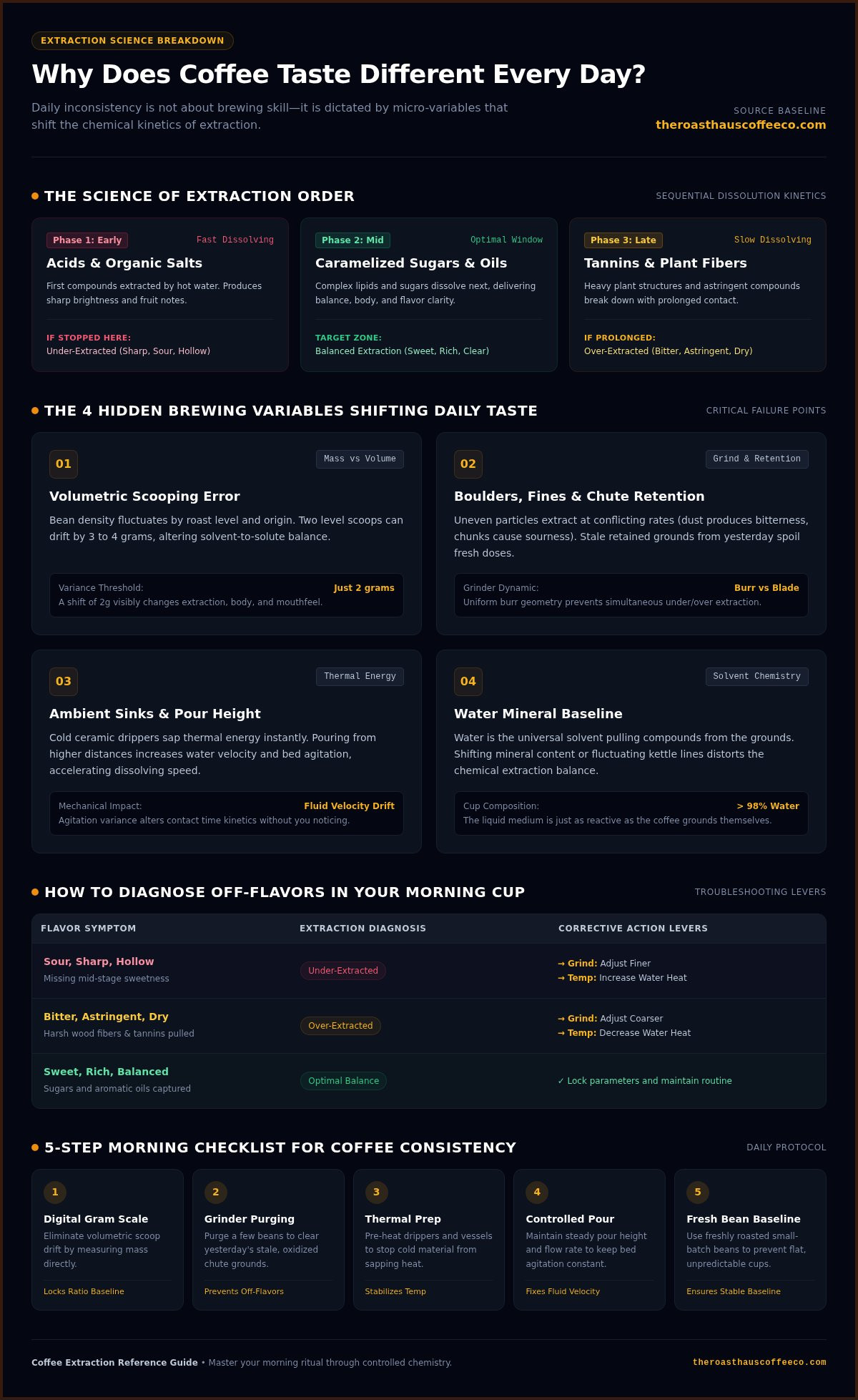
A 5-Step Morning Checklist for Coffee Consistency
Inconsistent coffee rarely happens by accident. It happens because tiny steps get skipped during the morning rush. If you constantly wonder why does my coffee taste different every day, establish a disciplined checklist to eliminate daily drift. Follow these five straightforward steps before every single brew:
- Weigh your beans: Use a digital gram scale instead of volumetric scoops to guarantee accurate coffee mass.
- Purge your grinder: Grind a few whole beans through the burrs to push out yesterday's stale remnants.
- Preheat and rinse: Flush your brewer and paper filter thoroughly with hot water, then discard the rinse water.
- Rest boiled water: Let a boiling kettle sit off the heat for thirty seconds so water lands right in the 195 to 205°F zone.
- Adjust one setting at a time: Change only a single variable when dialing in your flavor.
Purging and Preheating Routine
Paper filters carry residual wood pulp and dry paper odors from manufacturing. A thorough hot water rinse washes those cardboard flavors down the drain before ground coffee ever touches the filter. That same rinse heats ceramic, glass, or steel brewers. Brewing in a cold dripper saps heat instantly, dropping the temperature of your slurry and stalling proper extraction. Finally, a five-second grinder purge flushes out stale, oxidized grinds trapped in the chute so only fresh grounds enter your basket.
The One-Variable Adjustment Rule
Never change your grind size, water ratio, and water temperature all at once. If you alter multiple inputs simultaneously, you will never know which adjustment fixed or ruined the cup. Keep your coffee weight and water volume locked in place, then nudge your grinder one click finer or coarser. When you find the exact setting that yields balanced sweetness, document the numbers in a small kitchen notebook.
Lock down your brewing routine with freshly crafted beans. Grab your next bag from The Roast Haus Coffee Co. and experience how consistent small-batch roasting elevates your morning ritual.
Why Bean Freshness Controls Consistency: The Small-Batch Difference
Even with precise gram scales and steady kettle temperatures, the beans themselves can be a moving target. Roasted coffee beans steadily release carbon dioxide gas in a natural process called degassing. During this active cycle, the chemical makeup of the bean changes day by day. If you wonder why does my coffee taste different every day despite repeating your brewing steps, bean age is often the culprit. Supermarket beans sit in distribution warehouses and retail shelves for months, bleeding off volatile aromatic oils until they brew into flat, lifeless coffee. Beans between five and twenty days post-roast sit right in the sweet spot of balanced degassing and peak flavor stability.
How Bean Age Alters Daily Extraction
Beans brewed within forty-eight hours of leaving the roaster release heavy gas bubbles that repel water, causing uneven flow channels through your brewer basket. As beans age past thirty days, oxidation breaks down delicate origin flavors, leaving behind flat, cardboard notes. Sourcing small-batch coffee eliminates this guessing game because you know the exact roast date. To protect that stability on your counter, keep your whole beans inside an airtight container tucked away from direct heat and morning sunlight.
Small-Batch Roasting in Wyandotte, Oklahoma
Founded in 2014, The Roast Haus Coffee Co. is a family-owned artisan roastery in Wyandotte, Oklahoma. We handcraft coffee in small batches, roasting to order and shipping within 24 hours of roasting. This rapid turnaround ensures your beans land on your doorstep right as they enter their ideal brewing window. Discover distinct origin notes in our Ethiopia Limu Organic and Kenya AA Supreme, enjoy the rich balance of Honduras Morning Splendeur, or explore multiple origins with The All Day Sampler. Starting with honest, freshly roasted coffee establishes the baseline control you need for a dependable cup every morning.
Take Control of Your Daily Brew
Achieving an exceptional cup isn't about barista certifications or complex math. If you've spent weeks wondering why does my coffee taste different every day, remember that extraction responds to measurable inputs. By replacing volumetric scoops with a digital gram scale, purging stale retained grinds, and keeping your brew temperature steady, you eliminate the invisible variables that cause harsh bitterness or thin sourness.
True brewing consistency also requires an honest baseline. Stale beans will always drift, no matter how carefully you pour. The Roast Haus Coffee Co. has been family-owned and operated since 2014, handcrafting coffee in small artisan batches in Wyandotte, Oklahoma. We roast to order and ship within 24 hours of roasting, putting peak freshness directly on your counter. Taste the consistency of freshly roasted beans at The Roast Haus Coffee Co. and turn your morning routine into a reliable ritual you genuinely enjoy.
Frequently Asked Questions
Why does my coffee taste sour one day and bitter the next?
This dramatic flip comes down to opposing extraction extremes. Sour coffee indicates under-extraction, meaning water passed through coarse grounds too quickly or at too low a temperature to dissolve sweet sugars. Bitter coffee means over-extraction, where water lingered too long and stripped harsh tannins from fine grounds. Minor variations in your grind size or kettle temperature can easily flip a brew from sharp and sour to dry and bitter between mornings.
Does the age of roasted coffee beans change how they brew?
Yes, roasted beans change chemically every day due to degassing and oxidation. Fresh beans release carbon dioxide, which creates resistance against brewing water and can lead to uneven extraction if brewed too quickly. As beans pass thirty days, they lose essential aromatic oils and absorb ambient oxygen. This natural aging process explains why does my coffee taste different every day when you draw from an older bag over several weeks.
Why does using a coffee scoop cause daily taste inconsistency?
A coffee scoop measures volume rather than mass, introducing unseen weight swings. Coffee beans settle into scoops unevenly based on bean size, roast darkness, and bean density. A single scoop can easily swing by two to four grams from day to day. That variance throws off your brew ratio, shifting the concentration of your liquid and altering mouthfeel even though your morning routine felt completely identical.
Can changing my tap water make my coffee taste completely different?
Tap water drastically impacts coffee flavor because water makes up more than ninety-eight percent of your cup. Municipal water supplies fluctuate across seasons, altering mineral levels like calcium and magnesium. When mineral content drops, water struggles to extract rich aromatic oils, leaving coffee flat. High chlorine or heavy mineral spikes introduce medicinal flavors and blunt natural fruit notes. Using filtered water provides a consistent mineral baseline.
How much does grinder retention affect the flavor of morning coffee?
Grinder retention plays a surprisingly large role in daily flavor drift. Most motorized burr grinders trap one to three grams of coffee grounds inside their chutes. Those grounds sit overnight, oxidizing and going stale before you brew again. When you grind fresh beans the next morning, that stale remnant gets pushed directly into your filter basket, introducing muddy, stale notes into an otherwise fresh cup.
What is the easiest way to make my home coffee taste consistent?
The easiest fix is using a digital gram scale for both your coffee beans and water. Weighing your ingredients removes volume-based guessing, which is the main reason why does my coffee taste different every day. Combine precise measurements with fresh, artisan-roasted beans and a quick five-second grinder purge. Locking in your coffee-to-water ratio creates an immediate foundation for reliable mornings without buying complicated commercial gear.
How soon after roasting should I brew my coffee beans?
Coffee beans taste best when brewed between five and twenty days after their roast date. Whole beans need about three to five days to release excess carbon dioxide gas from the roasting drum. At The Roast Haus Coffee Co., we roast small batches to order and ship within 24 hours of roasting. This timeline ensures your beans arrive right on schedule for their peak flavor and balance.

