


The best light roast coffee beans aren't defined by a fancy label; they're defined by a timestamp. If you've ever bought a bag expecting bright, floral notes but ended up with a cup that tasted flat or even burnt, you're likely dealing with stale inventory. Most coffee on grocery store shelves has sat for months, allowing the delicate aromatics to vanish long before you ever reach for your grinder. It's a common frustration that makes origin names and flavor notes feel more like marketing jargon than a reality.
We're here to help you change that experience. You'll discover how small-batch roasting acts as the secret key to unlocking vibrant blueberry and citrus profiles that actually taste like the fruit described. This guide highlights the 11 best light roast coffee beans for 2026, focusing on artisans who prioritize quality over mass production. We'll preview world-class options like our Kenya AA Supreme and Ethiopia Limu Organic while teaching you how to master the light roast brewing process. It's time to stop settling for mediocre beans and start supporting independent roasters who ship within 24 hours of the roast.
Key Takeaways
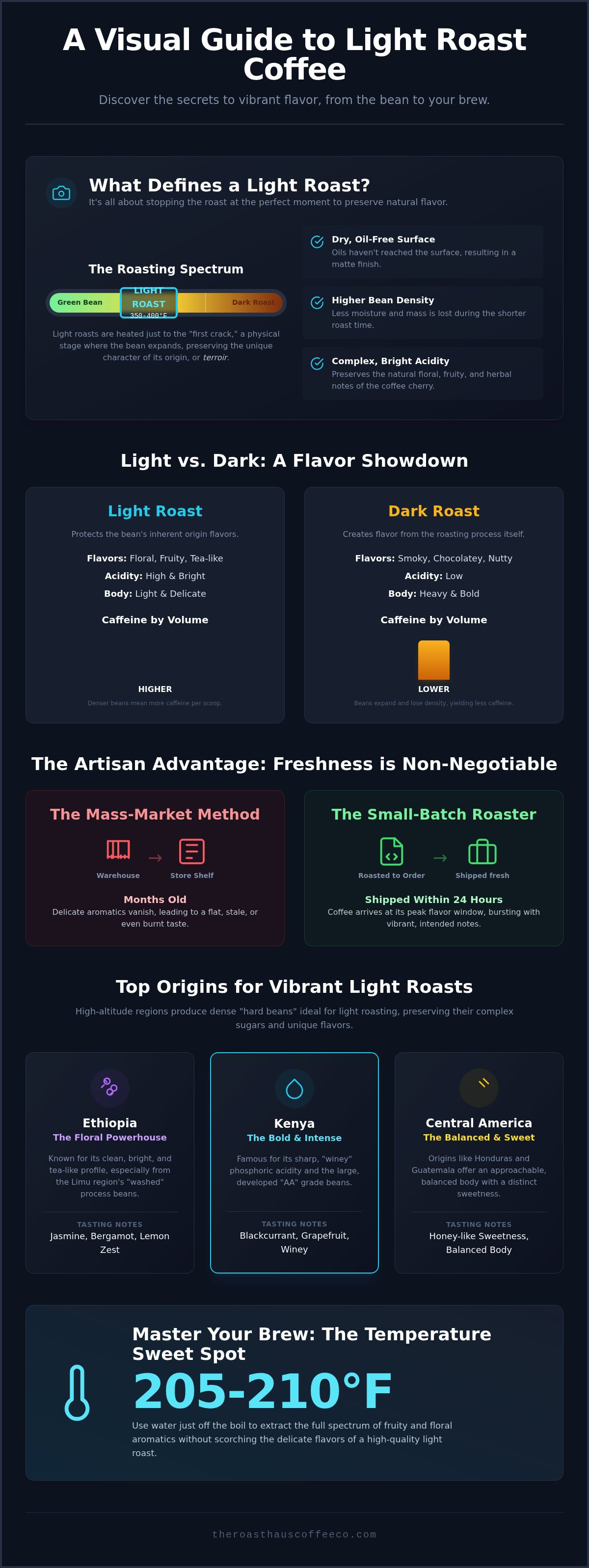
- Learn how roasting to the first crack at 350 to 400 degrees preserves the natural acidity and complex floral notes of the bean.
- Discover why high-altitude regions like Ethiopia and Kenya produce the dense beans required for vibrant, tea-like flavor profiles.
- Identify the best light roast coffee beans by choosing small-batch roasters that focus on origin transparency and craft quality.
- Master the brewing process by using water temperatures between 205 and 210 degrees to extract the full spectrum of fruity aromatics.
- Understand why shipping within 24 hours of roasting is the only way to ensure your coffee reaches its peak flavor window.
What Defines the Best Light Roast Coffee Beans?
The best light roast coffee beans represent the purest expression of the coffee cherry's potential. During the Coffee roasting process, light roasts are pulled from the heat just as they reach the 'first crack'. This physical stage happens between 350°F and 400°F. At this point, the bean has expanded and released its initial moisture, but it hasn't stayed in the roaster long enough for the sugars to carbonize or for the natural oils to reach the surface. This creates a bean that is dry, dense, and light brown in color.
You'll often hear these beans called 'Blonde Roast' or 'Cinnamon Roast' in specialty coffee circles. These terms describe the light, tan shade of the bean. This style of roasting is essential for high-quality specialty coffee because it preserves the 'terroir'. Terroir refers to the specific characteristics of the land, soil, and climate where the coffee grew. If you roast too dark, you taste the fire and the smoke. When you choose a light roast, you taste the high-altitude volcanic soil of Ethiopia or the bright, washed process of a Kenyan farm.
Light Roast vs. Dark Roast: The Flavor Spectrum
Roasting time fundamentally changes the bean's chemistry. Dark roasts lean on the roaster to create smoky, chocolatey flavors through intense heat. Light roasts do the opposite; they protect the bean's inherent floral, fruity, and herbal notes. There's also a common myth about caffeine content. Light roasts actually retain more caffeine by volume because the beans are denser and haven't lost as much mass during the roast. If you measure your coffee by the scoop, you'll get a bigger caffeine kick from a lighter bean. For a deeper look at these differences, read our guide on Light vs. Dark Roast: Which Coffee Is Right For You?.
The Importance of Small-Batch Roasting
Precision is everything when producing the best light roast coffee beans. Large-scale commercial roasters often struggle with heat consistency. This leads to 'baked' beans that taste flat and bread-like rather than vibrant. If the heat is applied too slowly, the acidity disappears. If it's applied too fast, the outside burns while the inside stays sour. At The Roast Haus, we use small-batch techniques to control the heat application second by second. This artisan approach ensures we hit the sweet spot where the complex sugars are developed but the delicate aromatics remain intact. It's a difficult balance that only small-scale production can reliably achieve.
Top Origins for Vibrant Light Roast Profiles
Not every coffee bean is suited for a light roast. To survive the heat of a roaster without losing its structural integrity, a bean needs density. High-altitude regions produce what we call "hard beans." Because these plants grow slower in cooler mountain air, the seeds become compact and nutrient-dense. This density is what allows the best light roast coffee beans to maintain their complex sugars during the brief window of the first crack. According to the National Coffee Association's guide to coffee roasts, this level of roasting highlights the unique characteristics of each origin rather than the flavor of the roasting process itself.
Ethiopia remains the gold standard for anyone seeking a tea-like, floral cup. As the birthplace of coffee, its heirloom varieties offer a complexity that darker roasts simply destroy. Meanwhile, Central American origins like Honduras and Guatemala provide a different profile. These beans often feature a honey-like sweetness and a balanced body that makes them approachable for those transitioning away from darker roasts. We've found that beans from these regions provide the perfect foundation for a morning cup that is both bright and satisfying.
Ethiopian Limu: The Floral Powerhouse
The Limu region is famous for its wet-processed, or "washed," coffees. In this method, the fruit is removed before drying, which results in a very clean and bright cup. When you brew our Ethiopia Limu Organic, you'll notice distinct notes of jasmine, bergamot, and lemon zest. This clarity is exactly why these beans are a favorite for pour-over enthusiasts. The light roast preserves the delicate oils that carry these floral scents. It's a sensory experience that feels more like a fine tea than a heavy morning brew.
Kenya AA: The Boldest Light Roast Experience
If you want intensity without the bitterness of a dark roast, Kenya is the answer. Kenyan coffee is renowned for its phosphoric acidity, which creates a sharp, "winey" sensation on the tongue. You'll often taste deep notes of blackcurrant or grapefruit. The "AA" designation refers specifically to the bean size; these are the largest and most developed beans from the harvest. Choosing the best light roast coffee beans often leads enthusiasts back to Kenya for its unmatched vibrance. Our Kenya AA Supreme: Bold Flavors From The Roast Haus showcases how a light roast can be incredibly powerful while remaining crisp and clean.
Finding the right origin is the first step toward a better morning routine. If you're ready to taste the difference that high-altitude density makes, you can explore our current artisan roasts to find your new favorite origin.
The 11 Best Light Roast Coffee Beans for 2026
Selecting the best light roast coffee beans requires a focus on three pillars: freshness, origin transparency, and flavor complexity. Many grocery store options fail because they prioritize shelf life over sensory quality. Research into What Defines a Light Roast suggests that a universal standard is emerging to help consumers identify true light roasts that preserve bean integrity. At The Roast Haus, we ensure this integrity by roasting in small batches and shipping within 24 hours of roasting.
Our top picks for 2026 include:
- 1. Kenya AA Supreme (The Roast Haus): Best for those who love intense, winey acidity and deep blackcurrant notes.
- 2. Ethiopia Limu Organic (The Roast Haus): Best for fans of jasmine and bergamot with a clean, tea-like finish.
- 3. Honduras Morning Splendeur (The Roast Haus): Best for a balanced daily cup featuring honey-like sweetness.
- 4. Panama Geisha: A luxury origin prized for its peach aromatics and silky body.
- 5. Ethiopia Yirgacheffe: A traditional choice for lemon and floral profiles.
- 6. Colombian Pink Bourbon: A rare variety with high sugar content and complex floral notes.
- 7. Costa Rican Tarrazu: Known for crisp citrus and a very clean, bright body.
- 8. Guatemalan Huehuetenango: Offers a unique green apple crispness and high-altitude density.
- 9. Tanzanian Peaberry: Small, round beans that provide concentrated brightness.
- 10. Salvadoran Pacamara: Large beans that deliver tropical fruit and herbal undertones.
- 11. Rwandan Bourbon: A syrupy light roast with distinct red fruit characteristics.
Comparison Table: Roasts at a Glance
| Origin | Primary Flavor Notes | Best Brewing Method | Freshness Window |
|---|---|---|---|
| Kenya AA | Blackcurrant, Winey | Pour Over | Ships within 24 hours |
| Ethiopia Limu | Jasmine, Lemon Zest | Chemex | Ships within 24 hours |
| Honduras | Honey, Caramel | Drip / AeroPress | Ships within 24 hours |
| Grocery Brands | Flat, Paper-like | Any | 3-6 Months Stale |
The Best Light Roast for Beginners
If you're new to the world of light roasts, the high acidity can sometimes be surprising. Our Honduras Morning Splendeur serves as the perfect bridge. It retains the bright character of a light roast but pairs it with a familiar honey-like sweetness that feels grounded. If you aren't sure which profile suits your palate, The All Day Sampler: Find Your Perfect Coffee allows you to test different origins side-by-side. This is the best way to train your palate to recognize the subtle differences between a floral Ethiopia and a bold Kenya.
How to Brew Light Roast Coffee for Maximum Flavor
Brewing the best light roast coffee beans requires more than just a standard drip machine. Because light roasts are denser and contain less soluble material than their dark-roasted counterparts, they need a specific approach to extraction. If you use water that is too cool, your cup will taste sour and grassy. We recommend using water temperatures between 205°F and 210°F. This high heat provides the energy needed to break down the dense cellular structure of the bean and release the complex sugars and fruit notes that define the roast.
Precision is your best friend in the kitchen. Start with a 1:16 coffee-to-water ratio as a baseline. For example, if you use 20 grams of coffee, use 320 grams of water. This ratio ensures you have enough solvent to extract flavor without diluting the delicate aromatics. For the grind, aim for a medium-fine consistency, roughly the size of kosher salt. Using a high-quality burr grinder is essential here. Blade grinders create uneven particles that lead to muddiness in the cup, where some grounds are over-extracted and others are under-extracted.
The Pour-Over Method: The King of Light Roasts
The pour-over method, specifically using a v60 or Chemex, is the superior choice for highlighting acidity and clarity. These brewers use paper filters that trap heavy oils and fine sediment. This leaves you with a clean cup that allows the jasmine notes of an Ethiopian bean or the citrus of a Kenyan bean to shine. You can learn more about how this compares to other styles in our article on French Press vs Pour Over: Which Method Is Best?.
Always start with a bloom phase. Pour about 40 grams of water over your grounds and wait 30 to 45 seconds. You will see the coffee bubble as it releases trapped carbon dioxide. This process is vital for fresh coffee. If the gas isn't released, it acts as a barrier that prevents the water from fully penetrating the grounds. Since we ship our beans within 24 hours of roasting, you'll see a very active bloom with our coffee.
Grinding for Success
Never buy pre-ground light roast coffee. Once a bean is ground, its surface area increases exponentially, causing the volatile aromatics to disappear in minutes. If your coffee tastes unpleasantly sour, your grind is likely too coarse. If it tastes dry or bitter, your grind is too fine. Small adjustments to your grind size can completely transform your morning experience. Check out The Ultimate Guide to Coffee Grinders to see how the right equipment impacts your daily brew.
Ready to put these brewing tips into practice? Order a bag of our whole-bean Ethiopia Limu Organic today and experience the clarity of a professional artisan roast at home.
The Artisan Advantage: Why Roasted-to-Order Wins
Most people buy a bag labeled "light roast" from a grocery shelf and wonder why it tastes flat or bitter. The problem isn't the bean; it's the age. The best light roast coffee beans are defined by their volatile aromatics, and those aromatics begin to vanish the moment the roasting process ends. At The Roast Haus, we follow a strict 24-hour rule. Every bag is roasted to order and shipped within one day. This ensures you receive the coffee exactly as it begins its peak flavor window, rather than after it has sat in a warehouse for months.
Light roasts require a specific period for degassing. After roasting, beans release carbon dioxide, and they typically hit their peak flavor between day 3 and day 14. By shipping immediately, we ensure the beans are degassing while they are in transit to your front door. You get to experience the full spectrum of floral and fruity notes that mass-market brands lose during their long stay on a retail shelf. This timing is the ultimate differentiator between a generic cup and a true specialty experience.
Our philosophy is built on transparency and independent values. We're a family-owned operation that values craftsmanship over volume. We don't want to be a faceless corporation; we want to be the experts you trust for consistent, sensory excellence. Supporting a local Oklahoma roaster means you aren't just a number in a database. You're part of a community that values quality and supports the integrity of small-batch production.
Freshly Roasted Coffee Beans in Wyandotte, Oklahoma
We started as a kitchen hobby back in 2014. Today, we're a professional roastery in Wyandotte, Oklahoma, but our focus hasn't changed. We still treat every small batch with the same earnest care we did on day one. For our local neighbors, we offer pickup options that guarantee maximum freshness. We also provide fast national shipping for enthusiasts across the country who want to experience Oklahoma's best. You can learn more about our roots and how we serve our community at Your Local Oklahoma Coffee Roaster in Wyandotte.
Never Run Out: The Light Roast Subscription
The hardest part of enjoying fresh coffee is remembering to reorder before the bag is empty. Our subscription service solves this by offering recurring deliveries of your favorite profiles. Whether you prefer the winey acidity of our Kenya AA Supreme or the balanced sweetness of Honduras Morning Splendeur, a subscription keeps your pantry stocked with the best light roast coffee beans. This ensures you never have to settle for stale grocery store alternatives again. Read our A Guide to the Best Coffee Subscription Services in 2026 to find the right frequency for your home.
Elevate Your Morning with Freshly Roasted Aromatics
Mastering the world of specialty coffee starts with understanding that freshness is a timestamp. You now know that finding the best light roast coffee beans requires looking beyond the grocery store shelf for small-batch attention that protects unique origin flavors. Whether you're drawn to the crisp, winey acidity of a Kenyan bean or the jasmine-scented clarity of an Ethiopian harvest, the secret lies in avoiding stale inventory and embracing the artisan process.
At The Roast Haus, we are a family-owned artisan roastery dedicated to this level of craftsmanship. We provide a small-batch quality guarantee by shipping every order within 24 hours of roasting. This ensures you receive your beans exactly when they are ready to peak in flavor. Supporting an independent Oklahoma business means you get expert advice and a product that hasn't sat in a warehouse for months. Don't settle for flat, paper-like flavors when you can experience the vibrant fruit notes of a truly fresh roast.
Shop our Roasted-to-Order Light Roasts at The Roast Haus Coffee Co. and discover how our commitment to timing changes your daily brew. We look forward to helping you find your new favorite origin.
Frequently Asked Questions
Is light roast coffee stronger than dark roast?
Light roast coffee is not necessarily stronger than dark roast; it depends on how you define strength. If you mean flavor intensity, dark roasts have a bold, smoky profile that many perceive as strong. However, light roasts have a higher concentration of organic acids and complex origin notes. Strength in the cup is ultimately determined by your coffee-to-water ratio. A properly extracted light roast offers a vibrant and intense sensory experience without the bitterness.
Does light roast coffee have more caffeine?
Light roast coffee does contain more caffeine when measured by volume. Because light roast beans are denser and haven't lost as much mass during the roasting process, a single scoop contains more caffeine molecules than a scoop of dark roast. However, if you measure your coffee by weight using a scale, the caffeine content is almost identical. For most home brewers using standard scoops, light roasts provide a slightly higher caffeine kick per cup.
What is the difference between blonde roast and light roast?
There is no technical difference between blonde roast and light roast; they are simply different names for the same roast level. "Blonde roast" is a marketing term popularized by large commercial chains to describe coffee roasted to the first crack. In specialty coffee circles, we often use the term "light roast" or "Cinnamon roast" to describe this profile. Both focus on preserving the delicate, fruity aromatics of the bean rather than the flavors created by the roaster's heat.
How long do light roast coffee beans stay fresh?
Light roast coffee beans stay at their peak freshness for about 30 days after roasting. They typically require a degassing period of three to five days to reach their full flavor potential and remain vibrant until the two-week mark. After 30 days, the delicate oils and volatile aromatics begin to fade. To ensure you are getting the best light roast coffee beans, always check for a roast date and buy from artisans who ship within 24 hours.
Why does my light roast coffee taste sour?
Sourness in light roast coffee is usually a sign of under-extraction. Because these beans are very dense, they require more energy to release their sugars. If your water is too cool or your grind size is too coarse, the water cannot pull out the sweetness, leaving only the sharp acids behind. To fix a sour cup, try using water closer to 210°F or adjusting your grinder to a finer setting to increase the surface area and extraction.
Which is the best brewing method for light roast coffee?
The pour-over method is widely considered the best way to brew light roast coffee. Tools like the Hario v60 or Chemex use paper filters that remove heavy oils and sediment, which allows the bright acidity and floral notes to remain clear and distinct. This method provides the control needed to manage water temperature and flow rate. It results in a clean, tea-like cup that highlights the unique terroir of high-altitude beans from Ethiopia or Kenya.
Can I use light roast coffee beans for espresso?
You can certainly use light roast beans for espresso, a style often referred to as "modern espresso." It produces a very bright, acidic shot with intense fruit notes rather than the traditional chocolate and crema profile. However, light roasts are harder to dial in because they are less soluble. You will likely need a high-end grinder and a precise recipe to avoid a sour shot. When done correctly, it offers an incredibly complex and rewarding flavor.
Where can I buy freshly roasted light roast beans in Oklahoma?
You can buy freshly roasted coffee beans directly from our family-owned roastery in Wyandotte, Oklahoma. The Roast Haus Coffee Co. specializes in small-batch production and ships every order within 24 hours of roasting. This ensures that customers in Oklahoma and across the country receive the best light roast coffee beans at their absolute peak. We take pride in our artisan process and offer local pickup for those who want the freshest experience possible.

