


The bag of grocery store coffee sitting in your pantry is likely hiding the true potential of the mexican coffee beans inside. Most mass-market brands over-roast their beans to mask inconsistencies. This leaves you with a bitter cup that often triggers acid reflux instead of providing a smooth morning ritual. When you source high-quality beans from the right regions, you unlock a profile defined by chocolate, cinnamon, and a gentle nuttiness that doesn't need cream or sugar to be palatable.
It's frustrating to invest in specialty coffee only to find it's been sitting on a shelf for months. We believe you deserve a cup that's easy on the stomach and rich in flavor, not a burnt and stale disappointment. This guide explains what makes these beans unique, from the high altitudes of Chiapas to the lush landscapes of Veracruz. You'll learn why small-batch roasting is the only way to preserve delicate cocoa tones. We'll also explore the low-acid benefits of this origin and show you how to find a source that prioritizes freshness over warehouse volume.
Key Takeaways
- Mexican coffee beans offer a smooth, low-acid experience with rich notes of milk chocolate and toasted hazelnut.
- Explore the unique growing conditions of Chiapas, Oaxaca, and Veracruz to understand how regional terroir shapes every cup.
- Avoid the "shelf-stale" trap of grocery stores by choosing small-batch roasts that preserve essential aromatic oils.
- Master the perfect extraction by maintaining a water temperature of 195°F to 205°F to highlight the bean's natural sweetness.
- Experience the difference of the "roasted-to-order" model, where your coffee is shipped within 24 hours of being crafted.
What Makes Mexican Coffee Beans Unique?
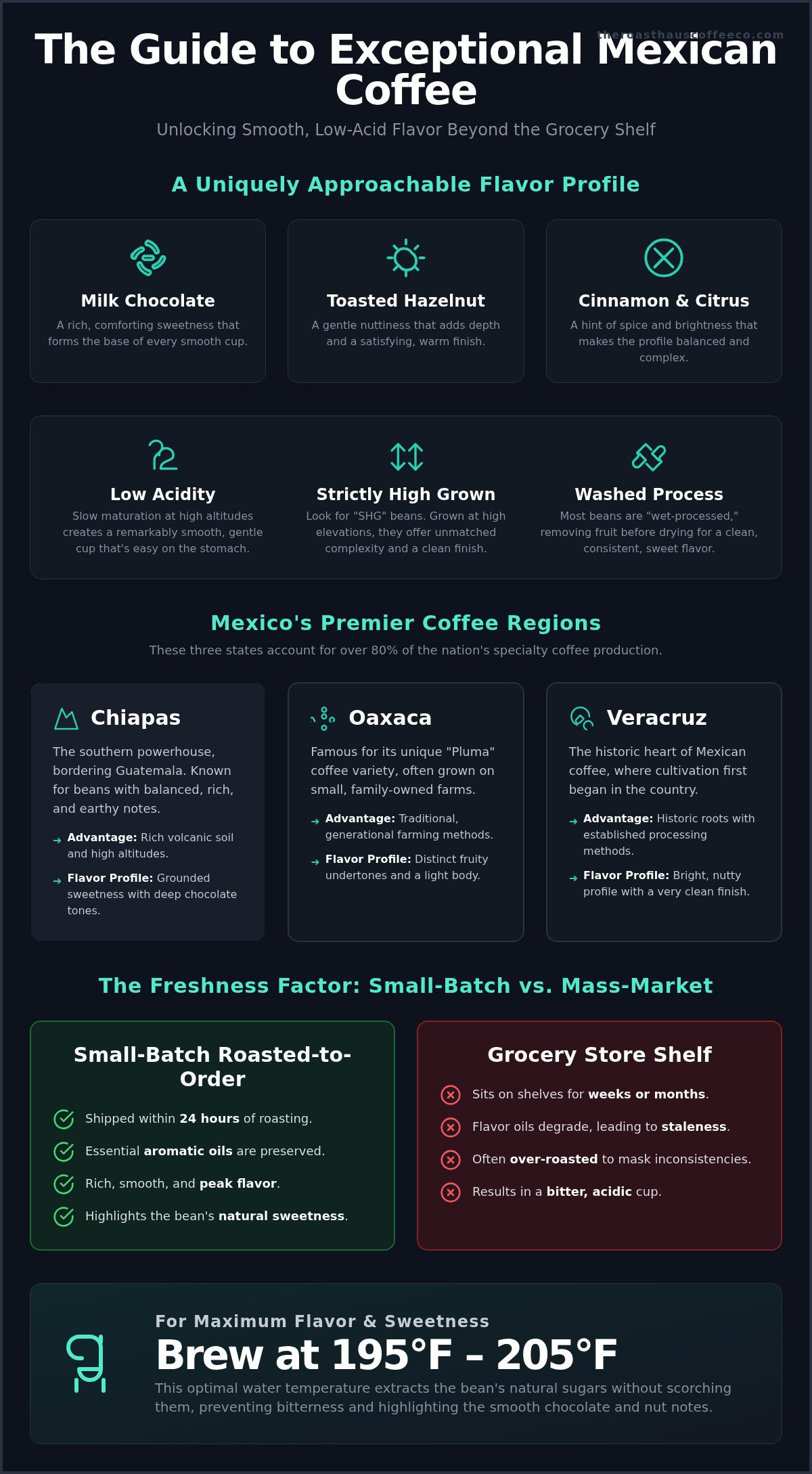
Mexican coffee beans are high-grown Arabica beans known for their balanced, earthy sweetness. They provide a profile that is easy to enjoy at any time of day. You'll find a medium body, mild acidity, and a smooth finish in every cup. The primary flavor notes often include milk chocolate, toasted hazelnut, and a hint of subtle citrus. These beans are the most approachable choice for anyone new to specialty coffee because they lack the aggressive bitterness found in lower-quality grocery store roasts.
The history and scale of Coffee production in Mexico have created a diverse landscape for coffee lovers. For decades, the industry has focused on producing beans that appeal to a wide range of palates. This focus makes them a reliable staple for your morning routine. Whether you're brewing a simple drip or a refined pour-over, the consistency is there. We appreciate these beans because they don't hide behind gimmicks; the quality of the soil and the care of the farmer are evident in the final brew.
The Benefits of Low Acidity
Many coffee drinkers struggle with the sharp, wine-like acidity found in African origins. Mexican coffee is much gentler on the stomach. This smoothness comes from high-altitude growing conditions in regions like Chiapas and Oaxaca. High altitudes allow the cherries to mature slowly, which develops a rich mouthfeel without the harsh acidic bite. Choosing a darker roast can further reduce acidic compounds for sensitive drinkers. It's a practical way to enjoy your caffeine without the discomfort of acid reflux.
Arabica vs. Robusta in Mexico
Specialty roasters focus almost exclusively on Mexican Arabica. While Robusta production is rising for use in soluble coffee, it lacks the depth of high-grown beans. Arabica grown at high elevations offers a complexity that lowland crops simply can't match. Check labels for "Strictly High Grown" (SHG) designations to ensure you're getting premium quality. These high-grown beans provide the clean, cocoa-toned finish that defines a superior cup and supports the integrity of independent growers.
Top Coffee Regions of Mexico: Chiapas, Oaxaca, and Veracruz
Mexico's coffee landscape is a tapestry of micro-climates and diverse elevations. While many countries have a singular flavor profile, mexican coffee beans vary significantly depending on their home state. Chiapas stands as the southern powerhouse of the industry. Bordering Guatemala, this region benefits from rich volcanic soil and high altitudes. Much of the best coffee here grows within or near the El Triunfo Biosphere Reserve. This protected area ensures that the beans mature under a canopy of shade, preserving their integrity and complex flavor profiles.
Oaxaca offers a different experience entirely. It's famous for "Pluma" coffee, a variety known for its distinct fruity undertones and light body. The farmers here often work on small, family-owned plots, maintaining traditional methods that have lasted for generations. Meanwhile, Veracruz represents the historic heart of the trade. As the first region to cultivate coffee in Mexico, it produces beans with a bright, nutty profile and a clean finish. According to a USDA report on Mexican coffee production, these states drive the majority of the nation's specialty exports. In the 2026/2027 marketing year, production is forecasted to reach 4.14 million 60-kilogram bags, with Chiapas, Veracruz, and Puebla accounting for over 80% of that total.
The Volcanic Soil Advantage
The mineral-rich volcanic soil in regions like Chiapas provides a unique foundation for growth. This soil contributes specific earthy notes that ground the sweeter chocolate tones mentioned in previous sections. High-altitude shade-growing is also vital. When coffee grows slowly in the shade, the sugars have more time to develop. This results in a denser, more flavorful bean. Because of this regional diversity, mexican coffee beans are a perfect choice for those who enjoy variety. You can explore these different profiles by trying The All Day Sampler, which highlights the versatility of high-grown harvests.
Wet-Processing: The Secret to a Clean Cup
Most Mexican cooperatives use the "washed" or wet-processing method. In this process, the fruit is removed from the bean before drying. This highlights the bean’s natural sweetness and produces a "clean" cup without the fermented funk sometimes found in natural-process coffees. For a small-batch roaster, washed beans are a dream. They roast more consistently, allowing us to hit the precise temperature needed to unlock those toasted hazelnut notes. This consistency is why we can guarantee a high-standard experience every time you order.
Freshness vs. The Grocery Store: Why Small-Batch Roasting Wins
Grocery store coffee often suffers from a major "shelf-stale" problem. Most bags sit on a retail shelf for months before they reach your kitchen. Industrial roasters prioritize volume, which leads to a lack of transparency about when the beans were actually roasted. They use "Best By" dates to extend shelf life, but these dates don't tell you anything about flavor. Volatile aromatic oils begin to dissipate the moment the roast ends. If you want to taste the distinct chocolate and earthy notes of premium mexican coffee beans, you need a different approach. Choosing fresh coffee beans from an artisan roaster ensures those oils are still present when you brew.
The Roasted-to-Order Philosophy
Our "Roasted-to-Order" philosophy is the ultimate differentiator. We don't pre-roast and store our products. Instead, we wait until you place an order to fire up the roaster. This creates a tight 24-hour window from the roaster to the shipping carrier. Small-batch production allows us to monitor every stage of the process. This level of quality control is impossible for large corporations. Freshness is visible during the brewing process through the "bloom." When hot water hits fresh grounds, the release of carbon dioxide creates a rich, bubbling foam. This reaction unlocks the full sensory potential of the bean. Stale beans stay flat, resulting in a dull and bitter taste.
Supporting Independent Roasters
Choosing an independent roaster is about more than just flavor. It's about supporting a family-owned venture that cares about integrity. The Roast Haus operates out of Wyandotte, Oklahoma, where we focus on the specific needs of each single-origin harvest. We are passionate craftsmen, not a faceless corporation. We take pride in our identity as a personal venture. Small-scale production allows us to highlight the subtle nuances that industrial roasters ignore in favor of volume. When you order from a local expert, you receive a product that has been handled with care. This commitment to quality and service ensures you get the best possible experience with your mexican coffee beans.
How to Brew Mexican Coffee for Maximum Flavor
Brewing is the final step in the craftsman's journey. You've sourced high-quality mexican coffee beans, so don't ruin them with poor technique. Water temperature is critical for successful extraction. Aim for a range between 195°F and 205°F. If the water is boiling, you'll scorch the grounds and create a bitter mess. If it's too cold, you won't extract the natural sweetness found in high-grown Arabica. A consistent grind is the foundation of every great cup. Uneven grounds lead to an imbalanced, muddy flavor. Learning how to make coffee properly allows the subtle citrus and chocolate notes to shine.
The Perfect Drip and Pour Over
Drip and pour-over methods are excellent for highlighting the medium body of Mexican origins. Use a paper filter for these methods. A paper filter traps fine sediment and heavy oils that can make the cup feel weighted or dusty. This creates a crisp, clean finish that lets the bean's integrity stand out. We recommend a starting ratio of 1 gram of coffee to 16 or 17 grams of water. This balance ensures the toasted hazelnut notes are clear without being overwhelmed. Pay attention to the taste to identify extraction levels. Bitterness usually means over-extraction, while sourness indicates under-extraction. Adjust your grind size slightly until the profile is smooth and balanced.
Mexican Coffee as Cold Brew
To make a batch at home, follow these simple steps:
- Coarsely grind your mexican coffee beans to the texture of sea salt.
- Combine the grounds with cold, filtered water using a 1:4 ratio.
- Let the mixture steep in the refrigerator for 16 to 20 hours.
- Strain the concentrate through a fine mesh or paper filter to remove all grounds.
This method showcases the sensory excellence we strive for in our small-batch roasting process. If you're ready to start brewing, browse our fresh-roasted single origins today and taste the difference that 24-hour fulfillment makes.
Experience Fresh Mexican Coffee from The Roast Haus
Small-Batch Craftsmanship in Oklahoma
Our roastery in Wyandotte, Oklahoma, is where the transformation happens. We don't use automated, industrial-sized machines that prioritize volume over flavor. Instead, we monitor every roast curve by hand. This careful attention allows us to preserve the delicate hazelnut and milk chocolate notes that make mexican coffee beans so special. Our customers trust The Roast Haus Coffee Co.'s mantra: timing is the ultimate differentiator. By keeping our batches small, we ensure that heat is applied precisely. This prevents the burnt bitterness common in mass-produced coffee and protects the nutritional integrity of the bean.
The "Roasted-to-Order" promise is our bond with you. We roast your coffee today and ship it tomorrow. This ensures you receive the beans at the peak of their aromatic potential. You won't find our bags gathering dust in a warehouse or sitting on a grocery store shelf for six months. This level of freshness is essential for unlocking the smooth, cocoa-toned profile we've explored in this guide. When you open a bag from The Roast Haus Coffee Co., you're smelling the results of a process that was completed just hours before it reached your door.
Find Your New Favorite Roast
If you're looking for a smooth, non-bitter experience that is gentle on the stomach, our Mexican single-origins are the perfect choice. They are available for individual purchase or as part of The All Day Sampler. For those who never want to run out of fresh beans, a coffee subscription provides a convenient way to maintain a steady supply of roasted-to-order quality. We take pride in being your trusted local expert, ensuring every cup you brew is a high-standard experience.
Ready to upgrade your morning ritual with beans that are actually fresh? Shop Fresh Mexican Coffee Beans and experience the difference of artisan craftsmanship delivered straight to your home.
Elevate Your Morning Ritual with Fresh Mexican Coffee
Mexican coffee beans offer a unique combination of low acidity and deep, chocolatey sweetness that is hard to find elsewhere. By understanding the regional differences between Chiapas and Oaxaca, you can select a profile that perfectly matches your palate. Remember that the secret to unlocking this potential isn't just the origin; it's the timing of the roast. Choosing beans that haven't spent months on a retail shelf ensures you taste the vibrant hazelnut and citrus notes that define premium high-grown Arabica.
We take pride in our identity as a family-owned artisan roastery in Wyandotte, Oklahoma. Our small-batch quality guarantee means we monitor every detail of the process. We follow a strict mantra: roasted today, shipped tomorrow. This commitment to 24-hour fulfillment brings the craft of the roaster directly to your kitchen. It's time to stop settling for bitter, over-roasted grocery store options and start enjoying the smooth integrity of a truly fresh cup.
Order Your Freshly Roasted Mexican Coffee Beans and experience the difference that dedicated craftsmanship makes. We're excited to help you discover your new favorite brew.
Frequently Asked Questions
Are Mexican coffee beans low in acidity?
Yes, Mexican coffee is naturally low in acid. This characteristic makes it a preferred choice for people with sensitive stomachs or acid reflux. The smooth profile is a result of high-altitude growing conditions and traditional wet-processing methods. While it lacks the sharp brightness of African beans, it provides a gentle, balanced experience. This low-acid nature allows the natural sweetness of the bean to remain the primary focus of every cup you brew.
What are the main flavor notes of Mexican coffee?
The main flavor notes include milk chocolate, toasted hazelnut, and subtle citrus. You'll often find a medium body and a clean finish that resembles light brown sugar or cinnamon. These beans are prized for their earthy sweetness rather than complex floral layers. Because the flavors are so approachable, they serve as an excellent daily drinker for those who prefer a traditional, comforting coffee profile without any aggressive bitterness or overwhelming fruitiness.
Which region in Mexico produces the best coffee?
Chiapas, Oaxaca, and Veracruz are the top-producing regions, each offering distinct qualities. Chiapas is often considered the best for its volcanic soil and dense, high-grown crops. Oaxaca is famous for the "Pluma" variety, which offers more delicate, fruity undertones. Veracruz provides a bright, nutty profile with a historic reputation for quality. Choosing the "best" depends on your preference for either deep chocolate tones or lighter, more nuanced sweetness from independent family farms.
Is Mexican coffee usually a light or dark roast?
Mexican beans are versatile but are most commonly roasted to a medium or medium-dark level. A medium roast preserves the delicate citrus and hazelnut notes while developing the chocolatey sweetness. Darker roasts are popular for those who want to further reduce acidity and enhance the smoky, earthy characteristics of the bean. We find that a precise small-batch roast highlights the integrity of the bean without masking its origin with burnt industrial flavors.
Can I use Mexican coffee beans for espresso?
Yes, mexican coffee beans make an exceptional espresso. Their medium body and low acidity create a smooth shot with a rich, golden crema. The chocolate and nutty notes cut through milk perfectly, making them a great base for lattes and cappuccinos. When used as a single-origin espresso, you get a clean and sweet result that isn't overly sharp. It's a practical choice for home baristas who want a reliable, easy-to-dial-in bean.
How long do Mexican coffee beans stay fresh after roasting?
Coffee beans stay at their peak for about two to three weeks after the roast date. Volatile oils begin to dissipate quickly, which is why our 24-hour shipping model is so important for mexican coffee beans. After a month, the vibrant aromas and chocolate tones start to flatten out. Store your beans in an airtight container away from light and moisture to extend their life. Always look for a roast date for true quality.
Is Mexican coffee considered specialty coffee?
Much of Mexico's high-grown Arabica is classified as specialty coffee. To earn this title, the beans must score above 80 points on a 100-point scale. Producers in regions like Chiapas often meet these standards by using shade-growing techniques and meticulous wet-processing. We specifically source these high-standard beans to ensure our customers receive a product with sensory excellence. This focus on quality supports independent farmers who prioritize craftsmanship over industrial volume and mass-market consistency.
What is the best brewing method for Mexican beans?
Drip and pour-over methods are the best ways to enjoy the clean, nutty profile of these beans. These methods allow the medium body to feel light and refreshing on the palate. Cold brew is another excellent choice because the slow extraction emphasizes the deep cocoa flavors without adding any heat-induced bitterness. Use a consistent medium-coarse grind and filtered water at the correct temperature to ensure you're getting the most out of every single-origin bag.

