


The most expensive espresso machine in the world cannot fix a bag of stale, supermarket beans. It is frustrating when you spend your morning dialing in a grind only to end up with a shot that is either punishingly bitter or thin and sour. You want that rich, syrupy texture you find at a professional roastery, but your home setup often feels like it's missing a secret ingredient. We understand that frustration because we see it every day with brewers who are just looking for a consistent, cafe-quality experience.
To fix your brew, you must learn how to select the best coffee beans for espresso by looking past marketing buzzwords and focusing on roast chemistry. In 2026, specialty coffee drinkers are prioritizing transparency and flavor over generic labels. This guide will show you how to identify the perfect beans for your specific palate and explain why peak freshness is the ultimate secret to a thick, golden crema. We'll walk through how to choose between origins and why our small-batch, roast-to-order philosophy ensures your beans never go stale before the bag is finished.
Key Takeaways
- Learn why "espresso roast" is a myth and how to identify the best coffee beans for espresso based on bean density and extraction needs.
- Discover the flavor differences between traditional dark roasts and modern medium roasts to find your perfect balance of body and acidity.
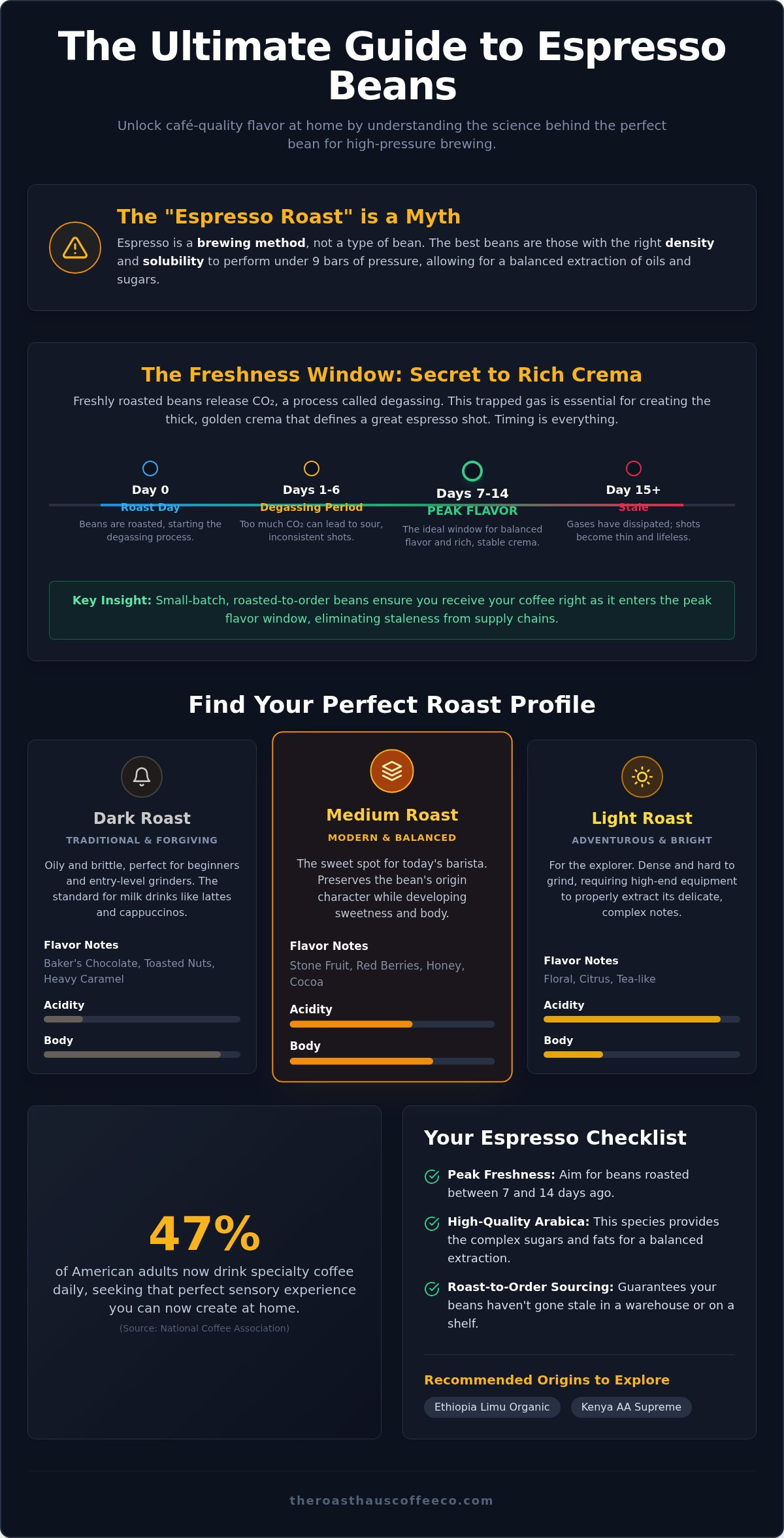
- Understand the critical importance of the degassing period and why beans typically peak between 7 and 14 days after roasting.
- See how our small-batch, roasted-to-order model eliminates middleman staleness to ensure your home espresso always has thick, rich crema.
- Explore specific recommendations like Ethiopia Limu Organic and Kenya AA Supreme to bring unique regional flavor notes to your morning routine.
What Makes the Best Coffee Beans for Espresso?
Many home baristas search for a specific bean variety labeled for espresso, but the truth is simpler. Espresso is a brewing method, not a type of bean. Any coffee can technically be used, but the best coffee beans for espresso are those with a chemical and physical structure that can withstand nine bars of pressure. In 2026, specialty coffee drinkers are moving away from generic dark roasts and toward beans that showcase specific origin characteristics while maintaining high solubility.
Bean density is the hidden factor in a perfect shot. When you grind coffee for espresso, you are creating a fine powder that resists water flow. The roasting process makes the bean more porous, allowing water to penetrate the cell walls and extract oils quickly. If a bean is too dense, the water passes through without picking up the necessary solids, resulting in a thin, acidic cup. High-quality Arabica beans are preferred because they provide the complex sugars and fats needed for a balanced extraction.
Freshness is more critical for this method than any other. When we roast in small batches in Wyandotte, Oklahoma, the beans begin a process called degassing. This release of CO2 is what creates the crema. As pressurized water hits the coffee oils and trapped gases, it emulsifies them into the signature golden foam. Without this gas, your espresso will lack the syrupy mouthfeel and aromatic punch that defines a great shot. Recent data from the National Coffee Association shows that 47% of American adults now choose specialty coffee daily, and most are looking for that specific sensory excellence.
Espresso Roast vs. Filter Roast
The term espresso roast usually describes a bean developed longer in the roaster to increase solubility and reduce sharp acidity. This profile is designed for solubility and balance. While filter roasts are meant to be light and tea-like, espresso roasts are often pushed slightly further to ensure they can cut through milk in lattes or cappuccinos. Modern baristas are experimenting with lighter roasts, but these require professional-grade grinders and precise temperature stability to dial in correctly.
The Anatomy of an Espresso Bean
Specialty coffee relies on Arabica beans for their superior flavor profiles. During the roast, the bean expands and its internal pressure increases, creating a brittle structure that is easy to grind into a uniform powder. If you are new to home brewing, it's helpful to learn what is espresso to understand the mechanics of the puck. For a deeper look at the cultural history of the beverage, you can also explore what is espresso through historical records.
Choosing a Roast Level: From Traditional to Modern
Selecting the best coffee beans for espresso requires understanding how heat transforms the raw seed. In 2026, the definition of a perfect shot has expanded. While many drinkers still crave a heavy, syrupy cup, others now prefer a bright and tea-like experience. Your roast choice dictates your daily workflow and the final flavor profile in your cup. According to the National Coffee Association, 47% of American adults consumed specialty coffee in the past day, and much of that growth is driven by drinkers exploring these diverse roast levels.
The Dark Roast Advantage
Traditional espresso is built on dark roasts. These beans are oily and brittle, making them incredibly forgiving for beginners. If you own an entry-level grinder, dark roasts are often your best friend. They shatter easily into a uniform powder and extract quickly under pressure. You can expect deep notes of baker's chocolate, toasted nuts, and heavy caramel. These roasts have very low acidity, which is why they remain the standard for lattes and cappuccinos. The bold bitterness of the roast provides a necessary backbone that doesn't get lost when you add steamed milk.
Medium Roasts and Complexity
Medium roasts represent the sweet spot for the modern home barista. They strike a careful balance between the sugars developed during roasting and the natural acidity of the bean. This profile is the hallmark of contemporary artisan roasteries. By stopping the roast earlier, we preserve the origin character of the coffee. You'll often taste stone fruit, red berries, or honey alongside a smooth cocoa finish. These shots are frequently described as vibrant or juicy. If you want to explore the nuances of different coffee-growing regions, you should look for roasted-to-order medium beans that arrive at your door within days of the roast.
Light roasts are for the adventurous brewer looking for floral and citrus notes. They are dense and physically hard to grind, often requiring high-end equipment to extract properly. If your machine cannot reach high temperatures, a light roast will likely taste sour or salty. Dialing in these beans is a precise science. You'll need to grind much finer and use higher water temperatures compared to a darker profile. For most home setups, sticking to medium or dark roasts provides a more consistent experience without the frustration of constant adjustments.
Single Origin vs. Espresso Blends
Choosing between a blend and a single origin bean is a pivotal step in your espresso journey. For many, the best coffee beans for espresso are those that provide a reliable, repeatable flavor profile every morning. Blends are designed to achieve this by combining beans from different regions. Conversely, single origin beans offer a transparent look into the terroir of a specific farm or region. While blends offer comfort, finding the best coffee beans for espresso in the single origin category offers a unique journey into global flavors. Both have a place on your counter depending on your equipment and your patience for dialing in the perfect shot, and you can find a diverse selection of these profiles at KESTAR COFFEE to suit your specific tastes.
A roaster crafts a blend to create a flavor profile that is greater than the sum of its parts. Usually, we choose a base bean that provides heavy body and chocolatey sweetness. We then add an accent bean to introduce floral or fruity aromas. This process is essential because coffee is an agricultural product that changes with the seasons. By adjusting the components of a blend, we maintain a consistent house flavor year-round. If you're unsure where to start, we suggest checking out our coffee sampler to try different profiles and see what resonates with your palate.
Beginners should almost always start with a reliable blend. Because blends are designed for balance, they're more forgiving when your grind size or water temperature isn't perfectly dialed in. This allows you to focus on mastering your puck preparation without the frustration of a shot that tastes like pure lemon or ash. Once you've mastered the basics, you can move on to the more temperamental world of single origins.
The Excitement of Single Origin Espresso
Single origin espresso is where you find the most vibrant and surprising flavors. For example, our Ethiopia Limu Organic is known for jasmine notes and a bright citrus finish. Beans from Colombia or our Honduras Morning Splendeur typically offer a more balanced experience with caramel and red fruit sweetness. These coffees reflect the soil, altitude, and processing methods of their specific origin. In 2026, 35% of specialty coffee drinkers cited flavor as the primary reason they view a coffee as specialty, according to the National Coffee Association.
You should be aware that single origins require more frequent attention. As these beans age, their chemical composition shifts more noticeably than a blend. You might find yourself adjusting your grinder every few days to keep the extraction within the sweet spot. High-quality options like our Kenya AA Supreme can produce world-class shots with wine-like acidity, but they demand respect and precision from the barista. If you're ready to experiment, these beans offer a sensory reward that a standard blend simply cannot match.
The Freshness Window: Why Roasted-to-Order Matters
The best coffee beans for espresso lose their magic quickly if they aren't used at the right time. Most home brewers struggle with thin, watery shots because they rely on beans from a supermarket shelf. Those bags are often three to six months old. By the time you open them, the volatile oils have oxidized and the CO2 has vanished. Without that gas, you cannot produce a thick, rich crema. Espresso flavor degrades rapidly after 30 days post-roast. This stale cliff is the primary reason home espresso often fails to match the quality of a professional roastery.
Understanding Degassing
During the roasting process, CO2 builds up inside the bean. This gas is vital for creating crema, but too much of it causes problems in the portafilter. If you brew beans the same day they are roasted, the escaping gas creates bubbling and turbulence in the basket. This disrupts the water flow and leads to uneven extraction. The sweet spot for most espresso beans is between 7 and 14 days after roasting. Our roasted-to-order model ensures you receive beans just as they enter their peak window. This timing allows the beans to settle so you get a balanced, syrupy extraction every time.
How to Store Your Espresso Beans
Protecting your investment means fighting the four enemies of freshness: light, heat, moisture, and oxygen. Many people move their beans to glass jars for the aesthetic, but this exposes them to light and speeds up degradation. A dark, airtight environment is essential. The original bag we provide features a one-way valve that lets CO2 out without letting oxygen in. Keep your beans in a cool pantry rather than the freezer or fridge, as moisture can damage the delicate oils. You should also learn more about coffee grinders to ensure you're grinding fresh every time. Grinding right before you brew is the only way to preserve the aromatic complexity of the best coffee beans for espresso.
We are a family-owned business in Wyandotte, Oklahoma, and we believe you deserve the best possible experience. That is why we roast in small batches and ship within 24 hours. You don't have to settle for stale, warehouse-stored coffee anymore. Experience the difference of truly fresh, artisan beans by visiting The Roast Haus Coffee Co. today.
Top Espresso Recommendations from The Roast Haus
Choosing the best coffee beans for espresso is a personal decision based on your unique flavor preferences. We have carefully curated a selection of roasts that cater to every type of home barista, from those seeking traditional bold flavors to those chasing modern, fruity extractions. Every bag we produce reflects our commitment to small-batch quality and the integrity of the bean's origin. In 2026, the demand for flavor transparency is higher than ever, and we aim to meet that with every roast.
- Kenya AA Supreme: This is for the brewer who wants a powerful experience. It offers a bold, wine-like acidity and a heavy body that stands up perfectly in a straight shot or a short macchiato.
- Ethiopia Limu Organic: If you prefer a bright, floral, and modern espresso, this is the perfect choice. It highlights the delicate jasmine and citrus notes that are currently trending in specialty coffee circles.
- Honduras Morning Splendeur: This is our most balanced, crowd-pleasing profile. It features smooth notes of brown sugar and a clean finish, making it an excellent daily driver for any home setup.
- Decaf Swiss Water Process: You don't have to sacrifice flavor for a late-night shot. This is an espresso-quality decaf that uses a chemical-free process to preserve the natural sweetness of the coffee without any bitter aftertaste.
The Artisan Difference in Wyandotte, OK
We have been family-owned and operated since 2014. Our small-batch roasting process allows for a level of precision that large industrial roasters simply can't match. We check every single bag for quality before it leaves our facility in Wyandotte, Oklahoma. By choosing our beans, you are supporting an independent venture that values craftsmanship over mass production. This direct-to-consumer model also ensures that more of your money goes toward better pay for farmers across the globe. We believe the best coffee beans for espresso come from people who care about the product from the soil to the bag.
Starting Your Espresso Journey
If you're still exploring your palate, the All Day Sampler is the best way to find your espresso preference. It allows you to taste different origins and roast levels side-by-side to see what truly works for your machine and your taste buds. To make things even easier, our coffee subscription keeps you in the peak freshness window automatically. We ship within 24 hours of roasting, so you never have to worry about running out or using stale beans. We invite you to shop our freshly roasted-to-order beans today and experience the difference that true artisan quality makes in every cup.
Elevate Your Home Espresso Experience
You now have the tools to transform your morning routine from a trial-and-error struggle into a consistent, cafe-quality ritual. Finding the best coffee beans for espresso is not about following a generic grocery store label. It is about understanding the science of bean density and respecting the critical degassing window. By choosing a roast that matches your specific equipment and palate, you eliminate the bitterness and thin texture that plague so many home setups.
Our family-owned roastery in Wyandotte, Oklahoma, is dedicated to this level of craftsmanship. We don't believe in warehouse storage or middleman staleness. Every bag is roasted in small batches and shipped within 24 hours to ensure you receive your coffee exactly when it enters its peak flavor state. This direct-to-consumer model is the only way to guarantee the rich, syrupy crema you deserve. We take pride in our small-batch quality control because we know every shot counts.
Take the next step in your brewing journey and experience the difference that true freshness makes. Order your roasted-to-order espresso beans from The Roast Haus today. We are excited to be a part of your daily ritual and help you pull the perfect shot every single morning.
Frequently Asked Questions
Can I use any coffee beans for espresso?
You can use any coffee bean to make espresso since the term refers to the brewing method rather than a specific crop. However, the best coffee beans for espresso are those specifically roasted for high solubility. While a light filter roast might taste thin or overly acidic under pressure, beans developed for espresso provide the balance needed for a rich shot. We recommend choosing high-quality Arabica beans that can withstand the intense extraction process.
Is dark roast always better for espresso?
Dark roast is not always better, although it is the traditional choice for those who enjoy chocolatey, low-acid flavors. In 2026, many specialty drinkers prefer medium roasts because they preserve the unique terroir of the region. Dark roasts are more forgiving for beginners with entry-level equipment, but they can sometimes mask the delicate floral or fruity notes found in higher-quality single-origin beans like our Ethiopia Limu Organic. It's a matter of personal preference.
How soon after roasting should I use beans for espresso?
You should wait between 7 and 14 days after the roast date before pulling a shot. This period allows the beans to degas, releasing built-up carbon dioxide that can cause turbulence and uneven extraction in the portafilter. Because we ship within 24 hours of roasting at our Wyandotte facility, your beans will typically arrive right as they are entering this peak flavor window. Avoid using beans on day one for the best results.
Why does my espresso taste sour even with expensive beans?
Sourness is a primary sign of under-extraction, which often happens when the water passes through the coffee too quickly. This can occur if your grind is too coarse, your water temperature is too low, or you are using a very light roast on a machine that lacks thermal stability. Even the best coffee beans for espresso will taste sour if the puck resistance isn't high enough to slow down the water flow during the shot.
What is the difference between Arabica and Robusta for espresso?
Arabica beans are the specialty industry standard because they offer superior flavor complexity, higher acidity, and more natural sugars. Robusta beans contain more caffeine and produce a thicker crema, but they often have a harsh, rubbery taste. At The Roast Haus, we focus exclusively on high-quality Arabica origins. This ensures your espresso has the refined sensory profile expected from an artisan roastery rather than the bitter edge of commercial-grade blends often found in supermarkets.
Do I need a special grinder for espresso beans?
You need a dedicated burr grinder that is capable of making micro-adjustments for a fine, uniform powder. Standard blade grinders or cheap burr grinders often produce inconsistent particles, leading to "channeling" where water finds the path of least resistance. Without a precise grind, you cannot create the necessary pressure for a syrupy extraction. Investing in a quality grinder is just as important as the machine you use to brew. Consistency is the key to a great shot.
How long do espresso beans stay fresh once the bag is opened?
Espresso beans generally stay at their peak for about two to three weeks once the bag is opened. While they won't "spoil" after that, the aromatic oils oxidize and the CO2 escapes, leading to a flat taste and poor crema. To extend this window, keep your beans in their original bag with the one-way valve closed. Store them in a cool, dark pantry rather than the freezer to avoid moisture damage to the cell structure of the bean.
Is oily coffee bad for my espresso machine?
Oily beans are common in dark roasts, but they can cause mechanical issues over time. The surface oils act as a magnet for coffee dust, which can clog your grinder's burrs and leave a rancid residue inside your machine's group head. If you prefer dark, oily roasts, it is essential to clean your equipment more frequently. This prevents the buildup of old oils from ruining the flavor of your fresh, small-batch beans and keeps your machine running smoothly.
