


The secret to a perfect shot isn't hidden in a fancy machine; it's found in the roast date on your bag. Most people buy "espresso roast" thinking it's a specific type of bean, but that label often masks stale, over-roasted coffee that produces bitter or sour results. Finding the best coffee beans for espresso requires looking past the supermarket aisle and focusing on the integrity of the roasting process itself.
It's frustrating to invest in high-end equipment only to end up with a thin brew and zero crema. You've likely felt the confusion of staring at endless labels, wondering if a dark roast is truly mandatory for a decent latte. We'll help you gain the confidence to choose between light and dark roasts while explaining why freshness is the ultimate differentiator. You will discover how to select beans for a syrupy mouthfeel and balanced sweetness, featuring insights from our small-batch roasting process in Wyandotte, Oklahoma. We'll show you how our commitment to shipping within 24 hours of roasting ensures you never have to settle for a dull cup again.
Key Takeaways
- Understand that "espresso beans" are a roast profile rather than a specific plant species, requiring high solubility to withstand pressure.
- Identify the "sweet spot" for brewing, which typically occurs 7–14 days after roasting once the beans have properly degassed.
- Discover how to select the best coffee beans for espresso by matching origin notes, like the citrus of Kenya AA Supreme, to your flavor preferences.
- Master the "Golden Ratio" of 18g of coffee to 36g of liquid to achieve a syrupy mouthfeel and perfectly balanced sweetness.
- Learn why a small-batch, roasted-to-order model is the only way to guarantee the peak freshness necessary for thick, golden crema.
What Actually Makes the Best Coffee Beans for Espresso?
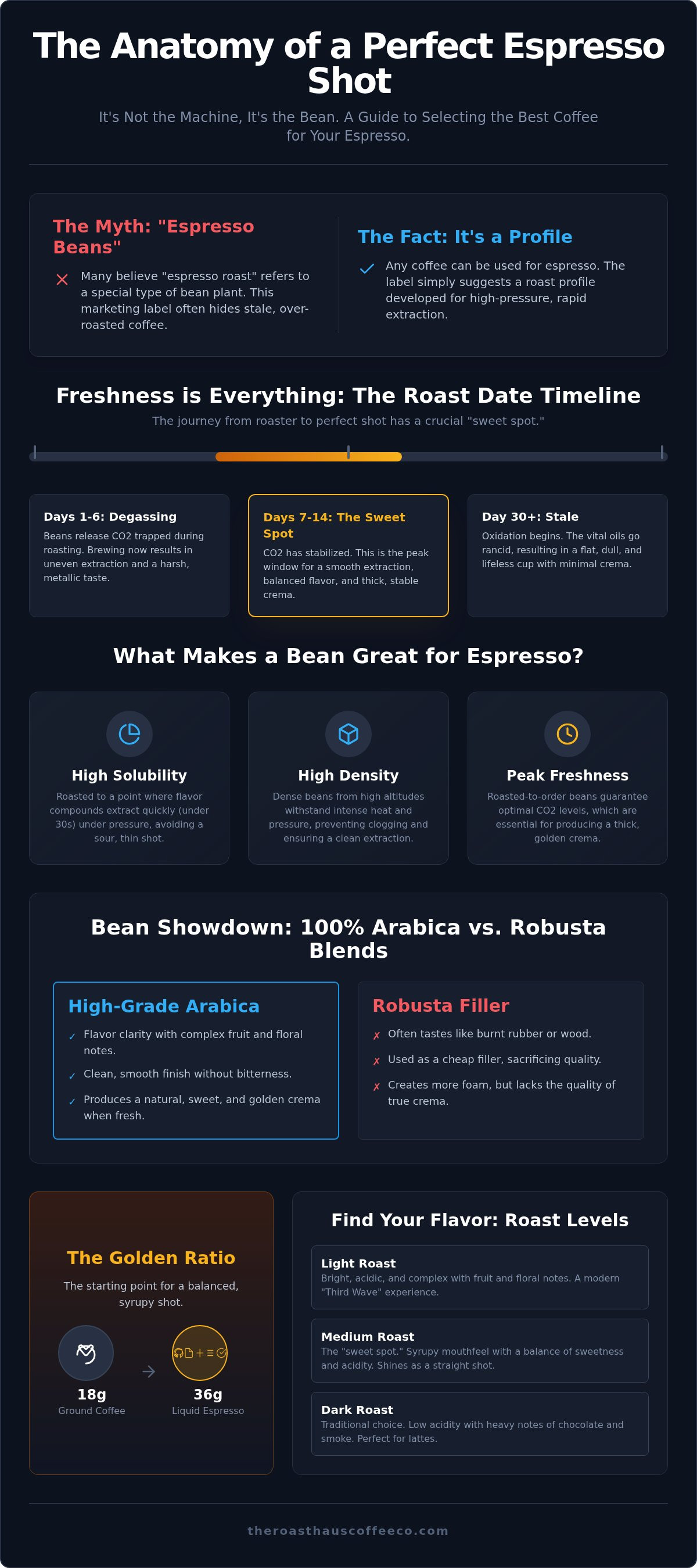
Walk into any grocery store and you'll see bags labeled "espresso beans." This is a marketing myth. There is no special plant species that grows espresso. Any coffee bean can be used for espresso, provided you grind it correctly and use the right equipment. To understand What is Espresso, you must view it as a brewing method rather than a specific crop. The label on the bag is simply a roaster's suggestion for which beans have the right profile for high-pressure extraction.
The reason roasters use the espresso label is actually about solubility. Espresso brewing involves forcing hot water through a tightly packed puck of coffee at nine bars of pressure. This happens fast, usually in under 30 seconds. The best coffee beans for espresso are those roasted to a point where their compounds can be extracted quickly. If a bean isn't soluble enough, your shot will taste sour and thin. If it's too soluble or over-roasted, it becomes bitter and ashy. We focus on the Maillard reaction during our small-batch process to ensure the sugars are developed enough to dissolve the moment the water hits the puck.
Density also plays a massive role in how a bean performs. We source high-altitude beans like our Kenya AA Supreme because they are physically harder and denser than beans grown at lower elevations. These dense beans can withstand the intense heat and pressure of an espresso machine without collapsing into a fine silt that clogs your filter. This structural integrity allows for a clean, vibrant extraction that highlights the bean's natural character rather than just tasting like "roast."
Arabica vs. Robusta in Espresso
Many commercial brands mix in Robusta beans to create a thicker crema. While Robusta produces more foam, it often tastes like burnt rubber or wood. It is essentially a cheap filler. We believe in flavor clarity. Our small-batch process uses only high-grade Arabica. This ensures your espresso has a clean finish and complex notes that don't need to be hidden under a layer of bitter foam. A well-roasted Arabica bean will produce plenty of natural, golden crema if it's fresh.
Understanding Roast Levels for Modern Espresso
The roast level dictates the final flavor profile of your shot. Dark roasts are the traditional choice. They offer low acidity and heavy notes of chocolate and smoke, making them perfect for milk-based drinks like lattes. Medium roasts are often the sweet spot for home baristas. They provide a syrupy mouthfeel and a balance of sweetness and acidity that shines as a straight shot. Light roasts are a newer trend. These shots are bright, acidic, and complex. They are harder to dial in but offer incredible fruit and floral notes for those who enjoy a "Third Wave" experience, a movement championed by dedicated roasteries like Romeo Coffee Roaster. Choosing the best coffee beans for espresso depends on whether you want classic comfort or modern acidity.
The Freshness Factor: Why Roast Date Is Everything
Freshness determines whether you get a syrupy shot or a watery mess. Many people buy beans without checking the roast date, but for espresso, that date is the most important piece of information on the bag. Complex chemical processes involving coffee aroma and flavor begin to shift the moment the beans leave the roaster. If you want the best coffee beans for espresso, you have to understand the timeline of the bean.
During the roasting process, carbon dioxide (CO2) becomes trapped inside the coffee beans. This gas needs time to escape, a process known as degassing. If you try to brew espresso with beans roasted earlier that same day, the gas will escape violently when it hits the high pressure of your machine. This creates turbulence in the portafilter, leading to uneven extraction and a metallic, harsh taste. However, you also can't wait too long. After about 30 days, the beans begin to oxidize. The vital oils go rancid and the flavors lose their "sparkle," leaving you with a flat, dull cup.
The "sweet spot" for espresso performance is typically between 7 and 14 days after the roast date. During this window, the CO2 levels have stabilized enough to allow for a smooth extraction while still providing the gas necessary to create a thick, stable crema. Most grocery store beans have been sitting in warehouses for months. By the time they reach your kitchen, the window for peak flavor has already slammed shut.
The Roast Haus Fulfillment Advantage
We built our roastery around the belief that freshness starts with the roast. Our family-owned operation in Wyandotte, Oklahoma, uses a roasted-to-order model. We don't keep shelves of pre-packaged coffee waiting for a buyer. Instead, we roast in small batches and ship your order within 24 hours. This ensures you receive the best coffee beans for espresso exactly when they are ready to be dialed in. You can view our fresh roast collections to find a profile that fits your morning routine.
Storing Your Espresso Beans for Longevity
Once your beans arrive, you must protect them from light, heat, moisture, and oxygen. These four enemies accelerate the aging process. We ship our coffee in specialized bags with one-way valves. These valves allow the remaining CO2 to escape without letting oxygen in to spoil the oils. Keep your coffee in a cool, dark cupboard rather than on the counter. Never store your espresso beans in the freezer. The moisture from condensation will damage the delicate cell structure of the bean and ruin the very oils that produce that golden crema you're looking for.
Choosing Your Flavor Profile: Origins and Notes
Origin is the blueprint of your espresso's flavor. While the roast level develops the sugars, the soil and altitude define the inherent character of the bean. To find the best coffee beans for espresso, you need to look at the three major growing regions and understand what each brings to the cup. Each region offers a distinct sensory experience that dictates how the final shot will taste.
Central American beans, like our Honduras Morning Splendeur, are the backbone of traditional espresso. They typically offer notes of cocoa and toasted nuts with a very balanced acidity. These beans provide a consistent, reliable base that most drinkers find familiar and comforting. They are excellent for those who want a smooth, chocolatey finish without any sharp surprises.
African beans represent the adventurous side of espresso. Our Kenya AA Supreme is a prime example, offering a wine-like complexity with bright citrus notes. These beans are often denser, as we discussed in the previous section, and require precision during extraction to unlock their floral aromas. They are perfect for drinkers who enjoy a vibrant, multi-layered experience.
South American coffees, particularly those from Colombia, are known for their caramel sweetness and medium body. They are versatile and often serve as the middle ground for those who want more sweetness than a Central American bean but less acidity than an African one. They provide a syrupy mouthfeel that coats the palate beautifully.
Many commercial roasters rely on blends to hide inconsistencies in low-quality beans. We take a different approach. We believe single-origin beans offer a superior experience because they tell the story of a specific farm and harvest. When you choose a single-origin bean, you aren't getting a generic "espresso" flavor; you're getting a unique profile that hasn't been diluted by filler beans. This transparency is a hallmark of our small-batch process.
Best for Lattes and Cappuccinos
Milk is naturally sweet and heavy. If you use a light, delicate bean, the flavor will disappear the moment you pour the microfoam. You need a bean that can cut through the fat and sugar of the milk. Look for medium to dark roasts with chocolate or caramel base notes. Our Honduras Morning Splendeur is roasted to provide that punchy, classic profile that stands up perfectly in a latte, ensuring the coffee remains the star.
Best for Straight Espresso Shots
When you drink espresso neat, there's nowhere for flaws to hide. Clarity and acidity become the most important factors. This is where you should explore the bright side of coffee. Our Ethiopia Limu Organic is a game-changer for straight shots. It uses a washed process to produce a clean, tea-like body with vibrant acidity. If you want to experience the best coffee beans for espresso in their purest form, this washed African single-origin is the ideal choice.
Home Barista Tips: Dialing In Your Best Beans
Buying the best coffee beans for espresso is only half the battle. To get the thick crema and syrupy mouthfeel we discussed earlier, you have to "dial in" your beans. This is the process of adjusting your variables to find the sweet spot for a specific roast. It requires patience and a bit of trial and error, but the results are worth the effort. Even the highest quality bean will taste poor if the extraction isn't controlled.
Start with the "Golden Ratio." We recommend a 1:2 ratio of dry coffee to liquid espresso. For a standard double shot, use 18 grams of ground coffee to produce 36 grams of liquid espresso. Aim for an extraction time of 25 to 30 seconds. If the shot runs too fast, it will likely taste sour and thin. If it takes longer than 35 seconds, expect a bitter, dry finish. Use a scale and a timer for every shot to ensure you're staying consistent.
Temperature control is another critical factor. Most specialty beans perform best at roughly 200°F. If your water is too cool, you won't extract enough of the sugars, leading to a sour, under-extracted cup. If it's too hot, you'll burn the delicate oils and create a bitter, over-extracted mess. If your machine allows for temperature adjustments, experiment in small increments to see how it changes the clarity of the notes.
Grind Size and Freshness
A dedicated espresso grinder is non-negotiable. You need the ability to make micro-adjustments to the grind size. Freshly roasted beans are full of oils and CO2, which means they require a slightly finer grind than beans that have been sitting for a few weeks. As your coffee ages, you'll notice the shot starts running faster. You must tighten your grind to maintain that 25 to 30-second window. For a deeper dive into equipment, check out The Ultimate Guide to Coffee Grinders.
The Espresso Ritual
Your preparation technique must be consistent. Use a distribution tool to ensure an even bed of coffee before tamping. If the coffee is uneven, the pressurized water will find the path of least resistance, causing "channeling" and a ruined shot. This is why we never sell pre-ground espresso. Pre-ground coffee loses its structural integrity and flavor within minutes of being ground. We always recommend starting with whole beans to ensure you're getting the most out of your purchase. Learn more about the process in our guide on How to Make Coffee.
Ready to practice your technique? Order a bag of our roasted-to-order beans and start dialing in your perfect shot today.
The Roast Haus Selection: Small-Batch Espresso Favorites
Choosing the best coffee beans for espresso comes down to your personal flavor preference and how you plan to enjoy your brew. We've curated a selection of single-origin beans that highlight the diversity of the coffee world while maintaining the high density and solubility required for a perfect extraction. Whether you want a bright, modern shot or a traditional, chocolatey base for a latte, our small-batch process ensures every bag meets our standard for excellence.
- Kenya AA Supreme: This is our top choice for the espresso purist. It's a dense, high-altitude bean that offers a complex and fruit-forward profile. When dialed in correctly, you'll experience a wine-like acidity and a vibrant finish that stands out as a straight shot.
- Honduras Morning Splendeur: If you enjoy milk-based drinks, this is the ultimate all-arounder. It features a classic profile of chocolate and toasted nuts with a balanced acidity. It provides a heavy, syrupy mouthfeel that cuts through milk and cream without losing its character.
- Ethiopia Limu Organic: This washed-process bean is for those who appreciate floral and clean flavors. It produces a delicate espresso with tea-like clarity and subtle citrus notes. It's a game-changer for anyone looking to move away from smoky, dark roasts.
- Decaf Swiss Water Process: You shouldn't have to sacrifice flavor for a caffeine-free experience. Our decaf uses a chemical-free water process to preserve the bean's natural integrity. It offers a rich, full-bodied espresso flavor that is perfect for late-night shots or those sensitive to caffeine jitters.
Why Our Wyandotte Roastery Is Different
Most industrial roasters focus on volume and speed. They roast thousands of pounds at a time, which makes it impossible to maintain precise quality control. At our family-owned roastery in Wyandotte, Oklahoma, we take a different approach. We roast in small batches to ensure every bean is developed perfectly. This artisanal precision allows us to monitor the Maillard reaction closely, ensuring the sugars are fully caramelized for a sweet, balanced extraction. Our freshness guarantee is simple: we roast your coffee to order and ship it within 24 hours. You receive your beans at the start of their peak flavor window, not after they've sat on a shelf for weeks.
Never Run Out: The Roast Haus Subscription
The biggest obstacle to a great morning is realizing you've run out of fresh beans. A coffee subscription is the easiest way to ensure you always have the best coffee beans for espresso on hand. You can customize your frequency to match your home brewing habits, whether you pull one shot a day or five. By subscribing, you're also supporting local Oklahoma artisans and an independent business that values quality over corporate growth. It’s a simple way to bring a professional barista experience into your own kitchen every single morning.
Elevate Your Home Espresso Experience
Achieving a cafe-quality shot at home doesn't require a miracle. It requires a commitment to quality and an understanding of the timeline from roaster to cup. We've explored how the best coffee beans for espresso are defined by their solubility and density, not just a label on a bag. You now know that the "sweet spot" for extraction occurs when beans have had time to degas but haven't yet lost their vital oils to oxidation.
By focusing on small-batch precision and the right origin for your palate, you can eliminate the bitter or sour shots that often frustrate home baristas. Our family-owned roastery in Wyandotte, Oklahoma, is dedicated to this level of craftsmanship. We roast every bag to order and ship within 24 hours of roasting to ensure you never miss that peak flavor window. This artisan approach guarantees that the integrity of the bean is preserved from our roaster to your door.
Stop settling for stale supermarket coffee and start brewing with integrity. Shop our Roasted-to-Order Coffee Beans for Espresso and taste the difference that artisan quality makes. You have the tools and the knowledge; now it's time to pull the perfect shot.
Frequently Asked Questions
What is the best roast level for espresso?
A medium to medium-dark roast is generally the best choice for achieving a balanced espresso shot. These roast levels develop enough sugars to provide a syrupy mouthfeel and low acidity, which helps the coffee stand up to high-pressure extraction. If you prefer milk-based drinks like lattes, a darker roast provides the smoky, chocolatey notes needed to cut through the fat. Light roasts are also an option but require more precision to avoid sourness.
Can I use regular coffee beans for espresso?
You can use any high-quality coffee bean for espresso as long as you have a capable grinder. The term "espresso bean" is simply a roaster's recommendation for a roast profile that is easier to extract under pressure. Focus on finding the best coffee beans for espresso by looking for fresh, whole beans rather than specific labels. It's the grind size and the machine's pressure that define the drink, not the name on the bag.
How long do espresso beans stay fresh?
Espresso beans are at their peak performance between 7 and 14 days after the roast date. This window allows for proper degassing while maintaining the aromatic oils necessary for a thick crema. After 30 days, oxidation begins to dull the flavors and reduce the quality of the extraction. We ship our beans within 24 hours of roasting to ensure you receive them at the start of this peak window.
Why is my espresso shot so bitter?
Bitterness is usually a sign of over-extraction, which happens when the water pulls too much from the coffee grounds. This can be caused by a grind that's too fine, water that's too hot, or a shot that runs longer than 35 seconds. Try coarsening your grind or reducing your yield to find a sweeter, more balanced profile. Clean your equipment regularly as well, as old coffee oils can also contribute to a harsh, bitter taste.
What is the difference between espresso beans and regular beans?
There's no botanical difference between espresso beans and regular coffee beans; they both come from the same Arabica or Robusta plants. The primary difference lies in the roast profile and the intended brewing method. Roasters often roast "espresso" beans slightly longer to increase solubility. This makes it easier to extract flavor quickly during a 30-second pressurized pull. Regular beans might be roasted lighter to preserve delicate notes for slower brewing methods like pour-over.
Do I need to buy 'espresso' labeled beans for a home machine?
You don't need to buy beans specifically labeled for espresso to get a great result on your home machine. In fact, many of the best coffee beans for espresso are single-origin roasts that don't carry that label at all. Focus on the roast date and the flavor notes instead of the marketing on the front of the bag. As long as you can grind the beans fine enough, any fresh roast will work.

