


Why does a flat white from a professional roastery taste like liquid velvet while your home version often feels like watery, bitter milk? It's a common struggle for home baristas who've mastered their microfoam but still can't get the flavor balance right. You shouldn't have to settle for a drink where the coffee gets lost or tastes unpleasantly sharp. Finding the best coffee beans for flat white is about more than just picking a dark roast. It's about selecting beans with a specific Maillard-reaction profile that amplifies the natural lactose sweetness of the milk.
As roasters, we believe a great flat white starts with the integrity of the bean and the precision of the small-batch process. With 45% of American adults now enjoying espresso-based drinks weekly as of 2026, the demand for cafe-quality results at home has never been higher. In this guide, we'll show you how to select beans that deliver rich chocolate and caramel notes while cutting through the creaminess of the microfoam. You'll learn whether to reach for a single-origin or a blend and how to ensure your beans provide the thick crema required for professional results on your home machine.
Key Takeaways
- Learn the precise 1:3 espresso-to-milk ratio that defines a true flat white and why this balance requires a more robust coffee bean.
- Identify the ideal medium or medium-dark roast level to ensure your coffee notes cut through the microfoam without being lost in the milk.
- Discover why Central and South American origins often provide the best coffee beans for flat white drinkers seeking classic chocolate and caramel profiles.
- Understand the importance of the 24-hour roast-to-ship rule and how fresh crema acts as the essential bridge for flavor and latte art.
- Master the art of pairing specific small-batch beans like Kenya AA Supreme or Honduras Morning Splendeur to achieve professional results at home.
What Makes a Flat White Different? The Role of the Bean
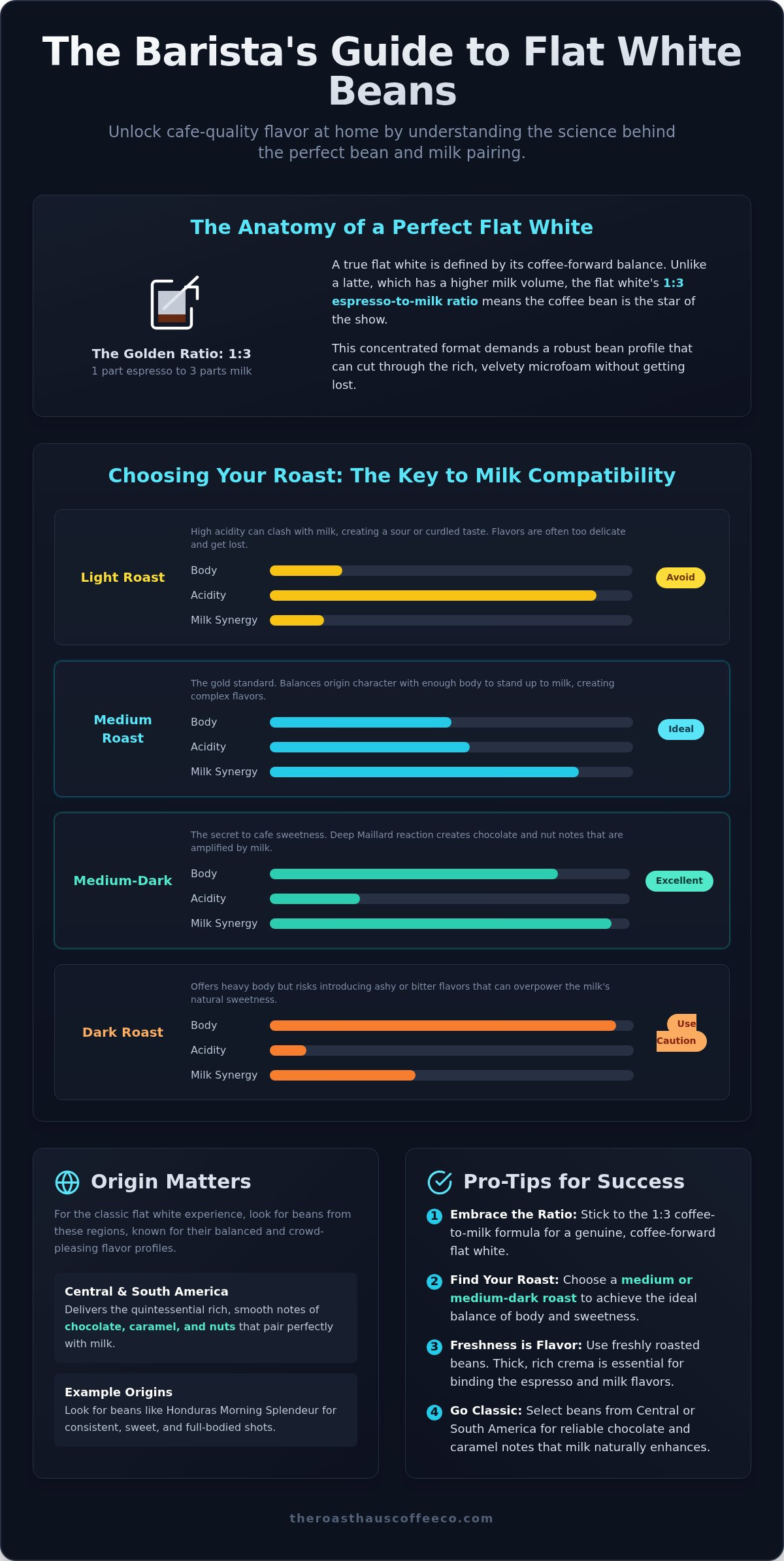
A flat white is defined by its balance: a double shot of espresso combined with a thin, velvety layer of microfoam. This usually follows a 1:3 ratio of coffee to milk. If you research What is a Flat White?, you'll see it was designed to be more concentrated than a latte. Because there's less milk to dilute the shot, the coffee is the primary focus. You can't hide a weak or poorly roasted bean in this format. The espresso must be bold enough to stand on its own while still complementing the creaminess of the dairy.
Choosing the best coffee beans for flat white requires an understanding of how coffee behaves under pressure. When you pull a double shot, you're extracting concentrated oils and solids. In a flat white, these elements must remain coffee-forward. If the bean is too delicate, the flavor will simply vanish. We've found that beans with a robust profile provide the necessary backbone. This ensures your drink doesn't taste like warm, coffee-flavored milk but like a professional espresso beverage crafted by a trusted expert.
Flat White vs. Latte: How Bean Choice Shifts
Lattes are often served in larger cups; the milk volume is significantly higher. This high ratio allows for lighter roasts that might otherwise be too acidic. Flat whites don't have that luxury. They require beans with a higher body and reduced acidity. The goal is a heavy mouthfeel. When you use the best coffee beans for flat white, the intensity of the espresso shot provides a sturdy foundation. Without this strength, the microfoam will overwhelm the coffee's character.
The Science of Milk and Espresso Interaction
Milk contains fats and proteins that change how you perceive flavor. These fats coat the tongue and can easily mask the subtle notes of a light roast. However, the Maillard reaction during the roasting process creates compounds that pair perfectly with steamed lactose. These roasty, toasted notes are amplified by the sweetness of the milk. We prioritize small-batch roasting at our Oklahoma facility to ensure these flavor profiles are consistent. Milk synergy is the harmonic balance between espresso oils and milk proteins. This synergy is what creates that lingering, chocolatey finish we all look for in a great cup.
Choosing the Right Roast Level for Milk Integration
Roast level directly dictates how your espresso shot will interact with microfoam. A medium roast is the gold standard for a flat white. It preserves the unique origin character of the bean while providing enough physical body to balance the dairy. If you choose a light roast, the high acidity can be problematic. When acidic coffee meets steamed milk, it can make the drink taste slightly sour or even curdled. This happens because the acid begins to break down the milk proteins, which ruins the smooth, velvety experience you expect from a flat white.
Dark roasts present a different challenge. While they offer plenty of body, they often carry ashy or smoky flavors. These bitter notes can easily overpower the natural sweetness found in steamed lactose. Finding the best coffee beans for flat white requires a roast that has moved past the sharp acidity of a light roast but hasn't reached the charred bitterness of a dark roast. You want a profile that complements the milk, not one that fights against it.
The Case for Medium-Dark Roasts
Medium-dark roasts are often the secret to a cafe-quality drink at home. Extended development time in the roaster triggers the Maillard reaction more deeply, creating the complex sugars that milk loves. This results in those classic chocolate and nut flavors that many coffee drinkers crave. These beans are especially ideal for home baristas using standard espresso brewing methods. They provide a wider sweet spot during extraction, making it much easier to pull a consistent shot every morning without specialized equipment.
Roast Profile Comparison Table
This table compares how various roast levels perform in a flat white format. Finding the best coffee beans for flat white involves balancing these three key metrics.
| Roast Level | Body | Acidity | Milk Compatibility |
|---|---|---|---|
| Light | Thin | High | Low (Perceived sourness) |
| Medium | Balanced | Medium | High (Best for complexity) |
| Medium-Dark | Heavy | Low | Excellent (Best for sweetness) |
| Dark | Very Heavy | Very Low | Moderate (Risk of ashiness) |
Consistency is the most important factor in a roast. We believe small batch artisan coffee roasters offer a superior product because they can monitor every second of the roast cycle. Large commercial roasters often produce uneven results that lead to a muddy tasting flat white. If you want to see how a precise, handcrafted roast changes your morning routine, browse our artisan roasts to find your perfect match.
Origin Matters: Chocolatey vs. Fruity Flat Whites
The origin of your coffee is the single biggest factor in determining the final taste of your drink. While the roast level provides the structure, the origin provides the personality. When searching for the best coffee beans for flat white, you generally choose between two distinct paths: the comforting, classic profile or the vibrant, modern profile. Both have their merits. Your choice depends on whether you want a drink that tastes like a dessert or one that tastes like a complex fruit harvest.
Classic Profiles: Nutty and Chocolatey
Beans from Central and South America are the traditional choice for espresso-based drinks. Our Honduras Morning Splendeur is a prime example of this style. It offers deep caramel and cocoa notes that naturally amplify the sweetness of steamed milk. Colombian beans also provide a sturdy, reliable base that ensures your flat white never tastes thin or watery. These origins are the safest bet for beginners who are just learning how to make coffee at home. They are forgiving to brew and produce a predictable, creamy result every morning.
Modern Profiles: Bright and Zesty
If you prefer a more adventurous cup, African origins like Kenya and Ethiopia offer a sophisticated alternative. A Kenya AA Supreme provides high acidity that cuts through the microfoam with a berry-like punch. This creates a more complex, layered drink than a standard chocolatey roast. Our Ethiopia Limu Organic brings floral notes that result in a tea-like, delicate flat white. These modern profiles are more challenging to balance. However, when you get the extraction right, they offer a rewarding experience that stands out from the crowd. Our Oklahoma-based roastery focuses on these small-batch origins to ensure every subtle note is preserved for your cup.
The mouthfeel of the bean is crucial. Regardless of origin, you need a coffee with enough body to support the milk. Many people argue that single-origins are wasted in milk-based drinks and suggest using cheap blends instead. We disagree. Using high-quality, small-batch single-origins allows the specific terroir to shine through the microfoam. The best coffee beans for flat white aren't just about strength; they are about character. Choosing a single-origin allows you to explore the unique differences between a zesty Kenyan and a smooth Honduran cup without the muddy flavor of a mass-produced blend.
Freshness and Grind: The Secret to Microfoam Synergy
Freshness is the most overlooked factor when people search for the best coffee beans for flat white. We follow a strict 24-hour rule at our Oklahoma roastery. We roast your beans and ship them within one day. This process ensures the coffee retains the CO2 necessary for a thick, stable crema. Crema isn't just for looks. It acts as the physical bridge between the heavy espresso and the velvety microfoam. Without a healthy layer of crema, your flat white art will fail and the flavor will lack the necessary depth to stand up to the milk.
The grind size is equally important for creating a coffee-forward drink. You need a slightly finer grind than you might use for a standard drip coffee. This finer setting helps extract the concentrated oils that provide the drink's backbone. However, you must use a quality coffee grinder to ensure every particle is uniform. Inconsistent grinds lead to uneven extraction, which ruins the balance of your espresso. A precise grind allows the natural sweetness of the bean to shine through without being masked by the dairy.
Degassing and Your Flat White
Coffee that is too fresh can actually be a problem for espresso. If you pull a shot within 48 hours of roasting, the excess gas creates large, unstable bubbles in your crema. This makes it impossible to pour smooth latte art. The ideal sweet spot for espresso is between 7 and 14 days post-roast. This period allows the beans to settle and develop their full flavor profile. Our small-batch fulfillment model is designed with this timeline in mind. By the time our beans arrive at your door and rest for a few days, they are at their absolute peak for extraction. You can experience the difference of roasted-to-order coffee by trying our latest batch.
Grinding for Milk Drinks
Dialing in your shot is a critical skill for any home barista. You should aim for a 25 to 30 second extraction time. If your shot runs too fast, the coffee will taste sour and thin. If it runs too long, the bitterness from over-extraction will be amplified by the heat of the milk. We want a clean, sweet finish that complements the creamy texture of the microfoam. Fresh coffee beans are the non-negotiable foundation of any successful flat white. Once you have the right beans and a consistent grind, the synergy between the espresso and the milk happens naturally.
The Best Roast Haus Beans for the Perfect Flat White
Selecting the best coffee beans for flat white comes down to your personal flavor preference and how you want the espresso to interact with your milk. We take pride in our small-batch roasting process in Wyandotte, Oklahoma. Every bag is roasted to order. This ensures you get the peak flavor profiles needed for a professional-grade drink. Whether you want a punchy, fruit-forward experience or a smooth, chocolatey cup, we have a specific bean for your morning routine. Finding the best coffee beans for flat white often involves choosing between boldness and balance.
Our Top Recommendation: Kenya AA Supreme
The Kenya AA Supreme is our "Powerhouse" choice. It features a bold profile with blackcurrant notes and a wine-like acidity. This intensity is specifically designed to cut through six ounces of microfoam without losing its identity. When you mix this espresso with full-fat dairy or oat milk, the acidity transforms into a sweet, jammy finish. It's the ideal choice for those who want their coffee to be the star of the show. We recommend this for anyone who finds their current home brew tastes too thin once milk is added.
The Balanced Alternative: Honduras Morning Splendeur
If you prefer a traditional, comforting drink, the Honduras Morning Splendeur is the "Crowd Pleaser." This medium roast brings out a distinct brown sugar sweetness with smooth caramel and nut notes. It's a lower-acid option; it's perfect for drinkers who dislike tangy or bright coffee. It provides a reliable, sturdy base that pairs beautifully with any milk type, resulting in a velvety texture. This bean is excellent for a classic flat white that emphasizes creamy, sweet flavors over complex acidity.
Experiment with the All Day Sampler
For those who enjoy a delicate and sophisticated cup, our Ethiopia Limu Organic is the "Connoisseur's Choice." It offers floral notes that create a tea-like, elegant flat white. However, if you're still unsure which profile fits your palate, we recommend starting with our sampler. Testing different origins is the only way to see how your specific milk-to-coffee ratio affects the final taste. It's a practical way to discover if you prefer the "Powerhouse" or the "Crowd Pleaser" without committing to a full bag. It's also a great gift for the home barista in your life who is serious about their craft.
Shop the All Day Sampler and find your perfect flat white bean today!
Elevate Your Home Barista Experience
Achieving a cafe-quality drink at home is entirely possible when you prioritize the integrity of the bean. You've learned that the precise 1:3 ratio of a flat white demands a robust profile that won't get lost in the milk. Selecting medium roasts and paying attention to origin notes like caramel or blackcurrant allows you to create a balanced, professional result every time. Finding the best coffee beans for flat white is the final step in mastering your morning routine.
We take this responsibility seriously at our family-owned Oklahoma roastery. We focus on small-batch production to ensure every roast profile remains consistent and intentional. Our team roasts your order and ships it within 24 hours to guarantee you receive the beans at their peak state for degassing and extraction. Don't settle for watery or bitter coffee any longer. Take control of your extraction and enjoy the velvet texture of a perfectly balanced drink today.
Order Freshly Roasted Beans for Your Next Flat White and taste the difference that earnest craftsmanship makes.
Frequently Asked Questions
Can I use regular coffee beans for a flat white or do I need espresso beans?
You can use any high-quality bean, but "espresso beans" are usually roasted longer to handle the pressure and milk. For a flat white, you need a bean that provides a heavy body. We recommend our Honduras Morning Splendeur because its medium-dark profile is designed for this extraction method. While any bean works, those specifically roasted for espresso provide more consistent results in milk-based drinks.
Which is better for a flat white: single-origin or a blend?
Both work, but single-origins offer a more distinct and educational tasting experience. Blends are designed for consistency, while a single-origin like our Ethiopia Limu Organic highlights specific floral notes. For a flat white, choosing the best coffee beans for flat white often means opting for a single-origin that has enough body to cut through the microfoam. This allows you to taste the unique terroir of the region.
Does the type of milk affect which coffee bean I should choose?
Yes, the fat content and sweetness of your milk should influence your bean selection. Full-fat dairy is creamy and sweet, which pairs well with bold, acidic beans like Kenya AA Supreme. Lighter milks or plant-based alternatives may require a smoother, more balanced bean like Honduras Morning Splendeur to avoid a clashing flavor profile. Matching the intensity of your coffee to the richness of your milk is key to synergy.
How many days after roasting are beans best for a flat white?
Beans are typically at their peak for espresso between 7 and 14 days after roasting. This resting period allows the CO2 to degas, which prevents the crema from being too bubbly and unstable. Since we ship within 24 hours of roasting from our Oklahoma facility, your beans will likely arrive just as they are entering this ideal window. Using beans too early can result in a harsh, gassy flavor.
Why does my flat white taste bitter even with expensive beans?
Bitterness usually comes from over-extraction rather than the beans themselves. If your grind is too fine or your water temperature is too high, you'll pull out bitter compounds that ruin the drink. Even with the best coffee beans for flat white, poor technique will lead to a dry, ashy finish. Ensure your shot pulls in 25 to 30 seconds and check that your equipment is clean to avoid these common issues.
What is the best roast level for an oat milk flat white?
A medium-dark roast is generally the best choice for an oat milk flat white. Oat milk has a distinct toasted grain flavor that can easily overwhelm lighter, more acidic coffees. A darker roast provides the chocolatey and nutty notes that complement the natural sweetness of the oat. Our Honduras Morning Splendeur is a great option here because it provides a sturdy, sweet foundation that balances the plant-based milk perfectly.
Is Kenya AA coffee too acidic for milk drinks?
Not at all, but it requires a specific approach. While Kenya AA is known for its bright, wine-like acidity, this characteristic often transforms into a pleasant fruitiness when combined with steamed milk. It provides a "modern" flat white profile that is refreshing and complex. If you find it too sharp, try increasing your milk-to-espresso ratio slightly or ensure your microfoam is properly textured to add more perceived sweetness.
How much coffee should I use for a single flat white shot?
For a standard flat white, we recommend using 18 to 20 grams of finely ground coffee to pull a double shot. This dose provides the necessary strength to create a coffee-forward drink. A single shot often lacks the intensity needed to balance the milk in a 6-ounce cup. Using a precision scale ensures your dose is consistent every morning, which is the first step toward achieving professional results at home.

