


That bag of beans on the grocery store shelf might have a "best by" date far in the future, but it likely lost its flavor potential weeks ago. You've probably felt the frustration of pulling a shot that looks thin and tastes like battery acid, even when you've dialed in your grinder perfectly. It's a common struggle for the 85% of Americans brewing at home in 2026. Finding the best coffee beans for espresso isn't about learning secret jargon or buying the most expensive bag. It's about one simple, honest factor: the time between the roast and your portafilter.
We believe you deserve a reliable source for beans that actually perform. By choosing small-batch, roast-to-order coffee over mass-market convenience, you can finally achieve that thick, golden crema and balanced flavor you've been chasing. This guide will show you how to identify truly fresh beans and which origins will best suit your palate. We'll look at everything from the bright notes of Ethiopia Limu Organic to the bold body of Kenya AA Supreme. You'll understand why we ship within 24 hours of roasting to ensure your home espresso never tastes stale again.
Key Takeaways
- Learn why the best coffee beans for espresso are defined by their roast date and quality rather than just a marketing label.
- Understand the critical role of degassing and why waiting 7 to 10 days after roasting is the sweet spot for perfect crema.
- Compare the reliable balance of traditional blends against the adventurous flavor profiles found in single-origin espresso.
- Identify the specific storage habits and equipment that prevent your artisan beans from going stale.
- Discover how a roast-to-order fulfillment model provides a level of freshness that big-box retailers cannot match.
What Actually Makes the Best Coffee Beans for Espresso?
Many people believe that "espresso beans" are a specific variety of coffee plant. That isn't the case. The best coffee beans for espresso are simply high-quality beans that have been roasted with a specific flavor profile in mind. While any bean can technically be brewed as espresso, the intense pressure of the extraction process demands a bean that can stand up to the heat without becoming thin or overly acidic. Instead of looking for a dark roast label, look for an espresso profile. These profiles focus on body and sweetness to balance the intensity of the shot.
A great shot is defined by its crema. This golden foam is a combination of coffee oils, known as lipids, and carbon dioxide gas. When hot water hits the coffee bed under high pressure, it emulsifies these oils and traps the gas. If your beans are old, the CO2 has escaped, and you'll end up with a flat, watery shot. This chemistry is a core part of any encyclopedic overview of espresso and explains why freshness is non-negotiable for quality results.
We prioritize 100% Arabica beans for our roasts. While Robusta is often used in cheap commercial blends to boost crema and caffeine, it often carries a rubbery, bitter taste. Arabica offers the complexity and sweetness necessary for a balanced shot. With the specialty coffee industry moving toward the SCA's new Coffee Value Assessment framework in late 2025, the focus on bean quality over mass production is more important than ever for the home barista.
The Difference Between Espresso and Drip Roasts
Roasters develop espresso beans for a longer duration during the roasting process. This doesn't always mean the beans are darker or oily. Instead, the goal is to reduce perceived acidity and increase solubility so the flavor extracts quickly. Because the high pressure of an espresso machine amplifies every flavor note, a bean that tastes bright and citrusy as a drip coffee might taste painfully sour as an espresso. You can learn more about the mechanics of the brew in our guide on what is espresso.
Whole Bean vs. Pre-Ground: Why It Matters for Espresso
Ground coffee has a massive surface area, which leads to rapid oxidation. Once coffee is ground, it loses its volatile aromatics and CO2 within minutes. Without that gas, the water will rush through the coffee puck too quickly, resulting in a shot with no body and zero crema. Espresso requires a precise, uniform grind that creates enough resistance for the machine to build pressure, a level of accuracy that a standard blade grinder simply cannot achieve. If you want your beans to actually perform, you must grind them fresh right before you pull your shot.
Why Freshness is the #1 Factor in Espresso Quality
Freshness is the single most important variable in your espresso routine. You can own the most expensive machine in the world, but if your beans are stale, your shots will be thin and sour. We believe the best coffee beans for espresso are those that reach your door shortly after leaving the drum. Our roast-to-order model ensures that every bag ships within 24 hours of roasting. This speed is a game changer for flavor integrity. It prevents the delicate aromatic compounds from oxidizing before they ever reach your kitchen.
There is a specific window of time called the "sweet spot" for espresso extraction. While you want your beans fresh, you actually need to wait for them to degas. Coffee releases a significant amount of carbon dioxide in the first few days after roasting. If you brew too early, the gas interferes with water contact and creates a bubbly, uneven extraction. For most profiles, the ideal window is 7 to 10 days post-roast. This timing allows the flavors to settle while keeping the essential oils intact for a thick, persistent crema.
You can often identify stale beans just by looking at them. Fresh medium-to-dark roasts should have a healthy, slight sheen from their natural oils. Older beans lose this luster and appear dull or dusty. When these stale beans are ground, they lack the structural integrity to resist water pressure. This leads to "channeling," where water blasts through weak spots in the coffee puck rather than flowing evenly. The result is a watery shot that lacks the rich mouthfeel you expect from a premium roast.
The Problem with Grocery Store and Amazon Beans
Convenience often comes at the cost of quality. Most beans sold in big-box stores or through massive online retailers have been sitting in climate-controlled warehouses for months. These companies use "Best By" dates to hide the true age of the product. A bag might be labeled "Best By 2027," but it was likely roasted in early 2026. By the time it reaches you, the oils have turned rancid and the CO2 is gone. Choosing the best coffee beans for espresso means looking past the expiration date and finding a specific roast date.
How to Read a Roast Date for Espresso Success
Always look for a "Roasted On" label. If a bag only lists a "Use By" date, it is a sign that the producer is prioritizing shelf life over sensory excellence. We take pride in our family-owned operation in Wyandotte, Oklahoma. Supporting local craftsmanship means you get a product that was handled with care, not one that sat on a pallet for weeks. If you are ready to taste the difference that timing makes, you can browse our small-batch roasts and see exactly when your beans were prepared.
Selecting Your Profile: Single-Origin vs. Espresso Blends
Choosing the right profile is about knowing your own palate. Traditional espresso blends are engineered for balance. Roasters combine different beans to create a reliable experience with consistent notes of chocolate and caramel. On the other hand, single-origin espresso has gained significant popularity in 2026 as more home baristas seek to explore the unique terroir of a specific region. These are often the best coffee beans for espresso for those who drink their shots straight and want to taste the distinct characteristics of the soil and climate where the crop grew.
Your choice should also depend on your favorite drink. If you prefer a latte or a cappuccino, you need a bean with enough body to punch through the sweetness of the milk. If you enjoy a concentrated ristretto, you might prefer a bean with higher acidity and complex fruit notes. Regardless of the profile you prefer, the foundation is always high quality coffee beans that have been processed with care and roasted to order.
African Origins: Brightness and Complexity
African beans are often described as the "modern" espresso choice. Our Kenya AA Supreme is a standout for those who want a bold, intense experience. It features dark fruit notes and a heavy body that remains distinct even under high pressure. Ethiopia Limu Organic offers a different path, with floral aromas and citrus undertones that provide a crisp finish. These origins thrive in shorter, more concentrated shots where their natural brightness is highlighted. They are frequently cited as the best coffee beans for espresso by enthusiasts who enjoy a vibrant, wine-like acidity in their cup.
Americas and Beyond: Chocolate and Nutty Profiles
Beans from Central and South America are the "comfort food" of the coffee world. Our Honduras Morning Splendeur provides the classic nutty and chocolatey profile that many associate with a traditional cafe experience. These beans typically have lower acidity and a natural sweetness that makes them easy to dial in on home equipment. Because they're so balanced, they serve as the perfect base for milk-based drinks. The fats in the milk complement the cocoa notes of a Honduran or Colombian bean, creating a smooth, creamy beverage that isn't overpowered by sharp citrus flavors.
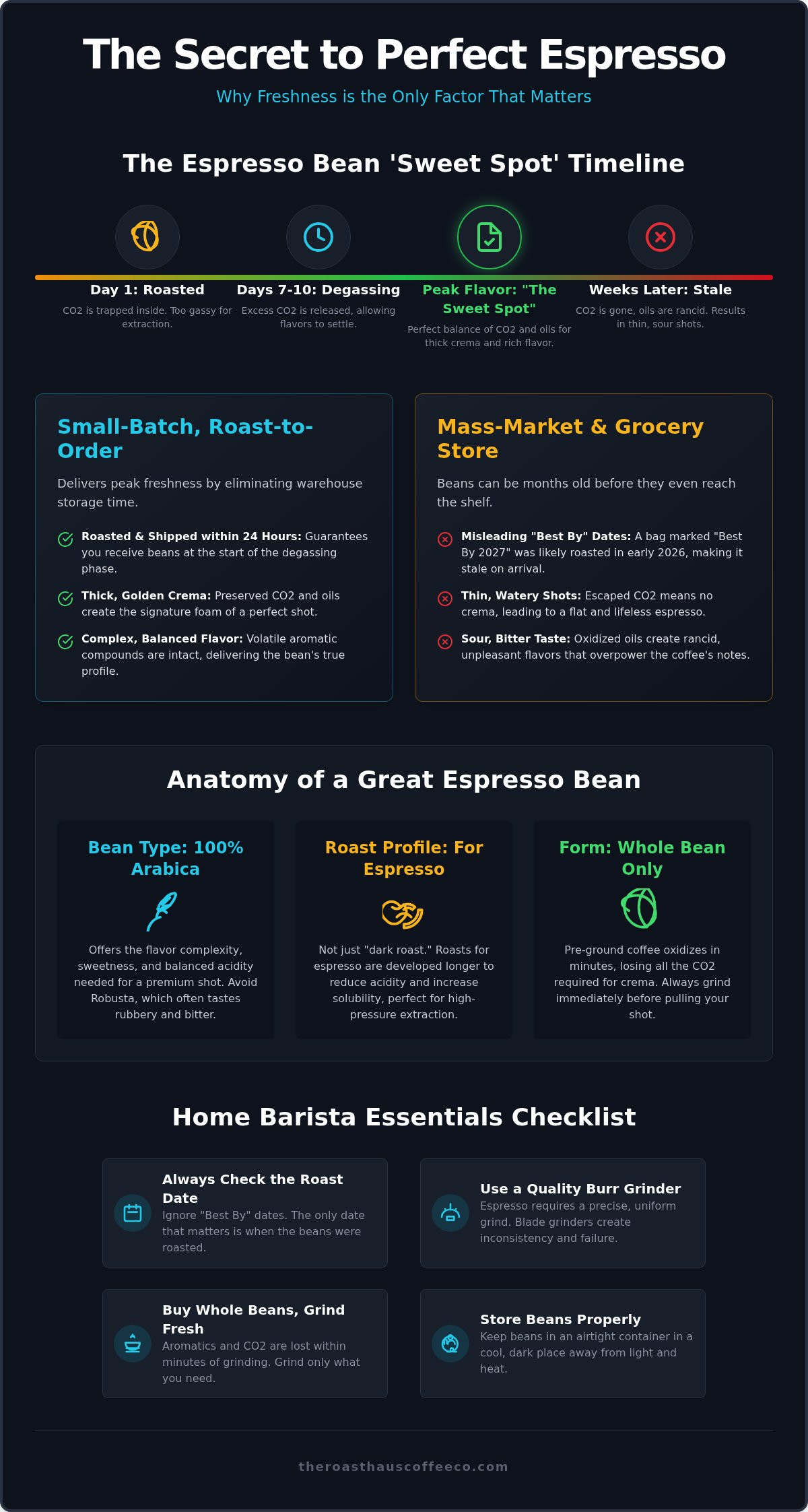
Home Barista Checklist: How to Prep Your Beans
Buying the best coffee beans for espresso is the first step toward a perfect shot, but your preparation routine is what finishes the job. Your equipment and habits must respect the craftsmanship that went into the roast. Even a premium bean like our Kenya AA Supreme will fail to perform if the grind is wrong or the water is poor. We want you to get the most out of every bag we ship from our Oklahoma roastery.
Water quality is often the invisible ingredient that ruins a shot. Since espresso is nearly 99 percent water, any off-flavors in your tap will be amplified under pressure. Use filtered water to remove chlorine and heavy minerals. This protects your machine from scale buildup and ensures the natural sweetness of the coffee shines through. You also need to dial in every new bag of beans. Coffee is an organic product that reacts to humidity and age. A slight grind adjustment each morning can be the difference between a sour shot and a balanced one.
Grinding for Espresso Success
A dedicated espresso grinder is non-negotiable for home brewing. You need a burr set that can produce a "fine sand" texture. This consistency allows your machine to reach the 9 bars of pressure required for a proper extraction. If your grind size varies, water will find the easiest path through the puck, leading to uneven flavor. Refer to our guide to coffee grinders to understand why a uniform particle size is the key to preventing bitterness and achieving that thick crema.
Storing Your Small-Batch Beans
Once you receive your beans, keep them away from light, heat, and air. These elements accelerate oxidation and kill the flavor. While some suggest the freezer, it is usually a bad idea for espresso beans. The moisture from condensation can damage the delicate oils and make the beans difficult to grind consistently. Our bags feature one-way degassing valves to let CO2 escape while blocking oxygen out. For the best results, use your beans within 14 to 21 days of opening the bag. This ensures the best coffee beans for espresso actually taste fresh in your cup.
If you are ready to upgrade your home cafe experience with beans that are roasted and shipped within 24 hours, order a fresh bag today and see how our small-batch approach changes your morning routine.
Experience the Roast Haus Difference in Every Shot
Finding the best coffee beans for espresso shouldn't feel like a gamble. We built our roastery on the belief that quality starts with honesty. Most large corporations prioritize shelf life and mass-market convenience over actual flavor. We take the opposite path. Our "Roasted-to-Order" model is our mantra. It ensures that the beans you receive were in the cooling tray just hours before they were packaged. This level of fulfillment is the ultimate differentiator for anyone serious about their morning shot.
From Oklahoma to Your Espresso Machine
We operate as a family-owned venture in Wyandotte, Oklahoma. This isn't an impersonal factory. It's a small-batch artisan production where we oversee every step of the process from the kitchen to your doorstep. In 2026, we've maintained our commitment to a strict 24-hour shipping guarantee. When you place an order, we roast it specifically for you. This artisanal quality ensures maximum flavor integrity and nutritional excellence. By supporting our independent business, you're choosing a product crafted with care rather than a commodity sitting on a warehouse pallet.
Recommended Beans for Your Next Shot
If you want a bold, stand-alone espresso, our Kenya AA Supreme is the top recommendation. It provides the intensity and dark fruit notes that define a world-class shot. For those who prefer a lighter, more floral experience, our Ethiopia Limu Organic is an excellent choice. It offers a sophisticated profile that highlights the unique terroir of the region. If you're undecided or just starting your journey, The All Day Sampler is the perfect way to test different origins in your specific machine. It allows you to find the exact flavor profile that suits your palate without committing to a single large bag. These are the best coffee beans for espresso for those who value variety and freshness above all else.
We're proud of our identity as an independent, personal venture. We want you to have the best possible experience with your home equipment. Our process is transparent. Our commitment to service is personal. When you choose our beans, you're joining a community that values sensory excellence and small-scale craftsmanship. Every shot you pull should be a testament to that dedication. We're here to help you move past bitter, stale shots and into a world of balanced, fresh espresso.
Elevate Your Morning Routine with Truly Fresh Beans
Great espresso is the result of honest ingredients and careful preparation. By prioritizing a specific roast date over a generic "best by" label, you've already taken the most important step toward a better cup. Remember that the best coffee beans for espresso need a short window to degas but quickly lose their magic if they sit on a retail shelf for months. Whether you prefer the bold fruit notes of a Kenyan origin or the chocolatey comfort of a Honduran bean, your success depends on that roast-to-order window.
We take pride in our family-owned artisan roastery in Wyandotte, Oklahoma. Our small-batch quality control ensures every bag meets our high standards before it leaves our house. Because we ship within 24 hours of roasting, you can trust that your coffee is at its peak when it reaches your doorstep. It's time to stop settling for stale, mass-produced beans and start enjoying the rich crema and balanced flavors you deserve.
Shop our fresh, roasted-to-order coffee beans for the perfect espresso. We look forward to helping you pull the best shot of your life.
Frequently Asked Questions
Can I use any coffee beans for espresso?
Technically, you can use any bean for espresso because it is a brewing method rather than a specific type of coffee plant. However, specialty beans are usually roasted with a specific profile to ensure they are soluble and balanced under high pressure. Using high-quality Arabica beans prevents the rubbery bitterness often found in lower-grade commercial options. Your results will improve significantly if you choose beans designed to stand up to intense extraction.
Is dark roast better for espresso than light roast?
Neither is objectively better, as the choice depends on your personal taste. Darker roasts are traditional for espresso because they offer low acidity and a heavy body, making them easy to dial in for a classic chocolatey profile. Light roasts are brighter and more complex but require more precision to avoid a sour taste. We offer options like Kenya AA Supreme for bold intensity and Ethiopia Limu for fans of lighter, floral notes.
How fresh should espresso beans be?
The best coffee beans for espresso should be used between 7 and 21 days after the roast date. If beans are too fresh, the excess carbon dioxide causes uneven extraction and a fizzy flavor. If they're too old, the lack of gas leads to a watery shot with zero crema. We ship our orders within 24 hours of roasting so your beans arrive exactly when they are ready to begin their peak flavor window.
Why are my espresso beans oily?
Oil on the surface is a natural result of the roasting process. As beans are roasted longer or at higher temperatures, the internal structure breaks down and pushes lipids to the exterior. While a slight sheen is a sign of a fresh medium-to-dark roast, excessively oily beans can sometimes lead to rancid flavors if they sit for too long. Artisan roasters manage this balance carefully to keep the essential oils inside the bean until you grind them.
Does espresso have more caffeine than regular coffee?
Espresso has more caffeine per ounce, but a standard serving usually contains less caffeine than a full cup of drip coffee. A single shot of espresso contains roughly 63 milligrams of caffeine. In contrast, a typical 8-ounce cup of brewed coffee averages about 95 milligrams. If you love the concentrated flavor of espresso but want to avoid the jitters, our Swiss Water Process decaf offers a rich, full-bodied experience without the high caffeine content.
What is the best way to store espresso beans?
Store your beans in an airtight container in a cool, dark place. Exposure to oxygen, light, and heat will quickly destroy the delicate aromatics needed for a quality shot. Avoid using the refrigerator or freezer, as moisture from condensation can damage the oils and affect your grind consistency. Keeping your beans in their original bag with a one-way valve is often the most effective way to maintain freshness for several weeks.
How long do coffee beans stay fresh for espresso?
Coffee beans typically stay at peak freshness for espresso for about four weeks after the roast date. After 30 days, the carbon dioxide has mostly dissipated, making it difficult to produce a thick, golden crema. To ensure you always have the best coffee beans for espresso, buy smaller quantities more frequently. Our small-batch model is designed to provide you with a constant supply of artisan beans that are always at their flavor peak.

